Web3 is generating a lot of hype — but what
exactly is it? From the metaverse to decentralized finance to NFTs and
beyond, we break down what Web3 is today and what it could mean for the
future of the internet.
Imagine an internet built, powered, and owned by its users instead of a few major tech companies.
Social media users could monetize their own data. Content
creators could receive crypto payments directly every time someone views
their latest post. Ride-sharing platforms could be owned by the
drivers.
GET THE LIST OF BLOCKCHAIN 50 COMPANIES
The Blockchain 50 is our annual ranking of the 50 most promising companies within the blockchain ecosystem.
This is the promise of Web3, a decentralized internet built on an open, permissionless blockchain network.
The internet as we know it now is centralized — data flows
through and is stored in data centers owned by a handful of companies. A
few powerful players control the most widely used services and
platforms. But in Web3, data storage and flow take place on networks
that run on many computers without a single entity controlling them.
Online services from e-commerce to social media to gaming are provided
and controlled by democratic groups of developers, creators, and users.
Three use cases are already gaining traction today:
-
- Decentralized finance (DeFi): an ecosystem of smart
contracts that allows participants to offer and access financial
services in a peer-to-peer format, without relying on traditional
intermediaries like banks, credit unions, or brokerages
- Non-fungible tokens (NFTs): digital assets — which can range from images to songs to videos — that are verified through blockchain technology
- Decentralized gaming: token-based gaming economies and
virtual worlds powered by blockchain technology. Most decentralized
games integrate NFTs in some capacity.
While a fully decentralized internet may still be a distant
vision — and critics say the idea is little more than hype — its
implications could be far-reaching.
In this report, we break down the elements of Web3, its use cases, and what it could mean for the future of the internet.
TABLE OF CONTENTS
- How does Web3 work?
- dApps aim to cut out the middle man
- DAOs govern Web3 apps and communities
- Decentralized networks own and control data on Web 3
- Decentralized identifiers (DIDs) verify Web3 users
- What is Web3 today?
- DeFi powers Web3 financial products and services
- NFTs could have use cases beyond art and gaming
- What could Web3 impact in the future?
- Metaverses
- Digital content
- Dispute resolution
- Social media
- What are the challenges facing Web3?
- Web3 is a digital Wild West
- DAOs are vulnerable to abuse and centralized control
- Total decentralization is difficult to implement — and could leave Web3 on shaky ground
- Cryptocurrencies still face formidable hurdles
How does Web3 work?
Decentralized apps (dApps) aim to cut out the middleman
Web3’s primary aim is to remove the middleman. It’s a simple goal with massive implications.
An idealized Web3 ride-sharing app, for instance, would connect
riders directly with drivers. Payments would go directly to the driver
without the app taking a slice. Juggernauts like Uber would be out of
luck.
The middleman would be replaced by a decentralized app, or a
dApp. These apps run on peer-to-peer networks, such as blockchains, and
use code-based smart contracts to facilitate agreements between parties
without the need for pre-established trust. In theory, these apps
wouldn’t be owned by any single person or company.
To be considered decentralized, an app must meet the following criteria:
-
- It is fully open-source, with data stored on an open blockchain and with no single entity owning a majority of the app’s tokens.
- It generates tokens, which are required for using the app and awarded to users in exchange for their contributions.
- It adopts protocol changes only upon the majority consensus of the majority of its users.
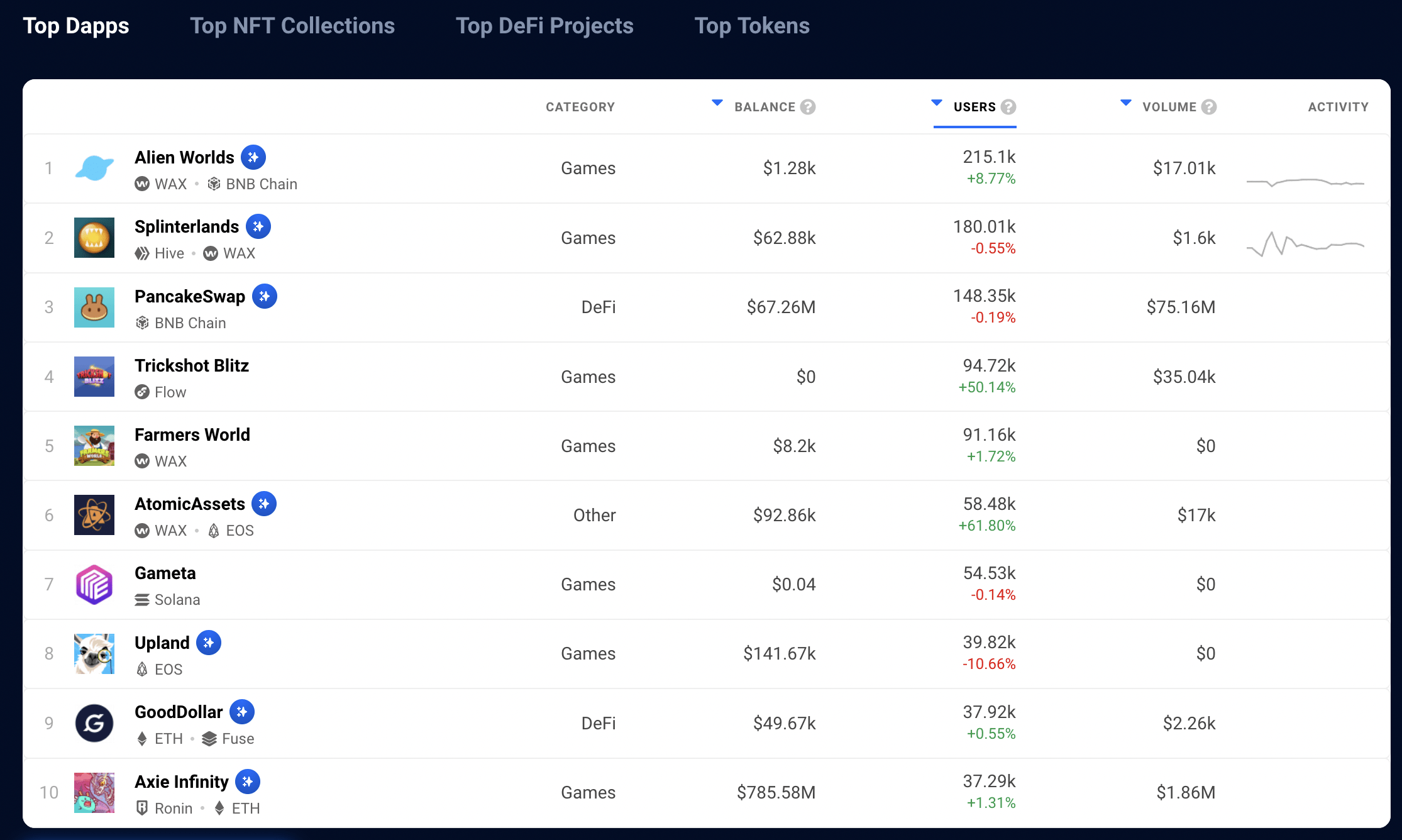
There are over 11,000 dApps on DappRadar, a dApp store. However, most dApps today are not technically decentralized — the entity that created them still typically runs or owns them (falling short of the prevalent Web3 narrative).
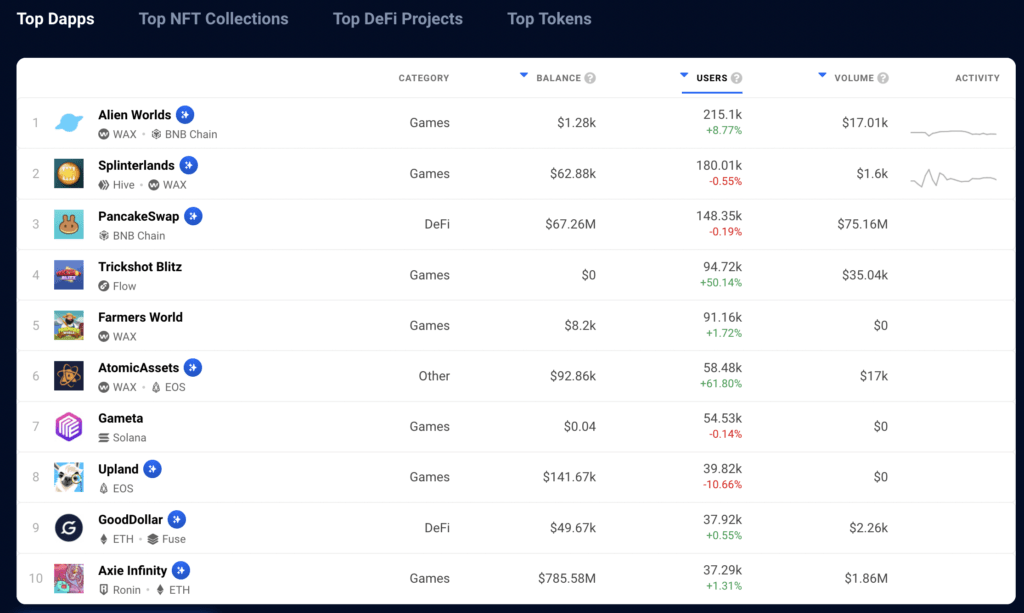
Source: DappRadar
Similarly, dApps don’t tend to completely run on a blockchain
like Ethereum, as that can be complicated, time-consuming, and
expensive. This was illustrated by the congestion crisis caused by CryptoKitties
in December 2017. As more players joined the game, the number of
transaction requests on the blockchain piled up. The number of network
requests on Ethereum increased sixfold in the first week of December, and transaction processing fees skyrocketed.
Today, many dApp developers either keep the main user interface
on a traditional website and send only transaction requests to the
blockchain through an API or build on “side chains” — separate, smaller
blockchains that can interact with larger blockchains.
Still, dApps offer some benefits that
traditional apps can’t provide. For example, they can be more resistant
to control or censorship by governments or other organizations. They’re
also open-source, which removes a barrier to developers building out a
dApp ecosystem. And because dApps use blockchain tech, cryptocurrencies
can easily be integrated in.
DAOs govern Web3 apps and communities
But how will dApps (and other Web3 initiatives) be governed if
no one is in control? Enter: decentralized autonomous organizations
(DAOs).
A DAO is a blockchain-based way to manage a group. Rules are
written into smart contracts — which can include self-executing code
tied to certain events or conditions.
The DAO structure embodies the collective ownership and decentralized aspects of Web3. In the full Web3 vision, DAOs will replace companies as the bodies that run online platforms. Many Web3 startups have roadmaps for transition into a DAO structure.
One example of a DAO is Opolis, which was created for independent workers and evolved from a digital employment cooperative.
Opolis provides its members with automated payroll, health
insurance, retirement plans, and other benefits typically offered by
employers but not made available to freelance contractors. Its members
voted to create a DAO in 2021 and contributed funds to the liquidity
pool for its token, $Work, on an exchange. Although Opolis received $5M in seed funding, only the cooperative members have voting rights.
Decentralized networks change how data is handled
Web3 platforms host data on distributed networks instead of on
central servers. The idea is that decentralized data will prevent a few
companies from controlling the internet.
One of the most popular peer-to-peer storage networks is the
InterPlanetary File System (IPFS). Computers around the world connect to
the system and act as nodes that store the data and make it available
to users who request it. IPFS isn’t blockchain-based and its records are
neither immutable nor permanent.
Filecoin
is similar to IPFS, but it’s built on a blockchain-based protocol.
Anyone can join the network to provide storage from their open hard
drive space and earn Filecoin tokens by doing so.
One downside to data decentralization, however, is that it can
cause bottlenecks in app usage. Retrieving data from a massive network
like IPFS or from the blockchain takes time, which limits the usability
of Web3 apps. As a result, developers are looking for workarounds.
One example is The Graph,
a protocol for indexing and querying blockchains and distributed
file-storage networks like the IPFS. The Graph aims to make it possible
for the user-facing side of a Web3 app to run smoothly even while
querying distributed data.
Decentralized identifiers (DIDs) verify Web3 users
Another challenge for Web3 is how to verify and track user
identity. This is where a decentralized identifier (DID) comes into
play.
A DID is a string of numbers and letters that underlie apps
called “identity wallets.” These wallets contain verified credentials
and other data that a user generates on the blockchain. The identity
wallet grants its owner access to applications.
DIDs work across different Web3 platforms and can be used to
prove ownership of NFTs, social media accounts, and other assets on the
blockchain.
Spruce lets users create a decentralized identity across blockchains including Ethereum, Polygon, and Solana. Synaps
encrypts digital identity attributes and decentralizes the storage of
identification documents, like ID cards and passports. This is
particularly useful for secure identity verification for Know Your
Customer requirements.
Identity wallets are also useful in professional settings. For
example, a developer can share verified academic credentials, as well as
proof that they contributed to certain open-source projects or created
digital assets.
GET THE LIST OF BLOCKCHAIN 50 COMPANIES
The Blockchain 50 is our annual ranking of the 50 most promising companies within the blockchain ecosystem.
What is Web3 today?
DeFi powers Web3 financial products and services
While a fully decentralized internet is still a distant vision, DeFi (decentralized finance) is already gaining some momentum.
DeFi refers to an ecosystem of smart contracts that allow
participants to offer and access financial services in a peer-to-peer
format, without relying on traditional intermediaries like banks, credit
unions, or brokerages. It does this using dApps.
Types of DeFi protocols include:
-
- Decentralized exchanges (DEXs) — users trade cryptocurrencies
- Lending and borrowing platforms — users deposit assets that are lent to borrowers and gain rewards/interest from the fees paid by borrowers
- Asset management & yield — depositors are rewarded for staking tokens, contributing to liquidity pools, or yield farming
- Derivatives — smart contracts that derive their value from an underlying asset are used for hedging or speculation
- Payments — users pay each other in crypto tokens
- Insurance — users can get protection for their crypto wallets, DeFi deposits, and smart contracts
- NFT lending — users put up NFTs as loan collateral
Trading is one of the more popular use cases of DeFi. Pancake Swap,
a decentralized exchange (DEX) on the Binance Smart Chain, is one of
the most popular DeFi apps with 2.4M active users in June 2022 alone.
Another popular DEX is Uniswap, which says it surpassed $1T in lifetime trading volume in May 2022 — less than 4 years since its launch.
NFTs could have use cases beyond art and gaming
Non-fungible tokens (NFTs) are another well-known Web3 application.
NFTs
provide a blockchain-based record of ownership of digital assets —
which can range from images to songs to videos. Each NFT represents a
unique and immutable entry in a ledger and can function a bit like a
title deed. Exchanging NFTs allows a way to trade “ownership” of digital
assets.
Creators can sell NFTs directly to their fans to help monetize their work or put them up for sale on NFT marketplaces like OpenSea or Rarible.
Using smart contracts baked into an NFT, creators can also add some
conditions, like setting it up such that they automatically receive
royalties whenever their NFT is traded — no matter how many times it is
bought and resold.
NFTs can be used in many different ways, though early use cases have centered on art and gaming.
Web3 gaming models typically involve a play-to-earn (P2E)
component facilitated by NFTs and tokens. Users can buy NFT-linked
assets like game skins, weapons, characters, and avatars. Players can
then sell or trade these on NFT marketplaces or swap them for
cryptocurrency on DeFi exchanges.
One of the most popular NFT games is Ethereum-based Axie Infinity, created by Vietnam-based studio Sky Mavis. The game reportedly generated $1.3B in revenue in 2021.
Users buy NFTs representing in-game creatures called Axies which can
then be traded or used in battles. The most expensive Axie sold for a whopping $820,000 in July 2021.
But the envisioned use cases of NFTs in Web3 extend beyond art
and entertainment, with some developers thinking that professional
certifications or DAO memberships, for example, could be facilitated by
NFTs.
What could Web3 impact in the future?
The metaverse
Another much-hyped tech concept that often gets discussed alongside Web3 is the metaverse.
The metaverse is the idea of shared worlds driven by virtual
products and digital experiences that are highly immersive and
interactive. A Web3 metaverse is blockchain-based and built on open
standards, and is sometimes called an “open metaverse.”
No single entity is meant to control an open metaverse.
One example of a metaverse is Decentraland,
a world governed by its users through a DAO. Using Decentraland’s
software development kits, users can build their own spaces,
experiences, content, and collectibles on the virtual land. Ownership of
these assets is represented by NFTs, while transactions are made using
Decentraland’s MANA token.

Source: Decentraland
Gaming and fashion companies are early adopters of the
metaverse, often collaborating to create limited-edition game skins and
character accessories. On Blankos Block Party, an open metaverse game,
you can socialize in a Burberry-themed resort and buy Burberry-branded
accessories for your avatar. Users can also make and sell their own
characters and accessories as NFTs.
Tech giants are also staking their claim in the metaverse field. Facebook’s parent company Meta is investing heavily
in developing immersive, 3D worlds as well as virtual reality (VR)
headsets and augmented reality (AR) glasses. Apple looks set to join the
race as well. The Cupertino-based company is reportedly building a
headset that will provide users with AR and VR experiences.
Digital content
One of Web3’s major promises is the possibility of giving
content creators control over how to use, distribute, and monetize their
content online.
LBRY
is a protocol that lets users publish content, set a price, and receive
payment directly without going through a publisher or a social media
site. Users can also choose to share their content for free. Similarly, DTube is a blockchain-based, community-controlled platform that focuses on publishing and sharing content.

Source: Starlinglab.org
Other content-driven Web3 use cases focus on preserving historical records. For example, The Starling Lab
uses cryptography and blockchain to preserve authenticated photographs,
articles, and data sets that record war crimes, human rights
violations, and genocide testimonies. One of its initial projects was
copying the USC Shoah Foundation’s Holocaust archive and uploading it to
Filecoin.
The company is also working with a human rights group to
encrypt and authenticate social media content documenting the war in
Ukraine and to preserve a record of it on the blockchain.
Dispute resolution
Some proponents think that Web3 could even also have implications in settling minor disputes.
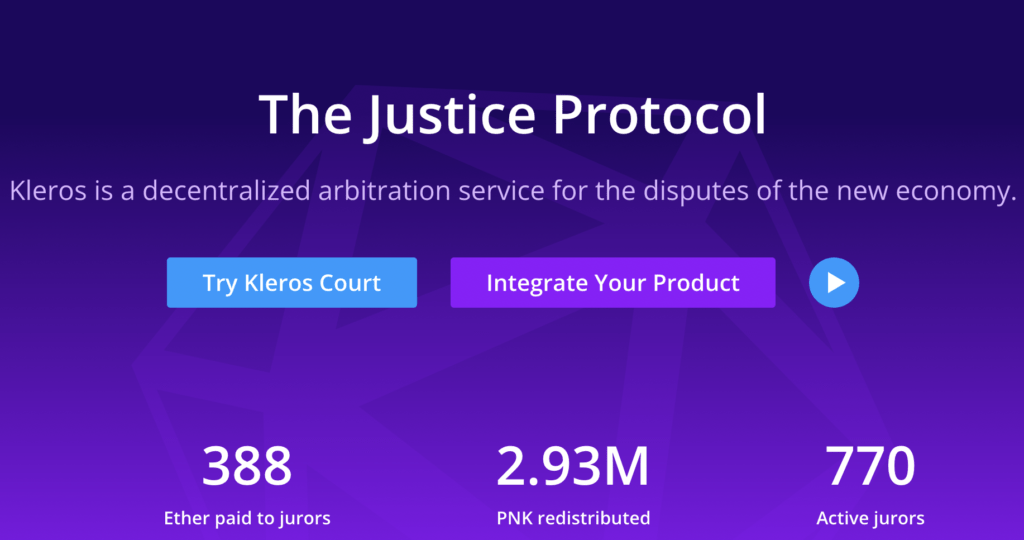
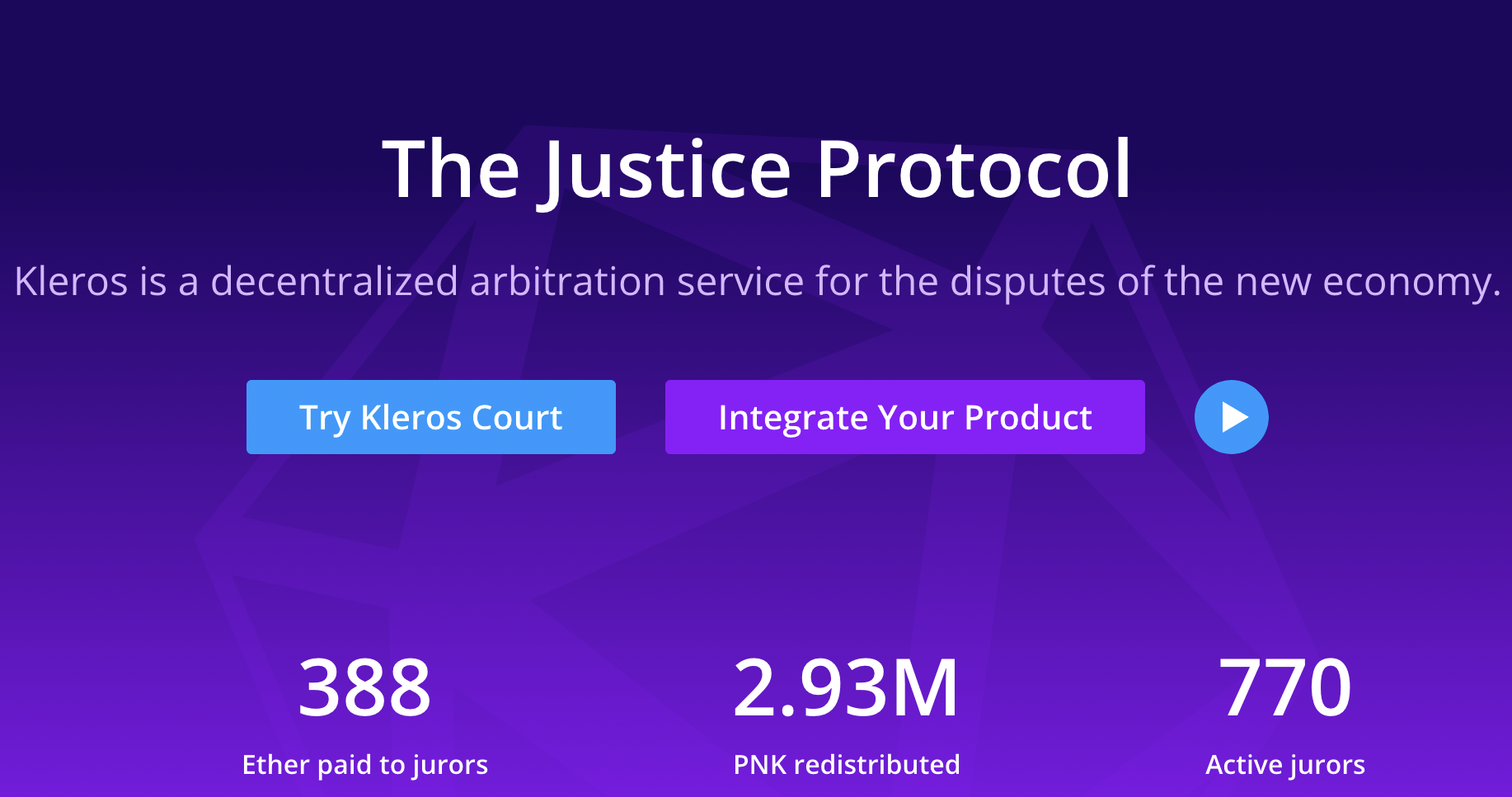
One startup in this space is Kleros, an Ethereum-based decentralized dispute resolution protocol that can be used on smart contract platforms. Kleros selects
a group of “jurors” that decide on a dispute, like contract breaches
between freelancers and companies or a conflict of interest within a
DAO. The whole process — including the final decision — is recorded on a
blockchain, and jurors receive the PNK token as a reward for their
service.
Source: Kleros
Aside from online contexts, Kleros has been used in a
real-world setting for arbitration on a tenant-landlord dispute. The
court in Mexico, where the dispute took place, recognized and enforced
the arbitral award recommended by the jurors on Kleros.
Social media
Some of today’s popular social networking platforms have begun evolving to maintain relevance in Web3. For example, Reddit is reportedly testing tokenizing karma points,
so users who earn them can influence the Reddit sub-communities to
which they belong. There’s still centralization here, though, as Reddit
owns and controls the platform.
New decentralized networks are also emerging. Aether
is touted as a Web3 alternative to Reddit. Its communities are
open-source and self-governing, with the power to elect and impeach
moderators by voting. Users can also audit how the platform is moderated
and earn tokens through participation.
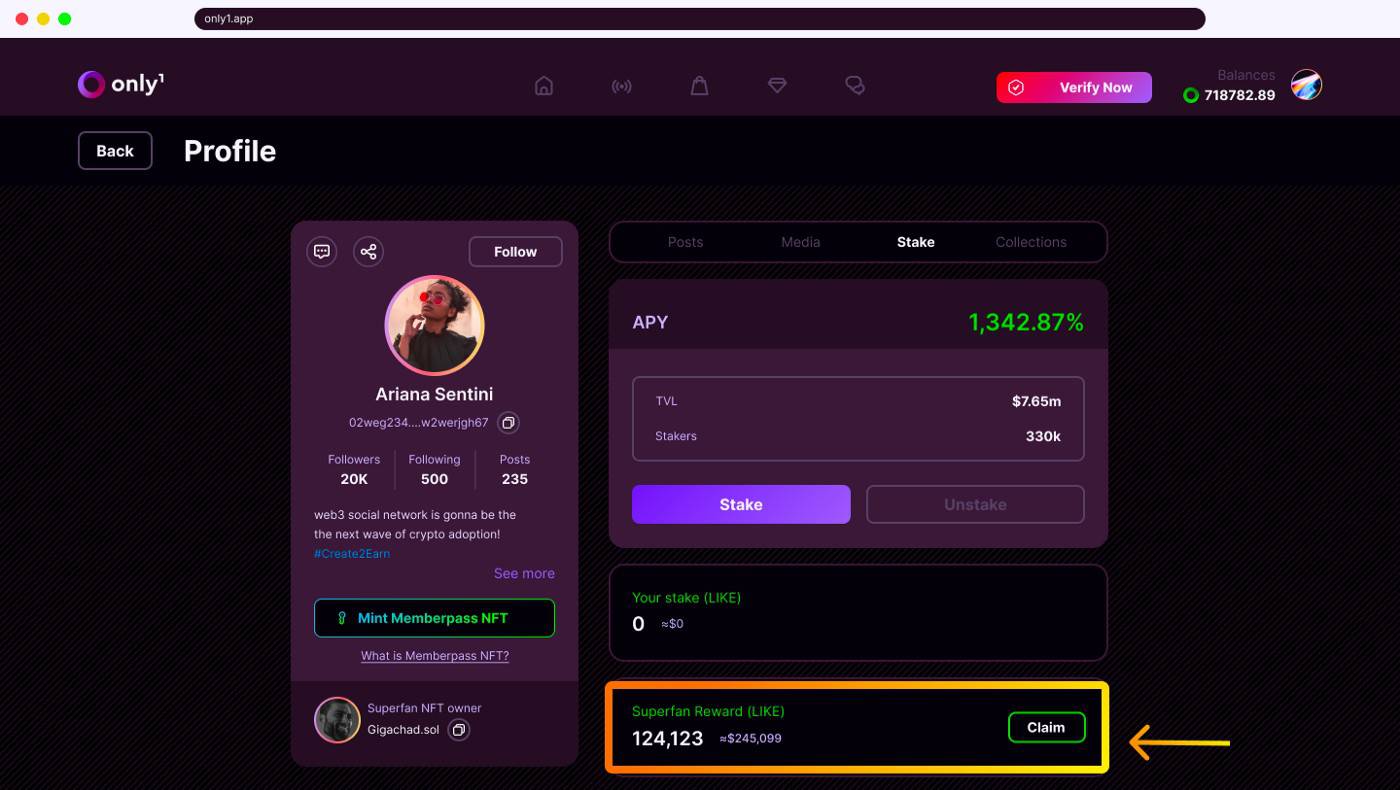
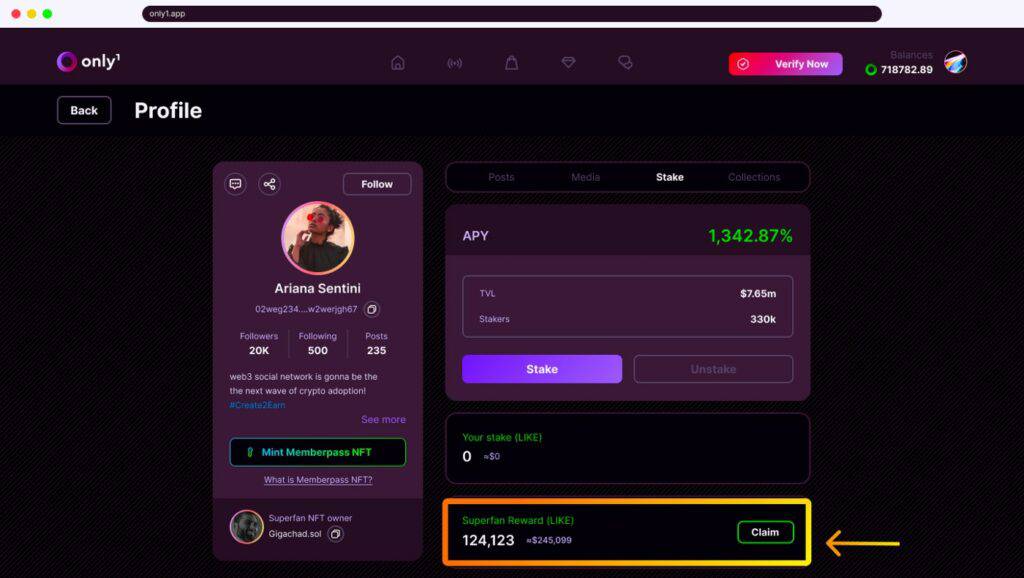
Other Web3 platforms are offering even more capabilities. Only1,
for instance, is an NFT-laden social media platform with a range of
features, including user profiles, superfan NFTs, a messenger service,
an NFT marketplace, and more. Creators can create NFTs that enable their
fans to access exclusive text, images, and videos.
Source: Only1
GET THE LIST OF BLOCKCHAIN 50 COMPANIES
The Blockchain 50 is our annual ranking of the 50 most promising companies within the blockchain ecosystem.
What are the challenges facing Web3?
Web3 is a digital Wild West
One of the primary risks associated with Web3 is the lack of regulatory oversight and rampant cybercrime. Because Web3 is blockchain-based, transactions are easier to keep anonymous. This can help protect users’ privacy but it also makes it more difficult to trace cybercrime culprits — while making it easier for them to sell ill-gotten assets.
Billions of dollars in cryptocurrency have already been stolen
this year. From January to April alone, $1.7B worth of cryptocurrency
was stolen — and 97% of those hacks took place on DeFi protocols,
according to Chainanalysis.
The majority of DeFi protocol hacks that took place from June 2020 to
June 2021 were made possible due to vulnerabilities overlooked by
developers, according to Cointelegraph. In a culture that prioritizes rapid project deployment, smart contracts can be shipped with critical vulnerabilities. These
contracts are typically open-source and public, so it’s easy enough for
hackers to scrutinize them for ways to manipulate a protocol. Instead
of targeting numerous victims through common email-focused methods like
phishing scams, hackers can attack the protocols directly to extract
cash.
DAOs are vulnerable to abuse and centralized control
Similar concerns around oversight and security surround DAOs.
DAO proponents say their structure promotes democracy and transparency
in decision-making, while critics say it is more akin to a pyramid
scheme that can concentrate power in just a few participants while
extracting wealth from unsuspecting members. Notorious DAO implosions
and the subsequent loss of millions of dollars have not helped boost
their reputation.
A famous attack on The DAO, which was a crowdfunding campaign launched in 2016, resulted in participants losing more than $50M worth of Ether. More recently, in October 2021,
just 20 hours after the launch of AnubisDAO, the $60M worth of ETH in
its liquidity pool vanished, only to reappear in a single crypto wallet.
Some investors accused the project’s creators of fraud, while others suspected a phishing scam.
Malicious attacks aside, one issue with DAOs is that
participants can buy more tokens to increase their influence over
decisions. This has resulted in a concentration of power in many DAOs.
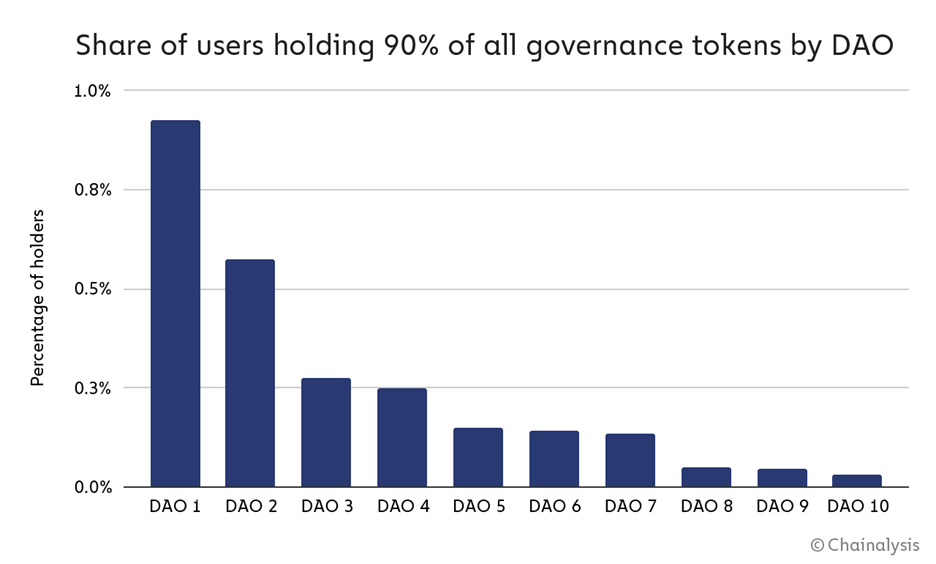
The governance token distribution of 10 major DAOs revealed that 90% of voting rights went to less than 1% of users, according to Chainalysis.
Source: Chainanalysis
The threshold for creating a proposal related to the DAO’s
governance is even higher. The same study found that only 1 in 1,000 to 1
in 10,000 of holders across the 10 DAOs have enough tokens to even
submit a proposal.
Gitcoin, a DAO-governed platform that crowdsources funding for Web3 projects, aims to work around this issue through quadratic funding,
where every additional token you put toward the same vote has less
value than the previous one. However, quadratic funding reduces but
doesn’t eliminate the possibility of decisions being controlled by a
single actor or by a few coordinated actors.
Total decentralization is difficult to implement — and could leave Web3 on shaky ground
Even if complete decentralization of the internet can be achieved, it would come with significant logistical issues.
For example, because of its consensus mechanism, blockchain is pretty slow. Ethereum currently supports only 30 transactions per second — though upcoming upgrades aim to increase this significantly.
Using the blockchain can also be expensive. As of March 2022, the average cost for running a transaction on Ethereum
(also known as a “gas fee”) was $15. In 2021, the mean cost often
reached $50, while some complicated transactions reached prices of more
than $200.
Further, it’s cumbersome for crypto wallets, mobile platforms,
and dApps to interact directly with blockchains themselves, so they
often don’t. Instead, they rely on APIs built and controlled by a
handful of companies. But these workarounds increase the surface area
for potential cyberattacks, can become points of failure, and typically
involve handing power to third parties — working directly against the
lofty aims of a “trustless” internet.
Cryptocurrencies still face formidable hurdles
Since crypto tokens are integral to dApps and DAOs, Web3 is vulnerable to the weaknesses of cryptocurrencies. As the May 2022 crypto crash revealed, it doesn’t take much to send the crypto sphere into freefall.
It started with the de-pegging of UST, Terra’s algorithmic stablecoin, from the US dollar. The value of Luna, UST’s sister coin, plummeted to $0. Amid
factors like a stock market downturn, rising inflation, and increased
regulatory scrutiny, confidence in the crypto market shattered — also
weakening assertions that cryptocurrencies provide a natural hedge
against broader market turmoil. Within a single day, the entire crypto
market lost over $200B. The price of bitcoin fell to a 16-month low.
Cryptocurrencies tied to utility tokens saw their values
plummet as a result of the crash. Within a month of the depeg, the price
of Filecoin and Solana fell by almost 50%, while Ether dropped from more than $2,700 to about $1,900 —
and they are currently continuing to fall. For dApp builders and users,
this means receiving less value for their contributions.
Bitcoin also continues to suffer. Some analysts predict
that the coin will hit a market bottom either at the end of 2022 or the
beginning of 2023. As the crypto crash continued in June, crypto
exchanges Coinbase, Gemini, BlockFi, and Crypto.com laid off a significant proportion of their employees, while lending platform Celsius even paused all withdrawals and transfers.
.jpg)

.jpg)
.jpg)
.jpg)
.jpg)


.jpg)



.jpg)
.jpg)


.jpg)