An ominous measure that the Federal Reserve considers a near surefire
recession signal again has reared its head in the bond market.
The reason the move is considered a recession indicator is the
expectation that the Fed will cut short-term rates in response to an
economic retreat in the future.
The Federal Reserve’s favorite recession indicator is flashing a danger sign again
The 10-year Treasury yield passed below that of
the 3-month note in trading Wednesday. In market lingo, that’s known as
an “inverted yield curve,” and it’s had a sterling prediction record
over a 12- to 18-month timeframe for downturns going back decades.
In fact, the New York Fed considers it such a reliable indicator that it offers monthly updates on the relationship along with percentage odds on a recession occurring over the next 12 months.
At
the end of January, when the 10-year yield was about 0.31 percentage
point clear of the 3-month, the probability was just 23%. However, that
is almost certain to change as the relationship has shifted dramatically
in February. The reason the move is considered a recession indicator is
the expectation that the Fed will cut short-term rates in response to
an economic retreat in the future.
U.S. 10 Yr/3 M Spread
RT Quote | USD
-0.05-0.06 (-842.86%)
Last | 3:03 PM EST
10-year 3-month curve
“This
is what one would expect if investors are adopting a much more
risk-averse attitude set of behavior due to a growth scare, which one
periodically sees late in business cycles,” said Joseph Brusuelas, chief
economist at RSM. “It’s not clear yet whether it’s more noise or it’s a
signal that we’re going to see a more pronounced slowdown in economic
activity.”
Though markets more closely follow the relationship
between the 10- and 2-year notes, the Fed prefers measuring against the
3-month as it is more sensitive to movements in the central bank’s
federal funds rate. The 10-year/2-year spread has held modestly
positive, though it also has flattened considerably in recent weeks.
U.S. 2Yr/10Yr Spread
RT Quote | USD
0.18-0.02 (-10.40%)
Last | 3:04 PM EST
10-year 2-year yield curve
To
be sure, yield curve inversions have had a strong but not perfect
forecasting history. In fact, the previous inversion happened in October
2022, and there’s still been no recession 2½ years later.
So
while there’s no certainty that growth will turn negative this time
around, investors worry that expected growth from an ambitious agenda
under President Donald Trump may not happen.
Economic obstacles arising
The 10-year yield soared following the Nov. 5, 2024, presidential election, building on gains that began
when Trump moved higher in the polls in September and peaking about a
week before the Jan. 20 inauguration. That would normally be a telltale
sign of investors expecting more growth, though some market pros saw it
also as an expression of worries over inflation and the extra yield
investors were demanding from government paper amid a mounting debt and
deficit issue for the U.S.
Since Trump took office last month,
yields have tumbled. The 10-year has fallen about 32 basis points, or
0.32 percentage point, since the inauguration as investors worry that
Trump’s tariff-focused trade agenda could spike inflation and slow
growth. The benchmark yield is now essentially unchanged from Election
Day.
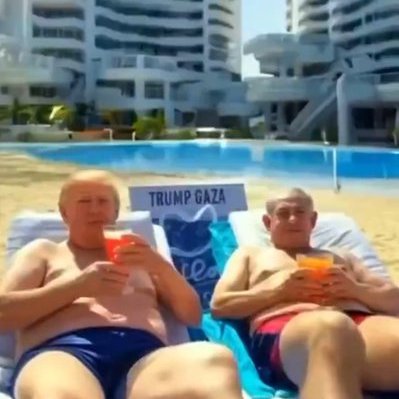
Social media reacted angrily after Donald Trump on Wednesday shared an AI-generated video depicting his vision for the future of the Gaza Strip.
The 33-second video, which Trump shared on his social media platform Truth Social, opens with a scene of Gaza in ruins, displaying the inscription "Gaza 2025" in green, followed by "What's next?" in red, white, an
The video then showcases towering skyscrapers and children gazing upward as dollar bills fall from the sky.
Tech billionaire Elon Musk is seen enjoying hummus on a beach in the newly-developed tourist destination, and a young boy is seen holding a golden balloon featuring Trump’s face.
The video also features Trump dancing in a nightclub, while the entrance to a skyscraper prominently displays the inscription "Trump Gaza." A massive golden statue of Trump is also showcased.
Israeli Prime Minister Benjamin Netanyahu appears lounging on a deck chair beside Trump, both sipping beverages near a swimming pool, with "Trump Gaza" visible in the background.
In the background, a song can be heard playing with lyrics, "Donald's coming to set you free, bringing the light for all to see, no more tunnels, no more fear, Trump Gaza is finally here, Trump Gaza's shining bright, golden future, a brand new light, feast and dance, the deal is done, Trump Gaza number one."
U.N. Special Rapporteur on Palestinian human rights Francesca Albanese condemned the video as "absurd" on X social media.
"What the new US Administration is doing is very clear and strategic: it is called psychological overwhelming. Hitting us every day with XXL doses of baffling rhetoric and erratic policies serves to "control the script," distracting and dishorienting (sic) us, normalising the absurd, all while disrupting global stability (and consolidating US control)," she wrote.
Secretary General of Amnesty International Agnes Callamard only wrote: "No words indeed. beyond indecency."
Prominent Palestinian rights activist Sarah Wilkinson wrote: "This from Trump’s own account: ethnic cleansing, white supremacy & the theft of Gaza turned into a real estate ad: it’s evil personified: it’s anti-God."
"Gaza full of skyscrapers & children catching dollars falling from the sky – a gift from “God Trump” & a sick video that isnt manifesting enough outrage," she said.
"If all legal experts can do is warn that Trump’s ethnic cleansing breaks int’l law & might destabilise the region, then the whole putrid world is doomed," she added.
The U.S. president has repeatedly called for the U.S. to "take over" Gaza, destroyed by Israel's relentless bombardment, and resettle its population to redevelop the enclave into "the Riviera of the Middle East."
The idea has been vehemently rejected by the Arab world and other nations, who say it amounts to ethnic cleansing.
Bearded Belly Dancers And Gold Statue of Himself...
Trump says Zelensky to visit White House after Ukraine 'agrees minerals deal with US'
Trump says minerals deal gives Ukraine 'right to fight on'
Published at 22:37 25 February
Without confirming an agreement had been reached, Trump says he
expects Zelensky to sign a minerals deal during a visit to Washington this
week, saying that in return, Ukraine would get the "right to fight
on".
"Without the United States and its money and its military
equipment, this war would have been over in a very short period of time",
Trump said on Tuesday, adding that there would be a need for "some form of
peacekeeping" in Ukraine following a peace deal.
Trump said he has been pushing for access to Ukraine's mineral
deposits in return for the military aid the US has given to the country.
"We want to get that money back," he said.
Quote Message
We're
helping the country through a very, very big problem... but the
American taxpayer now is going to get their money back plus."
Editor's Note: This is a developing story and is being updated.
An agreement between Kyiv and Washington regarding Ukraine's critical
minerals and natural resources will grant Ukraine "military equipment
and the right to fight on," U.S. President Donald Trump said on Feb. 25.
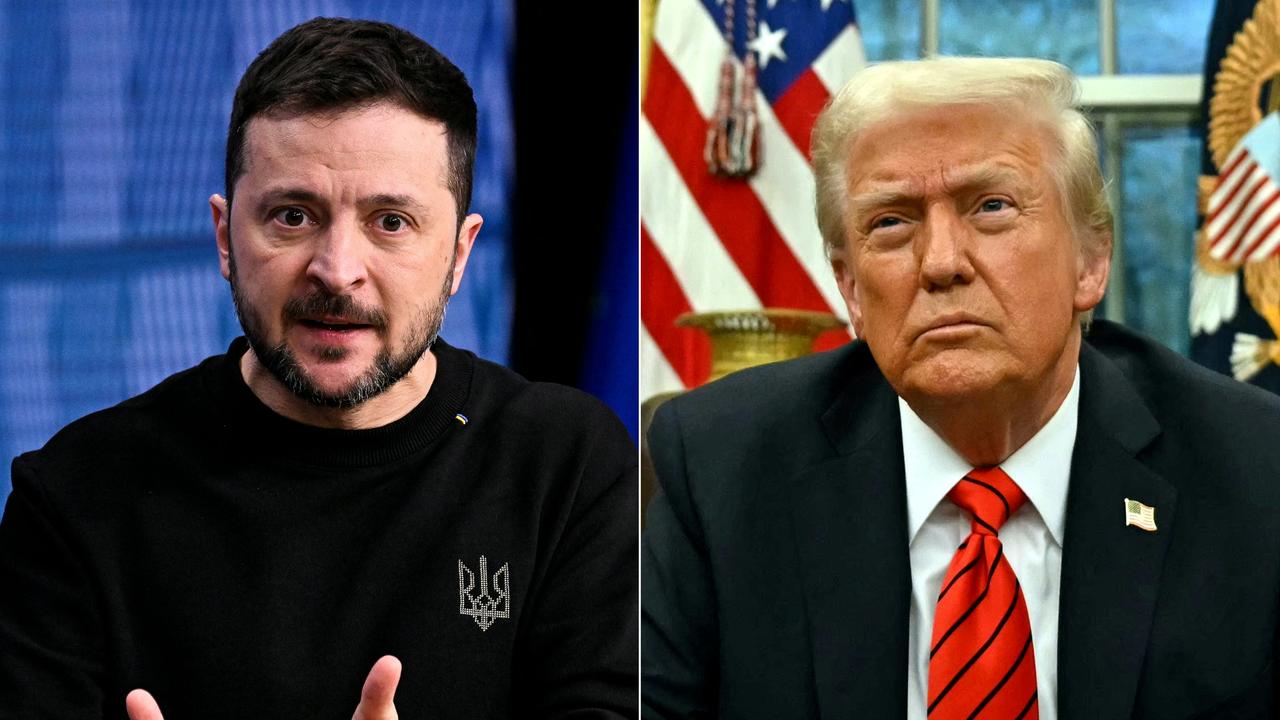
President Volodymyr Zelensky's office confirmed on Feb. 25 that the U.S. and Ukraine had reached an agreement regarding Ukraine's critical minerals after an intense period of negotiations.
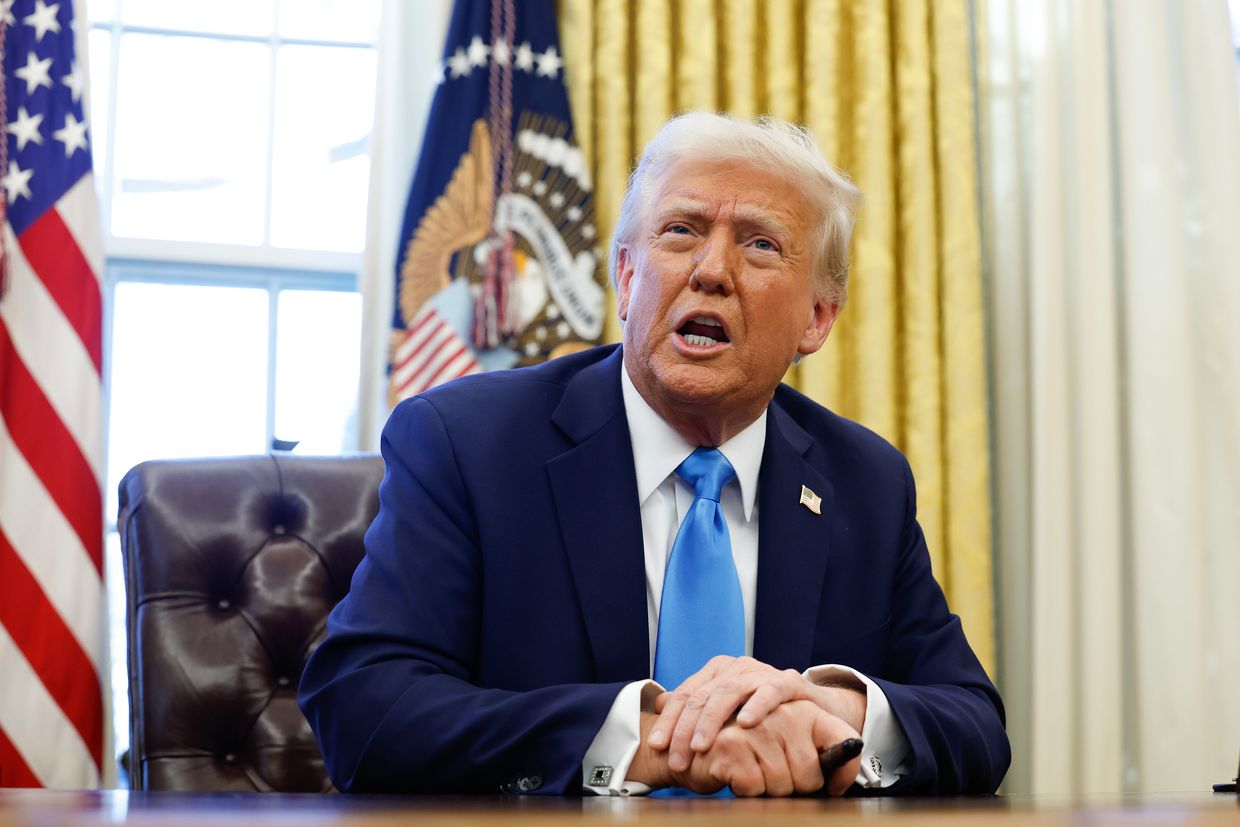
Speaking to reporters from the Oval Office of the White House, Trump said that the agreement gave Ukraine billions of dollars in aid and "lots of equipment."
The deal gives Ukraine "military equipment and the right to fight on, and originally, the right to fight," Trump said.
It
was unclear whether Trump was referring to previous or future military
aid packages to Ukraine.
When asked about the sustainability of
continued weapons and ammunition deliveries to Ukraine, Trump said
shipments could "go forward for awhile, maybe until we have a deal with
Russia."
Trump also said that Zelensky would visit the White House on Feb. 28 to sign the deal.
The
finalized agreement, dated Feb. 24, reportedly offers Kyiv no security
guarantees in exchange for 50% of revenues from the "future
monetization" of Ukraine's state-owned mineral resources.
The White House has said that the agreement is necessary in order for the U.S. to "recoup" the funds it has granted to Ukraine in aid packages over the past three years of Russia's full-scale war.
"Ukraine,
I will say they're very brave, and they're good soldiers, but without
the United States and its money and its military equipment, this war
would have been over in a very short time," Trump said.
Trump also said he was open to striking a deal on critical minerals with Russia.
Trump denied having spoken to Russian President Vladimir Putin regarding U.S. access to critical minerals in Russian-occupied Ukrainian lands.
Putin
on Feb. 24 — the third anniversary of Russia's full-scale invasion of
Ukraine — said that Moscow was open to working with foreign partners on
developing rare earth metal deposits, including in occupied regions of Ukraine.
Summary
Donald Trump says he expects Volodymyr Zelensky in Washington on Friday to sign a minerals deal after a senior Ukrainian official says an agreement has been reached
Media
reports say a revised version of the document appears to have dropped a
US demand to get $500bn (£395bn) in potential revenue from accessing
Ukrainian natural resources
However it reportedly does not give firm security guarantees to war-torn Ukraine - a key Ukrainian demand
Against
a hostile backdrop where Washington has aligned with Moscow, it is
hoped this agreement will pave the way for more co-operation between
Kyiv and its once biggest ally, writes James Waterhouse
The
US president has been pushing for access to Ukraine's minerals in
return for previous military and other aid to the country since Russia
launched a full-scale invasion three years ago
Live Reporting
Edited by Nathan Williams
Hard power is more important than soft power, says UK defence secretarypublished at 00:43
00:43
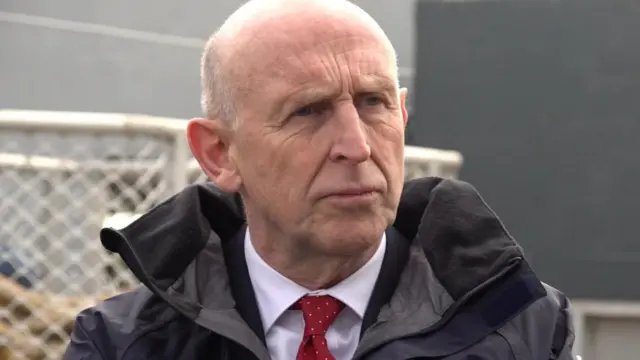
More now from UK Defence Secretary John Healey, who says that
the world has changed and they have had to take difficult decisions "that
require us to recognise hard power is more important than soft power".
He's referring to the UK government's announcement yesterday
that it would cut its foreign aid budget to fund a military boost - a move that
has been met with criticism from humanitarian organisations.
Speaking to BBC Radio 4's Today programme, Healey says the UK's
priority is to "deter conflicts that cause the biggest impact on many of
the poorest countries", but adds that "even in 2027... Britain will
still be spending £9bn" on aid.
He says the UK will continue to support the world's poorest and
most conflict-ridden countries.
Trump has 'accelerated' UK spending announcement, former defence chief sayspublished at 00:36
00:36
Former chief of defence staff, Lord Richards says the
conversation on defence spending "almost certainly would not" be
happening if not for Trump.
He says it is "excellent" that Defence Secretary John
Healy is a "very enthusiastic, forward-thinking, strategically-minded
person", who has been "pressing" for it to happen.
He tells BBC Radio 4's Today programme that the increase in
spending was going to happen, and has just been "accelerated" by
Trump's actions.
Talking about resources, he says the entire British Army has
"less artillery pieces" than he did had in his one brigade in the
90s, while the Navy similarly faces reduced supplies. If Britain were called on
to send troops, he says they would be able to send "very little".
He adds that it is unsustainable to send troops to Ukraine as
peacekeepers as they would need to be rotated out, and the "army isn't big
enough" to do that for a long period of time, explaining that European
troops stationed there would need to be able to "robustly defend
themselves" against Russia, who he says will "test them".
UK defence secretary says budget boost has been welcomed in Washingtonpublished at 00:10
00:10
Image source, PA Media
We've heard from Defence Secretary John Healey who says he has
spoken to his Ukrainian and US counterparts, and adds that Pete Hegseth, the US
defence secretary, has welcomed the UK's "strong step" in increasing
its defence budget to 2.5% of GDP by 2027.
Asked about the timing of the announcement ahead of Starmer's
trip to Washington, Healey tells BBC Breakfast that the Donald Trump's stance has
reinforced the importance of European nations demonstrating their willingness
to step up on defence spending.
Repeating lines from Starmer's speech in
Parliament yesterday, Healey says this is the "biggest increase in defence
spending since the end of the Cold War".
He says this is something European nations have "rehearsed,
but failed to act on", and that it's time to do more to strengthen Nato
and support Ukraine.
Deal seems to be about 'keeping Trump happy', says former Swedish PMpublished at 23:56 25 February
23:56 25 February
Carl
Bildt, the former Swedish prime minister and co-chair of the European
council on foreign relations, says the mineral deal between Ukraine and
the US seems like a "sideshow of limited relevance".
Speaking
on BBC World Service's Newsday programme, he says that the relevance
appears to be to "keep Mr Trump happy... but it is not going to give a
lot of money to the US, and I don't see it having any materially
economic effect for very many years."
He
gives the example of opening up new mines, which require a "lot of
capital", and would only drum up revenue "years into the future".
The deal, he says, is "more geared to the psychology of the US president than to the realities of the situation in Ukraine".
No point of any deal if Russians can reinvade a month later - Ukrainian officialpublished at 23:41 25 February
23:41 25 February
Here's
a bit more from Yuri Sak, who says the deal is not exactly what the US
or Ukraine had wanted, but is "good enough for both for the negotiating
process to move forward".
"Many things we didn't like were dropped," he says, adding that discussions about security guarantees need to continue.
"There's no point in signing any deal on critical minerals if Russians can reinvade one month after signing the deal," he says.
As a reminder, US media reports suggest that Washington has not given firm security guarantees to Ukraine as part of the deal.
Minerals deal initially Ukraine's idea, says Ukrainian official
Ukraine's Deputy Prime Minister
Olha Stefanishyna has led the negotiations between the US and Ukraine on this
mineral deal.
published at 23:38 25 February
We've
just heard from Yuri Sak, adviser to Ukraine's ministry of strategic
industries, who has been speaking to BBC Radio 4's Today programme.
Sak
says that a minerals deal was initially Ukraine's idea: "We included it
in our victory plan earlier, which was presented by our president to
the US and the rest of our partners in 2024."
Asked
how he views the shift to a more transactional relationship between the
US and Ukraine, Sak says "we are staying pragmatic".
Quote Message
Very
soon we'll get used to the very unusual nature of this negotiating
process. At the same time, we are not a nation of freeloaders, we
understand that this war has lasted for three years and the time has
come to switch to a slightly different narrative."
Deal is 'only part of the picture' - Ukraine's deputy PM
published at 23:02 25 February 23:02 25 February
Image source, EPA
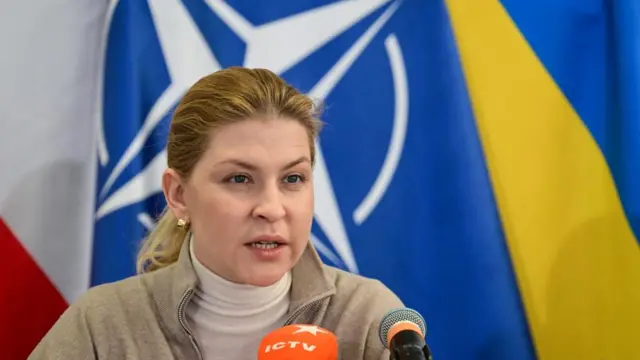
Ukraine's Deputy Prime Minister
Olha Stefanishyna has led the negotiations between the US and Ukraine on this
mineral deal.
Speaking to the Financial Times
yesterday, Stefanishyna said that the deal is "only part of the
picture".
"We have heard multiple
times from the US administration that it's part of a bigger picture," she
said.
We're still waiting to hear more
about the details of the deal, but media reports suggest the US has dropped
initial demands for a right to $500bn (£395bn) in potential revenue from using Ukraine's
natural resources, but has not given firm security guarantees to Ukraine.
And US President Donald Trump
says he's expecting his Ukrainian counterpart Volodymyr Zelensky in Washington
to sign the deal this week.


 -0.06 (-842.86%)