
Less than six weeks ahead of a likely summit between US President Donald Trump and Chinese leader Xi Jinping, preparations are inadequate, bilateral contacts anaemic and outcomes diminished, according to analysts and former government officials familiar with planning.
“On 28 February 2026, the US and Israel commenced joint military action in Iran, Israeli airspace has now closed.”
British nationals in the region are urged to take “sensible precautions”, including following advice from regional authorities, staying away from military facilities and ensuring travel documents are up to date.
All three giant Middle East hubs close down, disrupting plans for hundreds of thousands of travellers

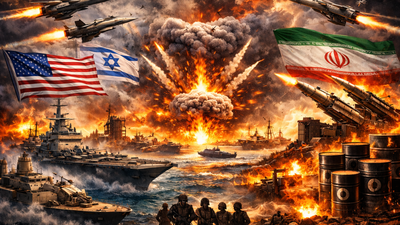
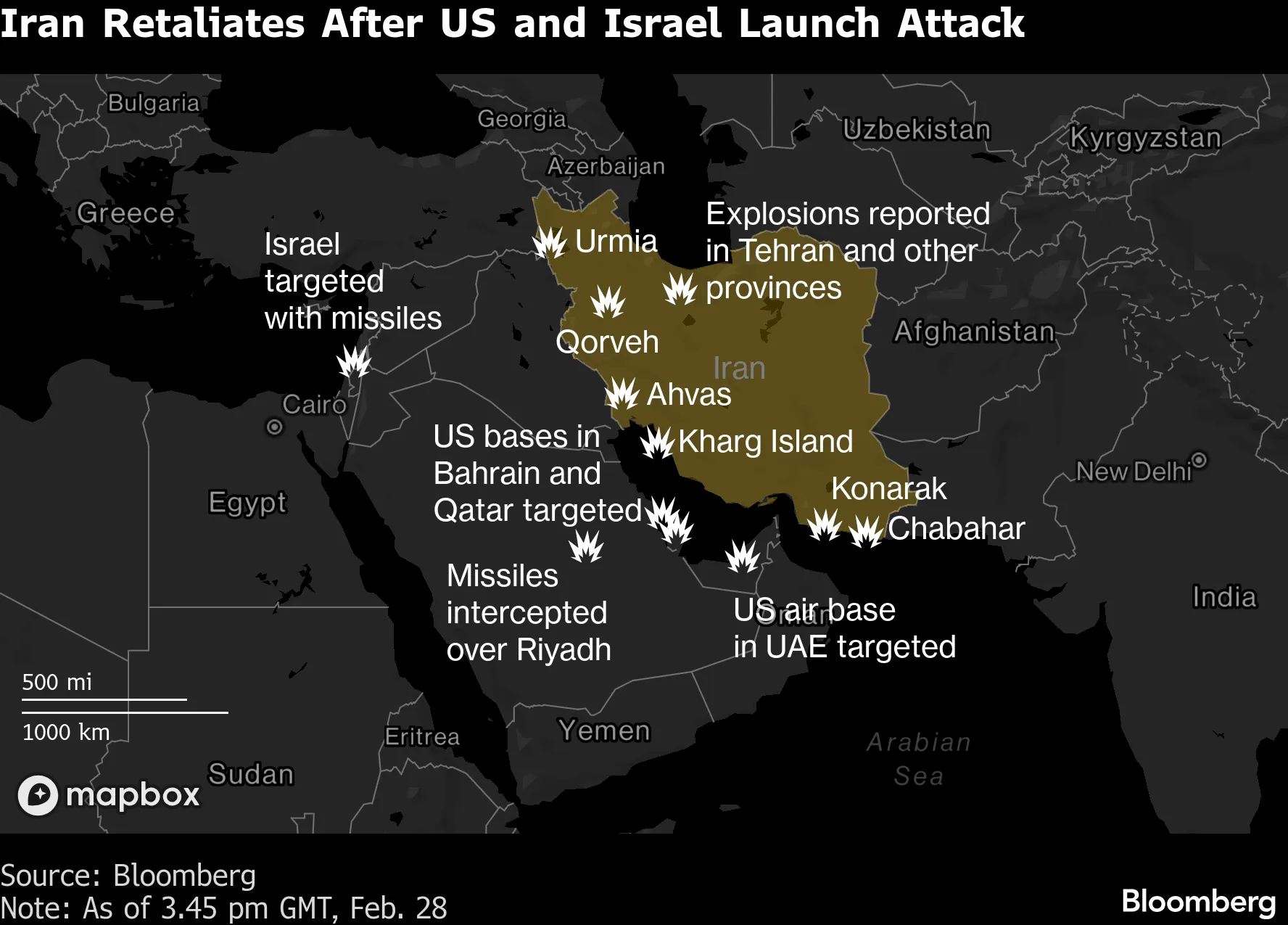

Images and videos posted on social media following the joint United States–Israeli strikes on Iran on 28 February 2026 appear to show debris from Israeli Blue Sparrow–series missile boosters in Iraq, as well as Israeli Air Force F-15 fighter jets taking off at night for strike missions. These elements suggest the possible use of air-launched ballistic missiles in the opening waves of the operation. However, Israeli authorities have so far not publicly detailed the weapons employed, and the identification of the missiles remains based on open-source analysis of debris and flight footage rather than on official confirmation. In the absence of formal confirmation from Israeli or US authorities regarding the munitions used, the discussion centers on the documented characteristics of the Blue Sparrow system and its integration on F-15 aircraft, while treating current imagery as indicative but not conclusive evidence of operational use. Read Full Defense News At This Link.
 | ||
Open-source imagery from the 28 February 2026 US and Israeli strikes on Iran suggests Israel may have employed Blue Sparrow air-launched ballistic missiles in the operation’s opening phase, though officials have not confirmed the weapon used (Picture Source: Israeli Ministry of Defense / Social Media)
Iran’s missile arsenal now stands at the center of the confrontation unfolding under Operation Epic Fury, with U.S. bases, allied facilities, maritime chokepoints, and regional capitals falling within layered strike envelopes. Tehran fields one of the region’s most diversified inventories, including short- and medium-range ballistic missiles, land-attack cruise missiles, anti-ship systems, heavy artillery rockets, and space launch vehicles with dual-use technological implications. Military analysts note that under sustained combat conditions, the decisive variables extend beyond raw missile counts to include the survivability of mobile launchers, hardened storage sites, reload capacity, command-and-control resilience, and the ability to orchestrate coordinated salvos capable of stressing or saturating regional air and missile defense networks. Read full Defense News at this link …
Read More
|