Thursday, April 20, 2023

American Lung Association: Phoenix ranks 5th in nation for ozone pollution in new report

 “The transportation sector is the leading contributor to carbon pollution, and it’s our responsibility to address this problem head-on,” . .“It is striking and distressing that 120 million people are still at risk from unhealthy air pollution, said Katherine Pruitt, lead author and the ALA’s national senior policy director. “Since around 2017, heat and drought driven by climate change has been undoing some of the progress that we should have made and been able to retain.”

www.citysuntimes.com

American Lung Association: Phoenix ranks 5th in nation for ozone pollution in new report
CITYSunTimes
13 - 17 minutes

  1. Local News

Air pollution

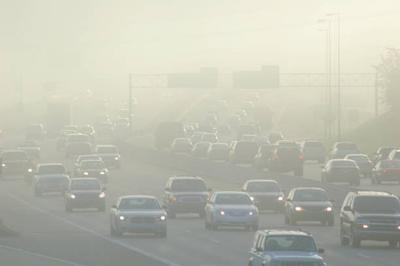
Phoenix has been named one of the top five worst cities in the nation for ozone pollution, according to the American Lung Association’s 2023 “State of the Air” report, which was released today. 

 Nationally, the report found that nearly 120 million people, or more than one in three, in the U.S. live in counties that had unhealthy levels of ozone or particle pollution.

The Lung Association’s 24th annual “State of the Air” report grades Americans’ exposure to unhealthy levels of ground-level ozone air pollution, annual particle pollution and short-term spikes in particle pollution over a three-year period. This year’s report covers 2019-2021.

“As we can see from this year’s report data, there is much work to be done in Phoenix to improve our air quality,” said JoAnna Strother, senior advocacy director for the Lung Association. “Even one poor air quality day is one too many for our residents at highest risk, such as children, older adults, those who are pregnant and those living with chronic disease. That’s why we are calling on lawmakers at the local, state and federal levels to take action to ensure that everyone has clean air to breathe.”

Nationally, the report found that ozone pollution has generally improved across the nation, thanks in large part to the success of the Clean Air Act. However, more work remains to fully clean up harmful pollution, and short-term particle pollution continues to get worse.

In addition, some communities bear a greater burden of air pollution. Out of the nearly 120 million people who live in areas with unhealthy air quality, a disproportionate number – more than 64 million (54%) – are people of color. In fact, people of color were 64% more likely than white people to live in a county with a failing grade for at least one measure, and 3.7 times as likely to live in a county with failing grades for all three measures.

Ground-level ozone pollution across Arizona

Compared to the 2022 report, Phoenix experienced more unhealthy days of high ozone in this year’s report. “State of the Air” ranked Phoenix as the No. 5 most polluted city for ozone pollution, which is the same compared to its ranking in last year’s report. 

Maricopa County received an “F” grade for ozone pollution.

Tucson-Nogales experienced fewer unhealthy days of high ozone and saw a slightly better ranking moving from No. 41 in last year’s report to No. 40 in “State of the Air” 2023.

Flagstaff saw zero unhealthy days earning a spot on the cleanest cities list.

Particle pollution across Arizona

The report also tracked short-term spikes in particle pollution, which can be extremely dangerous and even deadly. Phoenix’s short-term particle pollution improved in this year’s report, which means there were fewer unhealthy days. The area is ranked No. 13 worst for short-term particle pollution which is better than No. 11 in last year’s report. Maricopa County received an “F” grade for short-term particle pollution.

The 2023 “State of the Air” found that year-round particle pollution levels in Phoenix were higher than in last year’s report. The area is ranked No. 7 most polluted for year-round particle pollution, worse than the ranking of No. 8 last year.

Tucson-Nogales’s short-term particle pollution stayed the same seeing the same number of days but an improved ranking to No. 42, up from No. 38 in last year’s report. The 2023 “State of the Air” found that year-round particle pollution levels in Tucson-Nogales was higher than in last year’s report. The area is ranked No. 30 most polluted for year-round particle pollution, worse than the ranking of No. 44 last year.

The American Lung Association is calling on President Joe Biden to urgently move forward on several measures to clean up air pollution nationwide, including new pollution limits on ozone and particle pollution and new measures to clean up power plants and vehicles. See the full report results and sign the petition at Lung.org/SOTA." 

READ MORE


.
weather.com

The Weather Channel

The Weather Channel
4 - 5 minutes

Almost Everyone Is Breathing In Harmful Air Pollution

"A new study finds dangerous air pollution is being breathed in by nearly everyone on the planet at harmful levels.

  • Over one in three people in the U.S. live in counties that had unhealthy levels of ozone or particle pollution.
  • More than 64 million, or 54%, of the people who live in areas with unhealthy air quality are people of color.
  • Western states fare worse than Eastern states.

Nearly 120 million people in the United States — or more than one in every three — are exposed to unhealthy levels of air pollution, according to an annual report from the American Lung Association.

Many studies have shown that exposure to ozone, or smog, and fine particle pollution, or soot, increases the risk of premature birth, causes or worsens lung and heart disease and shortens lives.

The burden is not shared equally. More than 64 million, or 54%, of the people who live in areas with unhealthy air quality are people of color, according to the 2023 State of the Air report.

(MORE: Air Pollution May Be Worse Than Thought)

The report grades Americans’ exposure to unhealthy levels of ground-level ozone air pollution, annual particle pollution and short-term spikes in particle pollution over a three-year period in cities and counties. This year’s report covers 2019-21.

It said overall air quality across the U.S. had improved.

“The good news is that ozone pollution has generally improved across the nation, thanks in large part to the success of the Clean Air Act. In this year’s ‘State of the Air’ report, we found that 19.3 million fewer people are living in areas with unhealthy levels of ozone pollution, also known as smog,” Harold Wimmer, national president and CEO of the American Lung Association, said in a news release.

(IN YOUR HOME: Tips To Improve Your Air Quality Indoors)

Western states fare worse than Eastern states. More than 18 million residents in Western states live in counties with three failing grades, and the worst 25 counties for short-term particle pollution were all in the West.

Ten of those counties were in California, which saw more than 9,000 wildfires in 2021. Smoke from wildfires is a major source of tiny particulate matter pollution called PM2.5.

In addition to fueling wildfires, climate change is leading to higher temperatures that are generally associated with higher ozone levels. The smog it produces is a powerful lung irritant that can lead to inflammation, trigger asthma attacks and cause other significant health problems.

(ANOTHER RISK: Air Pollution May Increase Risk Of Dementia, Analysis Finds)aww

Ten of the 25 most ozone-polluted cities are also in California.

The top four are Los Angeles-Long Beach, Visalia, Bakersfield and Fresno-Madera-Hanford. Phoenix-Mesa, Arizona, is No. 5.

Seven cities rank on all three cleanest cities lists for particle pollution and ozone. They had zero days high in particle pollution or ozone and are among the 25 cities with the lowest year-round particle levels.

Alphabetically, they are: Asheville-Marion-Brevard, North Carolina; Bangor, Maine; Greenville-Kinston-Washington, North Carolina; Lincoln-Beatrice, Nebraska; Rochester-Batavia-Seneca Falls, New York; Urban Honolulu, Hawaii; and Wilmington, North Carolina."

The Weather Company’s primary journalistic mission is to report on breaking weather news, the environment and the importance of science to our lives. This story does not necessarily represent the position of our parent company, IBM.

www.theguardian.com

Nearly 120 million people in US exposed to unhealthy levels of soot and smog – report

Nina Lakhani
5 - 7 minutes

The climate crisis has upended progress on improving air quality, with one in three Americans currently living in areas with harmful levels of pollutants known to increase the risk of medical emergencies, pregnancy complications and premature death, new research reveals.

Almost 120 million people in the US are still exposed to unhealthy levels of soot and smog, according to the annual report by the American Lung Association (ALA), which found that people of color are almost four times more likely to live in the most polluted places than white Americans.

The extent to which access to clean air is racialized is stark; people of color account for 54% of those living in counties with failing air quality, despite accounting for just over 40% of the general population.

The zip code lottery spotlights decades of racist housing and environmental policies, which have incentivized and enabled polluting infrastructure like highways and railroads, fossil fuelQ projects and manufacturing plants to be located close to Black, Latin and Indigenous communities.

And despite overall improvements in air quality and pollution-related deaths over the past 50 years, the report also highlights a widening disparity between air quality in eastern and western states, especially for soot particles – scientifically known as fine particulate matter or PM2.5.

Ten of the 11 most polluted counties are in California where the climate breakdown is fueling wildfires and rising temperatures that are undermining efforts to improve air quality in places like Fresno, San Bernardino, Tulare and Los Angeles.

“It is striking and distressing that 120 million people are still at risk from unhealthy air pollution, said Katherine Pruitt, lead author and the ALA’s national senior policy director. “Since around 2017, heat and drought driven by climate change has been undoing some of the progress that we should have made and been able to retain.”


The US Environmental Protection Agency (EPA) was mandated by the 1970 Clean Air Act to set health-based limits for six toxins: fine particulate matter, ozone, nitrogen oxides, sulfur dioxide, carbon monoxide and lead. 

Since then, overall emissions have fallen by 78%, according to the EPA, yet progress has stalled and poor air quality continues to cut tens of thousands of lives short in the US every year.

Globally, air pollution is responsible for almost 7m premature deaths annually, according to the World Health Organization.

The ALA’s 24th annual state of the air report uses data from 2019 to 2021 to grade city- and county-wide exposure to the most widespread air toxins – ozone, AKA smog, and PM2.5 or soot – using three measures: year-round levels and daily spikes of PM2.5 and ground-level ozone pollution. (Seventy-one million people live in counties which do not monitor air quality and so are excluded from the report.)

Overall, almost 64 million people lived in areas that experienced unhealthy daily spikes in PM2.5 pollution, the highest number in a decade.

Eight of the 10 worst performing counties for daily particle spikes were in California which in 2021 recorded almost 9,000 wildfires – a major source of these microscopic particles which are blown for miles and can trigger asthma attacks, heart attacks and strokes, as well as lung cancer. Other sources include fossil fuel-powered cars and trucks, power plants, wood-burning stoves and agricultural burns.

Pittsburgh and Lancaster in Pennsylvania are the two worst metro areas for daily PM2.5 spikes east of the Mississippi River. While several urban, industrialised eastern and midwestern states such as New Jersey, New York and Ohio which once dominated the ALA dirtiest air list, have cut emissions.

Ground ozone – or smog – is a potent respiratory irritant emitted by fossil fuel- powered vehicles, oil refineries and chemical plants, and can cause a sunburn type of effect on the lungs. Inhaling smog can cause breathlessness, coughing and asthma attacks, as well as cutting life expectancy. Higher temperatures driven by the climate breakdown facilitates the formation of ozone – and makes it harder to clean up.

Nationwide, 103 million people – including 24 million children – are exposed to unhealthy smog levels, a staggering number, yet almost 20% less than reported last year. 

Los Angeles is the country’s smoggiest city by a long way, but the top 10 also includes Phoenix, Denver, Houston and Salt Lake City.

There is hope of fighting back against the climate-fueled regression.

Despite little progress in curtailing fossil fuel extraction, incentives to electrify the transport system in the Inflation Reduction Act plus several proposals by the EPA to tighten the outdated smog and soot standards and mandate lower emissions from vehicles and power plants are in the works.

Pruitt said: “The current standards need to be stronger to protect public health. If the EPA acts to reduce community level exposure, that along with proposals for new regulations to reduce emissions could be hugely significant in cleaning up pollution sources and reducing health inequities.”

Meanwhile, the report ranks Wilmington, North Carolina; Bangor, Maine; Lincoln, Nebraska; Rochester, New York and Honolulu, Hawaii among the country’s cleanest cities.

Phoenix Vice Mayor Yassamin Ansari Joins Veterans and Public Health Professionals to Call for a New Round of Federal Clean Car Standards

February 16, 2023 12:00 AM
Phoenix, Arizona) — Arizona elected leaders, veterans, and health experts convened today to call on the U.S. Environmental Protection Agency (EPA) to introduce a new round of vehicle pollution limits to protect the health of Arizonans and save them money in the process.  
Phoenix Vice Mayor Yassamin Ansari joined Aaron Marquez of Arizona VetsFWD, JoAnna Strother of the American Lung Association, Jason Lowry of Local First Arizona and Dr. Ida Sami of Moms Clean Air Force for a virtual press conference. The local leaders called on the Biden Administration and Arizona’s federal elected officials to support a new round of stronger federal clean car standards for models years 2027 and beyond from the U.S. Environmental Protection Agency (EPA). They urged the EPA to move quickly and introduce the new draft standards this March.

“The transportation sector is the leading contributor to carbon pollution, and it’s our responsibility to address this problem head-on,” said Phoenix Vice Mayor Yassamin Ansari. “The Biden Administration and the EPA need to take action now to set stronger clean car standards that will drive investments in clean cars and zero pollution electric vehicles in Arizona. This is at the heart of what we’re already doing here in Phoenix and across the state - we know that we can boost job growth while protecting public health.”

Aaron Marquez of VetsFWD, a Major in the U.S. Army Reserve, highlighted the importance of these new standards for national security. “As veterans, we understand the importance of strengthening our energy independence and its wide implications for national security. Cleaner cars not only benefit our environment and public health, but they also reduce our economy’s dependence on foreign oil.” 

JoAnna Strother, Senior Director, Advocacy-Southwest, American Lung Association stressed the need for stronger clean car standards to improve public health. “The alarming reality is that more than 133,000 children and over 561,000 adults that suffer from asthma. [lung.org]​ This while Maricopa, Pima and Pinal Counties repeatedly receive failing grades for ozone pollution that exacerbates asthma and other cardiovascular diseases. We cannot wait any longer to address the problem of vehicle pollution, which is why we need these new, stronger safeguards for 2027 model years and beyond. Now is the time for action.”

Dr. Ida Sami, Director of Research and Impact at Community Lattice and an Field Coordinator of Mom’s Clean Air Force mentioned “The transportation sector is the largest source of climate pollution in the US, and cleaning up this pollution is one of the most important things we can do to fight climate change and protect our children’s future. Tailpipe pollution can also harm the health of our families and communities. Clean car standards are a critical tool to fight climate change and reduce dangerous air pollution. They help protect public health nationwide.”

The speakers outlined the need for a new round of clean car standards and urged the EPA to move quickly to enact new strong tailpipe pollution limits this March for model years 2027 and beyond to limit carbon pollution and spur the clean energy economy. They emphasized the importance of fighting for these longer-term standards to protect the health of Arizona families, children, and seniors.

A recording of the event is available HERE [fb.watch].

Vice Mayor Yassamin Ansari, City of Phoenix
JoAnna Strother [linkedin.com], Senior Director, Advocacy-Southwest, American Lung Association​


No comments:

Plunging Metals Fan Global Selloff, . . . . . . . . . .

         2:32 Watch : Gold, Silver Extend Declines Markets Wrap Stocks Fall as Plunging Metals Fan Global Selloff Exclusive Metals Traders L...
