Looking up into the sky, you'll find the Orionid meteor shower shining bright through Saturday and Sunday night.
The
Orionids are one of the most reliably active annual meteor showers,
usually taking place every year from October 2 to 7, according to Xiu
Lipeng, a member of the Chinese Astronomical Society and an expert
dedicated to popularizing astronomy.
✓ With clear skies, you can see a spectacular display on October 21 and 22 from almost anywhere in the world, with a rate of 20 per hour when it peaks.
Orionid meteors are known for their brightness and speed. They travel at about 66 km per second into Earth's atmosphere, according to NASA.
✓ With clear skies, you can see a spectacular display on October 21 and 22 from almost anywhere in the world, with a rate of 20 per hour when it peaks.
Orionid meteors are known for their brightness and speed. They travel at about 66 km per second into Earth's atmosphere, according to NASA.
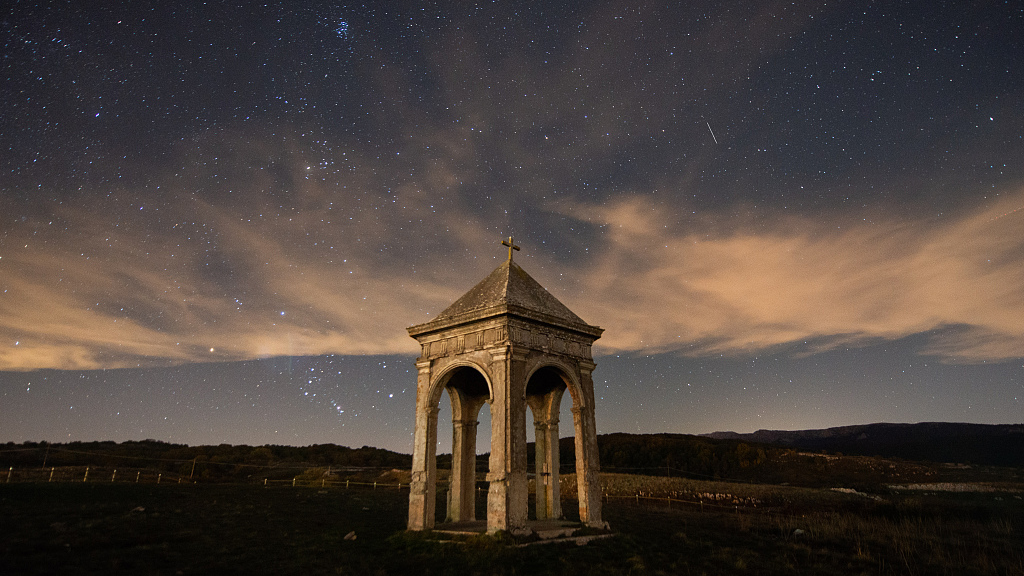
The Orionids passing above Palco della Rimembranza in Terranera, Abruzzo, Italy, on
October 23, 2020.
The Earth passes through the orbit of Halley's Comet twice a year, resulting two meteor showers, one is the Eta Aquariid meteor shower in early May, and the other is the Orionid meteor shower in mid-to-late October.
Xiu suggested waiting for the moon to set and choose a dark observing site. "Just be patient, you'll see the meteors flash by," he said.

No comments:
Post a Comment