

The $1 Trillion Race to Rebuild Ukraine Is Slowly Getting Going

The momentum may be with Russia, but politicians, executives and investors are already eying the biggest contract bonanza since at least World War II.
(Bloomberg) -- As orders for its backup electricity generators surged in Ukraine, Turkish company Aksa Power Generation finally dispatched a dedicated manager to Kyiv. Salih Komurcu’s job, though, wasn’t just to oversee the current business in the war-hit country. It was also about what happens when the bombs eventually stop.
The situation on the front line offers no sense of when or how Russia’s war against its neighbor might end. Ukrainian setbacks have darkened the mood in Kyiv of late.But a growing phalanx of companies is gradually increasing its presence on the ground with the prospect of the biggest investment opportunity since at least World War II when it does.
Governments, executives and investors are positioning themselves in anticipation of a reconstruction that the European Investment Bank estimates could amount to more than $1 trillion of public and private capital. Adjusted for inflation, that’s more than five times as big as the US-funded Marshall Plan that powered the industrial renaissance in Europe following Germany’s defeat.
- Turkish companies are restoring bridges and roads, while providing energy generators and mobile hospitals, hoping they will have an edge when the competition for big-ticket contracts gets going. Little of it so far, though, is for the longer term and more patching battle scars.
- Looking further out, German and Austrian companies are planning ventures in infrastructure and defense,
- JPMorgan Chase & Co. is waiting for working groups for “pre-project planning,” while
- Denmark has so far donated €120 million ($130 million) to rebuild the shipbuilding hub of Mykolaiv.
“Everyone is building their circles,” said Komurcu, Aksa’s representative in the Ukrainian capital since November. “I want to be in the middle of it, among the people who were here in advance — and knowing everyone.”
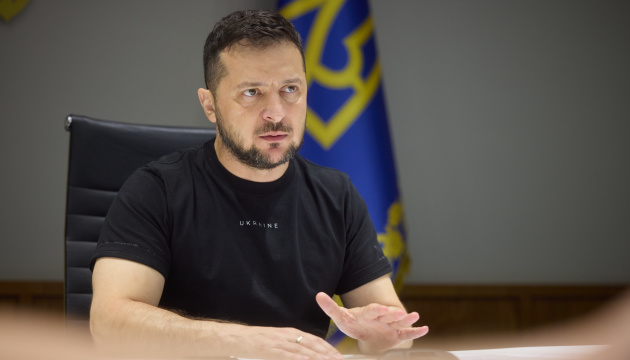
Where the rebuilding takes place will show what the shape of a future Ukraine might look like. Billions of dollars are slated for the swathe of the country controlled by President Volodymyr Zelenskiy’s government, but about 18% of Ukraine is currently occupied by Russian forces.
The map of Ukraine will depend on how much of that territory is taken back by Kyiv, and when and where more than a quarter of the country’s prewar population will opt to live.- about 3.7 million citizens still remain internally displaced,
- nearly 6.5 million have fled abroad and
- millions of others live under Russian occupation.
An estimated 156,000 square kilometers (60,231 square miles) — an area almost twice the size of Austria — have been affected by mines and other munitions, according to Ukrainian Economy Minister Yulia Svyrydenko.
For those reasons, the man in charge of the rebuilding project in Ukraine said he is unable to yet paint a picture of the shape of his nation once the war ends.
Questions also include:
- how to guarantee the Russian aggressors won’t return should there be some sort of peace accord and
- how a country plagued by corruption will process the incoming aid.
“We have a chance to rebuild better than it was in the USSR,” Mustafa Nayyem, head of the State Infrastructure and Reconstruction Development Agency, said in his office in Kyiv. “A kind of a machine that will work — confident and transparent — when the funds come.”
For now, Ukraine is struggling to get aid to support its flagging war effort let alone rebuild the country. A breakthrough came at the start of February when Hungary dropped its opposition to the EU’s €50 billion aid package.
But on the ground, work is being done to keep the country running and also gear up for the reconstruction. Ukrainian energy firms have patched up battered infrastructure and agricultural companies are restoring silos and transit routes.
- The biggest steelmaker, Metinvest BV, estimates that once the large-scale reconstruction starts, some 3.5 million tons of steel will be needed to restore housing and social infrastructure over five to 10 years. The company says it’s ready to meet that demand.
- Building materials manufacturer Fixit has been putting up a new production site in the west of Ukraine since last year, while
- chemical company Bayer AG has announced investments in seeds production.Waagner-Biro Bridge Systems, an Austrian company that makes modular steel overpasses that span rivers and valleys, already started some production at a site in western Ukraine.
- Chief Executive Officer Richard Kerschbaumer said in an interview last year that “there will be plenty of work for decades.”
Given where the money will come from, US and European companies are likely to get the lion’s share of the contracts when they come.
Turkey, though, is pushing ahead in the meantime.
Turkish building contractors have completed 70 projects in Ukraine over the two years of war that were worth around $1 billion, Turkish Trade Minister Omer Bolat said earlier this year. The biggest of them, Onur Group, is repairing blown-up bridges, such as the one at Irpin on the outskirts of Kyiv.
- Teaming with South Korea’s Samsung C&T Corp., Onur Group was also building mobile hospitals in Ukraine.
- The company eventually wants to resume redevelopment of the Dnipro International Airport along with some highway projects.
“We’ve got more than 4,000 pieces of machinery here and we’re committed to Ukraine and never considered abandoning it,” said Emre Karaahmetoglu, the general coordinator for the company in Ukraine.
- Its most pressing challenge is finding enough workers because of army conscription, he said.
While competition for contracts is going to be huge, Turkish companies hope their experience of working in countries that have struggled with conflict or corruption will give them an advantage.
Istanbul-based Dogus Construction, already in Ukraine for years, is rebuilding three bridges with backing from the UK and expects contracts worth “a couple of billion dollars” from the reconstruction effort one day, according to its country representative, Suha Canatan.
As Russia rearms more quickly than Ukraine, the stalemate in the war might not hold for long. President Zelenskiy has been imploring the US to follow Europe and renew its aid package, though even if it does the question is where Ukraine’s allies can source now scarcer resources of ammunition.
But companies say that, whatever happens in the near term, reconstruction must come at some point. More of the corporate mood music is how to make sure they’re prepared for it.
- Away from Ukraine, for example, Hungarian engineering firm Ganz-Mavag has said part of the rationale for bidding to buy Spanish train maker Talgo SA was to scale up capacity to meet demand in Eastern Europe over the next decade, driven by the Ukrainian reconstruction once it starts.
- In Mykolaiv, consultants and local authorities are drafting a masterplan that looks ahead to 2050.
- Much of it remains on paper only as further progress can’t be done before the war ends, said Jesper Karup Pedersen, the technical director and project manager for Cowi, a Danish engineering consultancy working on the Mykolaiv redevelopment.
“Many of the projects can be bomb targets,” he said. Often simple tasks like sourcing documents from local authorities are tough because people are whisked off to the front lines, creating gaps in the state administration, he said.
- Most of the Danish funds for the municipality were so far used to buy generators, water pumps, heaters, and support de-mining efforts in the city whose population shrank since Vladimir Putin’s invasion two years ago.
Still, even those first steps are paying off. There are already visible signs that people have started to return to Mykolaiv. At his last visit to the town in January, Danish ambassador Ole Egberg Mikkelsen said he experienced a traffic jam for the first time since the war.
Mikkelsen said he hopes Danish companies will one day benefit from their nation’s good reputation in Ukraine as they explore commercial opportunities in the country. “We have the approach that we must do something now,” he said. “We cannot wait for the war to be over and for reconstruction conferences to have taken place.”
For sure, new industries are putting down roots, with defense and technology rising in importance and contribution to Ukraine’s economy. Agriculture, the main driver of growth, is undergoing the biggest revamp in decades.
The European Bank for Reconstruction and Development, which has provided €3.8 billion in financing for Ukraine since the war started, noted that the focus should not be only on the money, but also on people, said Beata Javorcik, the lender’s chief economist.
Indeed, the success of the biggest investment project since World War II requires the patience of Ukrainians, and whether Russia can be trusted to adhere to any peace deal, according to Nayyem, the Ukrainian official in Kyiv.

“Many people think in terms of ‘the war will end and ...,’ but we do not know when it will end,” Nayyem said.
“And even when it ends, what shall we do with such a neighbor? We will definitely need a long time to restore territories that were liberated or on the front line.”


mm


No comments:
Post a Comment