France's historical responsibility for Haiti
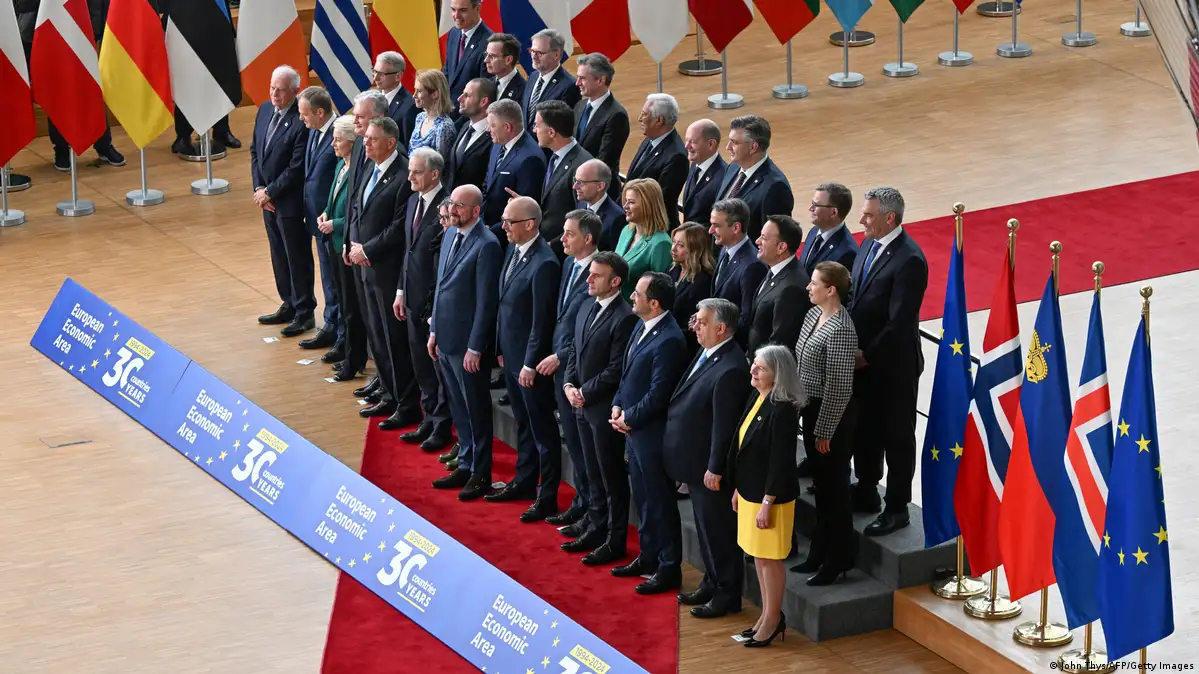
". . .Poverty, political chaos and a high crime rate have plagued the Caribbean country of Haiti for decades. Now, violence has spiraled out of control again.
On February 29, acting Prime Minister Ariel Henry announced new elections — for August 2025. His term of office had been supposed to end in February so many violent gangs interpreted Henry's announcement as a call to arms. They attacked the National Palace and prisons, which led to over 3,000 prisoners freeing themselves.
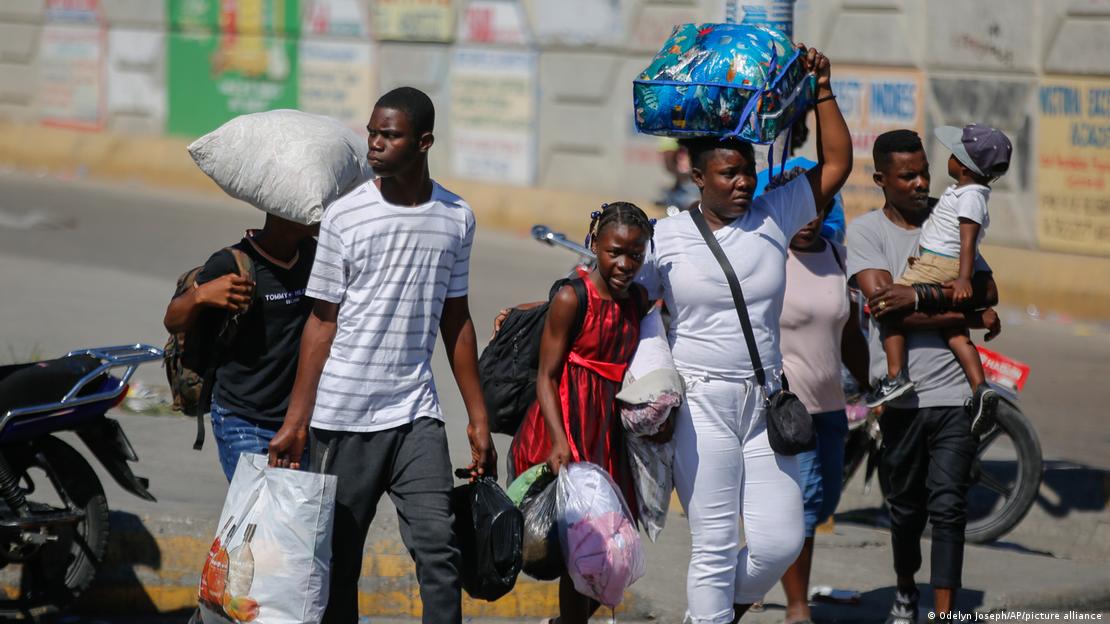
These armed groups now control large parts of Haiti's capital, Port-au-Prince, and tens of thousands of residents have fled. Henry is currently in the US unincorporated territory of Puerto Rico. He arrived there from the Kenyan capital Nairobi where was promoting a Kenyan-led police mission to restore security in Haiti.
The former colonial power France bears a historical responsibility for the current crisis.

The Haitian Revolution
--- Jean-Claude Bruffaerts, one of the co-authors of the 2022 book "Haïti-France. Les chaînes de la dette: Le rapport Mackau" (Haiti-France. The Chains of Debt: The Mackau Report.)
Haiti even had to borrow money from French banks, at high interest rates, to pay off the debts. Economists call this a "double debt" and Haiti was only able to pay its debts off in 1947.
- "So this money was not there for urgently needed infrastructure such as roads, schools and hospitals.
- Haiti also needed the protection of an army, which swallowed up even more money. This slowed down the country's economic development considerably," explained Bruffaerts, saying that the lack of investment in infrastructure remained noticeable today.
- "There are no roads in many parts of the island, healthcare is inadequate, and most schools have no electricity."
The French Revolution
- "The Haitians were inspired by the French Revolution, which had taken place shortly before, in 1789.
- ... But the French did not apply the principles of their own revolution — liberty, equality, fraternity and human rights — outside their own borders."
- "From 1957 to 1986, it supported the brutal dictatorship of Francois, and later Jean-Claude, Duvalier, known as 'Papa Doc' and 'Baby Doc'" he said.
- "And it continues to interfere in internal affairs to this day."
Observers doubt that France will return the money. "No former colonial power would do that," said Laurent Giacobbi from the French Institute for International and Strategic Affairs (IRIS). "It would trigger a chain reaction. All ex-colonies would then make claims."
Please continue reading to find out more > DW.com
But to me, there’s never been a more clear-cut case for reparations than that of Haiti.
I’m a specialist on colonialism and slavery, and what France did to the Haitian people after the Haitian Revolution is a particularly notorious examples of colonial theft.
Yet, somehow, in the 19th century, the thinking went that the former enslavers of the Haitian people needed to be compensated, rather than the other way around.
Just as the legacy of slavery in the United States has created a gross economic disparity between Black and white Americans, the tax on its freedom that France forced Haiti to pay – referred to as an “indemnity” at the time – severely damaged the newly independent country’s ability to prosper.
The cost of independence
Despite the fact that both of Haiti’s rulers were veterans of the Haitian Revolution, the French had never quite given up on reconquering their former colony.
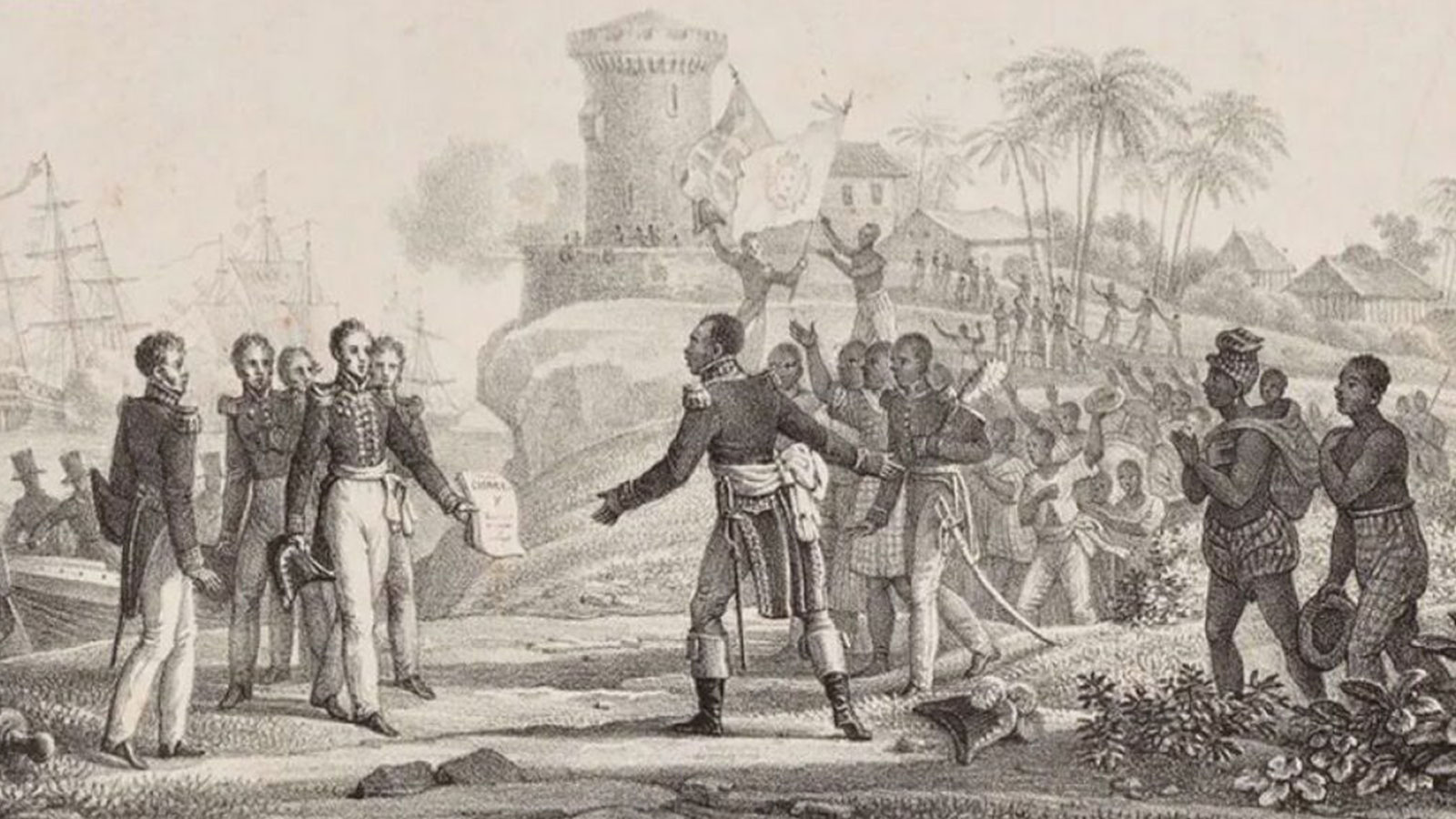
- In 1814 King Louis XVIII, who had helped overthrow Napoléon earlier that year, sent three commissioners to Haiti to assess the willingness of the country’s rulers to surrender.
- Christophe, having made himself a king in 1811, remained obstinate in the face of France’s exposed plan to bring back slavery.
- Threatening war, the most prominent member of Christophe’s cabinet, Baron de Vastey, insisted,“ Our independence will be guaranteed by the tips of our bayonets!”
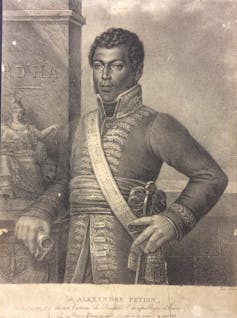
In contrast, Pétion, the ruler of the south, was willing to negotiate, hoping that the country might be able to pay France for recognition of its independence.
In 1803, Napoléon had sold Louisiana to the United States for US$15 million. Using this number as his compass, Pétion proposed paying the same amount. Unwilling to compromise with those he viewed as “runaway slaves,”
Louis XVIII rejected the offer.Pétion died suddenly in 1818, but Jean-Pierre Boyer, his successor, kept up the negotiations. Talks, however, continued to stall due to Christophe’s stubborn opposition.“Any indemnification of the ex-colonists,” Christophe’s government stated, was “inadmissible.”
Once Christophe died in October 1820, Boyer was able to reunify the two sides of the country.
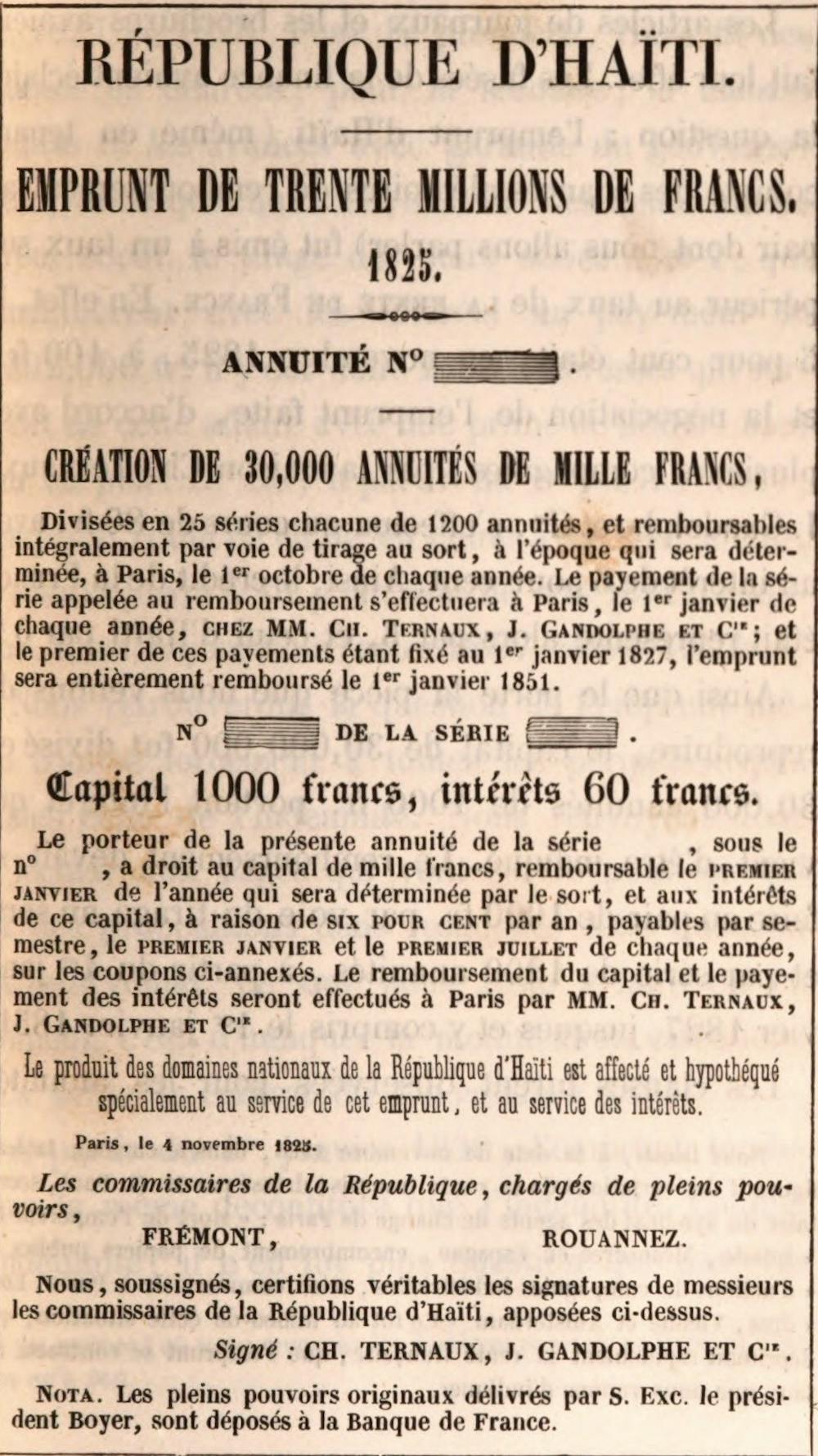
However, even with the obstacle of Christophe gone, Boyer repeatedly failed to successfully negotiate France’s recognition of independence. Determined to gain at least suzerainty over the island – which would have made Haiti a protectorate of France – Louis XVIII’s successor, Charles X, rebuked the two commissioners Boyer sent to Paris in 1824 to try to negotiate an indemnity in exchange for recognition.
On April 17, 1825, the French king suddenly changed his mind. He issued a decree stating France would recognize Haitian independence but only at the price of 150 million francs – or around 10 times the amount the U.S. had paid for the Louisiana territory. The sum was meant to compensate the French colonists for their lost revenues from slavery. . ."


No comments:
Post a Comment