This exchange begs the question of whether retaliatory strikes during an armed conflict are lawful, the subject of this post.
Jumping ahead >
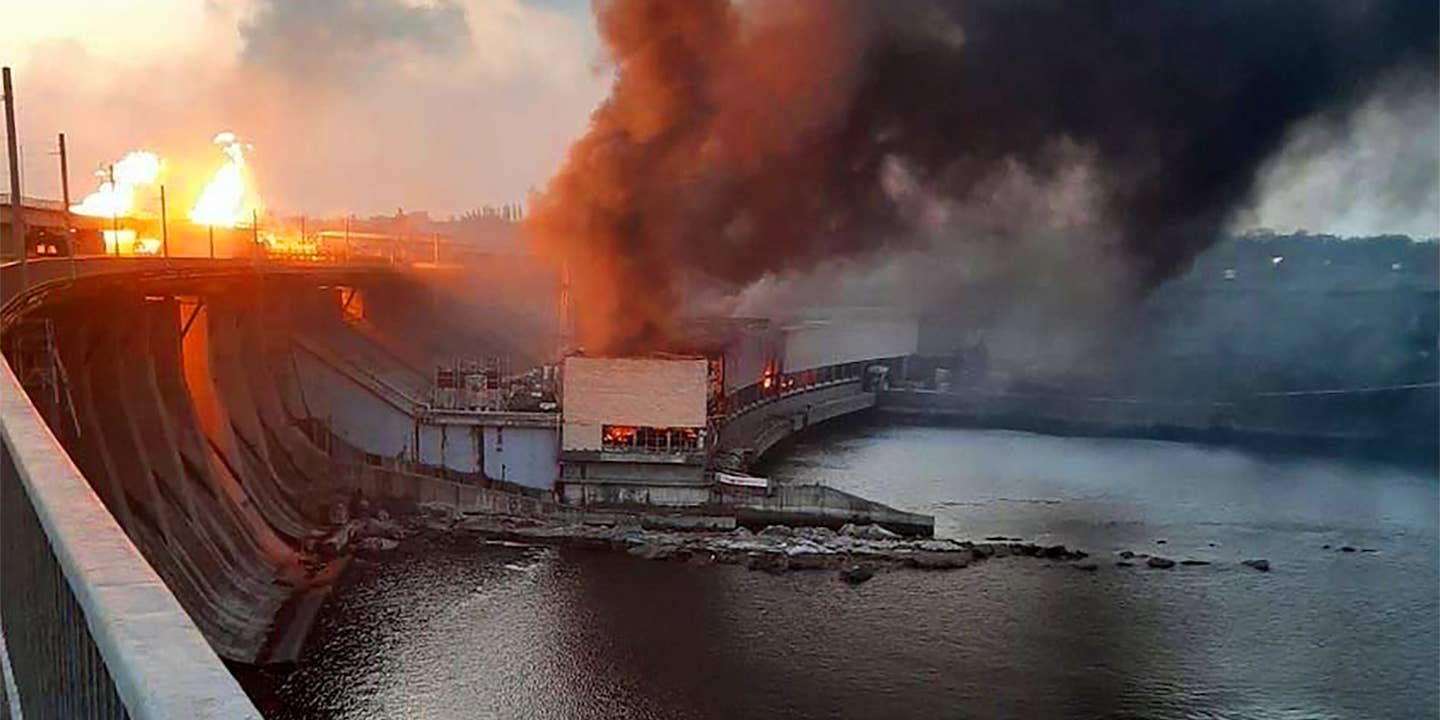
Russia’s Reprisal Attack On Ukraine’s Energy Infrastructure Was The Biggest Yet
By Thomas Newdick / Updated Mar 22, 2024
_____________________________________________________________________________________
UKRAINE SYMPOSIUM – RETALIATORY WARFARE AND INTERNATIONAL HUMANITARIAN LAW (IHL)
Here's the post-script:
INSERT:
________________________________________________________________
RELATED POSTS
Symposium Intro: Ukraine-Russia Armed Conflict
by Sean Watts, Winston Williams, Ronald Alcala
February 28, 2022
–
Russia’s “Special Military Operation” and the (Claimed) Right of Self-Defense
February 28, 2022
–
Legal Status of Ukraine’s Resistance Forces
by Ronald Alcala and Steve Szymanski
February 28, 2022
–
Cluster Munitions and the Ukraine War
February 28, 2022
–
Neutrality in the War against Ukraine
by Wolff Heintschel von Heinegg
March 1, 2022
–
The Russia-Ukraine War and the European Convention on Human Rights
March 1, 2022
–
Deefake Technology in the Age of Information Warfare
by Hitoshi Nasu
March 1, 2022
________________________________________________________________
x

"As a general matter, attacking targetable persons (combatants and civilians directly participating in hostilities) and striking military objectives in retaliation for the enemy’s operations (wrongful or not) is lawful.
The fact of a retaliatory motive is simply irrelevant; the legal issue is whether the side undertaking the retaliation complied with the rule of proportionality and the obligation to take precautions in attack (Additional Protocol I, (AP I) arts. 51 and 57; U.S. DoD Law of War Manual, § 5.10 – 5.12; International Committee of the Red Cross (ICRC) Customary IHL study, rule 14 and ch. 5).
Concerning the Ukrainian attacks, it is currently impossible to offer an opinion on proportionality because we do not know the targets (anticipated military advantage), and equally impossible to assess compliance with the precautions obligation without knowing more about the weapons and weapons systems used and otherwise available, or how tactics could have been adjusted to avoid civilian harm (e.g., timing and alternative targets to achieve comparable effect).
But what Russia alleges and what some may suspect is that following one of the deadliest Russian attacks on its cities, Ukraine launched a tit-for-tat response directed at a civilian population center. Such an attack would violate the AP I, Article 51 prohibition on attacking the civilian population, and the Article 52 prohibition on attacking civilian objects and their customary law counterparts (see ICRC Customary IHL study, rules 1, 2, 7).
As a general matter, the fact that Russian operations have systematically and with great frequency violated IHL has no bearing on the lawfulness of the Ukrainian response.
One side’s violations of the law do not relieve the enemy of its obligation of compliance
________________________________________________________________
THE SPECIFIC MOST RECENT REPORT yesterday March 22, 2024
- As well as shelling and cross-border raids directed at border areas within Russia, Ukraine has a growing arsenal of long-range attack drones that are able to strike targets much deeper within Russia.
- There are also reports that the Biden Administration has warned Kyiv about targeting Russian energy production infrastructure due to the possibility of escalation and that it would raise global energy prices.
Regardless, before today, Russian energy infrastructure was very much in Ukraine’s sights and it would have been surprising if a response in kind doesn’t follow sooner rather than later.
The big question is if Ukraine will let off the pressure it has put on Russia's energy sector by slowing or ceasing long-range drone strikes on those facilities. From what we have seen in the past, barring extreme outside influence, that is unlikely to happen.
Russia’s Reprisal Attack On Ukraine’s Energy Infrastructure Was The Biggest Yet
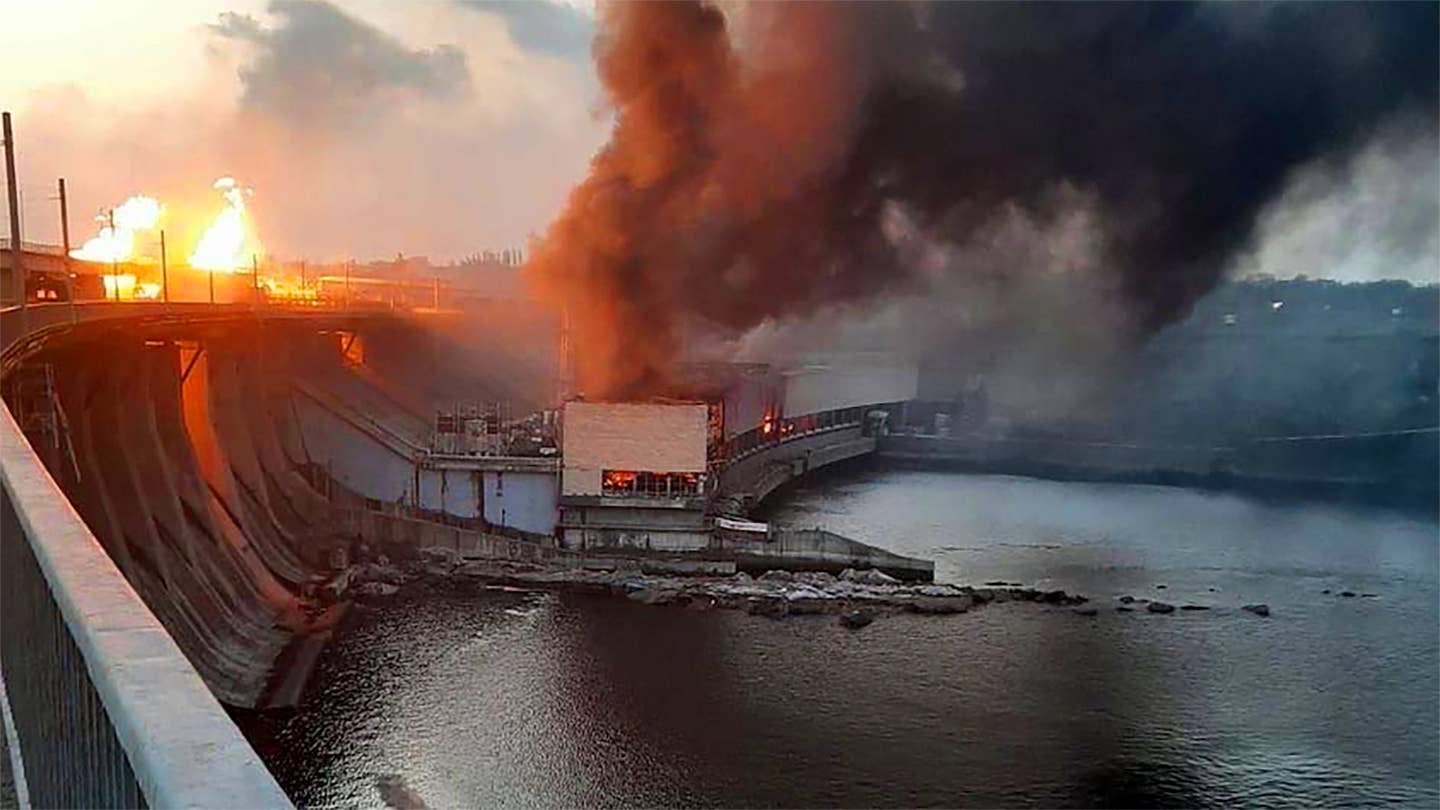
Ukraine’s largest dam was among the targets of the large-scale raid aimed at knocking out critical energy infrastructure.
- Authorities in Kyiv described the raids as the heaviest to target its energy infrastructure in the war so far.
- For Moscow, the latest round of attacks was revenge for Ukrainian strikes launched against targets inside Russia, especially energy-related ones, during its recent presidential election.
The latest attacks involved 88 missiles of various types and 63 Iranian-designed Shahed one-way attack drones, the Ukrainian Air Force said. These were primarily targeted against the regions of Kharkiv, Dnipropetrovsk, and Zaporizhzhia.
- At the same time, the targets were disproportionately located in regions close to Russian-controlled areas, reducing the warning time and weapons’ time to target. Rural areas are also less defended than Ukraine's major population centers.
Among the key targets selected by Russia was the huge DniproHES dam over the Dnipro River, in the city of Zaporizhzhia, which left at least five people dead and left more than a million without power.
The dam, Ukraine’s largest, was hit eight times by Russian missile strikes, according to the Ukrainian prosecutor's office. Videos posted to social media showed what appeared to be Russian Kh-101 air-launched cruise missiles ejecting infrared countermeasures to spoof heat-seeking air defense missiles as they made their terminal attack runs on the dam.
Ihor Syrota, the director of the state hydropower company, said both the power blocks and the dam itself had been damaged. One of the blocks sustained two direct strikes, he stated. Despite the hits, the company said there was no risk of a breach. However, the state ecological inspectorate said that oil had leaked into the Dnipro River, presenting a serious risk to the environment.
- As well as the dam, around 20 substations and electricity stations were also hit in the latest Russian offensive, according to Ukrainian Prime Minister Denys Shmyhal.
- Furthermore, there were reports from Ukraine’s largest private energy company, DTEK, that some of its thermal powerplants were hit, while the country’s state oil and gas company, Naftogaz, said its facilities had also been damaged.
According to officials in Kyiv, the strikes led to power outages in seven regions of Ukraine, including around 1.2 million people left without power in four regions alone, according to presidential aide Oleksiy Kuleba.
- To make up for the deficit, Ukraine has been forced to seek emergency electricity supplies from Poland, Romania, and Slovakia.
Beyond Ukraine's onslaught against energy targets in Russia, the Kremlin said that the attacks were in response to Ukrainian shelling and cross-border raids into Russian border regions last week. These appear to have been timed to coincide with presidential elections that secured Vladimir Putin a fifth term in office.
For Ukrainian officials, the Russian raids are part of a renewed winter offensive that’s aimed at Ukraine’s power grid.
Similar tactics were employed during the winter of 2022-23, as well, leading to severe disruption.
- Ukraine had long warned that another such winter offensive would take place and officials had called for additional Western air defense systems to counter just such a contingency.
“The world sees the targets of Russian terrorists as clearly as possible: powerplants and energy supply lines, a hydroelectric dam, ordinary residential buildings, even a trolleybus,” said Ukrainian President Volodymyr Zelensky.
Ukrainian Energy Minister German Galushchenko added:
“The goal is not just to damage, but to try again, like last year, to cause a large-scale failure of the country’s energy system.”
While it’s abundantly clear that the destruction of critical non-military infrastructure is the primary aim of these attacks, Russia has justified the campaign in terms of the alleged disruption it brings to the Ukrainian military machine.
Today, however, saw a noticeable uptick in rhetoric from Moscow. Kremlin spokesman Dmitry Peskov told a Russian publication that Moscow saw itself as in a “state of war” because of the West’s intervention on behalf of Ukraine.
- In the past, Russian officials have repeatedly described the full-scale invasion of Ukraine, and the offensives that have followed as a “special military operation.”
Some saw Peskov’s words as evidence that Moscow is now preparing its citizens for what will now be more openly considered a full-scale conflict, and one that will be longer and harder-fought than expected.
Others have pointed out that descriptions of a “war” from Russian officials are not entirely new. Notably, Moscow has euphemistically used the term “special military operation” to describe its invasion of Ukraine, while also talking about a broader “war” with Ukraine’s NATO allies, and even the West in general.
Peskov subsequently walked back his statement, at least to some degree.
Rhetoric aside, Russia has clearly ramped up its winter offensive aimed at Ukrainian energy infrastructure and, once again, civilians have received the brunt of it.
“The wide impact of today’s attacks on critical civilian infrastructure is deepening the already dire humanitarian situation for millions of people in Ukraine,” the United Nations humanitarian coordinator for Ukraine, Denise Brown, said in a statement.
While Ukraine was expecting just such an attack and will have been better prepared than it was last winter to defend against it, it’s also true that Kyiv has, since then, greatly increased its potential to hit back at Russian targets in kind. As well as shelling and cross-border raids directed at border areas within Russia, Ukraine has a growing arsenal of long-range attack drones that are able to strike targets much deeper within Russia. There are also reports that the Biden Administration has warned Kyiv about targeting Russian energy production infrastructure due to the possibility of escalation and that it would raise global energy prices.
Regardless, before today, Russian energy infrastructure was very much in Ukraine’s sights and it would have been surprising if a response in kind doesn’t follow sooner rather than later. The big question is if Ukraine will let off the pressure it has put on Russia's energy sector by slowing or ceasing long-range drone strikes on those facilities. From what we have seen in the past, barring extreme outside influence, that is unlikely to happen.
Contact the author: thomas@thewarzone.com



No comments:
Post a Comment