.gif)
But Rutenberg and Myers are not worried about such self-censorship.
Instead they worry that constitutional objections to the government's social media meddling have had a "chilling effect" on efforts to curtail online speech.



The New York Times Again Worries That Free Speech Endangers Democracy
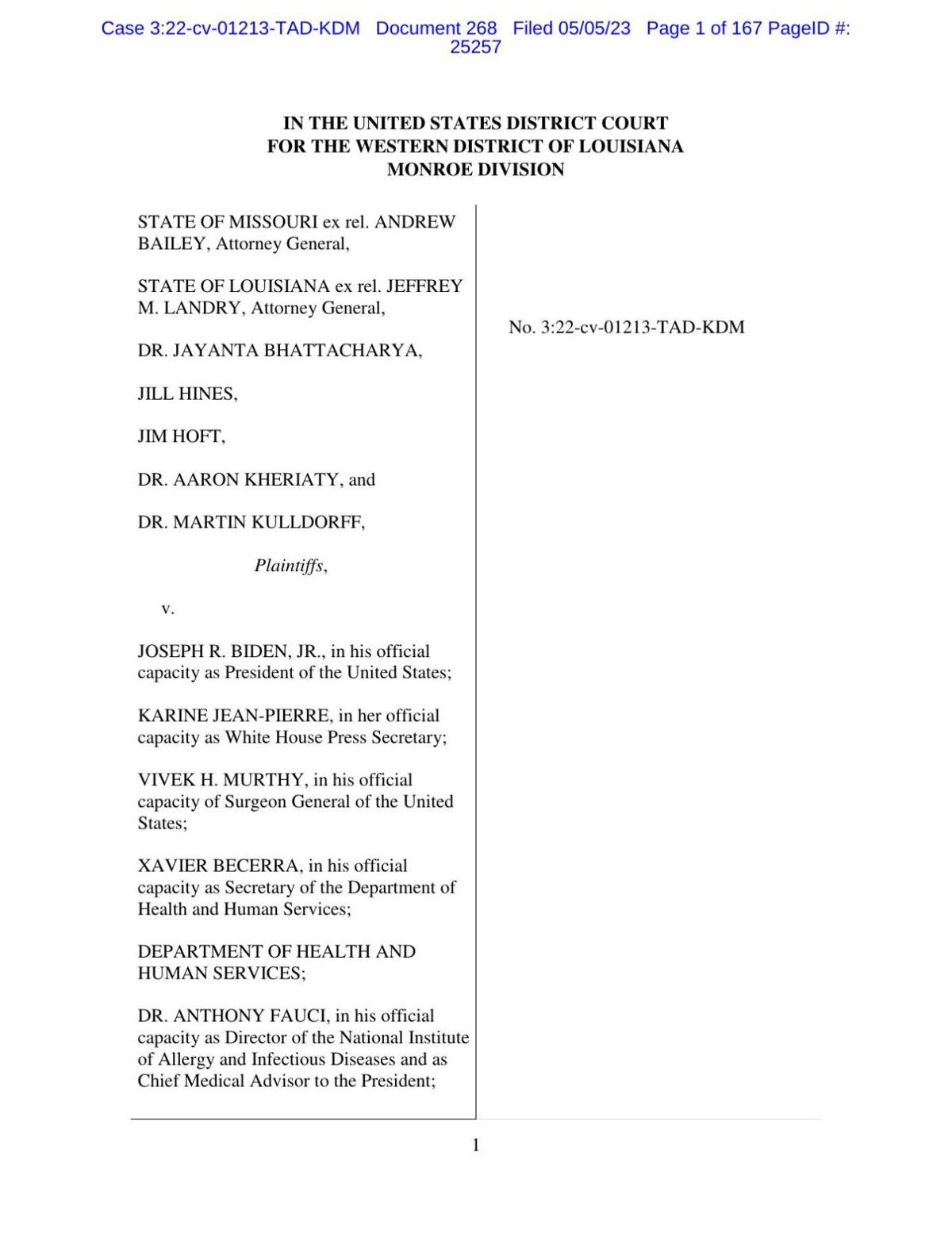
The newspaper portrays the constitutional challenge to the government's social media meddling as a conspiracy by Donald Trump's supporters.
". . .To emphasize the need for such intervention, Rutenberg and Myers quote Jen Easterly, director of the Cybersecurity and Infrastructure Security Agency.
- "We're in the business of critical infrastructure, and the most critical infrastructure is our cognitive infrastructure," Easterly said at a 2021 conference, "so building that resilience to misinformation and disinformation, I think, is incredibly important."
- She promised to "work with our partners in the private sector and throughout the rest of the government and at the [Department of Homeland Security] to continue to ensure that the American people have the facts that they need to help protect our critical infrastructure."
Ensuring that Americans "have the facts" is one thing. It involves responding to "misinformation and disinformation" by citing countervailing evidence. But when fighting "misinformation and disinformation" entails government-encouraged censorship of controversial speech, it raises obvious First Amendment concerns. The very idea of a government agency charged with guarding "our cognitive infrastructure" should set off alarm bells for anyone who values freedom of thought and freedom of speech.
The fact that Rutenberg and Myers do not hear those bells suggests they assume that Orwellian mission can only affect speech they do not like, because the government will inerrantly distinguish between "misinformation" and worthwhile content.
That is a pretty shortsighted view for people whose work depends on a constitutional provision that bars the government from enforcing such judgments."





No comments:
Post a Comment