Trump Says Meeting With Zelenskiyy Will Go Well

U.S. President Donald Trump said he believes his upcoming meeting with Ukrainian President Volodymyr Zelenskiyy will go well and stressed that any peace deal between Ukraine and Russia would require his personal approval.
- Speaking to Politico ahead of talks with Zelenskyy in Florida on Sunday, Trump commented on Ukraine’s proposed 20-point peace plan, UATV English informs
According to the report, Ukraine’s proposal includes the creation of a demilitarized zone and discussions on US security guarantees. Trump reportedly expressed a cautious attitude toward these ideas but said he expects the talks to be constructive.
“I think it will go well with him (Zelenskyy). I think it will go well with Putin too,” Trump said, adding that he expects to speak with Russian leader Vladimir Putin “soon — as soon as I want.”
Zelenskyy’s proposal on a demilitarized zone reportedly includes a key condition: Russia must withdraw its troops from the relevant territory in Donetsk region. Moscow has shown no willingness to give up full control of the area. However, Trump noted that Russia’s economy is currently in poor condition.
“Their economy is in bad shape, very bad shape,” he said.
Trump also confirmed that Israeli Prime Minister Benjamin Netanyahu is expected to visit him this weekend.
“I’ll have Zelenskyy and I’ll have Bibi. Everybody’s coming. They respect our country again,” Trump said.


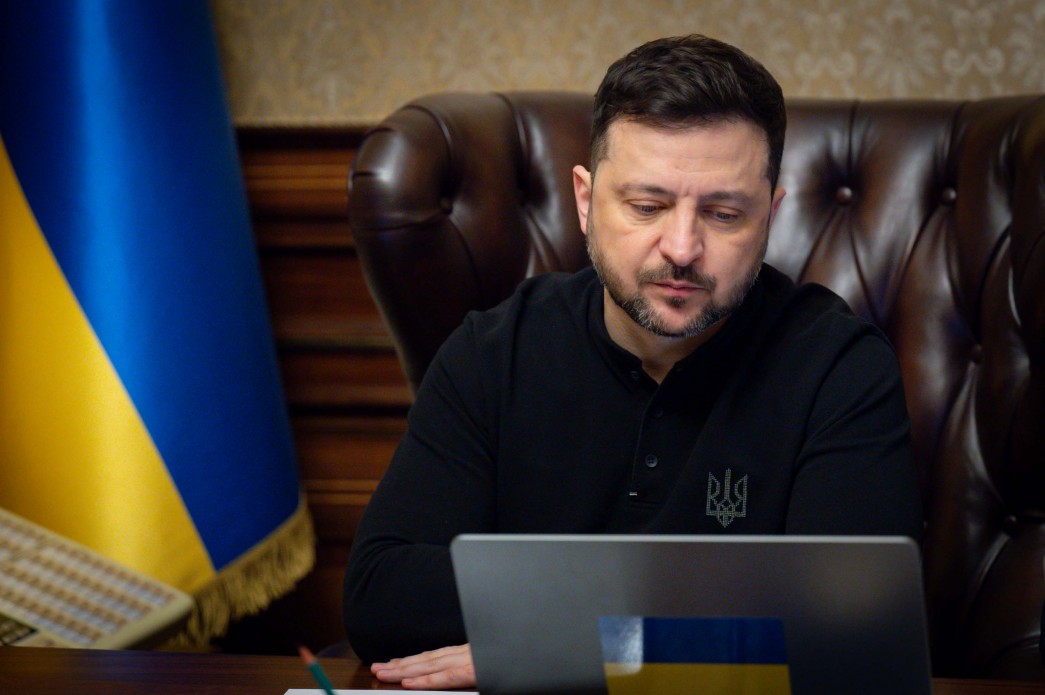
Alongside Preparations for a Meeting With President Trump in the United States, Volodymyr Zelenskyy Held Six Phone Calls With European Leaders and the NATO Secretary General: The Agreement Is Getting Closer
26 December 2025 - 21:33
Alongside Preparations for a Meeting With President Trump in the United States, Volodymyr Zelenskyy Held Six Phone Calls With European Leaders and the NATO Secretary General:
The Agreement Is Getting Closer
26 December 2025 - 21:33

Russian Economy Entering Phase of “Managed Chaos”

The SZRU notes that Russia’s Central Bank has effectively acknowledged the collapse of transparency standards. From 2027, financial institutions are expected to publish only anonymized data on ownership structures. Since 2022, banks and insurers have been allowed to withhold information about owners and management, citing sanctions risks. As a result, only 3 out of 352 credit institutions currently disclose their ownership structure — less than 1%.
The regulator’s proposed “compromise” would limit disclosures to formal yes/no answers about the presence of influential persons, “unfriendly” non-residents, or problematic beneficiaries, with the Central Bank itself filling out the forms. Intelligence officials say this underscores the market’s inability to ensure even minimal transparency without manual state control. The legal framework is expected in 2026, with implementation no earlier than April 2027.
At the same time, the state is rolling back oversight in other areas. A package of bills submitted to the State Duma would abolish regular income declarations for Russian officials. Lawmakers have framed this as an anti-corruption measure, further highlighting the gap between rhetoric and real accountability.
Economic stress is also mounting. One-third of small and medium-sized businesses in Russia say they may shut down within six months. Banks have sharply reduced consumer lending: POS loans are approved for only one in ten applicants, with rejection rates reaching 90% in November. Meanwhile, pawnshops posted 9.6 billion rubles in net profit from January to September — 54% more year-on-year, an indirect sign of declining household purchasing power.
Financial strain has spread to the public sector as well. In 2025, state companies’ payment arrears to contractors under public procurement contracts increased 2.7-fold — from 200 cases worth 1.5 billion rubles in 2024 to 548 cases totaling nearly 4.03 billion rubles. Payment delays of one to three months have effectively turned contractors into lenders, driven by falling revenues and high borrowing costs.
Cybersecurity adds another warning sign: 73% of all data leaks in 2025 occurred in the public sector. Expectations among businesses and workers are bleak, with only 13% of Russians hoping to receive an annual bonus.
Taken together, these trends depict a market drifting further from global standards and becoming entrenched in opacity, distrust, and systemic chaos, the SZRU concluded.
NEW: Russian Deputy Foreign Minister Sergei Ryabkov reiterated that the Kremlin will not sign any peace agreements to end the war in Ukraine


No comments:
Post a Comment