Tuesday, February 01, 2022
5-LETTER WORDS ARE FUN! . . ."It's not trying to do anything shady with your data or your eyeballs."
New York Times spends “low seven figures” to buy Wordle
Game's creator will be stepping aside and handing over the reins to the NYT.
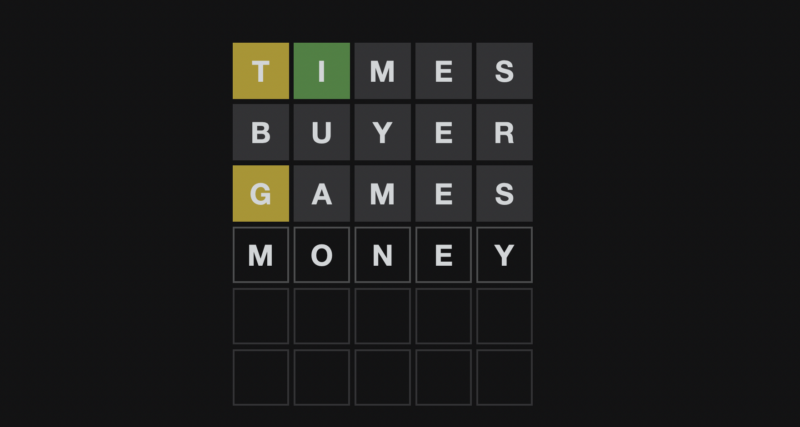
"The New York Times announced today that its Games division would be purchasing Wordle—everyone's favorite five-letter-word guessing game and emoji-square generator—for a number in the "low-seven figures."
The sale caps a meteoric rise for the simple game. It rode word-of-mouth recommendations and glowing media coverage to prominence, was subject to multiple copycat apps that Apple removed from its App Store, and inevitably generated backlash from people who don't like it when other people have fun in public.
"At the time it moves to The New York Times, Wordle will be free to play for new and existing players, and no changes will be made to its gameplay," the Times notes in its press release. Presumably after Wordle has moved, the Times will tweak its gameplay and impose a registration requirement or paywall as it sees fit. Many of the Times' games, including Sudoku, Spelling Bee, and the mini-version of its crossword, can also be played for free without signing in or registering. But a subscription is required to play the full version of the crossword puzzle and access the NYT's crossword puzzle archive.
Wordle creator Josh Wardle released his own statement saying that he was letting the Times "take over running Wordle going forward" and that he is working with the paper to make sure that current players' win records and streaks will carry over. Wardle detailed to the Times in early January how the game had begun as a word guessing game for his partner.
"I think people kind of appreciate that there's this thing online that's just fun," Wardle told the Times in that piece. "It's not trying to do anything shady with your data or your eyeballs. It's just a game that's fun."
A NEW ILLUSTRATED BIOGRAPHY DIEGO RIVERA: "All bristling melodrama and animal energy"
Diego Rivera by Francisco de la Mora and José Luis Pescador review – rumbustious hymn to a radical artist
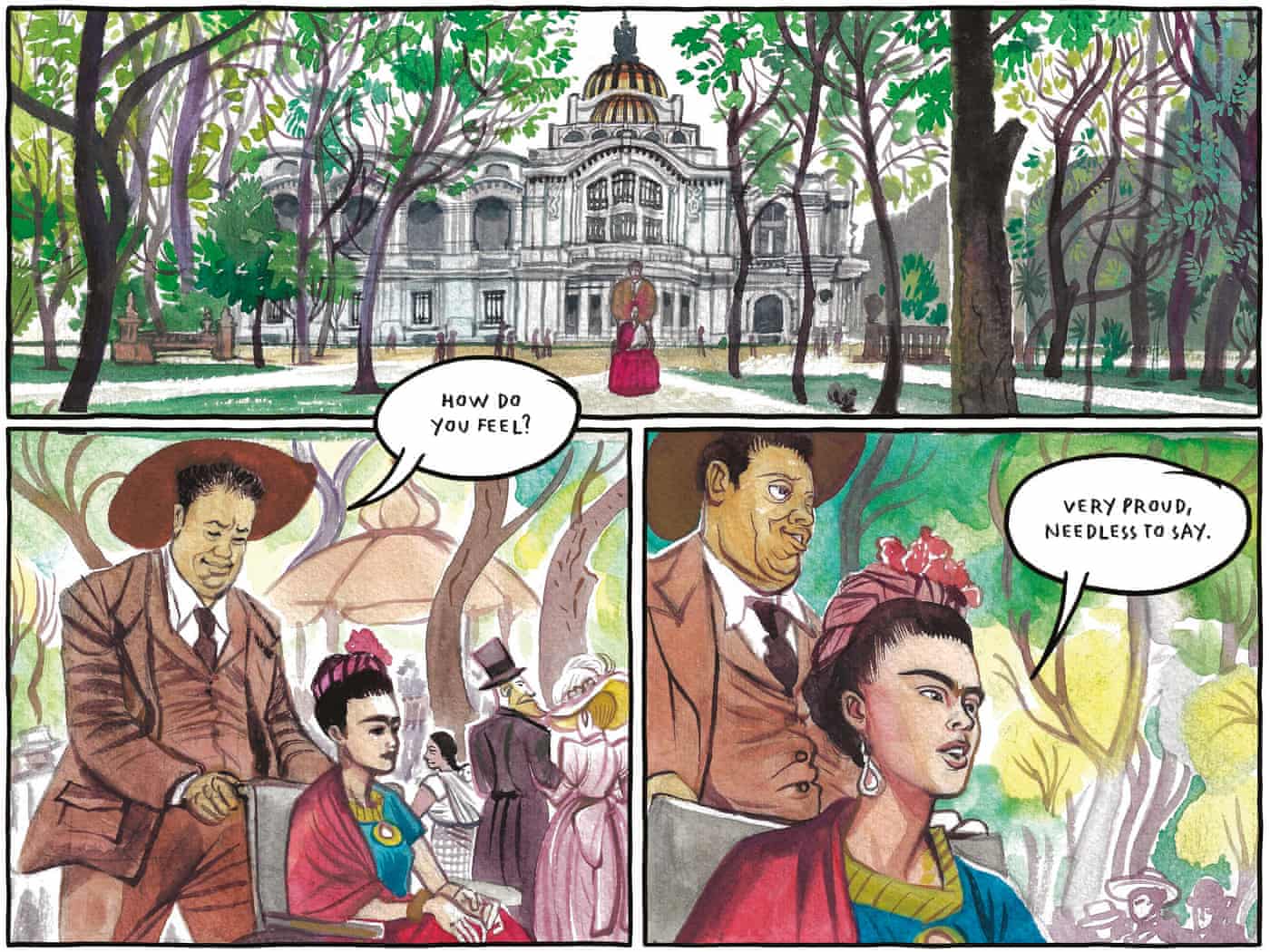
In this frenetic, rumbustious new graphic biography of Diego Rivera by Francisco de la Mora and José Luis Pescador, the Mexican artist’s third wife (and fourth: they married twice) appears only fleetingly. We don’t find out where or how they met; the powerful connection between them, never fully explained, must simply be taken for granted by the reader. But perhaps the authors feel that Frida Kahlo has had a bit too much attention just lately: who could forget the snaking queues at the V&A’s show of her work in 2018? In their book, then, it’s Rivera who is centre stage. Like a raging bull, rushing into the ring for a fight, he dominates every page, all bristling melodrama and animal energy.
“There have been two great accidents in my life,” Kahlo said. “Diego was by far the worst.” There is surely hyperbole in this statement, however unhappy Rivera made her at times (both of them were repeatedly unfaithful). But you grasp her meaning: the sense of collision that accompanied her husband wherever he went. Though his talent was prodigious – he went to art school at 11 – it often struggled to find its place in a life that was by any standards overpopulated with incident. Born in 1886, Rivera was the son of a journalist who was involved in revolutionary politics, instincts he would famously go on to share. Travelling in Europe, he met Lenin in Paris and Stalin in Moscow; later, he offered refuge to Trotsky during his Mexican exile. But revolutionaries come in many guises. If he talked the talk – even after fame arrived, he remained proudly un-clubbable – he was also easily distracted, usually (though not exclusively) by women.
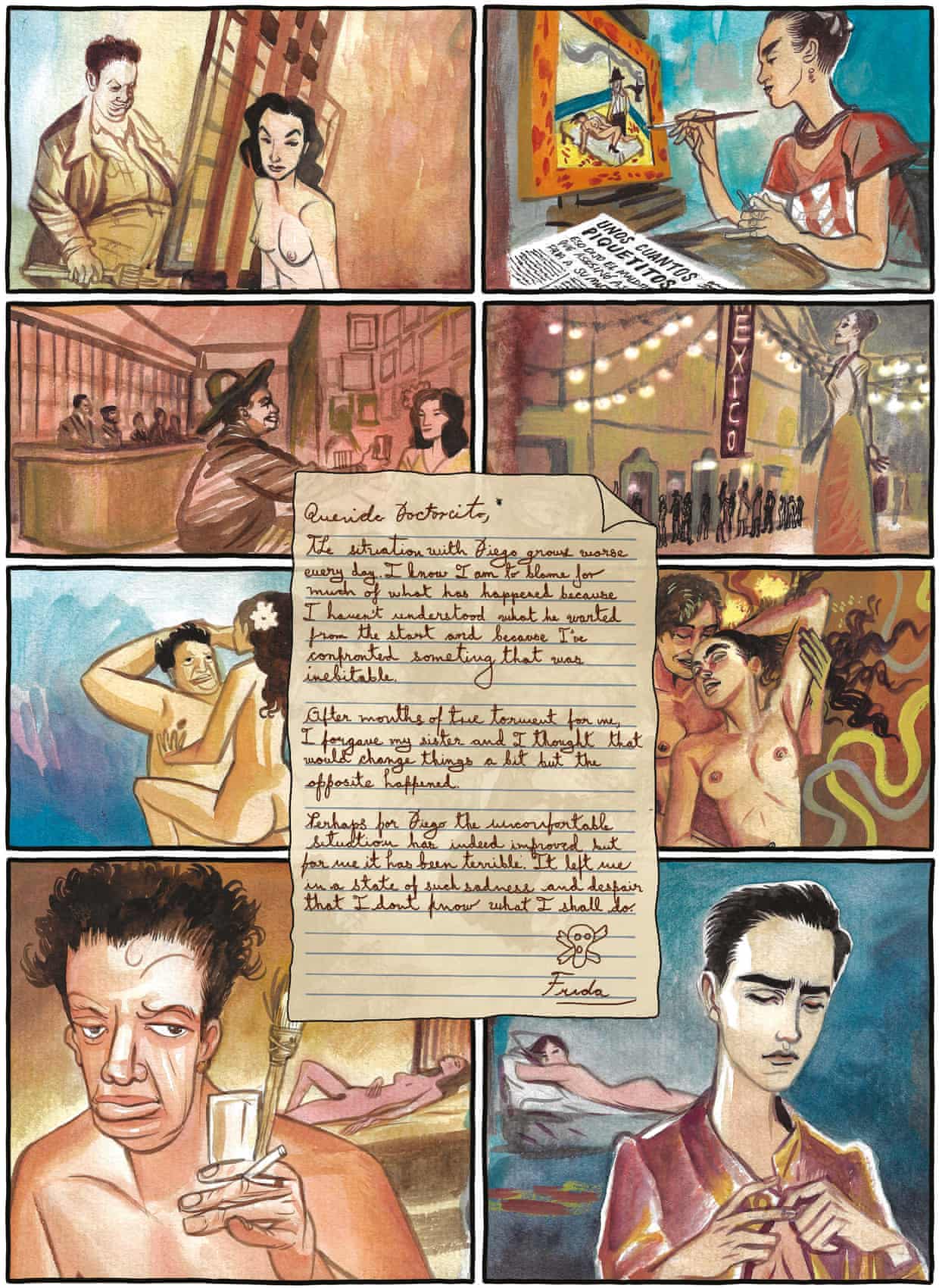
De la Mora and Pescador pick and choose when it comes to the biographical details. They make little, for instance, of Rivera’s Jewishness on his mother’s side – her family was supposed to have converso history (ancestors who were forced to convert to Catholicism) – something that he felt informed both his art and his politics. But they’re predictably enthralled – and who can blame them? – by his years in Paris, where he knew Braque, Picasso and Modigliani and embraced cubism (a passion that did not last). There is, perhaps, a bit too much wild sex in their book – bed springs are always groaning; women are ecstatic at his merest touch – but they make the most both of his return to Mexico and, later, the time he spent in the US, where he accepted commissions from such giants of capitalism as John D Rockefeller.
Pescador, who illustrates, has a feeling for the epic scene; he knows just how to do it, stepping back from the frame, opening things out. Depicting the artist at work at his mural The History of Mexico in the stairwell of the National Palace in Mexico City – Rivera’s Sistine Chapel, it took six years to complete – he uses fold-out pages, the better to give us a 360-degree fix on the spectacle and the result is quite wonderful, a moment of quiet in a narrative that is at times very noisy. Rivera and Kahlo, now in a wheelchair, are tiny on a landing. Like two small children, their chins are raised, they eyes look ever upwards. Here is his vision, vast and teeming and fervent, and it seems that even they must struggle to take it all in.
Diego Rivera by Francisco de la Mora and José Luis Pescador is published by SelfMadeHero (£16.99). To support the Guardian and Observer order your copy at guardianbookshop.com. Delivery charges may apply
Techdirt Teaser
Why Techdirt Is Now A Democracy Blog (Whether We Like It Or Not) While political reporters are still doing their view-from-nowhere “Democrat...

-
 Flash News: Ukraine Intercepts Russian Kh-59 Cruise Missile Using US VAMPIRE Air Defense System Mounted on Boat. Ukrainian forces have made ...
 -
A nor’easter is about to hit the Northeast in May. That’s very unusual.

