Monday, November 23, 2026

SCREEN SHOTS >> | The New York Times American daily newspaper (founded 1851)


🌐
NYTimes • 5 hours ago
Elon Musk Faces an A.I. Dilemma at SpaceX - The New York Times
Mr. Musk’s SpaceX is renting out computing power from its data centers to competitors, including Anthropic. That’s making it harder for his own A.I. effort.
🌐
NYTimes • 1 day ago
COP31 Talks Collapse in Turkey in a Clash Over Fossil Fuels - The New York Times
European and vulnerable nations rejected a proposed agreement after Saudi Arabia and other oil producers blocked any mention of phasing out coal, oil and gas.
🌐
NYTimes • 2 days ago
Tech Outages Are Only the Beginning. A.I. Will Bring More Disruptions. - The New York Times
Cybersecurity has been an afterthought since the early days of the internet. Now A.I. is uncovering dormant problems, making the bill come due for decades of vulnerable code.
🌐
Mediaite • 19 hours ago
NYT Replies to RFK's Claim Article Was 'Deceptive Hit Piece'
The New York Times' public relations department fired back at a claim by HHS Secretary Robert F. Kennedy Jr. that a recent article was a "deceptive hit piece," posting a response saying his comments had already been included in the article.
🌐
NYTimes
https://nytimes.com › live › 2026 › 11 › 23 › technology › nvidia-jensen-huang-reinstated
Live
Nvidia Live Updates: Jensen Huang’s Reinstatement as CEO Sparks Stock Market Rally - The New York Times
4 minutes ago - Mr. Huang resigned from the powerhouse chipmaker less than two weeks ago after revelations of his extramarital relationships, including one with a woman U.S. intelligence believes to be a Chinese asset.


Sunday, November 22, 2026

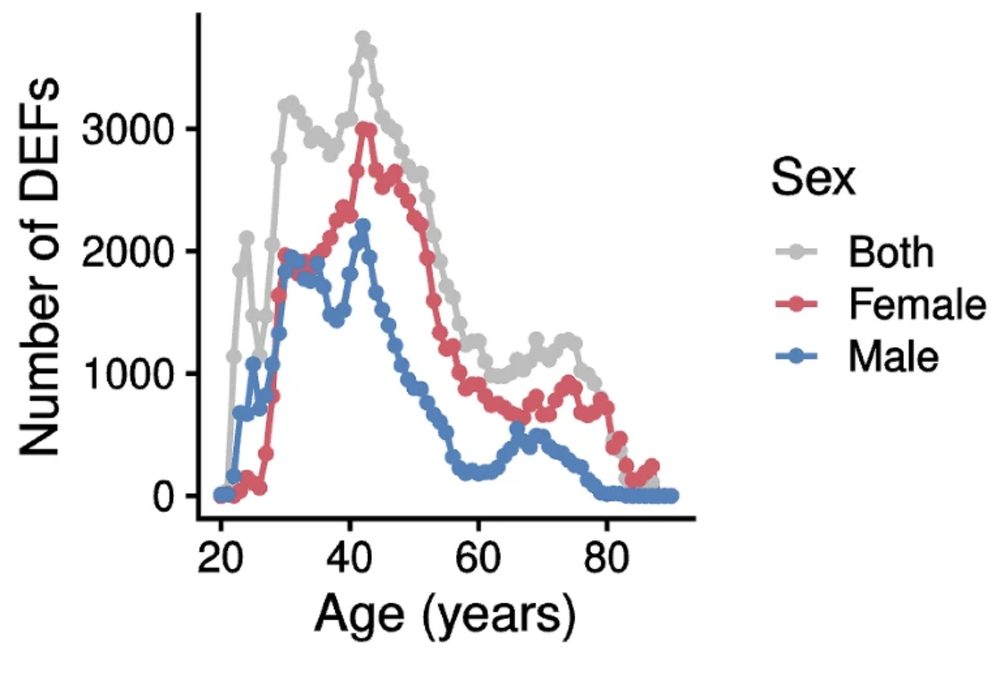
TWO SHARP PEAKS >> New Study Human Immune System suggests that our immune systems age faster at two sharp peaks || Science Alert

The journey from birth to death never did run straight nor smooth.
  1. The human body seems to age in sudden leaps and bounds, and scientists are trying to figure out when these accelerations occur on a cellular level.
  2. A new study on the human immune system suggests that our immune systems age faster at two sharp peaks.

The findings are published in Nature Communications. 

PLEASE NOTE: Findings from this recent analysis echo a 2024 study that reported molecular changes associated with aging occur in two abrupt lurches forward, one at the average age of 44 and the other around age 60.

That 2024 study has since faced criticism for its statistical methods, in a preprint that hasn't yet been peer-reviewed and was co-written by two of the published study's own authors. The authors are now working with the journal on corrections. . .

he age-related gene changes seen in male and female participants, there seemed to be more pronounced changes in gene activity associated with aging among females.

Their two peaks appeared to be somewhat higher.

Humans Age Faster at 2 Sharp Peaks, Research on The Immune System Shows
The number of age-related differences in immune-cell gene activity across adulthood, shown for females (red), males (blue), and both combined (gray). (Park et al., Nature Communications, 2026)

"These peaks remained after applying different sliding-window sizes, different statistical thresholds, different batch effect correction approach, and random down-sampling," the authors explain, "but were no longer detected upon random age permutation, confirming involvement of true biological signals."

Whether or not these two aging peaks are 'artificial' constructs or real surges will require more research.


When the team built biological aging clocks (AI models that estimate a person's age from biological data) based on their results, they estimated a person's age from the gene activity in their immune cells better when the clocks were split: one for males, one for females.

The male clock relied more on genes changing earlier in life, whereas the female clock relied more on genes changing later in life to predict age.

Related: Huge Review of 361 Studies Suggests Eating Less Protein May Slow Down The Aging Process

"The study gives us a more detailed map of how the human immune system changes across the lifespan, and importantly, how those trajectories differ between men and women," says biological scientist Sheemei Lok from Duke-NUS.

"That knowledge is fundamental if we want to move away from treating aging as a one-size-fits-all approach and move towards more precise approaches to maintaining health as people grow older."

The research has been published in Nature Communications. 

Sex-specific trajectories of nonlinear immune aging at single-cell level

Abstract

Despite the female predominance in age- and immune-associated diseases, the pathways underlying sex differences in healthy immune aging remain incompletely understood. Here, we analyze a multi-ethnic single-cell transcriptome of healthy human immune aging (35% Asian), comprising 3.8 million peripheral blood mononuclear cells (PBMCs) from 1,828 individuals aged 19–97 years. Prominent peaks of differential gene expression around 40 (mainly CD4 T cells) and after 60 (mainly CD8 T cells) years of age were accompanied by an age-dependent decline in RNA/protein homeostasis and inflammatory PBMC polarization with sex-dependent kinetics. While females displayed sustained CD8 T cell activation and late-life aging signatures in CD4 T, NK, and B cells, males exhibited early-life fluctuations in CD4 T cell immunometabolism associated with hypomethylation of SSH3 at chromosome 11q13. Deep learning-based biological age clocks stratified for sex outperformed sex-combined models, learning from transcriptional immune trajectories. We thus unravel a nonlinear PBMC aging whereby targeting sex-specific pathways might allow precision geromedicine

===


NEW LINKS >> Hacker News ^ Y Combinator

1. Meta Hid Behind 'Balloonist LLC' to Sneak a $1.6B Datacenter Past a 22-Year-Old ( thedingodaily.com ) 2 points by latein 4 min...