NATO to respond if Baltic Sea pipeline damage deliberate - alliance chief
HELSINKI/BRUSSELS, Oct 11 (Reuters) - NATO will discuss damage to a gas pipeline and data cable running between member states Finland and Estonia, and will mount a "determined" response if a deliberate attack is proven, NATO Secretary General Jens Stoltenberg said on Wednesday.
Damage to the Balticconnector pipeline and telecommunications cable was confirmed on Tuesday after one of the two pipeline operators, Finland's Gasgrid, noted a drop in pressure and possible leak on Sunday night during a storm.
Damage to the Balticconnector pipeline and telecommunications cable was confirmed on Tuesday after one of the two pipeline operators, Finland's Gasgrid, noted a drop in pressure and possible leak on Sunday night during a storm.
Helsinki, which is investigating, has said the damage was probably caused by "outside activity". That has stoked concern over regional energy security and pushed gas prices higher.
"The important thing now is to establish what happened and how this could happen," Stoltenberg told reporters in Brussels ahead of a meeting of the military alliance.
"If it is proven to be a deliberate attack on NATO-critical infrastructure, then this will be, of course, serious, but it will also be met by a united and determined response from NATO."
"If it is proven to be a deliberate attack on NATO-critical infrastructure, then this will be, of course, serious, but it will also be met by a united and determined response from NATO."
- Finland's National Bureau of Investigation said "external marks" had been found on the seabed beside the damaged pipeline and that it was reviewing the movements of vessels in the area at the time of the rupture.
Risto Lohi, the bureau's chief investigator, told a news conference that anchor damage had not been ruled out, adding: "At the moment it looks like the damage was caused by mechanical force, not an explosion."

The pipeline runs between Inkoo in Finland and Paldiski in Estonia across the Gulf of Finland, part of the Baltic Sea which stretches eastward into Russian waters and ends at the port of St Petersburg.
TALKS THURSDAY
NATO defense ministers will discuss the damage on Thursday when they gather for a second day of meetings in Brussels, Finnish defense minister Antti Hakkanen told reporters late on Wednesday.
"We do know that the infrastructure is vulnerable and needs to be better protected," Hakkanen said.
"We do know that the infrastructure is vulnerable and needs to be better protected," Hakkanen said.
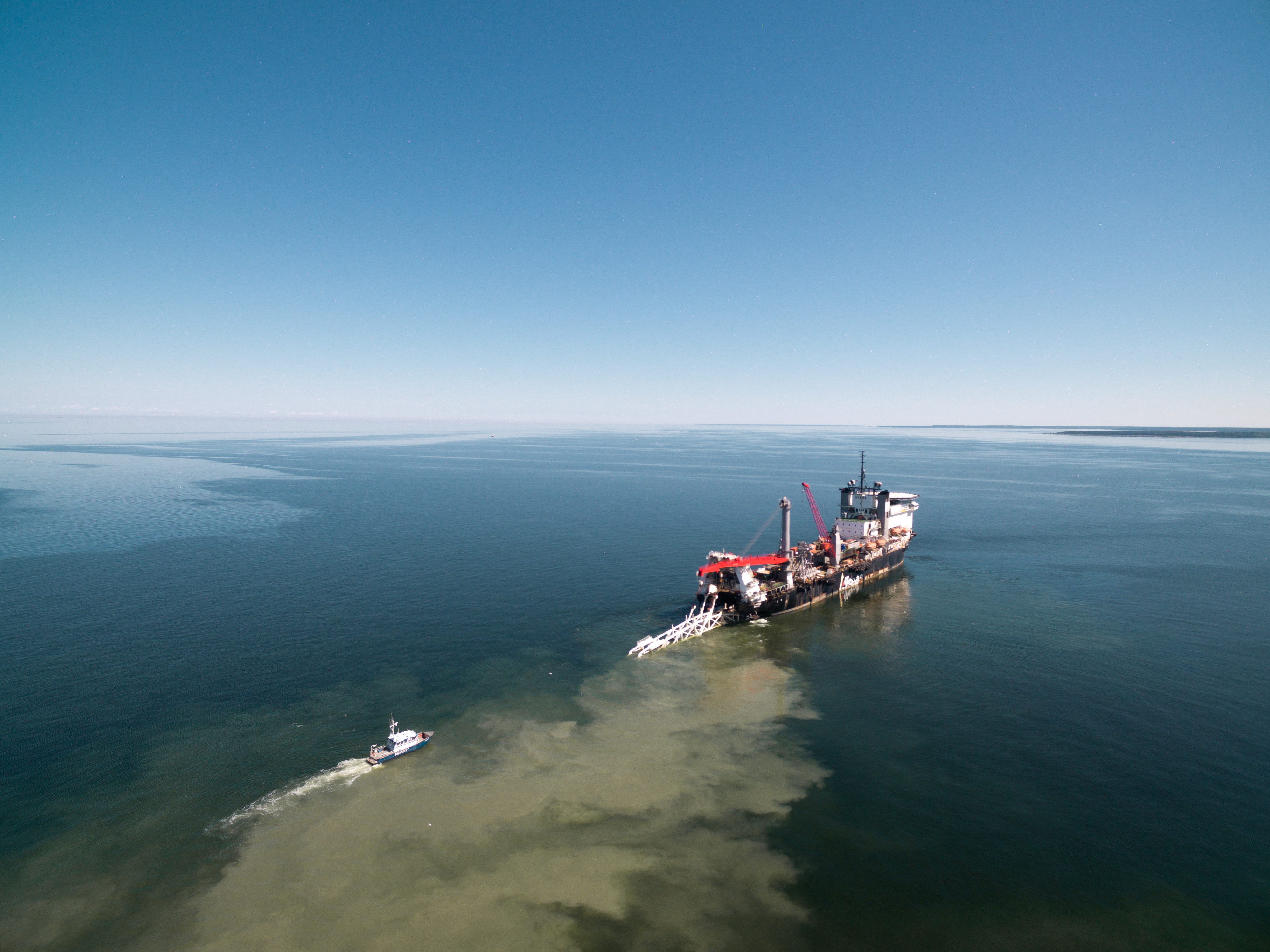
[1/2]A view of the Balticconector pipeline as it is pulled into the sea in Paldiski, Estonia in an undated handout photo taken in 2019. ELERING/Handout via REUTERS/File Photo Acquire Licensing Rights
Balticconnector is jointly operated by Estonian electricity and gas system operator Elering and Finnish gas transmission system operator Gasgrid, which each own half of the pipeline.
The operators said in a statement that planning and carrying out repairs to the pipeline would take at least five months, with gas transfers unlikely to resume before April.
"I think the big question in the long term is ... do we have a clear set of potential countermeasures for such (sabotage) activities? What is the deterrence?" he said.
President Sauli Niinisto and other officials were briefed on Wednesday and preparedness levels raised at critical infrastructure facilities, the Finnish government said. Meanwhile, Norway and Lithuania moved to tighten security at onshore energy installations.
The operators said in a statement that planning and carrying out repairs to the pipeline would take at least five months, with gas transfers unlikely to resume before April.
- Kremlin spokesman Dmitry Peskov described the incident as "disturbing" and told a regular news briefing that the September 2022 attack on the Nord Stream pipelines that cross the Baltic Sea between Russia and Germany have set a dangerous precedent.
- Those larger gas pipelines were damaged by explosions that authorities have said were caused by sabotage.
"I think the big question in the long term is ... do we have a clear set of potential countermeasures for such (sabotage) activities? What is the deterrence?" he said.
President Sauli Niinisto and other officials were briefed on Wednesday and preparedness levels raised at critical infrastructure facilities, the Finnish government said. Meanwhile, Norway and Lithuania moved to tighten security at onshore energy installations.
PIPELINE 'PULLED FROM ONE SIDE
'"It can clearly be seen that these damages are caused by quite heavy force," Estonian Defence Minister Hanno Pevkur told Reuters, with possible causes including "mechanical impact or mechanical destruction."
The pipeline and telecoms cable run in parallel at a "significant" distance from each other, according to the cable operator, Elisa.
The two were damaged "within the same time frame" early on Sunday, Finnish investigators said, with the pipeline break believed to have been in Finnish waters while the cable breach was in Estonian waters.
The Balticconnector pipeline opened in December 2019 to help integrate gas markets in the region, giving Finland and the Baltic nations of Estonia, Latvia and Lithuania more flexibility of supply.
The two were damaged "within the same time frame" early on Sunday, Finnish investigators said, with the pipeline break believed to have been in Finnish waters while the cable breach was in Estonian waters.
- The pipeline, encased in concrete for protection, looks like "someone tore it on the side", Estonian Navy Commander Juri Saska told public broadcaster ERR. "The concrete has broken, or peeled off, specifically at that point of injury."
The damage would not impact Finland's electricity system, grid operator Fingrid said. Gas accounts for 5% of Finland's energy needs.
The Balticconnector pipeline opened in December 2019 to help integrate gas markets in the region, giving Finland and the Baltic nations of Estonia, Latvia and Lithuania more flexibility of supply.
The Balticconnector pipeline opened in December 2019 to help integrate gas markets in the region, giving Finland and the Baltic nations of Estonia, Latvia and Lithuania more flexibility of supply.
_______________________________________________________________________________


Top stories


13 hours a
Reporting by Andrius Sytas in Vilnius, Anne Kauranen in Helsinki, Tom Little in Malmo, Benoit Van Overstraeten in Brussels, Nerijus Adomaitis, Elviira Luoma in Gdansk, Louise Rasmussen in Copenhagen, writing by Gwladys Fouche and Niklas Pollard; Editing by Terje Solsvik, Bernadette Baum and Catherine Evans


No comments:
Post a Comment