- Friday’s EU-US summit was initially set to focus on testing trade issues.
- However, the leaders are expected to stress their strategic partnership against a backdrop of global crises.
___________________________________________________________________________________
BLOOD & TREA$URE/America's Money-Pit...Through The Looking-Glass Darkly
16 Oct, 2023 17:56
US ‘can afford two wars’ – Treasury secretary
Washington is more than capable of supporting country’s overseas interests,
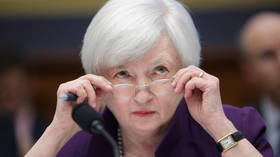
US Treasury secretary Janet Yellen said on Monday that Washington can “certainly” afford to support wars on two separate fronts, saying that its coffers are in good shape to continue backing US interests overseas in its support for Ukraine and amid ongoing tensions in the Middle East.
“America can certainly afford to stand with Israel and to support Israel’s military needs and we also can and must support Ukraine in its struggle against Russia,” Yellen said in a Monday interview with UK broadcaster Sky News in advance of a meeting with Eurogroup finance ministers in Luxembourg.
“America can certainly afford to stand with Israel and to support Israel’s military needs and we also can and must support Ukraine in its struggle against Russia,” Yellen said in a Monday interview with UK broadcaster Sky News in advance of a meeting with Eurogroup finance ministers in Luxembourg.
- Yellen added that the United States’ financial outlook is sufficient to back its allies abroad.
- However, she warned that the potential economic ramifications of a larger conflict in the Middle East remains unknown, particularly amid an already volatile global oil and natural gas market that has contributed to a cost-of-living crisis in several Western economies in the past year.
___________________________________________________________________________________
US leadership 'holds the world together,' Biden says in bid for Ukraine, Israel funds
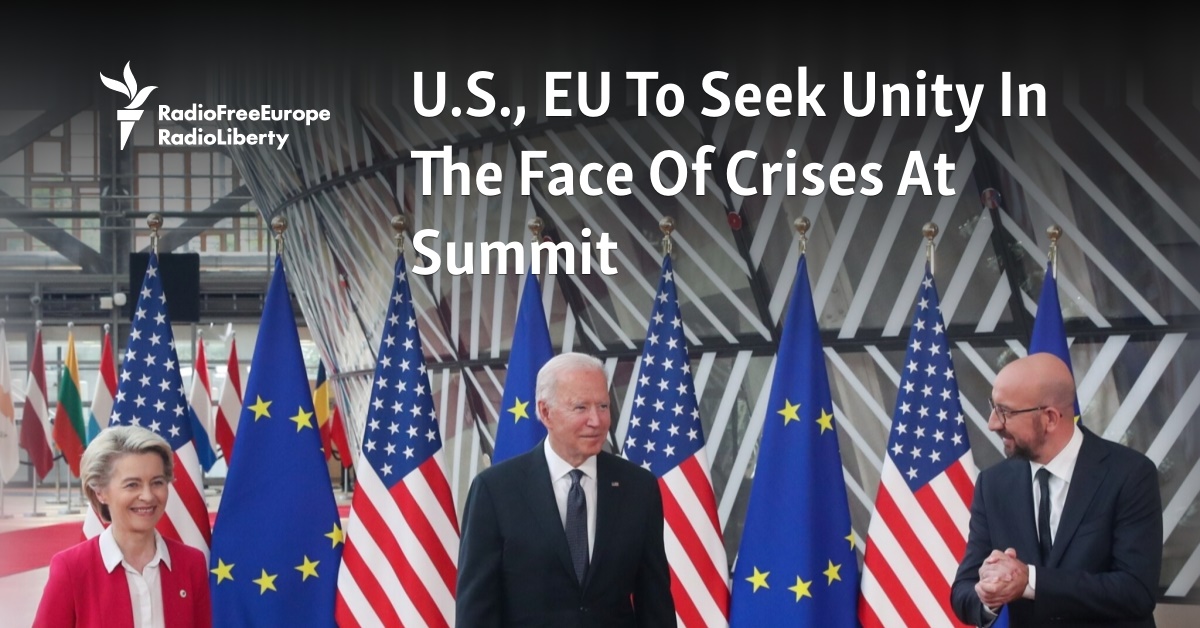
U.S., EU To Seek Unity In The Face Of Crises At Summit
EU-US summit to stress unity amid Israel-Hamas and Russia-Ukraine wars
Biden hosts EU’s Charles Michel and Ursula von der Leyen in the White House as war rages in Gaza and Ukraine.
US President Joe Biden will host European leaders Charles Michel and Ursula von der Leyen in the White House at a summit set to deliver a message of unity on conflicts in Gaza and Ukraine.
- Friday’s EU-US summit was initially set to focus on testing trade issues.
- However, the leaders are expected to stress their strategic partnership against a backdrop of global crises.

A supercontinent of opportunities


Eurasia has good foundations to start the second and later decades of the BRI partnership in the pursuit of new pathways of cooperation
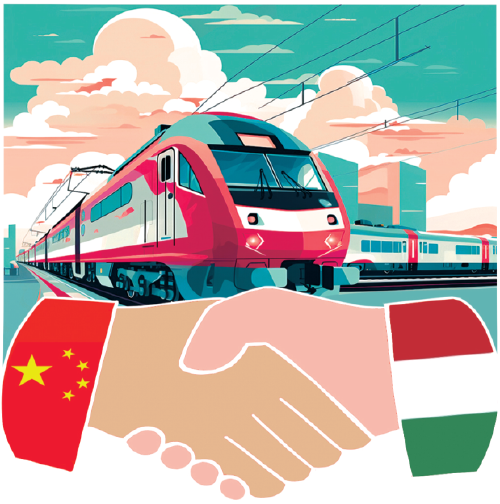
Editor's note: The world has undergone many changes and shocks in recent years. Enhanced dialogue between scholars from China and overseas is needed to build mutual understanding on many problems the world faces. For this purpose, the China Watch Institute of China Daily and the National Institute for Global Strategy, Chinese Academy of Social Sciences, jointly present this special column: The Global Strategy Dialogue, in which experts from China and abroad will offer insightful views, analysis and fresh perspectives on long-term strategic issues of global importance.
This year marks the 10th anniversary of the announcement of the Belt and Road Initiative, which has since become a flagship project of international cooperation on a large scale. Anniversaries serve as a good opportunity to review the past and look toward the future.
After 2010, Hungarian Prime Minister Viktor Orbán and his government announced the Eastern Opening Policy to tap the huge potential of the Eastern hemisphere. For the same reason, Hungary was among the first countries to join the BRI, the development initiative announced by Chinese President Xi Jinping in 2013. The BRI's first decade was a huge success, as it supported the economic and infrastructural development of many countries around the globe. As we know, infrastructure is the base of everything, and infrastructural spending can spur investment demand and boost employment.
After 2010, Hungarian Prime Minister Viktor Orbán and his government announced the Eastern Opening Policy to tap the huge potential of the Eastern hemisphere. For the same reason, Hungary was among the first countries to join the BRI, the development initiative announced by Chinese President Xi Jinping in 2013. The BRI's first decade was a huge success, as it supported the economic and infrastructural development of many countries around the globe. As we know, infrastructure is the base of everything, and infrastructural spending can spur investment demand and boost employment.
- The importance of the initiative can be gauged from the fact that trade between China and the countries participating in the BRI has doubled in the past 10 years, highlighting the economic opportunities beneath.
- Also, until now, more than 150 countries across the globe have joined the BRI through memorandums of understanding and investment partnerships.
- Since 2013, the BRI has grown from a vision to serve as a possible multilateral platform for international infrastructure development.
- Thanks to the appreciation of transcontinental cooperation, Hungary and the Central East European region have become a key area of 21st century geopolitics, providing a connection between Europe and Asia. The Magyar Nemzeti Bank, the central bank of Hungary, developed close relations with the People's Bank of China, and in 2013, among the firsts in Europe, the two institutions signed a bilateral swap agreement that has been renewed many times.
- Since the start of the Magyar Nemzeti Bank's Renminbi Program in 2015, it has encouraged the world to join the process of the Chinese currency renminbi's internationalization, supporting it to become a global currency.
- What China accomplished is unique in the history of mankind, therefore we must learn from it.
The impact of external shocks is very visible. Just take the case of energy price shocks, which require more energy efficiency and innovation, and also put competition for energy sources at the forefront of global politics. At this point of the 21st century, it is necessary to pay close attention to these long-term cycles — both economic and geopolitical — so that the global community is better prepared to address the key challenges of our age.
In the 21st century, we have megatrends, such as the new long-term sustainable economics, a digital, knowledge-based economy, and spatial structures and geo-fusion as the rise of regional and megaregional integrations. It is crystal clear that all of these changes require a new kind of out-of-the-box thinking, long-term visions and measurable targets.
Eurasian cooperation is namely the engine of these aforesaid patterns.
Eurasian cooperation is namely the engine of these aforesaid patterns.
- The world's economic center of gravity is returning to the heart of Eurasia, due to the rise of China and other emerging Asian economies in the past decades.
- We are witnessing the turnarounds of economic policy in Eurasia in the form of successful industries of the future, big data, data centers, green and clean technology, electromobility, biotechnology and future of healthcare, as well as central bank digital currencies.
- New Eurasian networks are the engine of a new sustainable growth paradigm because Eurasia has many power centers in the new multipolar world. These centers exhibit very special innovation capacities, allowing knowledge to spread internationally and achieve the exponential curve through sharing, and re-sharing of new ideas.
The BRI offers sustainable restructuring and knowledge sharing, and this innovation is very visible in the financial technology sector. In summary, the BRI has the capacity for innovation, economic policy coordination, and to create new channels and forms of finance. Besides it is a great source for people-to-people exchanges through mobilizing cultural resources and facilitating the emergence of top universities. Therefore, it offers opportunities for both Europe and Asia.
To win the 21st century, we must take advantage of these high value-added business activities, including knowledge- and technology-intensive BRI projects, to raise our competitiveness to a new level. In this regard, knowledge transfer and co-creation of added value are keys for us in our partnership with China and other BRI partners.
Multilateral development of the BRI will increase its global reach and enable the initiative to play a greater role as a new platform for global governance. In Eurasia and globally we have good foundations to start the second and later decades of the BRI partnership, exploring new pathways of cooperation.


The author is the governor of Magyar Nemzeti Bank, the Central Bank of Hungary. The author contributed this article to China Watch, a think tank powered by China Daily.
Contact the editor at editor@chinawatch.cn.
_____________________________________________________________________________________


No comments:
Post a Comment