"What we take as de facto gender roles today are not inherent, do not characterize our ancestors. We were a very egalitarian species for millions of years in many ways."
OCTOBER 20, 2023
Challenging prehistoric gender roles: Research finds that women were hunters, too
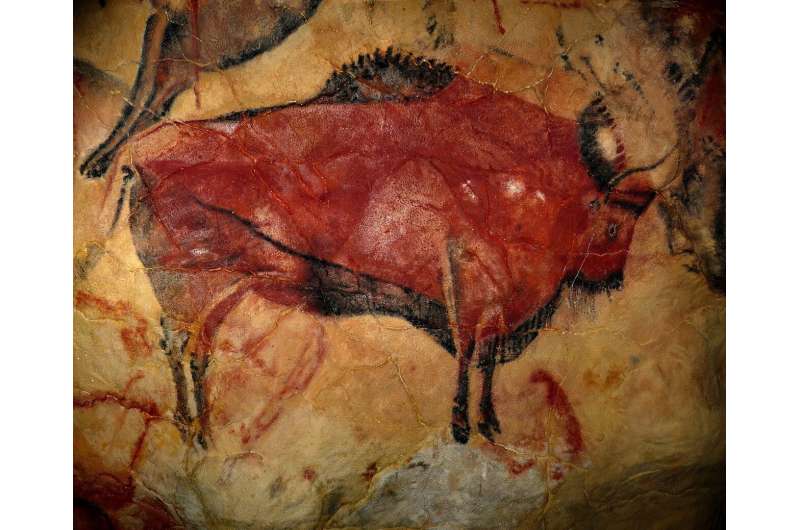
It's a familiar story to many of us: In prehistoric times, men were hunters and women were gatherers. Women were not physically capable of hunting because their anatomy was different from men. And because men were hunters, they drove human evolution.
But that story's not true, according to research by University of Delaware anthropology professor Sarah Lacy, which was recently published in Scientific American and in two papers in the journal American Anthropologist.
- Through a review of current archaeological evidence and literature, they found little evidence to support the idea that roles were assigned specifically to each sex.
- The team also looked at female physiology and found that women were not only physically capable of being hunters, but that there is little evidence to support that they were not hunting.
The researchers found examples of equality for both sexes in ancient tools, diet, art, burials and anatomy.
"People found things in the past and they just automatically gendered them male and didn't acknowledge the fact that everyone we found in the past has these markers, whether in their bones or in stone tools that are being placed in their burials. We can't really tell who made what, right? We can't say, 'Oh, only males flintknap,' because there's no signature left on the stone tool that tells us who made it," Lacy said, referring to the method by which stone tools were made. "But from what evidence we do have, there appears to be almost no sex differences in roles."
- They found that men have an advantage over women in activities requiring speed and power, such as sprinting and throwing, but that women have an advantage over men in activities requiring endurance, such as running.
- Both sets of activities were essential to hunting in ancient times.
- Estrogen can increase fat metabolism, which gives muscles a longer-lasting energy source and can regulate muscle breakdown, preventing muscles from wearing down.
- Scientists have traced estrogen receptors, proteins that direct the hormone to the right place in the body, back to 600 million years ago.
- During the Paleolithic era, most people lived in small groups.
- To Lacy, the idea that only part of the group would hunt didn't make sense.
Man the hunter
- Television cartoons, feature films, museum exhibits and textbooks reinforced the idea.
- When female scholars published research to the contrary, their work was largely ignored or devalued.
- "There were women who were publishing about this in the '70s, '80s and '90s, but their work kept getting relegated to, "Oh, that's a feminist critique or a feminist approach,'" Lacy said.
- "This was before any of the work on genetics and a lot of the work on physiology and the role of estrogen had come out.
- We wanted to both lift back up the arguments that they had already made and add to it all the new stuff."
- While she acknowledges that much more research needs to be done about the lives of prehistoric people—especially women—she hopes her view that labor was divided among both sexes will become the default approach for research in the future.
"It's not something that only men did and that therefore male behavior drove evolution," she said. "What we take as de facto gender roles today are not inherent, do not characterize our ancestors. We were a very egalitarian species for millions of years in many ways."
More information: Sarah Lacy et al, Woman the hunter: The archaeological evidence, American Anthropologist (2023). DOI: 10.1111/aman.13914
Cara Ocobock et al, Woman the hunter: The physiological evidence, American Anthropologist (2023). DOI: 10.1111/aman.13915
Provided by University of Delaware


No comments:
Post a Comment