What is at stake in space today is not merely technological prestige but strategic survivability and economic leadership. The space domain has become an essential extension of terrestrial warfare and national sovereignty. Satellites provide real-time intelligence, secure communications, navigation, missile early warning, and climate surveillance, all of which are indispensable to modern military operations. The proliferation of anti-satellite weapons, orbital interceptors, and cyber-capable space systems by China, Russia, and emerging space powers threatens to destabilize this domain. As a result, nations are pouring unprecedented investments into space-based defense, autonomous platforms, and space traffic management to ensure both deterrence and survivability in orbit.
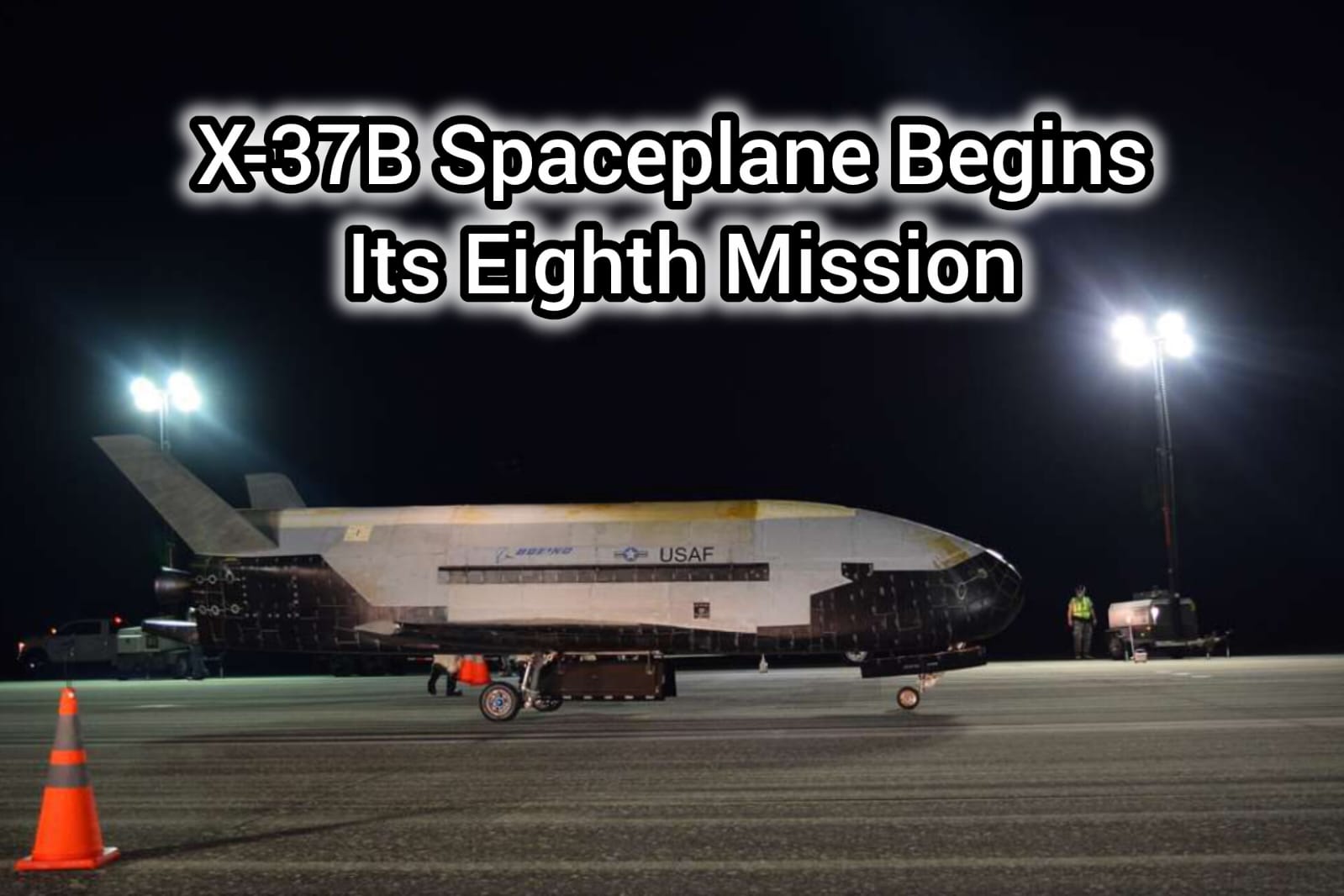
According to information published by SpaceX on August 21, 2025, the United States Space Force (USSF) successfully launched its eighth Boeing X-37B Orbital Test Vehicle (OTV-8), under the mission designation USSF-36, aboard a Falcon 9 rocket from Kennedy Space Center’s Launch Complex 39A in Florida.
Liftoff occurred precisely at 03:50 UTC, marking the continuation of one of the most secretive and long-duration orbital programs ever operated by the U.S. military. The rocket’s first stage executed a controlled descent and landed on the autonomous drone ship “A Shortfall of Gravitas” stationed in the Atlantic Ocean, reinforcing SpaceX’s operational reliability in national security launches.

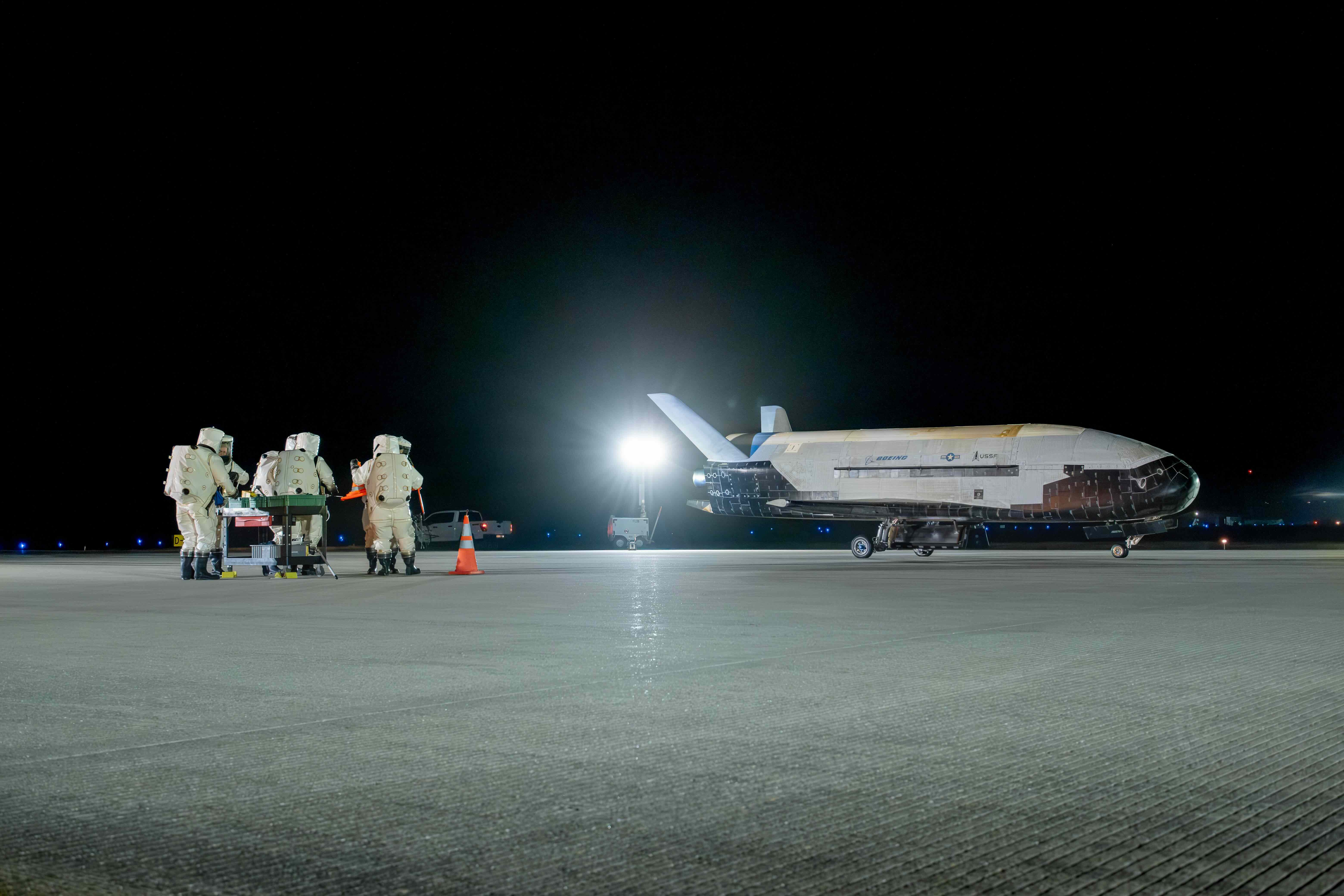
The Boeing X-37B is a reusable autonomous spaceplane capable of long-duration orbital missions, advanced technology testing, and classified military operations for the U.S. Space Force (Picture source: Boei
The origin of the Boeing X-37 dates back to the late 1990s when it was initially developed as a NASA program focused on reusable space vehicle technologies. Conceived as the X-37A, the project aimed to test autonomous flight systems, thermal shielding, and reentry capabilities for future spaceplanes.
- Boeing’s Phantom Works division took the lead in its development under the direction of the Air Force Rapid Capabilities Office.
- Since then, the X-37B has evolved into a classified military asset operated by the U.S. Space Force, blending cutting-edge aerospace engineering with covert defense applications in orbit.

The Boeing X-37B is a highly classified reusable spaceplane developed by Boeing's Phantom Works in partnership with the U.S. Air Force and now operated by the U.S. Space Force. Designed for extended autonomous missions in low Earth orbit, the X-37B measures 8.9 meters long, 2.9 meters tall, and weighs roughly 4,990 kilograms at launch. Its internal payload bay is 2.1 meters long and 1.2 meters wide, capable of hosting a variety of experimental payloads and technologies, with a speed of around 28,000 km/h. The vehicle uses a combination of a GPS-aided inertial navigation system, an advanced thermal protection system, and autonomous flight software to manage both orbital maneuvers and atmospheric reentry.
- It is powered by deployable gallium arsenide solar arrays feeding lithium-ion batteries, allowing for long-endurance missions exceeding two years in duration.
- testing space-based solar power systems,
- evaluating advanced heat shield materials,
- deploying CubeSats for technical experimentation, and
- miniature satellite sensors for intelligence and reconnaissance.

- The vehicle's key innovations include reusable first stages rated for up to 15 flights, titanium grid fins for high-precision landings, and robust avionics systems optimized for both commercial and military operations.
- SpaceX’s partnership with the U.S. Space Force under the National Security Space Launch (NSSL) program enables rapid and cost-effective deployment of critical national assets, giving the United States a strategic edge in space responsiveness and resilience.
- This dual-track approach, supporting both civil and defense missions, places SpaceX at the heart of the U.S. space ecosystem, with unmatched vertical integration and launch cadence.
The X-37B exemplifies this new era of strategic space competition. Its ability to discreetly deploy, maneuver, and operate in space for hundreds of days provides the U.S. with unmatched operational flexibility and intelligence-gathering capabilities.
Missions like USSF-36 are not simply about experimentation, they are about ensuring that the United States maintains orbital dominance in an increasingly contested environment.

As the world moves toward a future where space is a fully militarized and operational domain, the convergence of cutting-edge platforms like the X-37B with commercial launch innovators like SpaceX may prove decisive in shaping the balance of power beyond Earth.


No comments:
Post a Comment