Ukraine's Anti-Corruption Crackdown:
Implications for Defense Spending Efficiency and Foreign Investment Confidence
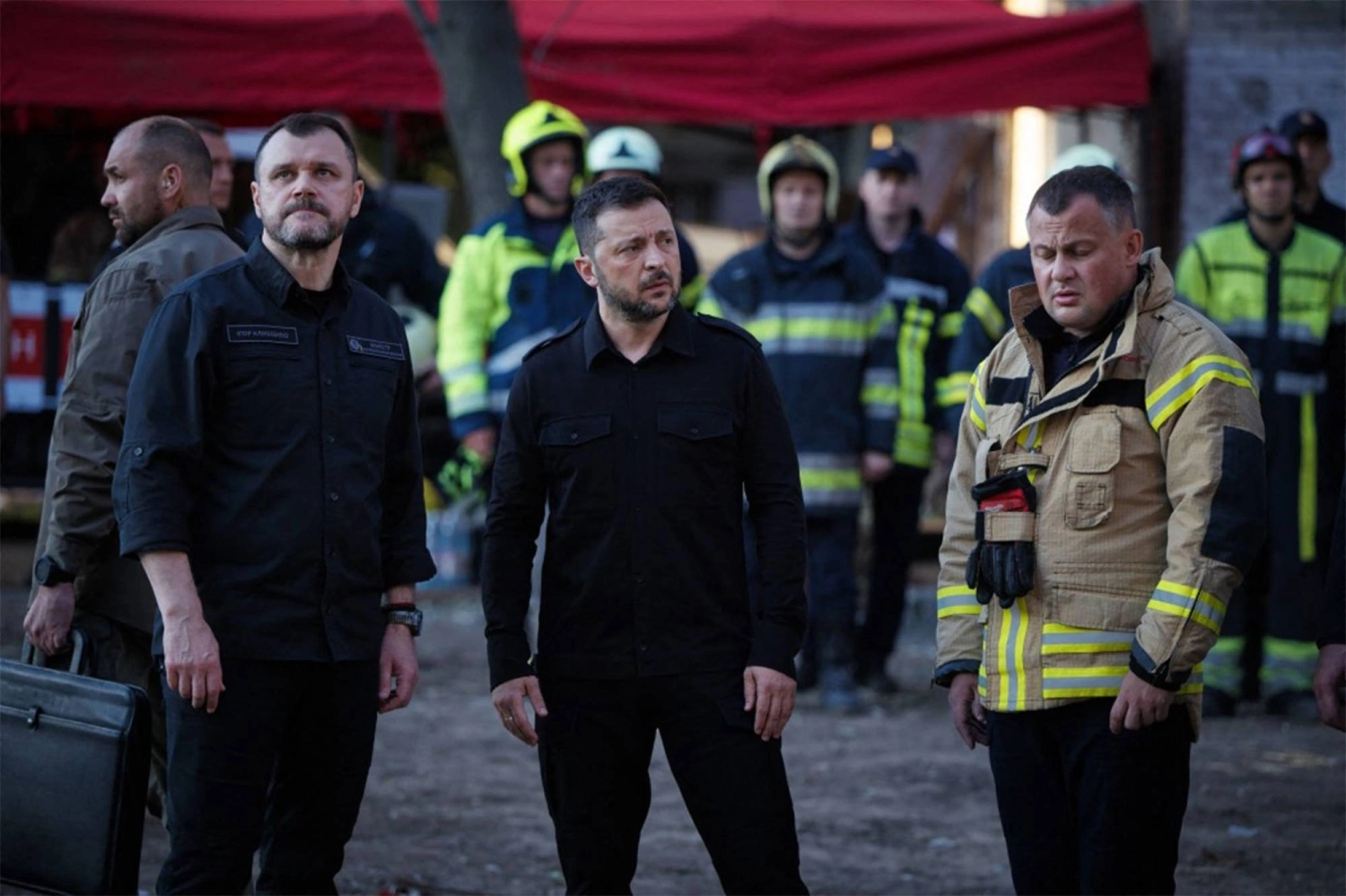
Implications for Defense Spending Efficiency and Foreign Investment Confidence
 3min read
- The government's initial attempt to strip the National Anti-Corruption Bureau (NABU) and the Specialized Anti-Corruption Prosecutor's Office (SAPO) of their autonomy triggered widespread public protests, froze €1.7 billion in EU aid, and raised urgent questions about the country's ability to sustain its reform momentum.
- Yet, the swift reversal of this decision—and the subsequent restoration of NABU and SAPO's independence—has rekindled hopes that Ukraine can strengthen its defense sector and attract long-term investment by reinforcing transparency and accountability.
Ask Aime:
What's the future of Ukraine's anti-corruption efforts after the reversal of stripping NABU and SAPO?
A Test of Institutional Resilience
The July 2025 controversy began when President Volodymyr Zelenskyy proposed a law granting the prosecutor general sweeping control over NABU and SAPO, including the power to reassign cases and issue binding instructions. Critics argued this move would enable political interference in high-level investigations, particularly in the defense sector, where past scandals—such as inflated troop rations in 2023—had already exposed vulnerabilities. The European Union and the OECD quickly condemned the law, warning that it would erode trust in Ukraine's governance and deter foreign capital.
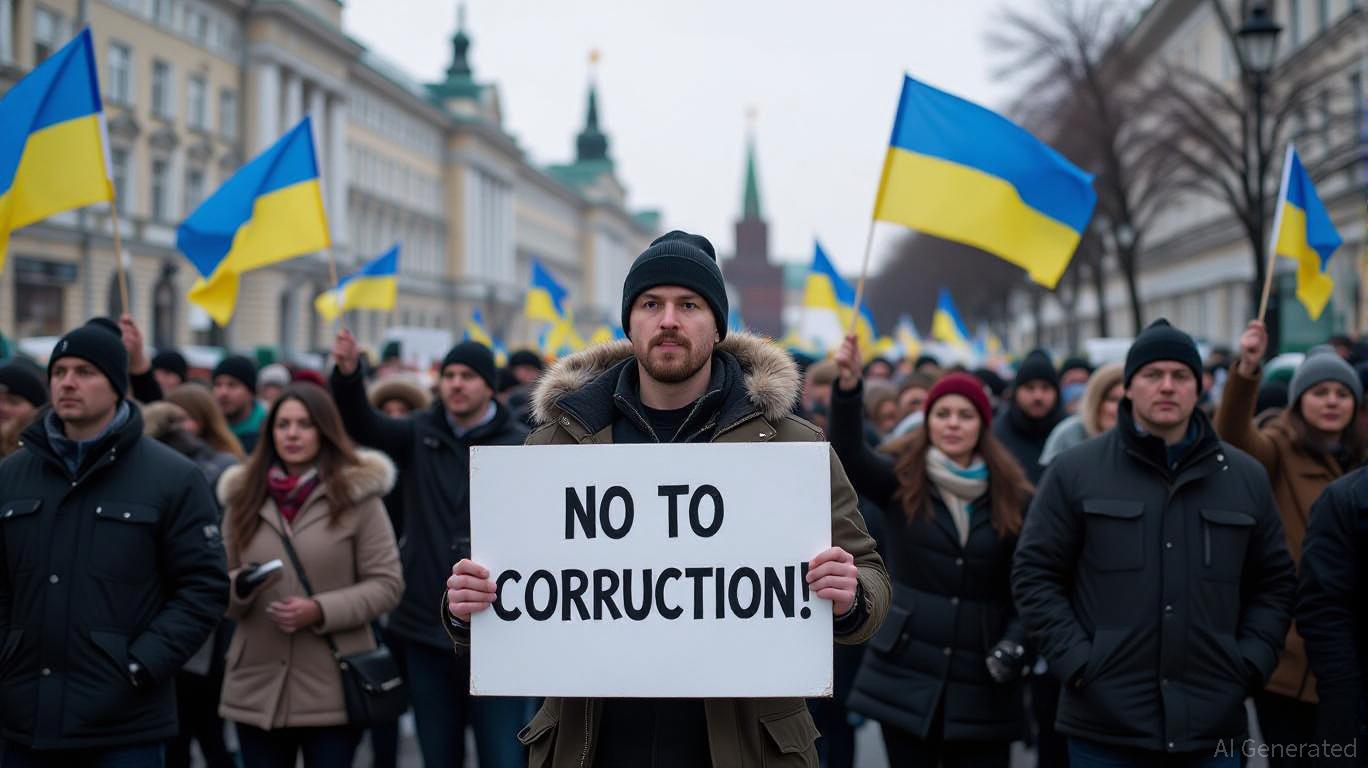
Public backlash was immediate. Thousands of Ukrainians, including students and young professionals, flooded Kyiv's central square, demanding the preservation of anti-corruption safeguards. The protests mirrored the 2014 EuroMaidan movement, underscoring the deep societal commitment to democratic reforms. Under mounting pressure, Zelenskyy reversed course within days, and the Verkhovna Rada passed a new law reinstating NABU and SAPO's independence with 331 votes in favor. This reversal not only averted an aid freeze but also signaled Ukraine's resolve to align with EU rule-of-law standards.
Defense Spending Efficiency: A New Dawn?
With anti-corruption oversight restored, Ukraine's defense sector faces a critical juncture. The government has allocated UAH115 billion for financial support to the Defense Forces and UAH216 billion for procurement and manufacturing of weapons and drones in 2025. These figures reflect a strategic shift toward domestic production, with Zelenskyy aiming to meet 50% of frontline needs through local industry by 2026.
The effectiveness of these funds will hinge on the renewed independence of NABU and SAPO. By investigating procurement irregularities and ensuring compliance with digital platforms like ProZorro (a transparent public procurement system), these agencies can prevent the kind of waste that has historically plagued Ukraine's defense budget. For example, ProZorro has already saved the state over $10 billion since its 2015 launch by streamlining contracts and reducing opportunities for graft.
Ask Aime: Ukraine's anti-corruption institutions restore independence amid public outcry.
However, challenges remain. The delayed appointment of Oleksandr Tsyvinsky as head of the Bureau of Economic Security—a key body for investigating economic crimes—has drawn criticism from the IMF and EU. Investors will need to monitor whether Ukraine can maintain this momentum in appointing capable, independent leaders to its anti-corruption infrastructure.
Foreign Investment: The Long Game
The July 2025 crisis highlighted a fundamental truth: Ukraine's ability to attract foreign capital is inextricably linked to its institutional credibility. Surveys consistently rank corruption as the top barrier to investment, particularly in sectors requiring complex bureaucratic approvals. Yet, the reversal of the anti-corruption law has provided a much-needed boost to confidence.
The EU's Ukraine Investment Framework, which includes €2.3 billion in funding and €580 million in grants, is now more accessible to investors who prioritize projects with strict anti-corruption audits. The European Flagship Fund for Reconstruction, capitalized at €220 million, is also poised to catalyze private equity inflows as security conditions stabilize.
For investors, the defense sector remains high-risk but high-reward. While domestic production of drones and military equipment offers growth potential, it is vulnerable to political shifts. A more balanced approach would prioritize diversification into sectors like agriculture and technology, which are less exposed to institutional fragility. Ukraine's agribusiness sector, for instance, could benefit from EU-backed infrastructure projects, while its tech ecosystem—already a hub for startups and remote work—offers scalable opportunities.
Strategic Recommendations for Investors
- Prioritize EU-Backed Projects: These initiatives are subject to rigorous anti-corruption audits and offer a safer bet for long-term capital.
- Diversify Sector Exposure: While defense holds promise, overreliance on this sector risks volatility. Agriculture and technology provide more stable, scalable opportunities.
- Leverage Digital Governance Tools: Platforms like ProZorro and Diia demonstrate Ukraine's capacity for systemic reform. Investors should integrate ESG frameworks that align with these innovations.
- Monitor Institutional Reforms: The appointment of anti-corruption agency heads and the enforcement of polygraph checks for law enforcement personnel will be critical indicators of progress.
Conclusion
Ukraine's anti-corruption crackdown has proven to be a double-edged sword. The brief erosion of institutional independence in July 2025 exposed vulnerabilities but also galvanized a resilient response from civil society and international partners. As the government moves forward with its defense budget and reconstruction plans, the restored independence of NABU and SAPO will be pivotal in ensuring that public funds are spent efficiently and that Ukraine remains an attractive destination for foreign investment.
For investors, the message is clear: Ukraine's post-war future depends not just on military resilience but on institutional integrity. Those who bet on a transparent, accountable Ukraine stand to gain from a reconstruction effort that could redefine the country's economic trajectory.
CORRUPTION IN ZELENSKIY'S UKRAINE
FACTBOX:
Protests against dismantling of anti-corruption institutions in Ukraine
 REUTERS/ Thomas Peter
Ukraine’s anti-corruption agencies
- In recent years, Ukraine has ranked among the most corrupt countries in the world.
- Western partners of Kiev have consistently emphasized that combating corruption and ensuring transparency in public spending are prerequisites for their continued support.
During the 2014 Euromaidan uprising, anti-corruption rhetoric was central to the opposition’s demands, alongside calls for Eurointegration. The establishment of specialized anti-corruption bodies was strongly advocated by Ukraine’s European allies and the International Monetary Fund (IMF), who called these reforms conditional to the country’s Euro-integration.
- In October 2014, President Petr Poroshenko (2014-2019) signed a package of anti-corruption laws, including the creation of the National Anti-Corruption Bureau of Ukraine (NABU).
- Launched in April 2015, the bureau became operational by October 2015.
- It was meant for "preventing, detecting, and prosecuting high-level corruption crimes that threaten Ukraine’s national security."
- NABU was designed as an independent agency, overseen by a parliamentary committee on organized crime and corruption.
- In December 2015, the Specialized Anti-Corruption Prosecutor’s Office (SAPO) was established as an autonomous unit within the Prosecutor General’s Office, tasked with supervising NABU’s pre-trial investigations in terms of adherence to the law. Both institutions were shielded from interference.
According to the National Anti-Corruption Bureau of Ukraine’s latest data, NABU employees sent to court 69 indictments in cases with a total loss of 18.5 bln hryvnia ($440 mln) in January-June 2025 alone. Charges were brought against 27 officials, including deputies, government members and their deputies, heads of state agencies, state enterprises, and top officials, in the reporting period. Seven persons belonging to this category were convicted.
Among the most high-profile cases handled by the NABU and SAPO were those of Pavel Vovk, head of Kiev’s District Administrative Court and the son of former Interior Minister Arsen Avakov, as well as the embezzlement schemes involving state-owned energy company Ukrnafta.
The agencies also went after the ex-head of the State Property Fund, Dmitriy Sennichenko, looked into the Defense Ministry army food supplies procurement fraud case, and investigated corruption within the National Guard.
- Chernyshov is considered a very influential figure in Zelensky’s (elected as the president of Ukraine in 2019, with executive powers officially expiring in 2024) inner circle.
- The charges against the deputy minister, who vacated his post in July 2025, were filed on June 23, 2025.
- On July 16, NABU reported that, on June 11, SAPO opened a criminal case against former Deputy Prime Minister for European and Euro-Atlantic Integration and former Justice Minister Olga Stefanishyna (who was appointed Ukraine’s US Ambassador earlier in July).
Government crackdown on NABU and SAPO, protests begin
On July 21, Ukraine’s Security Service (SBU) conducted 70 searches of NABU employees and also raided SAPO. NABU officials stated that the searches were carried out without court warrants. During the operation, several anti-corruption officers were detained, including Ruslan Magomedrasulov, head of NABU’s interregional detective unit.
On July 22, Ukraine’s parliament, the Verkhovna Rada, dominated by President Zelensky’s "Servant of the People" party, voted to adopt amendments to a law that effectively eliminate the independence of the National Anti-Corruption Bureau and the Specialized Anti-Corruption Prosecutor’s Office. A total of 263 lawmakers supported the amendments, while 13 voted against them. Zelensky signed the law on that same day. It came into force on July 23.
Under the law, the Specialized Anti-Corruption Prosecutor’s Office was to be placed under the authority of the prosecutor general, who would be able to influence the activities of the National Anti-Corruption Bureau. Apart from that, the law lifted the ban on transferring cases from the Bureau to other agencies, meaning the prosecutor general could now reassign cases to other prosecutors.
Protests gain momentum
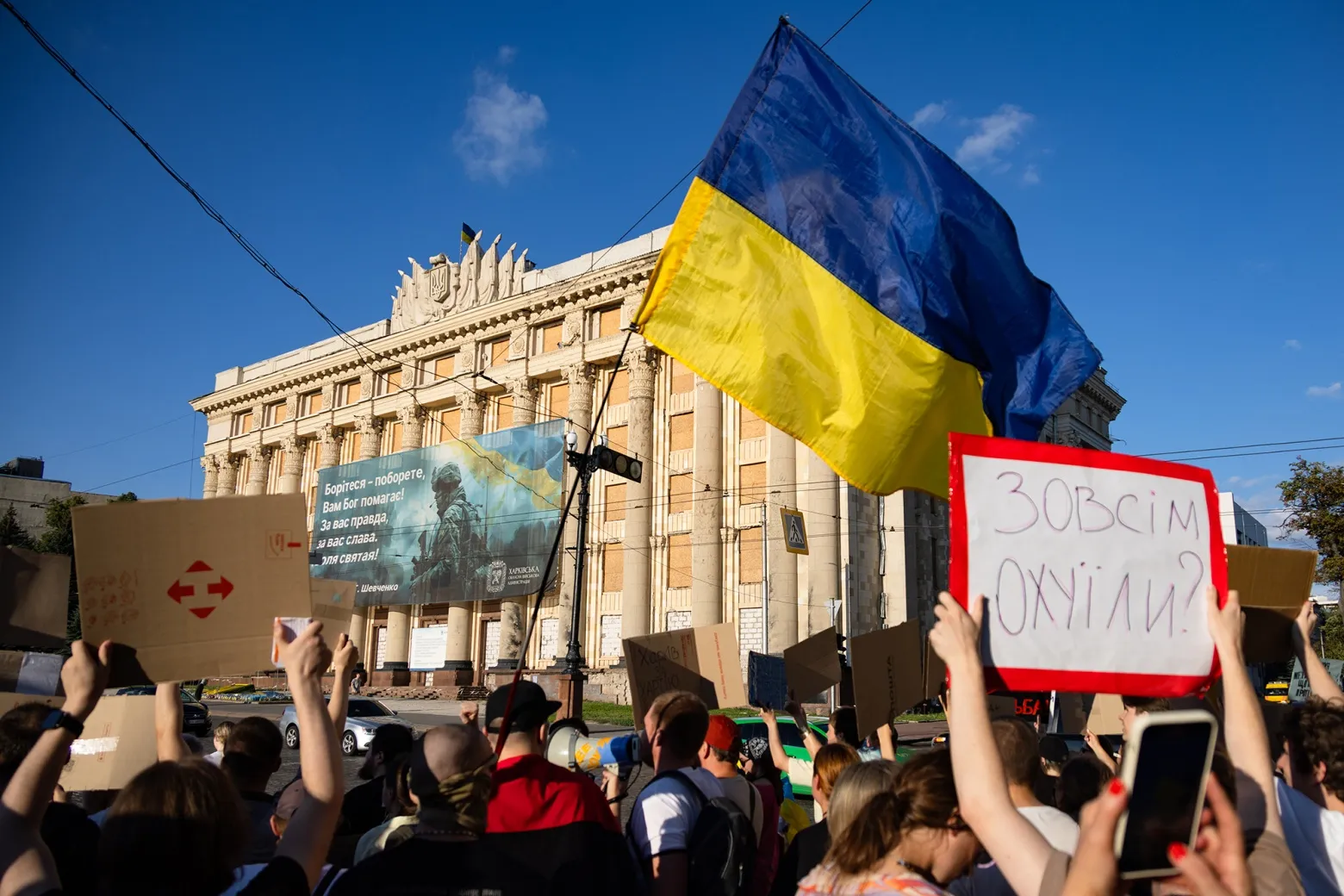
The anti-corruption crackdown sparked protests across Ukraine. On the evening of July 22, nearly 2,000 people gathered in central Kiev, demanding, among other things, the resignation of Andrey Yermak, head of Zelensky’s office. Protests also took place in Dnepr, Lvov, Odessa, Poltava, Rovno, and Ternopol.
On July 23, over 9,000 people protested in Kiev alone. The demonstrators promised to continue protests every day if their demands remained ignored.
On July 24, rallies were under way in 12 Ukrainian cities, according to Ukrainian media. The protests were being held in Chernigov, Kiev, Vinnitsa, Dnepr, Zhitomir, Lvov, Nikolayev, Poltava, Rovno, Ternopol, Kharkov and Khmelnitsky. According to the Strana publication, the protesters in Kiev held posters with the image of Zelensky and Yermak accompanied by slogans like "Murderers of democracy are traitors of Ukraine" and "Dictators."
Western backlash
Ukraine’s European allies, on whom Kiev has relied to provide €164.8 billion in aid since 2022, harshly condemned the decision.
1 On July 23, 2025, European Commission President Ursula von der Leyen demanded an explanation from Zelensky, while European Commissioner for Enlargement Marta Kos called for the law’s repeal. Polish Foreign Minister Radoslaw Sikorski warned that without an independent anti-corruption system, Ukraine’s EU hopes are slim.
2 On July 24, 2025 the spokesperson for the International Monetary Fund Julie Kozack stated that Zelensky’s actions threaten Ukraine’s macroeconomic stability and growth.
3 The same day, The Economist labeled the NABU-SAPO crackdown a strategic error by Zelensky that risks halting international aid to Ukraine.
New bill on NABU and SAPO
On July 24, amid mass protests, Zelensky submitted to the legislature a bill on the so-called strengthening of the powers of the anti-corruption agencies. The bill would require, among other things, that officers of the Security Service of Ukraine subject the staff of the two bodies, along with employees of the State Bureau of Investigation, the Economic Security Bureau and the police who have access to state secrets, to lie detector tests.
- The new law stipulates that investigations will be conducted by NABU itself, rather than by the Security Service of Ukraine (SBU).
- At the same time, NABU's internal control unit must coordinate the methodology for lie detector testing of its employees with the SBU.
- Yaroslav Zheleznyak, a member of Ukraine’s parliament, stated on his Telegram channel that otherwise, the law "reverses the undermining of NABU and SAPO’s independence and reinstates all provisions repealed by the July 22 law."
At a morning press conference in Kiev on July 25, Zelensky said that he respects "the views of [Ukrainian] society" and also admitted he should have communicated with the public before acting on NABU and SAPO’s status.
Verkhovna Rada deputies are expected to convene for an extraordinary session to review the new draft law on July 31, 2025.

There is not even quasi-fight against corruption in Ukraine — Russian MFA

SOLNECHNOGORSK /Moscow Region/, July 26. /TASS/. Russian Foreign Ministry Spokeswoman Maria Zakharova believes that there is not even a quasi-fight against corruption in Ukraine.
Certain structures have been created in Ukraine under the West’s pressure, "which were supposed to control the fight against corruption or perform some kind of anti-corruption function or control over anti-corruption processes," Zakharova said, adding that those institutions "have nothing to do with the fight against corruption." "Those are ways for the West to control the money flows that they send," she said.
On July 21, the Security Service of Ukraine searched 70 NABU employees, and carried out an inspection of the Specialized Anti-Corruption Prosecutor's Office.
On July 22, the Verkhovna Rada, where the majority of deputies belong to Zelensky’s party, passed a law stripping the NABU and SACPO of their status as independent bodies.
That evening, about 2,000 Kiev residents took to the streets in protest, demanding, among other things, the resignation of the head of Zelensky's office, Andrey Yermak.
However, Zelensky signed the law into effect, and it took force on July 23.
Rallies were also held in Dnepropetrovsk, Lvov, Odessa, Poltava, Rovno, and Ternopol.
On the day the law came into force more than 9,000 protesters gathered in the center of Kiev.
Ukraine Moves to Control Anti-Corruption Agencies Blasted by IMF


No comments:
Post a Comment