
- The bonds have since matured, but the cash remains in Euroclear because of EU sanctions against the Kremlin.
- This cash is now invested at the European Central Bank in overnight deposits.
- The EU would then use the cash to issue a reparations loan to Ukraine.
- The loan would be repaid by Ukraine once it receives war reparations from Russia in a peace agreement.


- long-term issuer default ratings of "AA",
- short-term IDRs of "F1+",
- viability ratings of "aa" and
- debt ratings, Fitch said.
Euroclear builds on strong momentum in Q3 2025

Financial highlights
- In the first three quarters of 2025, Euroclear has achieved solid financial performance and demonstrated sustained growth in most business lines coupled with disciplined cost management.
- Underlying business income increased by 7% year-on-year to reach €1.4 billion, driven by record-high deposit levels, resilient settlement activity, strong ETF flows and solid international fixed income volumes.
- As anticipated, interest and banking income continues to decrease (-10%) to approx. €800 million, mainly due to lower interest rates. Nevertheless, net interest earnings exceeded expectations, supported by stable USD interest rates and higher balances.
- After adjusting for non-recurring items, operating expenses increased by €31 million (+3%) to €1,021 million. Cost mitigation measures continue to progress and helped offset inflationary impacts and increased wage-related costs.
- Inversis, in which Euroclear has held a 49% stake since March 2025, contributed €7 million to the share of results, outperforming expectations. Initial synergies were realised with Inversis transferring its international settlement and custody service to Euroclear Bank. As planned, Euroclear will acquire the remaining 51% in the coming years to accelerate the growth of its funds offering and expand its presence in Southern Europe.
- As result of the positive operating leverage, business income operating margin continues to improve to 27.4% (+3.4% percentage points), reflecting continued growth in core activities and effective cost control.
- Resulting adjusted net profit remains stable at €878 million. Adjusted Earnings Per Share is €27.91.
- Euroclear group’s capital position remains very strong, comfortably above regulatory requirements with a Common Equity Tier 1 capital ratio of around 61%2.


Russian sanctions
- Interest earnings from Russian sanctioned assets were €3.9 billion, a 25% year-on-year decrease due to gradual rate cuts. Future interest earnings will continue to evolve in line with future policy rates.
- As required by the EU windfall contribution regulation, Euroclear provisioned €2.6 billion as windfall contribution for YTD 2025, of which €1.6 billion has been paid to the European Commission in July 2025. A second payment for 2025 is expected in early 2026.
- The Russian sanctions and countermeasures resulted in direct costs of €82 million and a loss of business income of €25 million year-to-date.

Russia’s invasion of Ukraine in February 2022
resulted in market-wide application of international sanctions.
Euroclear considers the application of international sanctions as a key
obligation. Therefore, well established processes are in place which
have allowed the group to implement the sanctions while maintaining our
normal course of business.
In line with Euroclear’s risk appetite and policies and as expected by
the EU Capital Requirements Regulation, Euroclear’s cash balances are
re-invested to minimise risk and capital requirements.
- The profits generated by the reinvestment of these sanctioned amounts dating from 15 February 2024 onwards are required to be contributed to the European Fund for Ukraine.
- To date, Euroclear contributed approx. €5 billion to the European Fund for Ukraine.
Euroclear continues to act prudently and to strengthen its capital by retaining the remainder of the Russian sanction related profits as a buffer against current and future risks. Euroclear is focused on minimising potential legal, financial and operational risks that may arise for itself and its clients, while complying with its obligations.
Despite all legal actions taken by Euroclear and the considerable resources mobilised, the probability of unfavourable rulings in Russian courts is high since Russia does not recognise the international sanctions.


EU nightmare begins – Fitch "threatens" Euroclear over Russian assets – Hearing for $230 billion in Russia on January 16
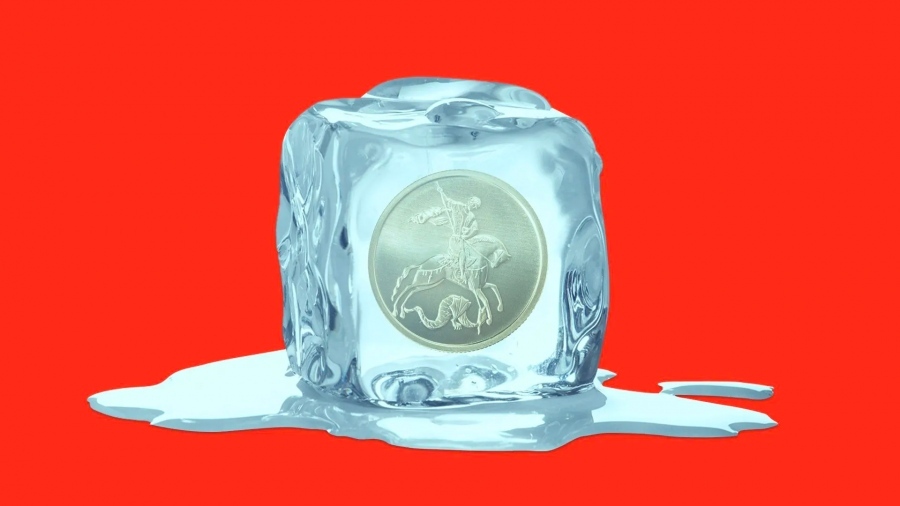
The European Union's nightmare is beginning. Euroclear is at the center of a legal battle with Russia over $230 billion, while at the same time, the American rating agency Fitch is "threatening" it with a "potential negative rating," citing the possibility of legal and liquidity risks.
It is noted that the European Union intends to use 210 billion euros of Russian central bank assets, which have been frozen in Europe following Moscow's 2022 invasion of Ukraine, to support a loan for Kyiv's military and civilian needs in 2026 and 2027. EU leaders agreed on Friday to freeze the assets indefinitely, arguing that they must support Ukraine because they do not want Moscow to one day attack NATO—something Russia denies it plans to do.
However, according to lawyers who spoke to Reuters, although Euroclear does not hold assets in Russia that could be seized, following a widely expected court decision in favor of the central bank's lawsuit, Russia could attempt to enforce it in jurisdictions it considers "friendly."
On January 16, the hearing for the lawsuit against Euroclear
On January 16, a hearing will take place in a Moscow court regarding the Russian central bank's lawsuit against Euroclear, which holds most of the Russian assets frozen in Europe since the 2022 invasion. The Central Bank of Russia has filed for $230 billion in compensation from Euroclear, marking the first step in what the Kremlin has warned will be a legal nightmare for the EU due to its plans to use frozen Russian assets to back Ukraine.
The EU, seeking a way to fund Ukraine's defense and budgetary needs for 2026 and 2027, plans to use up to 165 billion euros of Russian central bank assets frozen in Europe. Euroclear, the Belgian Central Securities Depository, held bonds on behalf of the Russian central bank since the start of the invasion. The bonds have since matured, but the funds remain at Euroclear due to EU sanctions against the Kremlin.
The threat from Fitch
Nonetheless, Fitch warned Euroclear of a downgrade by placing it on "negative watch," citing the potential for a multitude of legal risks and liquidity issues arising from the European Union's plans to use frozen Russian assets for a compensation loan to Ukraine. For its part, Euroclear announced today (12/17/2025) that Fitch's decision highlights the need for greater clarity and detail regarding the proposed compensation loan for Ukraine and that it is preparing for a range of scenarios.
"With the right comprehensive safeguards, we are confident that the significant risks to Euroclear will be appropriately addressed in both the short and long term," a Euroclear spokesperson stated. Fitch warned that insufficient legal and liquidity protection for such a plan could create a mismatch on Euroclear's balance sheet if the Russian central bank's liabilities become payable.
The critical moment for the EU
The European Union is at a critical crossroads. If the EU manages to enforce the seizure of Russian assets without resistance, it will create a dangerous precedent for the international financial system. The consequences for the rule of law, the global economy, and the geopolitical balance will be incalculable.
The weakening of rules protecting state assets may negatively affect international relations and damage trust in EU financial markets. If the Union becomes known for its willingness to use financial tools as political weapons, investors and governments may begin to reconsider their strategy toward European markets and institutions.
Global reactions and impact
The international community is closely monitoring developments. The United States, China, and other major powers view the situation with concern, as a potential spread of this policy to other countries could shake global financial and diplomatic balances. Russia, of course, will continue to oppose these moves, resulting in the strengthening of anti-Western sentiment and trends among its population.
Reactions are also coming from countries that, while not part of the EU, have strong economic ties with it. Japan, India, and other economic powers may re-evaluate their cooperation with the EU if the Union's moves threaten basic principles of international law and economic stability.
The future of Europe as a financial center
Europe faces the risk of losing its title as the world's safest financial center. With the uncertainty surrounding the management of Russian assets, the potential political manipulation of financial markets, and contradictions in its decisions, the EU threatens to undermine the foundations upon which it has built its economic power. Continuing this course risks leaving Europe isolated from the rest of the world, as other players will turn to other markets for greater security and political stability.
The EU's inability to maintain internal cohesion and adhere to international rule of law standards could have long-term consequences for its economy and its position on the global stage. History will judge the EU not only for its decisions regarding Russia and Ukraine but also for the way it manages this internal crisis and the impact it will have on future generations.
If the EU manages to restore order and rebuild trust in its financial markets, it might be able to recover. However, if it continues on this path, its very existence as an economic and political institution may be called into question. The day after for Europe is uncertain and full of challenges. Yet, the decisions made today will determine the future of the Union, international politics, and the economy for decades to come.
www.bankingnews.gr


No comments:
Post a Comment