Friday, May 01, 2026

WARFARE & Defense News: The United States is accelerating development of a new nuclear-armed cruise missile


Long-Range Stand-Off (LRSO) nuclear cruise missile enhances U.S. strategic deterrence with extended-range precision strike capability, replacing the AGM-86B and enabling survivable engagement of high-value targets from outside contested airspace.  


The United States is accelerating development of a new nuclear-armed cruise missile, called LRSO (Long-Range Stand-Off), to ensure its bombers can strike from beyond heavily defended airspace. 
  • This move strengthens the survivability and credibility of airborne nuclear deterrence against advanced adversaries with modern air defenses. 
  • The Long-Range Stand-Off nuclear cruise missile will replace the aging AGM-86B and allow U.S. bombers to deliver nuclear strikes without entering contested zones, expanding operational reach and flexibility. 
  • Announced on April 30, 2026, the effort supports broader nuclear modernization and reinforces deterrence in high-end conflict environments. 
B-52 TESTS AGM-181 NEXT-GEN STEALTH NUCLEAR MISSILE, 🚩 πŸ‡ΊπŸ‡Έ, A U.S. Air  Force B-52H has been spotted conducting integration tests with the AGM-181  Long Range Stand Off (LRSO) missile, the ... 
 
AGM-181 LRSO
US Air Force Unveils New AGM 181 LRSO Nuclear Cruise Missile Design
Read More

1
 

South Korea has launched a new guided-missile frigate that significantly strengthens its ability to control and defend contested waters around the Korean Peninsula. The addition enhances fleet survivability and combat reach across air, surface, subsurface, and land-attack missions. The 3,600-ton warship delivers a multi-role combat platform designed to track and engage diverse threats while supporting escort and sea-control operations.
1
 

India has demonstrated a helicopter-launched anti-ship strike capability by firing two short-range missiles in rapid succession, reducing an enemy vessel’s reaction time and increasing the likelihood of a successful hit. This development strengthens close-range maritime combat options and enhances the Indian Navy’s ability to rapidly engage hostile ships in contested waters.
 

The U.S. Marine Corps is advancing a new class of Collaborative Combat Aircraft based on the MQ-58 Valkyrie to operate alongside crewed jets in contested airspace. This effort aims to expand combat mass, reduce pilot risk, and maintain operational reach against increasingly capable air defenses. The MQ-58-derived platform is designed to perform missions such as reconnaissance, strike support, and electronic warfare while teaming with manned aircraft.
 

The United States is considering deploying its Dark Eagle hypersonic missile to the Middle East to hold Iranian ballistic missile launchers at risk deep inside the country. This move would significantly extend US strike reach and strengthen deterrence by targeting assets that are currently beyond the range of existing systems. Dark Eagle offers high-speed, long-range precision strike capability designed to penetrate advanced defenses and strike time-sensitive targets.
 

TΓΌrkiye is positioning itself as a full-spectrum defense supplier, showcasing at DSA 2026 its ability to deliver integrated artillery, air defense, and naval firepower solutions. This matters because countries seeking rapid force modernization can source complete, interoperable weapon and ammunition packages from a single provider, reducing dependency and improving operational readiness.


A U.S. Air Force B-1B Lancer has been shown in flight carrying an AGM-183A ARRW hypersonic weapon, introducing a new potential launch configuration for American long-range strike operations. The image is operationally important because it places a supersonic heavy bomber within the U.S. hypersonic strike architecture, offering commanders a faster standoff option against protected, time-sensitive targets.
 

The U.S. Army is investing $150 million in next-generation thermal imaging to give its future combat vehicles a decisive edge in detecting and engaging threats first. This move strengthens battlefield awareness and targeting precision for the XM30 and M1E3 Abrams, where superior sensing directly translates into survivability and lethality.
 

Iran has introduced the Rezvan loitering munition, a short-range kamikaze drone designed to deliver precision strikes within a 20 km radius, strengthening its ability to hit targets directly inside the tactical battlespace. This capability increases pressure on forward-deployed forces and enhances Iran’s ability to conduct localized, hard-to-detect strikes in contested environments.
1
 

U.S. F-22 Raptors operated from Basa Air Base in the Philippines during Cope Thunder 26-1, placing fifth-generation stealth airpower close to the South China Sea, the Luzon Strait, and the Taiwan contingency environment. The deployment strengthens forward air combat readiness as China expands military pressure across the first island chain. The exercise showed that U.S.
 

The United States is accelerating production of HIMARS rocket launchers under a $1.13 billion contract to meet urgent demand across U.S. forces and key allies. The move strengthens long-range precision strike capacity, a critical advantage for disrupting enemy positions, supply lines, and command nodes in high-intensity conflict. The new production lot will deliver additional M142 HIMARS systems and support equipment to U.S. units and partners, including Australia, Canada, and Taiwan.
 

The U.S. Army has deployed its VAMPIRE counter-drone system during Exercise Balikatan 2026 in the Philippines, strengthening its ability to counter unmanned threats in a contested Indo-Pacific environment. The system, formally known as the Vehicle-Agnostic Modular Palletized Intelligence, Surveillance, and Reconnaissance Rocket Equipment, reflects a push toward mobile, short-range air defense to protect forward forces from proliferating drones. Images released by the U.S.
 

Malaysia used DSA 2026 International Defense Exhibition to showcase a clear push toward more capable and responsive land warfare forces, emphasizing integrated systems, short-range air defense, and rapid mobility to counter evolving battlefield threats. The developments signal a shift toward stronger operational readiness against both conventional forces and dispersed, hybrid adversaries.
 

AM General has unveiled a next-generation unmanned ground vehicle armed with a remote turret, transforming an autonomous logistics truck into a combat-capable system. This shift matters because it enables Marines to move supplies, scout, and defend against aerial threats without exposing personnel in contested environments. The vehicle integrates a Moog RIwP turret onto a high-performance robotic truck, adding firepower and short-range air defense to autonomous mobility.
 

France has taken a key step toward restoring its long-range land strike capability with the first successful firing of the THUNDART rocket artillery munition. This progress strengthens France’s ability to deliver deep fires in high-intensity conflict, reinforcing deterrence and battlefield reach as legacy systems near retirement.The test validated a domestically developed precision strike solution designed to hit targets at extended ranges with modern guidance and survivability features.
 

Petrel Technologies has demonstrated a new way to extend the reach of FPV strike drones by launching them from its AERO Sky hybrid VTOL unmanned aircraft during a U.S. Army live-fire exercise. The test showed how an airborne mothership can push small precision attack systems deeper into contested terrain while keeping ground operators farther from enemy fire.
 

Italy's Parliament has cleared the transfer of its retired aircraft carrier Giuseppe Garibaldi to Indonesia, shifting a costly inactive asset into a vessel that could expand Jakarta’s maritime command and aviation reach. The transfer strengthens Indonesia’s ability to coordinate operations across its vast archipelago while deepening defense ties between the two countries. Read full defense news at this link...

Read more...
 

The United States is advancing a low-cost loitering munition designed to deliver one-way precision strikes in high-intensity combat, expanding its ability to overwhelm defenses and sustain deep attacks. This development signals a shift toward scalable strike systems that can be deployed in large numbers to pressure enemy air defenses and extend reach across contested battlefields.
 

The United States is accelerating the deployment of its next-generation stealth bomber, B-21 Raider, to maintain credible nuclear and conventional strike power against advanced adversaries. A $6.1 billion funding boost for the B-21 Raider signals its central role in penetrating modern air defenses and sustaining long-range deterrence in contested environments.
 

The U.S. Army is testing a major boost in frontline firepower with the arrival of an Armored Multi-Purpose Vehicle (AMPV) 30mm prototype equipped with a 30 mm automatic cannon, expanding a support platform into a direct combat role. If adopted, this upgrade would give armored brigade combat teams greater lethality and improve their ability to survive and win engagements against enemy infantry and light armored threats.
 

The U.S. Army has awarded General Dynamics Land Systems (GDLS) a $716 million contract to sustain and support key armored combat systems, including the Abrams main battle tank, reinforcing operational readiness across its heavy force structure amid evolving global security challenges. The agreement expands lifecycle support for multiple combat engineering vehicles while ensuring high availability rates for frontline formations and allied users. Announced on April 30, 2026, by the U.S.
 

The U.S. Air Force is requesting $345.7 million to restart development of the AGM-183 ARRW hypersonic missile, preserving a high-speed long-range strike capability for operations in the Indo-Pacific. The move reflects the need for weapons that can penetrate advanced air defenses and rapidly engage high-value targets from standoff distances. ARRW Increment 2 will further develop a boost-glide system designed to reduce warning times and complicate interception.
1


A U.S. Air Force B-1B Lancer has been shown in flight carrying an AGM-183A ARRW hypersonic weapon, introducing a new potential launch configuration for American long-range strike operations. The image is operationally important because it places a supersonic heavy bomber within the U.S. hypersonic strike architecture, offering commanders a faster standoff option against protected, time-sensitive targets.
 

The U.S. Army is investing $150 million in next-generation thermal imaging to give its future combat vehicles a decisive edge in detecting and engaging threats first. This move strengthens battlefield awareness and targeting precision for the XM30 and M1E3 Abrams, where superior sensing directly translates into survivability and lethality.
 

Iran has introduced the Rezvan loitering munition, a short-range kamikaze drone designed to deliver precision strikes within a 20 km radius, strengthening its ability to hit targets directly inside the tactical battlespace. This capability increases pressure on forward-deployed forces and enhances Iran’s ability to conduct localized, hard-to-detect strikes in contested environments.
1
 

U.S. F-22 Raptors operated from Basa Air Base in the Philippines during Cope Thunder 26-1, placing fifth-generation stealth airpower close to the South China Sea, the Luzon Strait, and the Taiwan contingency environment. The deployment strengthens forward air combat readiness as China expands military pressure across the first island chain. The exercise showed that U.S.
 

The United States is accelerating production of HIMARS rocket launchers under a $1.13 billion contract to meet urgent demand across U.S. forces and key allies. The move strengthens long-range precision strike capacity, a critical advantage for disrupting enemy positions, supply lines, and command nodes in high-intensity conflict. The new production lot will deliver additional M142 HIMARS systems and support equipment to U.S. units and partners, including Australia, Canada, and Taiwan.
 

The U.S. Army has deployed its VAMPIRE counter-drone system during Exercise Balikatan 2026 in the Philippines, strengthening its ability to counter unmanned threats in a contested Indo-Pacific environment. The system, formally known as the Vehicle-Agnostic Modular Palletized Intelligence, Surveillance, and Reconnaissance Rocket Equipment, reflects a push toward mobile, short-range air defense to protect forward forces from proliferating drones. Images released by the U.S.
 

Malaysia used DSA 2026 International Defense Exhibition to showcase a clear push toward more capable and responsive land warfare forces, emphasizing integrated systems, short-range air defense, and rapid mobility to counter evolving battlefield threats. The developments signal a shift toward stronger operational readiness against both conventional forces and dispersed, hybrid adversaries.
 

AM General has unveiled a next-generation unmanned ground vehicle armed with a remote turret, transforming an autonomous logistics truck into a combat-capable system. This shift matters because it enables Marines to move supplies, scout, and defend against aerial threats without exposing personnel in contested environments. The vehicle integrates a Moog RIwP turret onto a high-performance robotic truck, adding firepower and short-range air defense to autonomous mobility.

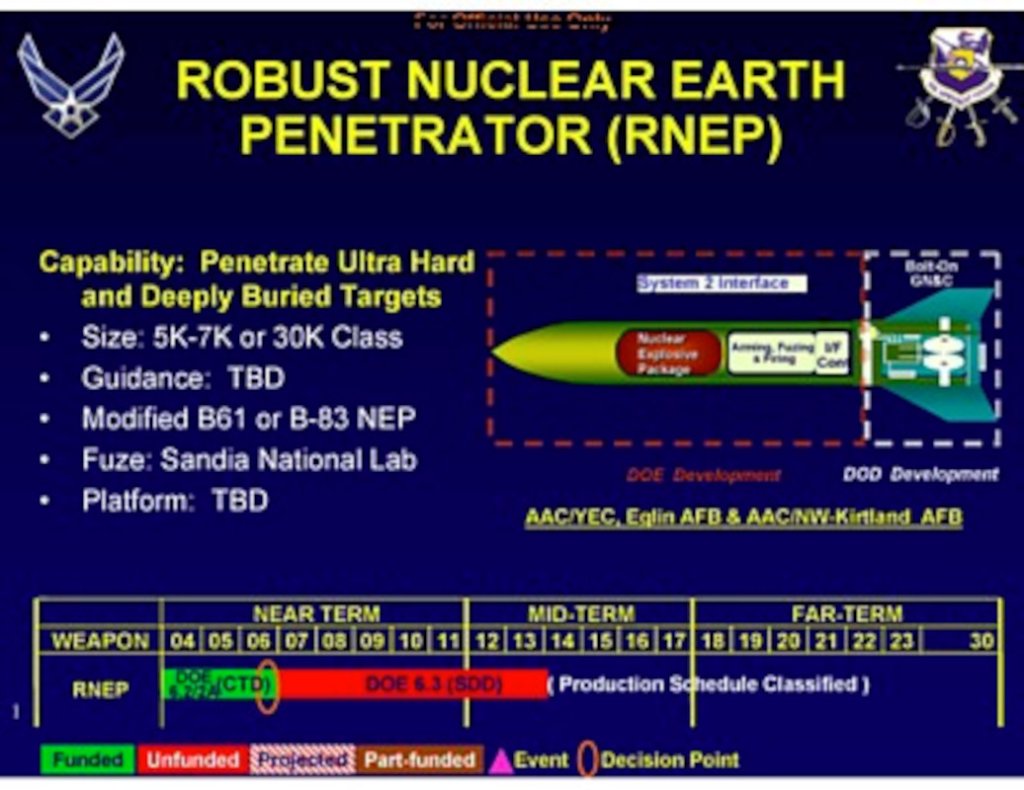
New Nuclear Bunker Buster Bomb Plans Revealed

New Nuclear Bunker Buster Bomb Plans Revealed 

 A U.S. Air Force B-1B Lancer has been shown in flight carrying an AGM-183A ARRW hypersonic weapon, introducing a new potential launch configuration for American long-range strike operations. 
The image is operationally important because it places a supersonic heavy bomber within the U.S. hypersonic strike architecture, offering commanders a faster standoff option against protected, time-sensitive targets. 
  • ARRW is designed to accelerate to hypersonic speed before releasing a maneuvering glide vehicle toward high-value land targets. 
  • Integrated with the B-1B’s speed, range, payload capacity, and standoff employment profile, the weapon could expand U.S. strike geometry against integrated air defenses, missile-support infrastructure, command-and-control nodes, and other critical military targets inside contested environments. 

No comments:

Teaser Trailer #fyp #trending #foryoupage #transformers #trailer | TikTok

TikTok 13 hours ago Teaser Trailer #fyp #trending #foryoupage #transformers #trailer