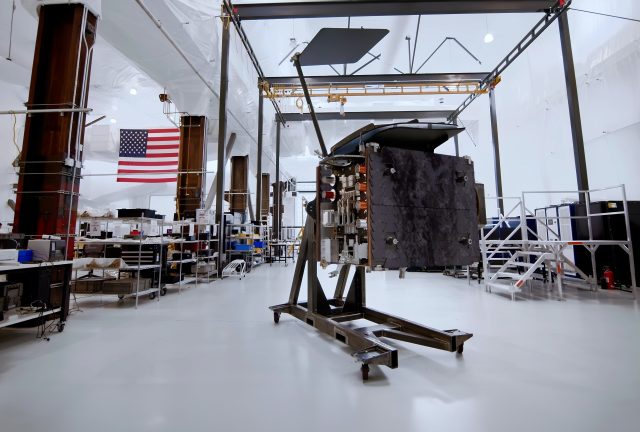


A promising Internet satellite is rendered useless by power supply issues
"The mission of providing Internet connectivity in Alaska will be delayed."
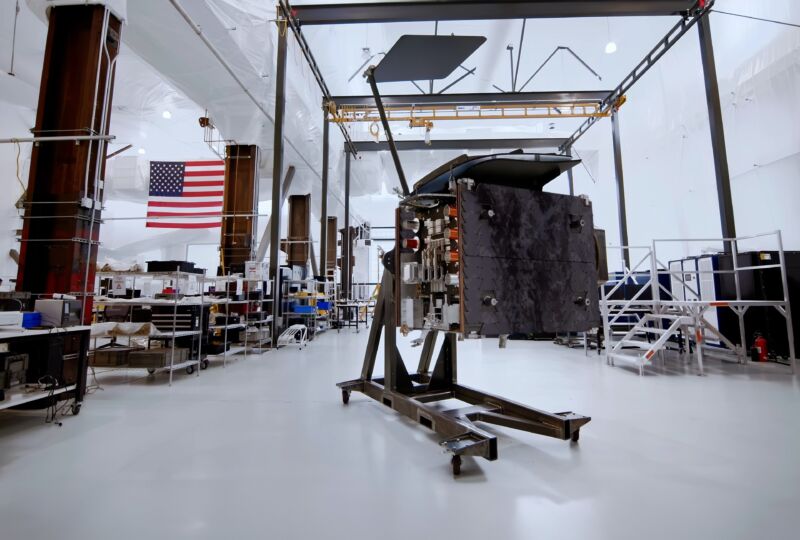
After taking control of the satellite, Astranis then began to send commands and update the flight software before raising Arcturus' orbit and slotting it into a geostationary position overlooking Alaska. Once there, the satellite linked up with an Internet gateway in Utah and communicated with multiple user terminals in Alaska.
- Sometime after this, however, the satellite experienced what Astranis characterized as an abrupt anomaly with a supplier's component on the solar array drive assembly. In an update on Friday,
- Astranis co-founder John Gedmark explained that this assembly rotates to solar arrays to ensure they are always pointed at the Sun, allowing the spacecraft to remain fully powered at all times.
"This is a frustrating situation—the Arcturus spacecraft is in a safe state and fully under our control, the payload and our other Astranis in-house designed components are all working perfectly, and the tanks are fueled for years of on-orbit operation," he said. "But unless something major changes, the mission of providing Internet connectivity in Alaska will be delayed."
Fixed for the future
Astranis was founded in 2015 to determine whether microsatellites built largely in-house could deliver high-speed Internet from geostationary space at a low price. The launch of Arcturus marked the first demonstration that Astranis' small satellite technology worked in space and could survive the harsh radiation and thermal environment previously dominated by much larger satellites that cost hundreds of millions of dollars.
Given that this was an effort to test this technology on a shoestring budget, it is perhaps not surprising that the satellite ultimately failed due to some unforeseen problem. The real acid test for Astranis, now, is to ensure that it learns from this failure and that the company's second satellite works in space.
In his update, Gedmark said the company understands how to quickly solve this issue on future spacecraft that are in production. The company is also working toward a solution to provide Internet service in Alaska, via Pacific Dataport, as initially planned with Arcturus.
The backup plan, he said, "involves a special, multipurpose satellite that can operate as an on-orbit spare and bridge us to a full replacement satellite. We call this satellite UtilitySat. It can operate anywhere in the world, on multiple frequency bands, with the flexibility of a software-defined satellite. UtilitySat has been in the works for over a year, is in the final stages of integration, and is manifested on our very next launch that will take place at the end of this year."

Astranis internet satellite malfunctions before beginning Alaska service, backup planned for spring
- Satellite internet service provider Astranis said Friday its first commercial satellite in orbit, which was intended to provide coverage to Alaska, has malfunctioned.
- The San Francisco-based company says it’s identified the issue and knows how to fix it on future satellites.
- Astranis already has plans in motion to bridge the gap in coverage for Alaska with a backup satellite, which is expected to begin providing service in spring.

Satellite internet service provider Astranis said Friday its first commercial satellite in orbit, which was intended to provide coverage to Alaska, has malfunctioned. A backup satellite is planned for the spring.
It’s an early setback for a unique approach to providing internet service to underserved communities in remote locations. Astranis announced in May that Arcturus was working “perfectly” and could begin servicing Alaskans as soon as mid-June.. .
The company declined to name the vendor that supplied the solar array drives. Gedmark confirmed on Friday that – until the solar array issue – the Astranis-built parts were working. The company had successfully completed early demonstrations of connecting to remote locations in Alaska.
A pre-planned backup
- Astranis will launch the previously unannounced “UtilitySat” as part of its batch of four satellites that are set to fly later this year.
- Gedmark described it as “the Swiss Army Knife of satellites.”
“We’ve built into our model that we’re going to put up a number of these on-orbit spares and backup satellites that can be used to bridge capacity [or] for more secondary missions,” Gedmark said.
Astranis expects UtilitySat to begin providing service to Alaska by spring of next year. Gedmark said the company expects to have a “full replacement” in early 2025.
In the meantime, Astranis will continue looking at ways to potentially recover Arcturus or use it as a demo platform.
- Gedmark suggested the company could use it to test connectivity “anti-jamming capabilities that we might demonstrate as part of the work that we’re doing with our partners at Space Force.”
________________________________________________________________________________


Astranis moves to Plan B after first commercial internet satellite malfunctions on orbit | TechCrunch
Debut Astranis satellite beams first signals to Alaska

The 400-kilogram Arcturus satellite reached its 163 degrees West orbital slot about a week after launching as a secondary payload to the 6,400-kilogram ViaSat-3 spacecraft, Astranis CEO and cofounder John Gedmark said in an interview.
Core functions including the telecoms satellite’s software-defined radio are working as expected, Gedmark said, after Arcturus successfully connected to a gateway in Utah and beamed its first signals to remote user terminals in Alaska.
“It is the biggest milestone that we have hit as a company yet in our seven-year history,” he said..."
Related


________________________________________________________________________________


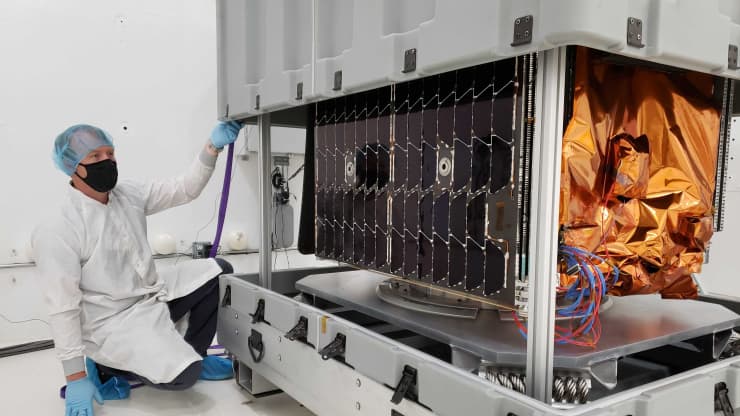

Satellite manufacturer Astranis builds Arcturus (also known as Aurora-4A), a small geostationary high-throughput communications satellite (MicroGEO) to be used to provide broadband communications services for Alaska for lease to Pacific Dataport, Inc. Astranis will be the owner and operator of the satellite.
The 300kgs Arcturus is to use electric propulsion to reach geostationary orbit. The Ku-band HTP communications payload will provide Alaska with a 7.5Gbps capacity. Initially consumers will be able to utilize a 25Mbps downlink and a 3Mb uplink.
Astranis had planned to launch the satellite in Q4 of 2020 on a SpaceX Falcon 9 rocket from Cape Canaveral. The launch was delayed to 2022 with the satellite being moved to a shared Falcon Heavy rocket for a dual launch with ViaSat-3 satellite for satellite operator ViaSat. After delays the launch took place on May 1st 2023.

Astranis Orders Dedicated SpaceX Falcon 9 to Bring 4 Satellites Faster and Closer to GEO Orbit in 2023 | Science Times
>


No comments:
Post a Comment