History of Nature
Nature’s archive comprises all the content published since the journal’s launch in 1869; it includes some images, articles and language that by twenty-first-century standards are offensive and harmful, including sexist, racist and other discriminatory content. This content does not represent Nature’s current values and would be unacceptable to publish today. We have not sought to suppress it because it is part of the scientific and historical record, and so should remain available for scholars now and in the future. Nature is committed to making the changes necessary to ensure that it learns from its past and creates a publication that champions science for everyone.
The future of water, and 150 years
of invisibility: Books in brief
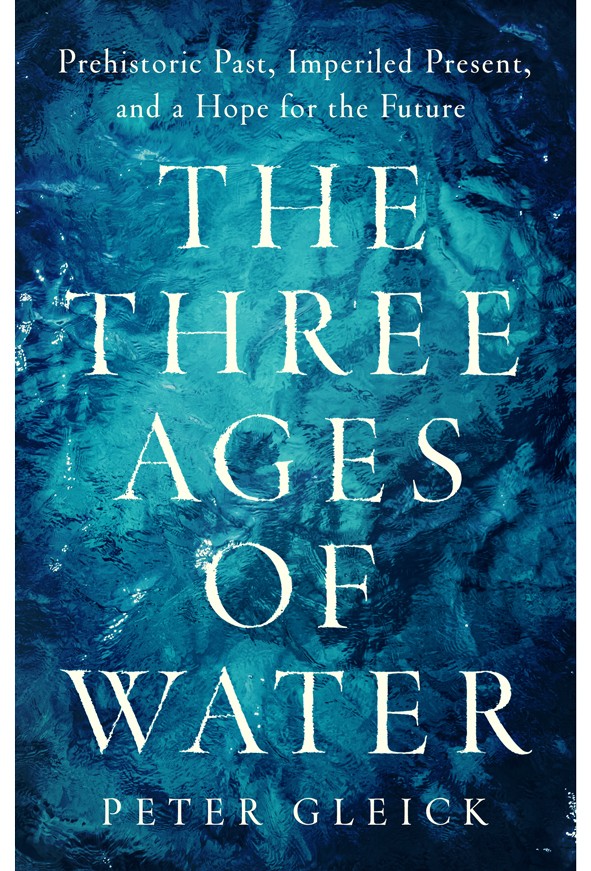
Peter Gleick PublicAffairs (2023)
Water is vital to humans: our hearts and brains are both more than 73% water. Yet we are not conserving the planet’s water, observes hydrologist Peter Gleick, co-founder of the Pacific Institute, a think tank based in drought-prone California. With eloquence and practicality, his essential book discusses the First Age of Water, from the Stone Age to the start of the modern era; the Second Age, of agricultural, industrial and technological revolutions; and the policies required for the Third Age, of sustainability, if civilization is to survive.

Chris Impey MIT Press (2023)
The first confirmed exoplanet orbiting a Sun-like star was spotted in 1995. More than 5,000 exoplanets are now known; hundreds are Earth-like, including one circling Proxima Centauri, the star nearest to the Sun. Astronomer Chris Impey’s intriguing investigation suggests that at least one hosts life, given that, even on Earth, life arose “in the darkness and crushing pressure of a hydrothermal vent”. His sci-fi epilogue imagines a starship sent to Proxima Centauri in 100 years, carrying frozen human embryos to be raised as pioneers by cyborgs.

Michael J. Reiss & Michael Ruse Harvard Univ. Press (2023)
Biology has always been a battle between reductionists, who regard life as a machine built of tiny components, and organicists, who explain it holistically in terms of functioning wholes. For example, reductionists expected genetics to explain organisms’ behaviour — until the Human Genome Project showed that we have many fewer protein-encoding genes than anticipated. Science educator Michael Reiss and philosopher Michael Ruse throw light on the controversy, without partisanship, or educational or philosophical jargon.

Gregory J. Gbur Yale Univ. Press (2023)
In 2006, two independent groups of physicists speculated on how to design an ‘invisibility cloak’ by guiding light around an object and then on its way, as if it had met no obstacle. Within six months, this proposal was demonstrated experimentally using microwaves rather than visible light. “The future of invisibility is very hard to see,” admits surprised physicist Gregory Gbur at the end of his tantalizing analysis of the phenomenon, ranging over more than 150 years and including science fiction such as The Invisible Man (1897) by H. G. Wells.

James Macdonald Lockhart Fourth Estate (2023)
The eight bird species whose songs are discussed in this enchanting UK journey by writer James Lockhart have a range of habitats. They are nightjars on a lowland heath; shearwaters on a mountain by the sea; dippers on a river; skylarks in farmland; ravens in woodland; divers on a loch; lapwings on the coast; and nightingales in dense scrub. Each song introduces a life. For instance, nightingales (ironically) don’t move much at night, performing instead from a single perch, “as though the birds don’t trust the darkness around them”.
doi: https://doi.org/10.1038/d41586-023-02241-0



No comments:
Post a Comment