
China beats rivals with first methane-liquid rocket launch
Elon Musk's SpaceX also racing to develop methane-fueled carrier vehicles

BEIJING (Reuters) -- A private Chinese company launched into orbit on Wednesday the world's first methane-liquid oxygen rocket, beating U.S. rivals in sending what could become the next generation of launch vehicles into space.
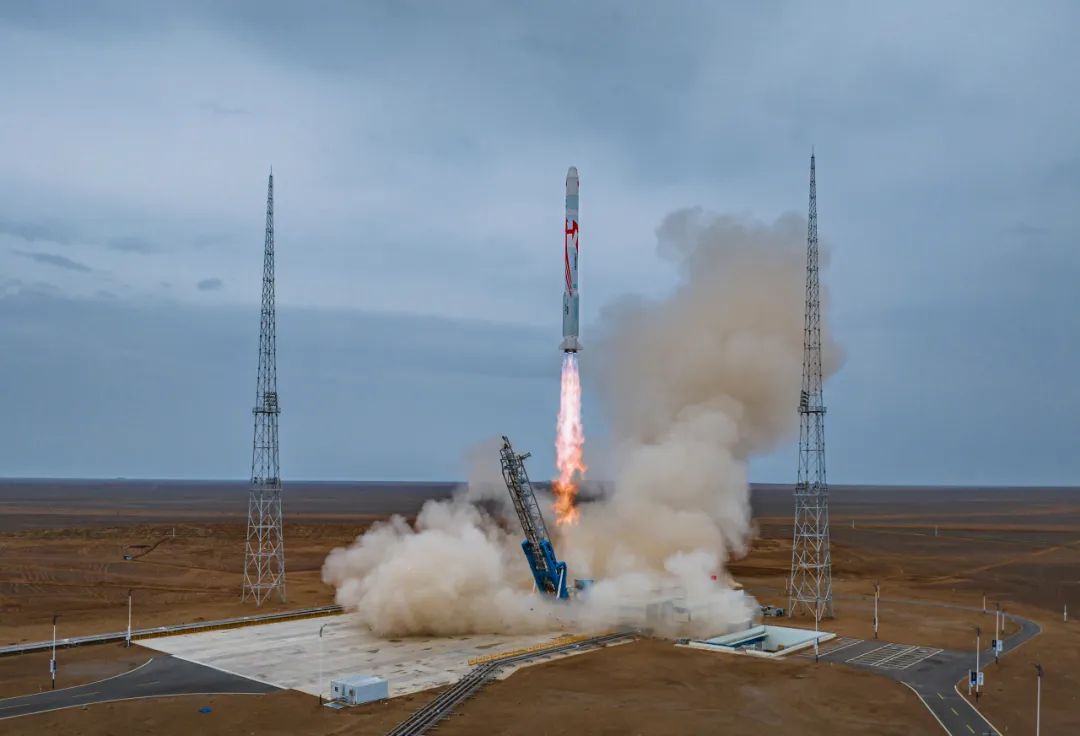
The Zhuque-2 carrier rocket blasted off at 9 a.m. from the Jiuquan Satellite Launch Center in northwest China and completed its flight according to plan, state media reported.
It was the second attempt by Beijing-based LandSpace, one of the earliest firms in China's commercial launch sector, to launch the Zhuque-2. A first attempt in December failed.
Wednesday's launch put China ahead of U.S. rivals, including Elon Musk's SpaceX and Jeff Bezos' Blue Origin, in the race to launch carrier vehicles fueled by methane, which is deemed less polluting, safer, cheaper and a suitable propellant in a reusable rocket.
LandSpace also became the second private Chinese company to launch a liquid-propellent rocket.
In April, Beijing Tianbing Technology successfully launched a kerosene-oxygen rocket, taking another step toward developing rockets that can be refueled and reused.
Chinese commercial space firms have rushed into the sector since 2014, when the government allowed private investment in the industry. LandSpace was one of the earliest and best funded of the entrants.


China beats SpaceX to claim a world first! The first liquid oxygen methane rocket now in orbit!
LandSpace claims win in the methane race to orbit via second ZhuQue-2 launch

LandSpace launched its methane-based ZhuQue-2 rocket on Wednesday. This was the rocket’s second launch after its failed maiden flight in December 2022. Initial claims from the company noted a mission success, marking the first methalox rocket to reach orbit.
The ZhuQue-2 rocket
ZhuQue-2 (Redbird 2 in English) is a rocket designed by the Chinese private company LandSpace. It stands 49.5 meters tall with a rocket body diameter of 3.35 meters. The medium-sized launch vehicle has a carrying capacity of up to six tons into a 200-kilometer low-Earth orbit and up to four tons into a 500-kilometer Sun-synchronous orbit (SSO).
One focus of the development of ZhuQue-2 was green and economically viable methane. According to the LandSpace website, the price of propellant was reduced by 50-90%, comparable to similar Chinese launchers. Furthermore, methane allows for a non-toxic, less-polluting, and more modern approach to fuel the rocket, compared to the hypergolics of the early Chang Zheng family.

ZQ-2 on the pad. (Credit: LandSpace)
Also, ZhuQue-2 utilizes standardization and generalization across the whole rocket. The rocket is made out of off-the-shelf parts when possible, and with that, LandSpace could reduce the cost of the whole stack even further..." MORE > NASASpaceflight.com


Chinese company wins race for first methane-fueled rocket to orbit
LandSpace says its test flight lays the foundation for a reusable rocket.
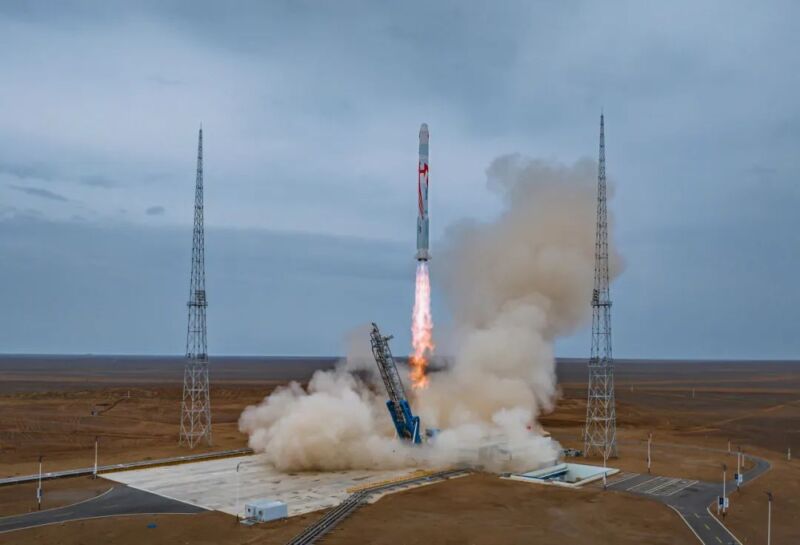
A commercial Chinese firm named LandSpace launched its Zhuque-2 rocket late Tuesday and made history as the first company to send a methane-fueled launcher into orbit, beating a bevy of US vehicles to the milestone.
LandSpace launched the Zhuque-2 rocket at 9 pm ET Tuesday (01:00 UTC Wednesday) from the Jiuquan spaceport, a military-run facility in the Gobi Desert of northwestern China. The company called the launch a success in a press release, and publicly available US military tracking data confirmed the rocket reached an orbit at an average altitude of about 280 miles (450 kilometers).
“The flight mission was completed according to the procedure, and the launch mission was a complete success,” LandSpace said. “The (Zhuque-2) rocket is the world's first liquid oxygen methane rocket that successfully entered orbit, and it is also the first launch vehicle in domestic civil and commercial aerospace to successfully enter orbit based on a self-developed liquid engine.”
The Zhuque-2 (Vermillion Bird-2) rocket is relatively small compared to other methane-fueled rockets in development in the United States. In its current form, the 162-foot-tall (49.5-meter) Zhuque-2 rocket can loft a payload of about 3,300 pounds (1.5 metric tons) into a polar Sun-synchronous orbit, a destination favored for many Earth observation satellites.
SpaceX test-launched its huge methane-fueled Super Heavy booster and Starship launch vehicle from Texas for the first time in April, but the mission was terminated before it reached space. When operational, the reusable Starship vehicle’s payload capacity will be 100 times that of the Chinese Zhuque-2 rocket.
Relativity Space launched its smaller Terran 1 rocket from Florida in March, but the upper-stage engine misfired a few minutes after liftoff, preventing the vehicle from reaching orbit. Relativity has retired the Terran 1 design to move on to the much larger Terran R rocket. United Launch Alliance’s Vulcan rocket, Rocket Lab’s Neuton launch vehicle, and Blue Origin’s New Glenn—all partially or fully fueled by methane—are also in various stages of development.
Methane is all the rage
In the past, most large liquid-fueled rockets have used kerosene, hydrogen, or hydrazine as fuel.
Hydrazine is toxic and has fallen out of favor for use in large rockets, but most members of China’s family of Long March rockets—built and operated by state-owned enterprises—are still fueled by hydrazine. Liquid hydrogen offers the best fuel efficiency of any conventional rocket fuel but is difficult to handle. It has to be stored near minus 423° Fahrenheit (minus 253° Celsius) and is prone to leaks because of the hydrogen molecule’s tiny size.
A highly refined grade of kerosene, RP-1 (Rocket Propellant-1), is the most common liquid fuel for rockets currently in service. Kerosene is stored close to room temperature and can power high-thrust engines, and its higher density translates into smaller fuel tanks.
But engineers have widely accepted methane as the preferred fuel for a new generation of rockets. Liquid methane is a cryogenic fluid, but it has a warmer boiling point and higher density than hydrogen. Its temperature is closer to that of liquid oxygen, used as an oxidizer on rockets fueled by hydrogen, kerosene, and methane.
Methane provides other benefits for reusable rockets. Kerosene fuel—used to power SpaceX’s reusable Falcon 9 boosters—deposits more soot inside reusable rocket engines, requiring cleaning and refurbishment between missions. That’s one of the reasons SpaceX switched to methane for its next-generation Starship rocket.
There’s another advantage to methane, but it may not be realized for decades. Future explorers could tap into natural resources on Mars to produce their own methane rocket fuel.
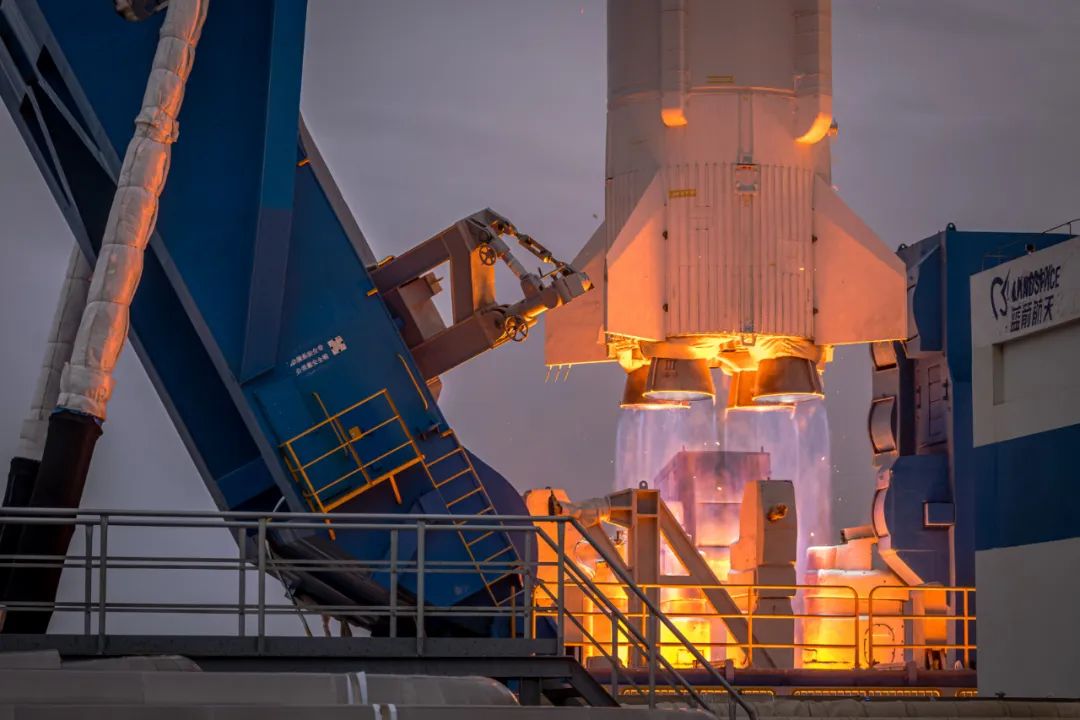
The successful launch of LandSpace’s rocket late Tuesday followed the first flight of the Zhuque-2 launcher in December. A vernier engine on the Zhuque-2 rocket’s second stage prematurely shut down on the December test flight, leaving the vehicle short of the velocity required to enter a stable orbit around Earth.
There was no such trouble on the second Zhuque-2 launch, which didn’t carry any functional satellites. LandSpace says it is preparing a third Zhuque-2 rocket for another mission by the end of the year, potentially with customer payloads aboard.
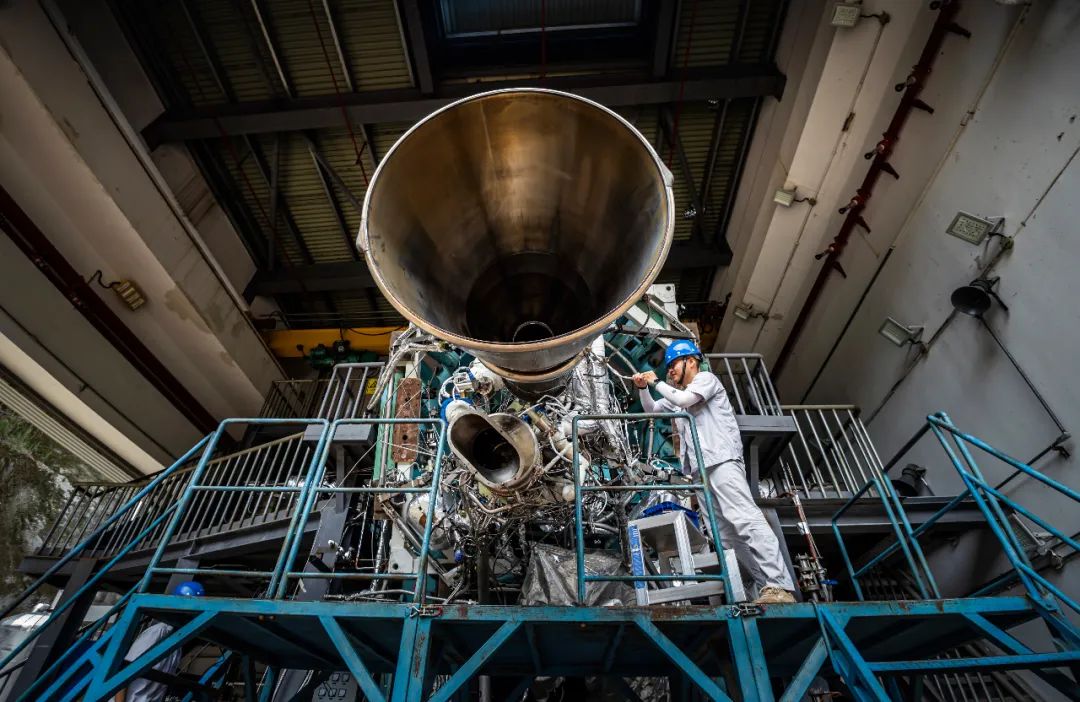
The two-stage Zhuque-2 rocket is powered by four TQ-12 engines on its first stage, consuming methane and liquid oxygen propellants to generate nearly 600,000 pounds of thrust at liftoff. The upper stage has a single TQ-12 main engine and a lower-thrust vernier engine. The TQ-12 engine relies on a gas generator cycle, and not the complex staged combustion cycle crucial to the design of more powerful and efficient methane-fueled engines like SpaceX’s Raptor for the Starship/Super Heavy rocket or Blue Origin’s BE-4 for the Vulcan and New Glenn launch vehicles.
China's “private” space industry is growing fast
LandSpace’s first launch attempt in 2018 used a solid-fueled rocket design called Zhuque-1 that likely employed propulsion technology from the Chinese military’s fleet of ballistic missiles. After one failure with the Zhuque-1, LandSpace moved on to complete the development of the larger Zhuque-2.
Engineers at LandSpace are developing an improved rocket that the company says will haul payloads of up to 8,800 pounds (4 metric tons) into a 310-mile-high (500-kilometer) polar Sun-synchronous orbit, more than twice the capacity of the current Zhuque-2 design. LandSpace is also working on a variable thrust, reignitable version of the TQ-12 engine that will enable propulsive landings of the first-stage booster.
LandSpace said the two Zhuque-2 launches to date have “laid a solid foundation” for a reusable variant of the rocket.
Space policy reforms implemented by the Chinese government in late 2014 opened the door for private capital to begin funding new satellite and launcher companies. China’s space program has historically been managed by state-owned organizations. LandSpace was established in 2015 and has raised more than $300 million from a mix of venture capital firms and investment funds backed by the Chinese government.
Another quasi-commercial Chinese rocket company—Space Pioneer—became the first privately funded Chinese launch operator to reach orbit with a liquid-fueled rocket in April. Unlike LandSpace’s reliance on self-developed engines, Space Pioneer’s Tianlong 2 rocket used kerosene engines provided by a subsidiary of the China Aerospace Science and Technology Corporation, the main government-owned contractor that oversees China’s space program. A larger rocket on Space Pioneer’s roadmap—Tianlong 3—is scheduled to debut in 2024 with a lift capacity similar to SpaceX’s Falcon 9 rocket. The Tianlong 3 is designed to eventually have a reusable first stage.
Some of the new generation of privately funded Chinese rockets are well-sized to deploy China’s 13,000-satellite Guowang network to provide broadband Internet connectivity, a potential analog to mega-constellations like OneWeb and SpaceX’s Starlink.
While LandSpace and many of its contemporaries in the burgeoning Chinese space industry may operate commercially—largely relying on private funding and revenue—it is difficult for international observers to ascertain how much technical support the companies receive from the government. In its press release announcing the successful launch of the Zhuque-2 rocket, LandSpace thanked several Chinese government entities for their “guidance and concern.” They included China’s National Defense Science and Technology Bureau and the Equipment Development Department of the Military Commission.


No comments:
Post a Comment