Normally when a democratic country passes through turbulence, there is some prospect of the turbulence coming to an end.
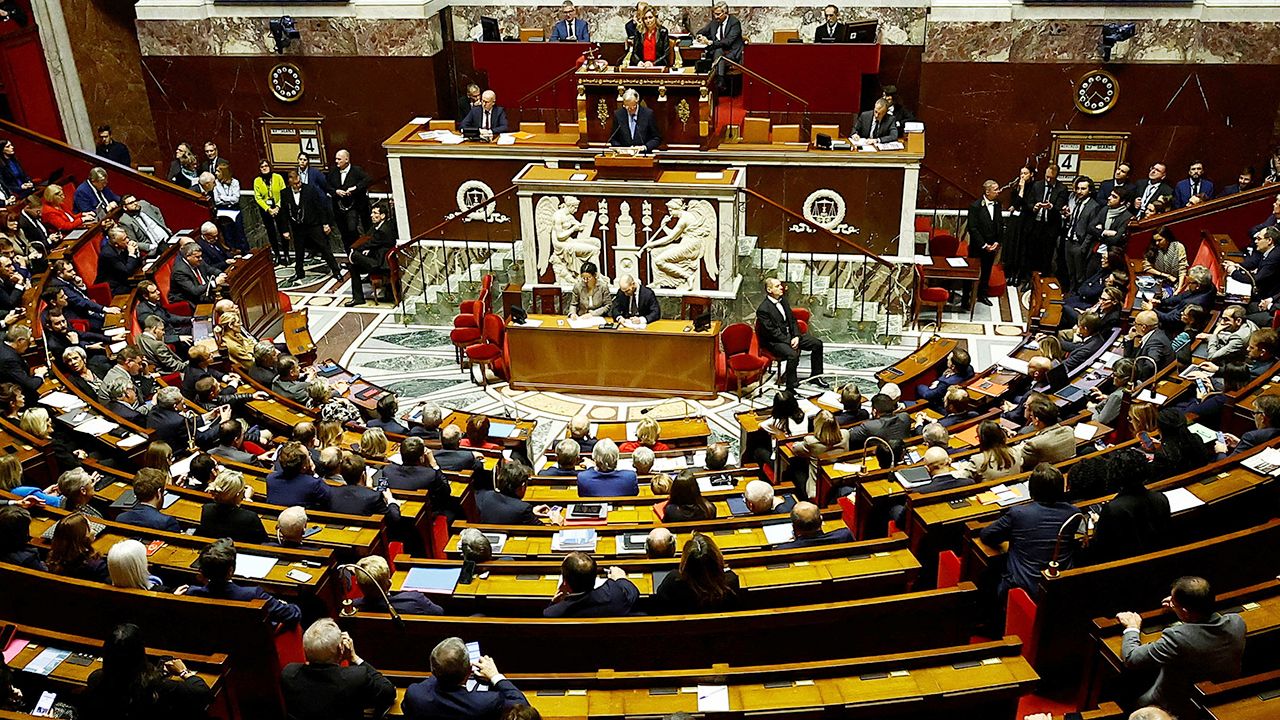
Not today in Paris. If anything, the downfall of Michel Barnier – toppled in parliament by a no-confidence motion – threatens to set a pattern for what lies ahead.
For if Barnier – a moderate of the centre-right with a reputation for courtesy and compromise – was unable to pass a budget, then who else can?
The original cause of the crisis has not gone away. It is the division since July of the National Assembly into three roughly equal blocs, none of which is prepared to deal with another.
As a result the two blocs that make up the opposition will always be able to unseat the one bloc that forms a government.Add to that a mood of near-insurrection on some opposition benches – plus an ideological push for ever more generous spending pledges, despite stark warnings about the national debt – and the idea of a return to serene central politics seems very distant.
For many it is a crise de régime which is being played out, with the very future of the Fifth Republic institutions in jeopardy.
Barnier downfall threatens to set a pattern for what lies ahead
. . .According to Nicolas Beytout, of the pro-business L’Opinion newspaper, this is the start of a series of crises which – counterintuitively – the country actually needs. Because only by being brought face-to-face with the economic abyss, will voters, parties – the country – accept the tough decisions that lie ahead.
Beytout predicts that any new prime minister will face the same problems as Barnier, and like him fail.
“A new government needs time, which it won’t have. It needs a majority, which it won’t have. And it needs the determination to see through the necessary reduction in state spending – which it won’t have.
“So I expect to see several more motions of censure, and several more falls of government – before eventually we start to wake up.”
.jpg)


===




No comments:
Post a Comment