Erik Prince: Letters of Marque Would Allow Private Organizations to Wipe Out Drug Cartels
Elizabeth Weibel1 Feb 2025
- Prince admitted that he had “helped put this idea in Senator Lee’s head.”

H.R. 6869: To authorize the President of the United States to issue letters of marque and reprisal for the purpose of seizing the assets of certain Russian
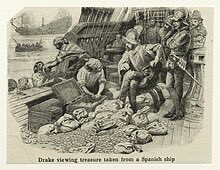
“Letters of marque and reprisal are government-issued commissions that authorize private citizens (privateers) to perform acts that would otherwise be considered piracy, like attacking enemy ships during wartime Privateers are rewarded with a cut of the loot they ‘bring home,'” Lee explained in his post.
A common practice among Europeans from the late Middle Ages to the 19th century, cruising for enemy prizes with a letter of marque was considered an honorable calling that combined patriotism and profit. Such legally authorized privateering contrasted with unlicensed captures of random ships, known as piracy, which was universally condemned.[1] In practice, the differences between privateers and pirates were sometimes slight, even merely a matter of interpretation. . .
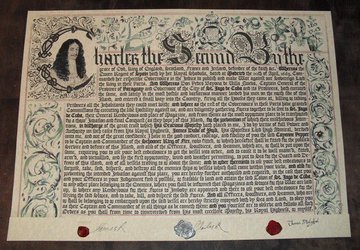
According to the Oxford English Dictionary, the first recorded use of "letters of marque and reprisal" was in an English statute in 1354 during the reign of King Edward III. The phrase referred to "a licen[c]e granted by a sovereign to a subject, authorizing him to make reprisals on the subjects of a hostile state for injuries alleged to have been done to him by the enemy's army".[6]. . .
21st-century American reconsideration of letters of marque
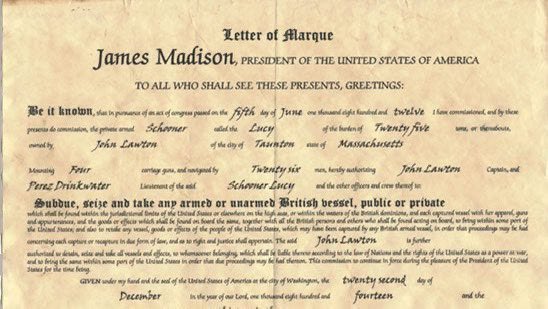
Article I of the United States Constitution lists issuing letters of marque and reprisal in Section 8 as one of the enumerated powers of Congress, alongside the power to tax and to declare war. However, since the American Civil War, the United States as a matter of policy has consistently followed the terms of the 1856 Paris Declaration forbidding the practice. The United States has not legally commissioned any privateers since 1815, although the status of submarine-hunting Goodyear airships in the early days of World War II created significant confusion. Various accounts refer to airships Resolute and Volunteer as operating under a "privateer status", but Congress never authorized a commission, nor did the President sign one.[41]
The issue of marque and reprisal was raised before Congress after the September 11 attacks[42] and again by Congressman Ron Paul on July 21, 2007. The attacks were defined as acts of "air piracy" and the Marque and Reprisal Act of 2001 was introduced, which would have granted the president the authority to use letters of marque and reprisal against the specific terrorists, instead of warring against a foreign state. The terrorists were compared to pirates in that they are difficult to fight by traditional military means.[43] On April 15, 2009, Paul also advocated the use of letters of marque to address the issue of Somali pirates operating in the Gulf of Aden. However, the bills Paul introduced were not enacted into law.
During the 2022 Russian invasion of Ukraine, the United States Congress considered a bill to "[authorize] the President to issue letters of marque and reprisal" in order to seize yachts owned by Russian oligarchs.[44]
Sen. Mike Lee and others have suggested consideration be given to the potential use of letters of marque and reprisal in efforts to curtail the presence of Mexican cartels.[citation needed]
When asked by Boyle “what the process would be for a Letter of Marque to be issued” and if it would come from the White House or Congress, Prince explained that the “last Letter of Marque” had been issued after Pearl Harbor “to a blimp operator who was authorized to hunt Japanese submarines.”
- “I believe the last Letter of Marque was actually issued after Pearl Harbor in 1942, and it was actually issued to a blimp operator who was authorized to hunt Japanese submarines off the coast of California.
- And, I don’t know if that was a simple vote of Congress, or if that was a committee procedure, or what.
- But, that model — you could actually do something similar with a presidential finding today, giving an entity — a private organization a hunting license.
- And, then of course, when they were issued to ships, you’d have to post a bond — a performance bond of certain rules you’re going to follow, effectively rules of engagement for them to proceed,” Prince explained.
When asked by Boyle if Prince thought this “would help solve the problem of the Mexican drug cartels” and help the United States “do certain things that maybe we aren’t doing” in order to stop the flow of drugs and human trafficking across the border, Prince explained that “one of the system problems” the U.S. has with its security apparatus “is all kinds of stove pipes.”
- So, is it a northern command issue?
- Is it a DEA issue?
- Is it a border patrol issue?
- Is it a paycom issue?” Prince said.
“The problem is, you have so many different bureaucracies involved that no one is able to swim in between those bureaucracies in that dead space — the cartels do, but no government entity can move that quickly.
So, the cartels basically operate inside of the OODA Loop of the U.S. government. And, really, only a private organization is going to be able to move that decisively with the flexibility required.”
“The cartels make enormous amounts of money that let’s them buy very good technology, very high end talent, very high end weaponry. They out gun Mexican law enforcement. I feel terrible for a state or local cop, or a federal cop in Mexico, because within days of coming on to a certain drug team, their family members are getting visited,” Prince continued.
- Privateers are rewarded with a cut of the loot they “bring home”
Mike Lee floats allowing private parties to target drug cartels for profit
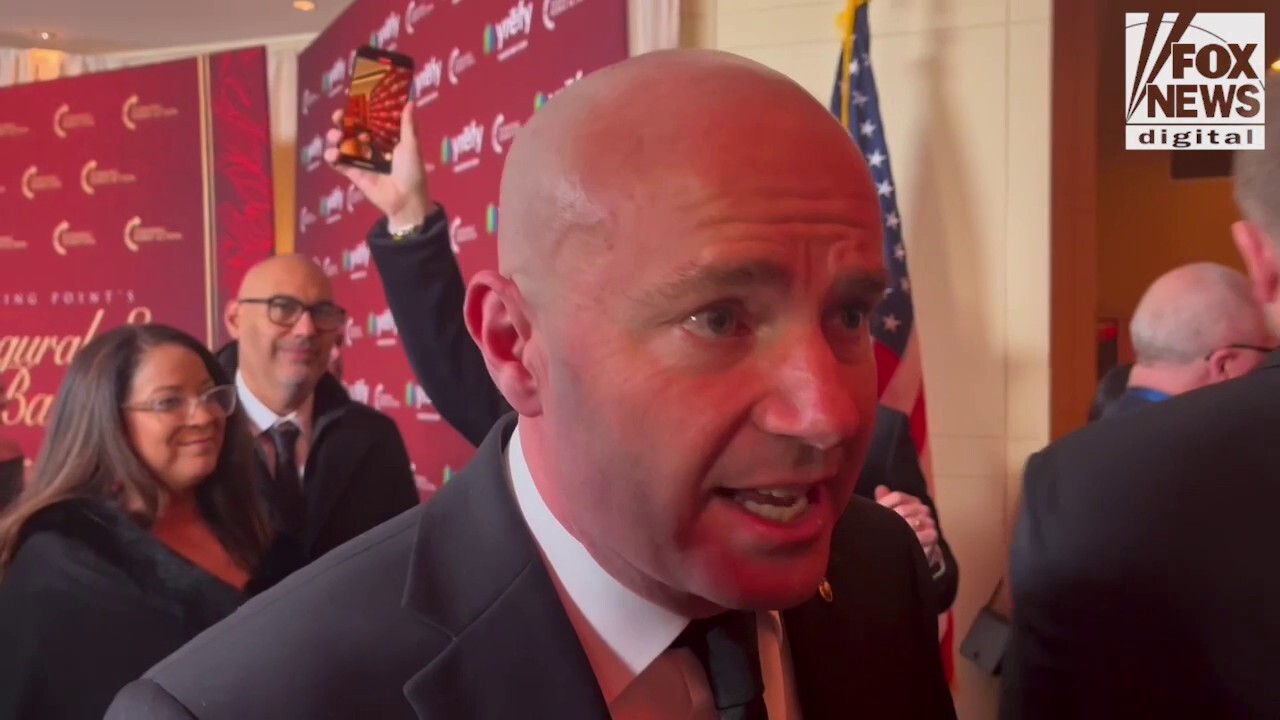
Sen. Mike Lee says 'a new day is dawning in America' with Trump
- "Congress could issue letters of marque and reprisal authorizing private security firms or specially trained civilians to intercept cartel operations, particularly those involving drug shipments or human trafficking across borders," Lee wrote, adding,
- "Focus on disrupting supply lines, capturing high-value targets, or seizing assets like boats, vehicles, cash, gold, or equipment used in criminal activities."
"One pitfall as a practical matter might be that a lot of the property belonging to these cartels isn’t … easy to monetize — because the products they sell are illegal," he wrote.
"That could make it difficult to incentivize and reward them, as ‘prize courts’ (historically the government’s tool used for selling the seized assets and assessing how much money each privateer is able to receive) obviously wouldn’t be able to sell drugs," Lee indicated. "But these cartels have a lot of non-contraband assets, including many things (gold, cash, etc.) that could be seized by privateers, returned to the U.S., liquidated, and used to reward the seizures."
Rep. Chip Roy responded to Lee's proposal by describing it in a tweet as "worthy of consideration."
"This would work very fast," Elon Musk said of the idea in a post.
Is THIS the Answer to Trump's Cartel Problem?
www.youtube.com › watch

13:07
How should President Trump handle the Mexican cartels? Glenn is “in love with” an idea that Sen. Mike Lee proposed: Hidden deep within the ...
YouTube · Glenn Beck · 4 days ago


No comments:
Post a Comment