Tariffs are taxes
on goods traded between nations. They’re a way for countries to control
international trade by artificially raising the cost of importing
goods. Some tariffs can incentivize would-be importers to purchase from
domestic sellers instead, potentially strengthening the local economy.
The US adjusts tariffs based on trade agreements, political goals, and
economic needs.
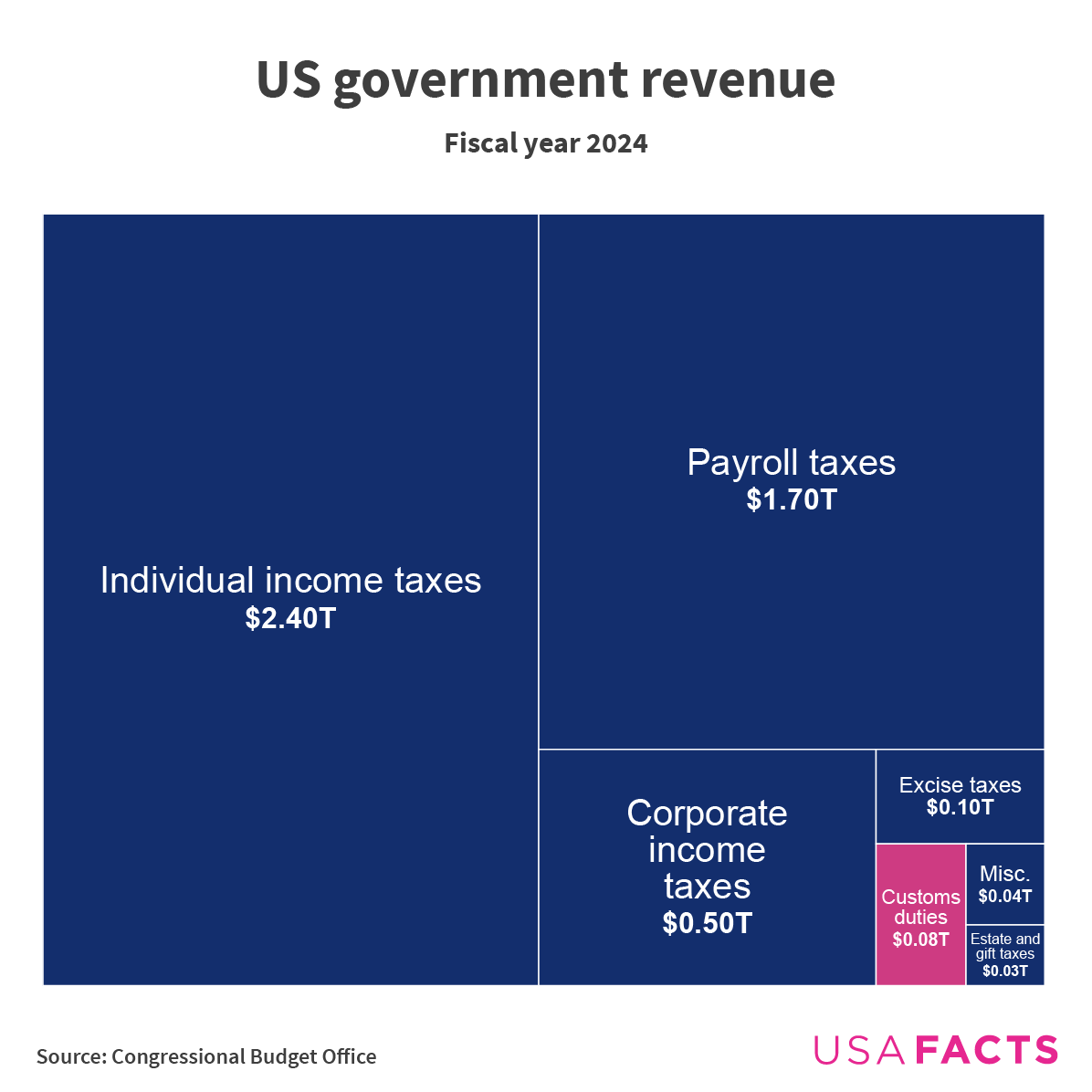
The US collected $77 billion in tariffs in 2024, making up 1.6% of
federal revenue. Tariffs haven’t comprised more than 2.0% of total
annual revenue since the 1960s.
Congress holds constitutional authority over tariffs but has
delegated much of it to the president through legislation. Customs and
Border Protection enforces tariff collections based on the type of
goods, quantity, and country they come from.
As of October 2024, the average tariff rate for bringing goods into
the US is 3.4%. However, it varies based on the product, cost, quantity,
and relationship with the exporting country.
The US follows World Trade Organization rules that standardize
tariffs across member nations, but 14 free trade agreements and special
exceptions allow for lower rates with specific partners.
When the US raises tariffs, US companies importing international
goods pay those tariffs. This can indirectly raise prices for American
consumers.
Why
does the United States provide foreign aid? In short, to support
economic development, global security, and humanitarian efforts. The United States Agency for International Development
(USAID) and the State Department oversee the more than 20 agencies that
fund these efforts. Foreign aid priorities shift over time, reflecting
changes in America’s strategic interests. Here are the facts on USAID, how much foreign aid the US provides, and who gets it.
USAID is an independent agency that administers foreign aid and
economic development assistance outside the US. In fiscal year 2024, the
agency spent $21.7 billion, which was 0.3% of federal spending.
The US promised about $68.2 billion in foreign aid in FY 2022.
Eighty-eight percent of aid was economic, while 12% was military aid,
supporting internal security, self-defense, and UN-related
peacekeeping.
When combining foreign aid from fiscal years 2001 to 2023,
Afghanistan received the most from the US ($145.9 billion), followed by
Israel ($91.2 billion) and Iraq ($89.4 billion).
Of the 196 countries recognized by the State Department, 173
received aid from the US in FY 2023. The median aid package was $43.7
million, but amounts ranged from $1,800 (yes, you read that right) to
the $16.6 billion sent to Ukraine. Israel ($3.3 billion) and Ethiopia
($1.8 billion) rounded out the top three, collectively accounting for
30% of US aid that year.
Foreign aid data collection lags and numbers can take up to two years to be fully reported. Aid figures can change after they’re reported due to revisions for a more accurate record.
If you like the data in today’s newsletter, sign up here
for the upcoming weekly Decoding DOGE newsletter. You’ll be among the
first to get data behind federal departments, spending changes, and the
Department of Government Efficiency.
Data behind the news
According to the Agriculture Department, a second strain of bird flu has now infected cows. See the data on bird flu, including how it affects livestock and the price of eggs.
Did you read last week’s newsletter? Then you should be able to breeze through the weekly fact quiz.
One last fact
Between 2000 and 2021, the nation’s cancer incidence rate
per 100,000 people fell by 5.7%, while the mortality rate dropped by
27.5%. In 2021, age-adjusted figures show 458.3 new cancer cases and
144.2 deaths per 100,000 people.



No comments:
Post a Comment