
The trend towards significant nominal minimum wage increases is
continuing this year. In view of falling inflation rates, this
translates into a sizeable increase in purchasing power for minimum wage
earners in most European countries
^^^^^^^^^^^RECENT NEWS HEADLINE ABOVE ^^^^^^^^^^^^

JULY 2025


Rachel Reeves reduced to hoping her numbers add up – they won't, Chancellor
A chancellor that is reduced to winging it simply isn't going to cut it in these tough times.
-
 You may have heard that inflation is up. No, this isn’t a rerun from last year. It really is up. Again. So much for the “fiscal discipline” and “costed plans” Rachel Reeves bleated on about when she was soliciting votes like a beggar with a tin can. The reality has come to bite: high inflation is back, and it’s here to stay. And it’s ordinary people – working families, renters and small businesses – who are paying the price for this Government’s stubborn refusal to change course.The truth is grim. Britain is now on track to have the highest inflation rate in the G7.

South West Rail sees a 50% spike in cancellations after Labour nationalised it.

CONCLUSION:
EUROPEAN MINIMUM
WAGE DIRECTIVE PROMOTES
DYNAMIC MINIMUM WAGE
DEVELOPMENT
EUROPEAN MINIMUM
WAGE DIRECTIVE PROMOTES
DYNAMIC MINIMUM WAGE
DEVELOPMENT
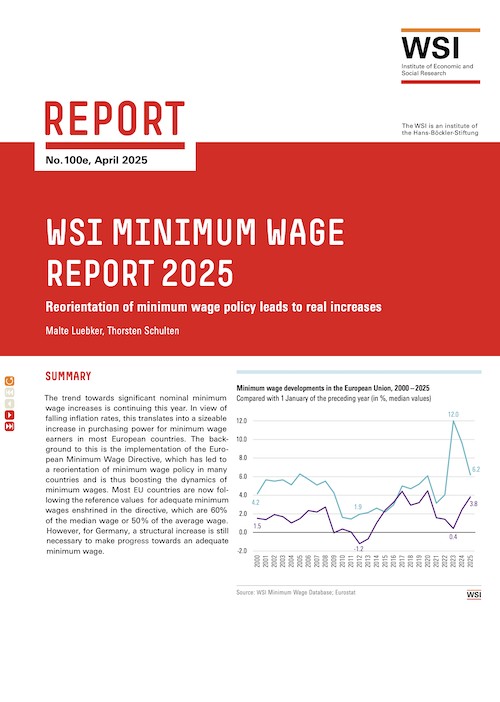
Most EU countries are now following the reference values for adequate minimum wages enshrined in the European Minimum Wage Directive, which are 60% of the median wage or 50% of the average wage.
CONTENT
AUTHORS
Malte Luebker, Dr. rer. pol.
is a researcher at the Institute of Economic and Social Research (WSI ) of the Hans Böckler
Foundation. Main areas of work: wages, effects and determinants of collective bargaining
coverage.
malte-luebker@boeckler.de
is a researcher at the Institute of Economic and Social Research (WSI ) of the Hans Böckler
Foundation. Main areas of work: wages, effects and determinants of collective bargaining
coverage.
malte-luebker@boeckler.de
Thorsten Schulten, Prof. Dr.
is a researcher at the Institute of Economic and Social Research (WSI ) of the Hans Böckler
Foundation. Main areas of work: WSI Collective Bargaining Archive, Labour and Collective
Bargaining Policy in Europe.
thorsten-schulten@boeckler.de
CONCLUSION:
EUROPEAN MINIMUM
WAGE DIRECTIVE PROMOTES
DYNAMIC MINIMUM WAGE
DEVELOPMENT
EUROPEAN MINIMUM
WAGE DIRECTIVE PROMOTES
DYNAMIC MINIMUM WAGE
DEVELOPMENT
Key aspects of the directive
- Adequate minimum wages:Member states must establish clear, stable procedures for setting minimum wages, ensuring they are adequate to cover basic living expenses.
- Reference values:The directive includes indicative "double decency" thresholds ofof the median wage orof the average wage to guide member states in assessing minimum wage adequacy.
- Strengthened collective bargaining:A major goal is to promote collective bargaining, with countries whose coverage is belowrequired to create action plans to strengthen their systems.
- Improved access:It aims to improve workers' access to minimum wage protection and ensure effective enforcement of minimum wage laws.
- Reduced poverty and inequality:The directive seeks to reduce in-work poverty, improve living standards, and narrow the gender pay gap.


Impact on national minimum wages
- Structural increases:The directive appears to be driving "structural-type" increases in minimum wages beyond what would be explained by inflation alone.
- Increased rates:There have been significant nominal increases in minimum wages across most EU countries since the directive's adoption.
- Dynamic development:The directive is contributing to a dynamic development of minimum wages and already influencing national minimum wage-setting and collective bargaining reforms.



No comments:
Post a Comment