INTRO:
To supporters, this is a clever solution to a familiar problem: how to stop one spoiler from holding the rest hostage. Yet in truth, the plan reveals something more uncomfortable: the EU does not lack enlargement procedures, but political courage to use them.
Delay as a policy
Since the start of the war in Ukraine, member states have declared enlargement a geopolitical imperative. They invoked Kyiv’s struggle as Europe’s own and insisted that the Western Balkans not be left behind. But when rhetoric meets reality, enthusiasm fades.
- There is a quiet reluctance to integrate new members which no amount of bureaucratic creativity can disguise.
Brussels’s “Plan B” on Ukraine hides a deeper problem: Europe’s lack of will
- For decades, the dossier has advanced mostly through procedural tinkering – reshuffled chapters, revised methodologies, dialogue formats – designed to show movement without committing to new entries.
- Each reaffirmed the same lesson: no procedural creativity can replace political will.
The Union’s neighbours do not need another creative pathway. They need proof that the EU will deliver enlargement. If the Union cannot persuade one of its own to lift a veto, it reveals profound political weakness.
- Genuine commitment to enlargement has been missing for years.
- Even before Hungary’s obstruction, many were ambivalent.
- Some fear public opinion; others that newcomers would stretch the EU’s budget, dilute cohesion or demand reform.
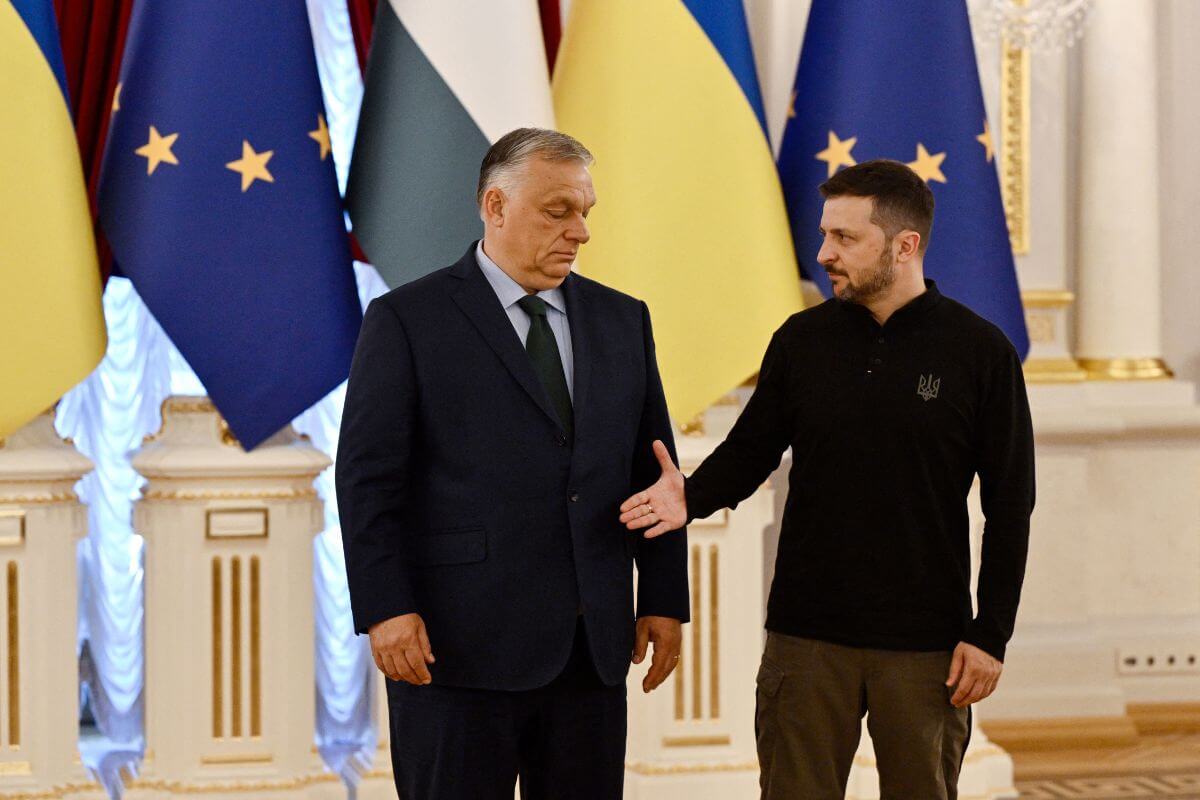
- Orbán’s veto is not an exception but the symptom of a deeper problem.
- To treat Budapest as the sole obstacle is to let everyone else off the hook.
A ritual of reassurances
- Yet without political will in the Council, these documents will prove aspirational rather than actionable.
Plan B fits neatly into that pattern. It allows the EU to claim momentum while avoiding a deeper reckoning: how to muster consensus behind a shared vision of Europe’s future and reform the EU’s institutions, budget and decision-making accordingly. Take Antonio Costa’s failed push for qualified majority voting. But enlargement and reform must advance together. Tactical workarounds achieve neither.

The real test of times
The timing is critical. Europe’s security order is being reshaped by Russia’s war, US political uncertainty and China’s assertive diplomacy. Enlargement is no longer a bureaucratic exercise; it is the EU’s decisive geopolitical tool. Whether the Union expands or stagnates will determine its ability to shape its neighbourhood, protect its values and remain a credible global actor. The same goes for internal reform: without a more agile budget and decision-making system, the EU lacks both the capacity to enlarge and to confront the age of permacrisis.
There is also the question of fairness. For the Western Balkans, Plan B would confirm what many in the region already suspect – that enlargement has become a tool of geopolitical competition rather than a merit-based process. Reform momentum will be harder to sustain in countries that have spent decades fulfilling EU conditions, often at great political cost, with outcomes that fell short of expectations. For the laggards, this perception risks feeding cynicism and illiberalism.
None of this diminishes Ukraine’s extraordinary case or its right to a European future. But if the EU truly believes that Ukraine belongs in Europe, it must show that conviction openly, not through procedural sleight of hand. That means confronting the hard choices: treaty reform, budget adaptation and institutional redesign.
History shows that enlargement succeeds with genuine political will. It was political courage, not bureaucratic invention, that opened the doors to Central and Eastern Europe in the 2000s. It was consensus, not cleverness, that reunited the continent.
Plan B may allow Brussels to claim short-term progress, but the test of our times is not whether the Commission can engineer a workaround. It is whether member states can choose between enlargement by exception or enlargement by reform. The future of the EU itself depends on that answer.
READERS PLEASE NOTE: The support the European Policy Centre receives for its ongoing operations, or specifically for its publications, does not constitute an endorsement of their contents, which reflect the views of the authors only. Supporters and partners cannot be held responsible for any use that may be made of the information contained therein.






No comments:
Post a Comment