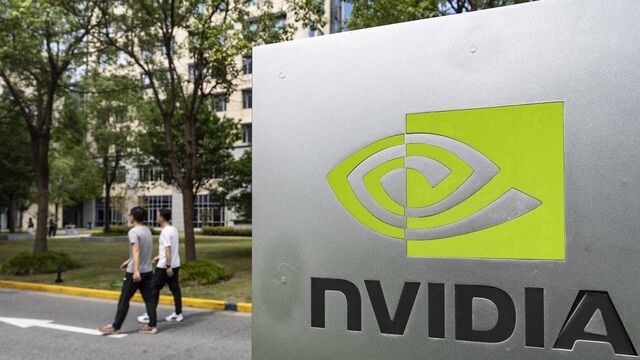
White House officials are urging members of Congress to reject a measure that would limit Nvidia Corp.’s ability to sell AI chips to China and other adversary nations, according to people familiar with the matter, dimming prospects for legislation opposed by the world’s most valuable company.

The so-called GAIN AI Act would create a system that requires chipmakers to give Americans first dibs on AI chips that are controlled for export to China and other arms-embargoed countries — an “America first” framing designed to appeal to the Trump administration.

Europe's Landmark AI Laws: What the Artificial Intelligence Act Means for Global Organizations
Why It Matters to Organizations Globally

Although the law originates in Europe, its reach is global. For companies in Australia, Southeast Asia, the Middle East, and the Americas, there are three key reasons to act now:
Market access. The Act applies to AI systems placed on the EU market or put into service in the EU, and to some non-EU actors when their systems’ outputs are used inside the Union (European Commission, 2024; White & Case, 2024).
Risks and penalties. Serious infringements can trigger fines up to €35 million or 7 percent of global annual turnover, whichever is higher (Artificial Intelligence Act Portal, 2025c; European Parliament, 2024).
Regulatory precedent. Much like the GDPR transformed global data-privacy norms, the AI Act is expected to serve as a blueprint for worldwide AI governance (ISACA, 2024).
What Organizations Should Do Now
These are recommended preparation steps—best-practice actions to operationalize compliance rather than standalone legal mandates (ISACA, 2024).
Map your AI footprint. Identify systems that could fall under the Act’s scope and define your role—provider, deployer, importer, or distributor.
Classify systems by risk. High-risk uses—recruitment, credit scoring, law enforcement, critical infrastructure—require strong data governance, documentation, and human oversight (White & Case, 2024).
Strengthen governance and transparency. Maintain logs, documentation, and oversight records; prepare to publish training-data summaries and transparency reports for general-purpose AI models (Artificial Intelligence Act Portal, 2025b).
Coordinate globally. Align legal, tech, and risk teams across regions to avoid siloed compliance.
Build trust. Beyond avoiding penalties, position your brand as a trustworthy AI leader—a differentiator increasingly valued by partners and regulators.
Beyond technical compliance, the AI Act signals a cultural shift: the EU defines AI as a technology that must uphold human dignity, fundamental rights, and societal well-being. It champions trustworthy, human-centric AI rather than unchecked automation (European Commission, 2024; IAPP, 2024).
For global companies, this means embedding ethics and explainability in AI design, not merely satisfying compliance checklists.


No comments:
Post a Comment