

- Israel is widely believed to possess an undeclared nuclear arsenal of approximately 90 plutonium-based warheads, with enough fissile material for 100–200 weapons.
- Maintaining a policy of "nuclear opacity," Israel neither confirms nor denies its capabilities, though it is recognized as the only nuclear-armed state in the Middle East

Most estimates posit that Israel possesses about 90 plutonium-based nuclear warheads and has produced enough plutonium for 100-200 weapons. These estimates have been fairly consistent for decades, which points to a nuclear posture defined by Israel’s deterrence needs. Israel appears focused strictly on survival and does not seek to threaten other nuclear-armed states.
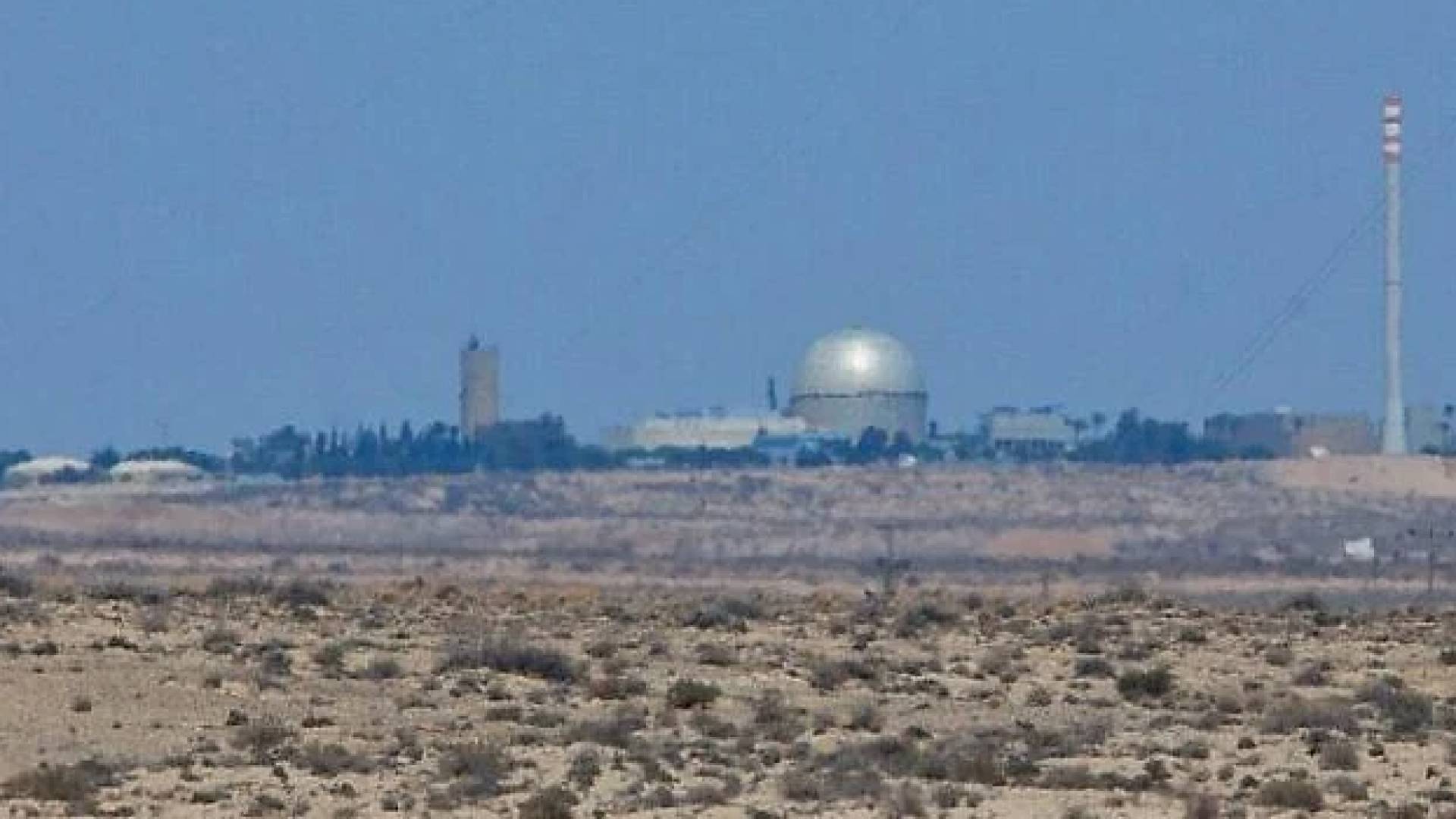
It is widely believed that the plutonium for Israel’s nuclear weapons program was produced by a reactor built with French assistance. The IRR-2 research reactor at the Negev Nuclear Research Center is commonly referred to by the city that hosts it, Dimona. It is officially a 26-megawatt thermal reactor, but some believe that is an underestimation of its capacity. The facility is not under IAEA safeguards. The IRR-2 went critical in December 1963 and likely helped Israel produce its first nuclear weapon in 1966-67, although these reports have not been officially confirmed. The declassification of sensitive government documents show that at least by 1975 the U.S. government was convinced Israel had nuclear weapons.
The lack of clarity surrounding an Israeli nuclear weapons program is a key obstacle to establishing a weapons of mass destruction free zone in the Middle East. The global pledge to create such a zone in 1995 was crucial to securing the indefinite extension of the NPT. The absence of the zone today presents a continuing challenge to this critical agreement.

Recent Analysis on Israel
- Israeli nuclear weapons at the heart of a strategic taboo July 4, 2025
- After US and Israeli strikes, some nuclear experts say Iran could be more dangerous July 2, 2025
- How Iran could build a bomb in secret – despite Trump’s $30bn offer June 27, 2025
- Dall’attacco all’Iran ai record a Wall Street June 26, 2025
- Ceasefire holds steady with a looming concern of Iran’s nuclear capabilities June 26, 2025
- Does Iran’s nuclear program survive under the rubble? June 26, 2025
- Bloomberg Businessweek Daily: Duped Into Funding Coup June 25, 2025
- Uncertainty surrounds the fate of Iran’s nuclear program June 25, 2025
- Iran could still build a dirty bomb – but it would spell disaster for the regime June 25, 2025
- Iranian Nuclear Program Damaged, Not ‘Obliterated’ by U.S. Attack June 24, 2025
About the Center for Arms Control and Non-Proliferation

The Center for Arms Control and Non-Proliferation is a national nonpartisan nonprofit dedicated to enhancing peace and security through expert policy analysis and thought-provoking research.
Our mission is to seek to reduce nuclear weapons arsenals, halt the spread of nuclear weapons, and minimize the risk of war by educating the public and policy makers.
The Center was founded in 1980 as a 501(c)(3) organization. Since then, the Center’s expertise on reducing the threats of war and nuclear weapons has been sought by the media and policymakers—supported by the tax-deductible contributions of foundations and individuals.
Our affiliated 501(c)(4) organization is the Council for a Livable World, founded in 1962 by Manhattan Project nuclear physicist Leo Szilard. For more than 60 years, the Council for a Livable World has been advocating for a more principled approach to U.S. national security and foreign policy."
A group of 29 US Democratic lawmakers has sent a letter to the Trump administration calling for the United States to publicly acknowledge 'Israel’s’ nuclear weapons program, challenging long-standing US policy of strategic ambiguity on the issue.
The letter, reported by The Washington Post, urges a departure from decades of official silence that has treated ‘Israel’s’ capabilities as an open secret among intelligence communities.
Successive US administrations, dating back to a reported understanding between President Richard Nixon and ‘Israeli’ Prime Minister Golda Meir in 1969, have refrained from confirming or discussing the arsenal publicly.
This approach has allowed continued US military assistance to ‘Israel’ without triggering certain non-proliferation legal restrictions.
The 29 House Democratic lawmakers argue that the time has come for transparency, particularly amid ongoing regional tensions, including the recent US-‘Israel’ actions against Iran’s nuclear facilities and broader Middle East dynamics.
- Public acknowledgment, they contend, would align US policy with known realities and potentially strengthen non-proliferation efforts by addressing inconsistencies in how nuclear programs across the region are treated.
Adopting such a stance would represent a significant policy shift. It could complicate US-‘Israel’ relations and broader diplomatic initiatives while inviting scrutiny under the Nuclear Non-Proliferation Treaty framework, which ‘Israel’ has never signed.


No comments:
Post a Comment