Saturday, September 29, 2018

THESE Are the Biggest Bubbles in the World! Global Asynchronous Real Est...


Published on Sep 28, 2018
Views: 7,600+

In The Ozone: Knock-Knock For Some: Equitable & Inclusive For Every One ?

Your MesaZona blogger just could not pass up this article published a couple of days ago on Commercial Observer https://commercialobserver.com about Opportunity Zones where writer Rey Mashayekhi starts off the sub-heading with "A year ago, nobody knew what an opportunity zone was . . . '  HUH?
Looking in the rearview mirror from what we know now from all the behind-the-scenes deals and years of planning with city officials here in Mesa, more than a few people probably may have acted on closely-held cahoots on inside information.   
‘Opportunity’ Knocks for Real Estate Investors Buoyed by Tax Program
A year ago, nobody knew what an opportunity zone was. Now, it could be the biggest thing to hit real estate development ‘maybe ever.’

"Tucked into the federal tax reform bill that passed late last year, the “Opportunity Zones” program wasn’t designed specifically with real estate in mind. Rather, the provision—which provides significant tax relief to investors who pour money into designated, “economically distressed” areas across the country—is meant to spur investment across a wide variety of business sectors and industries.
And yet, due to the very nature of the program, it is real estate interests that appear most poised to benefit from its potentially lucrative tax incentives.
_______________________________________________________________
“The tax benefits here are off the charts,” Millett said.
 “When tax reform passed [in 2017], nobody really knew that this was in here. It wasn’t until a couple of months later when people started saying, ‘What?’ ” 
_______________________________________________________________
Already, numerous real estate investment firms and financial platforms have launched funds seeking to raise billions of dollars with the goal of scooping up and redeveloping properties in designated Opportunity Zones.
in brief
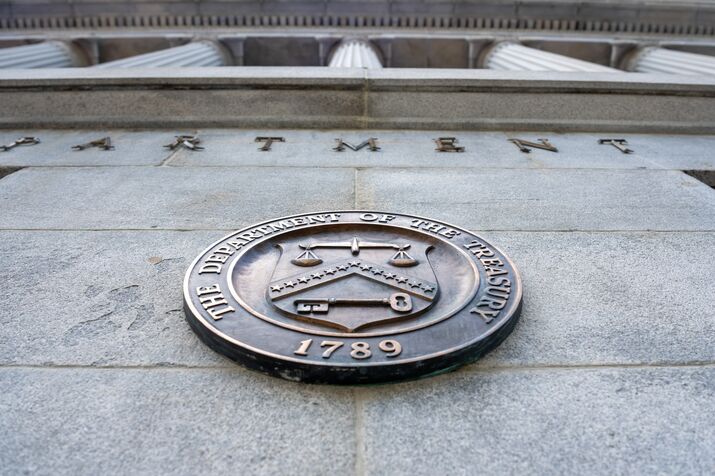
The hope is that this capital will be able to regenerate and reinvigorate specific census tracts across the country that have been economically overlooked and underserved—areas nominated by the governors of all 50 states, and subsequently approved by the U.S. Treasury Department as eligible. In exchange, the Opportunity Zones program provides investors with the deferral, and eventually the exemption, of hefty capital gains taxes that they would otherwise incur
_______________________________________________________________
Early last year here in downtown Mesa there  was "A Bee-Hive" of buy-out offers proffered to about twelve building owners to acquire their assets by scooping up in one grab most of the commercial properties on Main Street for about $100 sq ft. The first eight acquisitions were transacted with a price tag just shy of $8M.
Two more were later acquired in the portfolio by various   holding companies for one group of investors. Another group bought in and then a third - all  with a "Wait-and-See" outlook for what was announced in December 2017. 
Within the first five months of 2018 everything appeared somehow to happen all-at-once.
Then some details emerged from the fog in all kinds of 'pretty pictures', proposals and plans for the transformation and makeover of downtown Mesa by the groups of investors and the for-profit investment affiliates of The LDS Church to "protect and revitalize" the area around the Mesa Mormon Temple east of Mesa Drive/Main Street, with no financial details revealed at all. On top of all that, Justin Graham announced in July that an entire 10-acre city block east of the Mesa Arts Center on Main Street owned by Sunbelt Holdings would break ground in 45 days on a mixed-use project that might include another hotel on the former site of Brown & Brown Chevrolet/Auto Nation that has been demolished and 'remediated' after 85 years just leaving a parking lot.
_________________________________________________________________________  
Blogger Note: There have been at least 20 posts or more on this site covering details and actions about the makeover and transformation of downtown and many more about Opportunity Zones or OZones > please use the SEARCH BOX on the left-hand side of this home landing page
_________________________________________________________________________
" . . . Under federal guidelines, investors who pour such gains into “Qualified Opportunity Funds” are able to defer federal capital gains taxes through 2026.
If they hold onto that Opportunity Fund investment for five years, they would receive a step-up in their basis and would only be on the hook for 90 percent of the gains tax that they would have otherwise had to pay on those proceeds; upon seven years, they would receive another step-up that means they would only have to pay 85 percent.
And even more enticing for investors is the fact that, should they hold onto an Opportunity Zone investment for a 10-year period, they would be exempt from having to pay any federal capital gains taxes at all upon divesting their interest.
Of course, there are certain restrictions that investors must adhere to in order to reap those benefits.
> For instance, Opportunity Zone funds must have virtually all of their capital dedicated to investment in Opportunity Zones, and they must have at least 90 percent of their total capital deployed at any given time.
> Additionally, such funds must double their basis over the life of a given investment—a “substantial improvement” provision that’s meant to prevent them from simply parking their money without pouring additional capital into the Opportunity Zone, and one that lends itself to redevelopment or new construction projects as far as real estate investments are concerned.
> What’s more, the Opportunity Zones program and the guidelines governing it could look markedly different in the coming weeks, as the U.S. Treasury Department is expected to release an updated set of rules and regulations on the program this fall that could alter its complexion.
What is still needed is details on the specifics—how the funds need to be set up, what gains need to be made to qualify, permissible investments, and a lot of the nuances you get in federal programs,” Steven Kahn, a director at affordable housing development firm Standard Communities, said of the guidelines still to come. “The strict rules and regulations that lay out a game plan for you, that is still missing.”
_________________________________________________________
EXpect A BOOM IN MARKET-RATE HOUSING?
That's about everything in all the proposals and plans for the makeover of DTMesa, with Bob Worsley's Drew Street Plan for "above-market" and luxury units
________________________________________________________________________
> While there have been concerns that the Opportunity Zones program and its incentives could end up spurring a wave of market-rate residential development in the areas in question—rather than the sort of affordable housing that’s in short supply in cities across the country—Clinton said he believes it “can be a positive catalyst” for creating new workforce housing in areas overlooked by this cycle’s urban development boom. That could be through the development of new affordable housing, or “market-rate [housing] in an area where the gap between affordable and market-rate isn’t enormous.”
>> “The logistical complexity is in raising the money, transacting the funds for investors within 180 days of their gain, deploying it into the right real estate and having to be more than 90 percent deployed in Opportunity Zone real estate,” Miller said. “That logistical challenge of how you raise the money and how you deploy it is much more complicated for a fund. You usually spend 18 months raising a fund and draw those commitments down—that’s not how this works.”
_________________________________________________________
MORE TAKE-AWAYS:
> Maturo, like others interviewed for this story, cited the $6 trillion in unrealized capital gains that are “sitting on the sidelines” and eligible for potentially tax-free investment through the Opportunity Zones program—and given the sheer depth of that untapped liquidity, it’s easy to see why real estate market observers and participants are excited about the program’s potential.
> Alvin Schein, a partner at real estate law firm Seiden & Schein, described it as
a supercharged version of the 1031 exchange program, which allows real estate investors to roll over their proceeds from a property sale into a new acquisition without having to pay a gains tax—except in a 1031, “you never step-up your basis” and “you can never cash out” without eventually paying that gains tax.
“It’s so wide-ranging—it’s not like tax credits that are limited to a particular function, such as low-income housing tax credits. This is for any kind of commercial investment,Schein said. “The reason many real estate people love 1031s is that they can put off the day of reckoning for their [gains] tax. This is a way of exempting the day of reckoning, and it’s much broader.”


So Much For Tech Cities: Anyone See Phoenix-Mesa On This New List?

Sorry to suck-out all the hot air in the way-too-much-overblown hype and hoopla here in our home city Mesa, but Mesa has Big League Dreams with little to show for it except the $100-Million thrown at the International Design Award-Winning Mesa Performing & Visual Arts Center back in 2005 that's still chugging along to deliver on its promise to become the engine for economic development downtown after thirteen years. Valley Metro Light Rail - 'The Salvation Train'?
That's not delivering on that promise either after four years.
We've also been wondering - What's Next? -  if it's sooner or later to see some positive real results on-track for some point-in-time to deliver salvation-of-any-kind in the distressed neglected downtown area now classified as an Opportunity Zone [ Ozone ] from Mayor John Giles' election platform he named Next Mesa.
Is there something in the water here when Mesa tries to mimic most everything from Salt Lake City or Provo, Utah?
__________________________________________________________________________
Why not try Tech downtown?
Fixing-up all the fake facades on ten historic  one-story crumbling soft-brick buildings is a good idea since they've been neglected for decades - there's thousands of square-feet of interior spaces with easy sidewalk-access that can be filled with jobs for people if small tech start-ups can be given move-in incentives after the buildings are re-novated. It's far more cost-effective to push for Re/Generating downtown in available under-used spaces than spending millions in high tech corridors in suburbia.
 
It's faster and cheaper on a small and incremental scale with almost immediate occupancy and results. Tech corridors in suburbia are great for industries that need a lot of logistics. 
Let's take a look at a CWRE report from two days ago:  
Cushman & Wakefield’s ‘Tech Cities 2.0’ report profiles 25 North American cities stamping their ground in Tech 

Tech Cities 2.0 highlights the tech industry’s critical impact on commercial real estate
San Francisco, Ca. – Cushman & Wakefield today released Tech Cities 2.0 an annual report that identifies existing and emerging tech centers increasingly driving the North American economy and details their impact on the commercial real estate sector.
A follow-up from last year’s inaugural Tech Cities 1.0 report, this year’s research reviewed all major North American markets, and groups the top cities into three categories based on how important the tech sector is to the local economy and real estate market:
> 'tech is a critical component’ 
> 'tech is a key driver’
> ‘tech is important’.
As tech companies continue to dominate headlines and grow, a key question is how this affects commercial real estate. Building upon our inaugural Tech Cities report from last year, Tech Cities 2.0 offers new data and a further in-depth analysis of the marketplace,Revathi Greenwood, Cushman & Wakefield’s Americas Head of Research, said.
“Tech is no longer limited to just traditional technology companies – media companies, retailers and even law firms are competing for the same spaces and talent as traditional tech companies
"Although we expect established markets like Silicon Valley to see continued investment, new tech hubs are emerging across North America, from Provo to Philadelphia, sustaining a period of tech-driven, economic growth unseen since the dot-com boom of the late 1990s.”
McCarthy said New York City had seen significant growth in the TAMI sector (Technology, Advertising, Media and Information). “If Silicon Valley is the brains of the tech sector, then New York City is the creative center . . .
Both start-ups and big tech companies have recognized they need a footprint in the central cities to keep attracting millennial workers, and as a result, they are taking large chunks of high-rise buildings and trophy assets in dense urban areas - in addition to keeping their sprawling campuses in the suburbs,” Sammons said.
As well, he added that tech companies are driving demand as they continue to hunt for space and grabbing it in certain hot markets when they can find it.
With unemployment at 4.0% or lower in each of these markets, tech companies of all sizes are in a war for talent and must do their utmost to hold on to and recruit employees – and that means the best salaries, the best incentives, the best space and the best location.
That last point has generally meant an urban or even suburban location that is mixed-use, walkable, bikeable and near mass transit,” he said.
“The trend for the start-ups and tech companies to occupy large spaces in metropolitan areas is occurring all over North America and especially in the cities our report identifies as ‘Tech is a critical component of the local economy and CRE market,’” Sammons said.
Combining employment, occupations, venture capital investment, and demographics statistics, this year’s list from Tech Cities 2.0 is separated into three major categories:
________________________________________________________________________
Where does Mesa miss out?
You simply cannot try to MIMIC Provo and Salt Lake City . . .
________________________________________________________________________
  • Tech is a critical component of the local economy and CRE market:
    • Austin
    • Boston
    • Provo
    • Raleigh/Durham
    • Salt Lake City
    • San Diego
    • San Francisco
    • Silicon Valley
    • Seattle
    • Washington, DC Metro
  • Tech is a key driver of the local economy and CRE market:
    • Atlanta
    • Dallas/Fort Worth
    • Denver
    • Minneapolis/St. Paul
    • Montreal
    • Portland, OR
    • Toronto
    • Vancouver
  • Tech is important to the local economy and CRE market, but there are other important sectors as well:
    • Baltimore
    • Charlotte
    • Chicago
    • Greater Los Angeles
    • South Florida
    • New York City
    • Philadelphia
________________________________________________________________________

Key findings from Tech Cities 2.0 include:

  • In the first of half of last year, 42% of the square footage in the top 100 leases in North America were signed by tech companies.
  • The fastest growing tech employment market since 2010 is Provo, Utah. Though a smaller market than the others on the list, the number of people employed by tech companies increased 64.9%, surpassing the 62.7% increase in San Francisco.
  • Average asking rents in cities like Atlanta, Austin, Seattle, and San Francisco have increased more than 50% since 2010.
  • Property prices are skyrocketing. Among the Top 25, property prices have increased on average by 59%, with the greatest increases happening in Austin, Silicon Valley, and San Francisco.
  • Cities that are targets for venture capital funding are the most important tech cities in North America. Among the Top 25, VC funding grew by an average of $2.0 billion compared to $457 million for the top 101 markets.
  • The top four cities for new construction are all cities where tech is a critical factor in the local real estate market, including: Austin, Raleigh/Durham, Seattle, and San Francisco.

Friday, September 28, 2018

The Traveling Wilburys > End Of The Line

IT'S ALL RIGHT DOIN' THE BEST YOU CAN AS LONG YOU LEND A HAND ...
Jeff Lynne, George Harrison, Tom Petty, Roy Orbison, Bob Dylan
Published on May 20, 2016
Views: 14,068,088
Music video by The Traveling Wilburys performing End Of The Line. (C) 2007 T. Wilbury Limited. Exclusively Licensed to Concord Music Group, Inc.
http://vevo.ly/xEMlQF     End Of The Line
  • Artist

  • Album

    • The Traveling Wilburys Collection
  • Writers

    • Jeff Lynne, George Harrison, Tom Petty, Roy Orbison, Bob Dylan
  • Licensed to YouTube by

    • UMG (on behalf of Rhino (Pure)); SOLAR Music Rights Management, ASCAP, PEDL, CMRRA, Bicycle Music Co. (Publishing), UMPG Publishing, and 18 Music Rights Societies

Roubini Warns of 'Perfect Storm' for U.S. Economy in 2020

Roubini Warns of 'Perfect Storm' for U.S. Economy in 2020
YOU HAVE BEEN WARNED
https://www.youtube.com/watch?v=05kVaFnHXw0
Image result for Roubini
Published on Sep 18, 2018
Views: 11,724
Sep.18 -- Nouriel Roubini, chairman at Roubini Macro Associates and a professor at NYU Stern School of Business, explains why he sees a U.S. economic slowdown in 2020. He speaks on "Bloomberg Surveillance. 

Roubini Warns of 'Perfect Storm' Stalling Global Growth in 2020
https://www.youtube.com/watch?v=Vxo_Zqii_GI

Published on Sep 7, 2018
Views: 37,246
Sep.07 -- Nouriel Roubini, chairman and chief executive officer at Roubini Macro Associates, looks back on the financial crisis and warns of the next potential global slowdown in 2020. He speaks with Bloomberg's Francine Lacqua from the Ambrosetti Forum in Cernobbio, Italy on "Bloomberg Surveillance

Insiders Selling Stocks At RECORD Rate! Is This Panic Mode That Stocks W...


Published on Sep 27, 2018
Views: 11,643

Q & AZ: KJZZ Wants Your Curious Questions To Find Answers

Q&AZ


You’ve got questions, they got reporters.
Q&AZ
Whether you were born in Arizona or came here from somewhere else, chances are you’ve wondered about the people, places and things in the Grand Canyon State.
We think great stories start with curious questions, and KJZZ wants to investigate your questions — big or small — from the Valley or across the state.
Submit a question below.
Please note: We won't be able to answer every question, but we will answer as many as we can and also have voting rounds periodically for you to determine which questions we should focus on next!
Trying to craft the perfect question? Here are some tips for success:
  1. Be specific. Ask about one topic per submission and something that a single, in-depth investigation can uncover.
  2. Be open-ended. Questions that can be answered with a simple “yes” or “no” are less likely to lead to an interesting story.
  3. Be local. What are you wondering about that is unique to your neighborhood, the Phoenix area or Arizona?
  4. Be curious. Ask questions that inspire discussion and shed light on meaningful issues, whether cultural, historic, scientific, or related to current events or policies.
GO here > https://kjzz.org/content/673196/qaz

What questions do you have about the Valley and the state we call home?

BEA News: Gross Domestic Product by State and Personal Income by State, 3rd Quarter 2025

  BEA News: Gross Domestic Product by State and Personal Income by S...