A Call for Ideas was issued on 20 February 2023. Information and details on how to respond to the Call can be found on ESA’s Earth Observation Proposal System. The deadline to submit a Letter of Intent is 28 April 2023 and the deadline to then submit a full proposal is 29 September 2023.
New Earth observation strategy to keep pace with our changing world
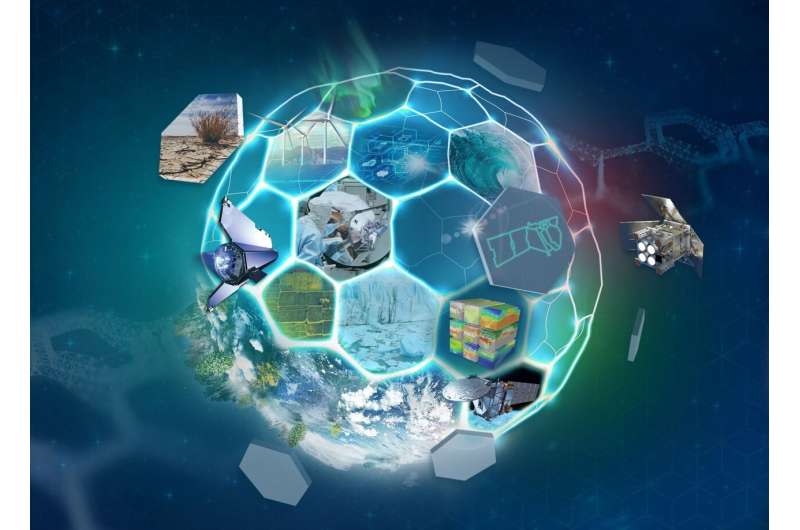
Fueled largely by climate change, our planet is being subjected to environmental changes that are having an unprecedented global impact on humans, animals and plants. Shockingly, in certain locations these changes are occurring at a rate never before witnessed.
To keep pace with the challenges we face, ESA is embarking on a new Earth observation science strategy—and has reached out to the scientific community at this early stage in the process to help guide the Agency's scientific agenda for the coming years.
More than ever, Earth observation-based science forms a critical part of our efforts to understand and address the many complex challenges facing our world.
From climate change to natural disasters, to food and water security, data from satellites orbiting above and the resulting scientific knowledge provide valuable insights into these global issues and help make informed decisions about how these challenges can be best addressed.
- At the same time, observing Earth from space has become a dynamic and fast-developing sector. It is critical to build on the latest advances in technology, data analytics and modeling to develop a comprehensive and integrated approach to Earth observation, while ensuring that the underlying science questions remain relevant.
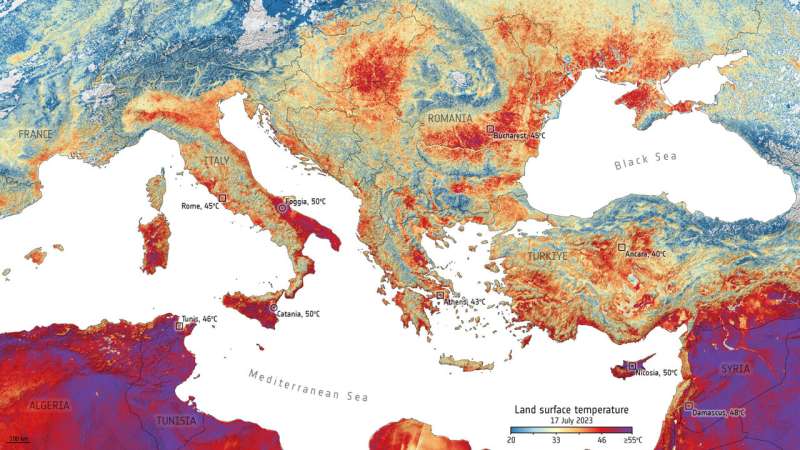
- "Nevertheless, Earth observation is evolving and has changed dramatically since 2015. We are seeing, for instance, how quickly our planet is being altered by the climate and the needs of a growing global population.
- "Advances in Earth system science, in remote sensing, in-situ observations, and digital information technology are also opening the door to new and unprecedented opportunities for advancing science, which ESA needs to grasp."
- "This is complicated science. In order for us to have a solid roadmap in place by mid-2024 we first launched a comprehensive international study as a way for scientists to help us identify key science questions.
- These questions express future science priorities and their role in addressing important gaps in our knowledge of the Earth system, as well as societal benefits linked to addressing these science drivers."
"It will outline the research objectives, priorities, and approaches for scientific activities within our Earth Observation Programs. It will identify the key scientific questions to address associated challenges and opportunities, as well as embrace opportunities such as digital innovation, open science, commercial space, national programs and policy directives.
"We recognize this is very complex and interconnected, and requires a multidisciplinary and collaborative approach, but we want our projects to continue to push the boundaries of our understanding of the Earth system.
"I'd like to thank everyone who has contributed to these important initial steps. This will help us to formulate a roadmap for implementing our programs over the next several years to a decade."
The next step will be for ESA to start preparing the Earth Observation Science Strategy, building on results from the workshop and the foundation study activity, in consultation with the Advisory Committee on Earth Observation.
A draft strategy document is anticipated to be ready in spring 2024 when, by popular demand, a second consultation is planned with the science community to review the document.
The goal is to finalize the strategy by mid-2024 and to proceed with its implementation.
Provided by European Space Agency
ADDENDUM
The Earth Explorer research missions are pivotal to FutureEO. Since the successful launch of the first Earth Explorer in 2009, these missions, without exception, continue to surpass expectations. These missions, which are proposed by the scientific community, continue to demonstrate how breakthrough technology can deliver an astounding range of scientific findings about our planet. They lead to the scientific excellence that is critical to addressing the challenges society faces today and is expected to face in the decades to come – from understanding different aspects in the climate system such as atmospheric dynamics and ice melt, to societal issues such as food security and freshwater resources.
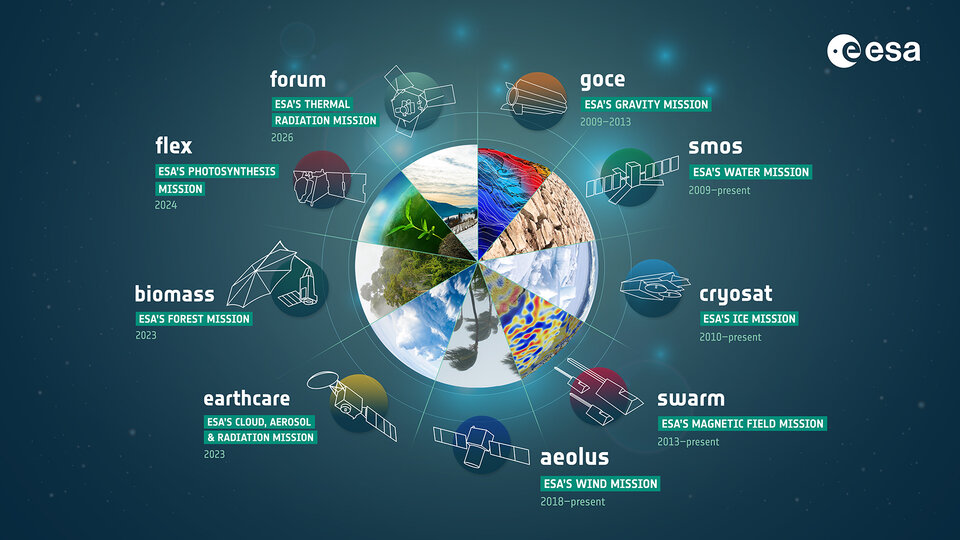
Their robust technology leads to many being extended way beyond their planned life in orbit and they gain ever-growing user communities through their scientific excellence and open and free data policy.
Importantly, Earth Explorers also provide sound heritage for developing operational missions. For instance, some of the highly successful current suite of Copernicus Sentinel missions and the future Copernicus Sentinel Expansion missions would simply not be possible without the technology and application opportunities demonstrated by the Earth Explorers.
To date, the family of Earth Explorers comprises the following missions:
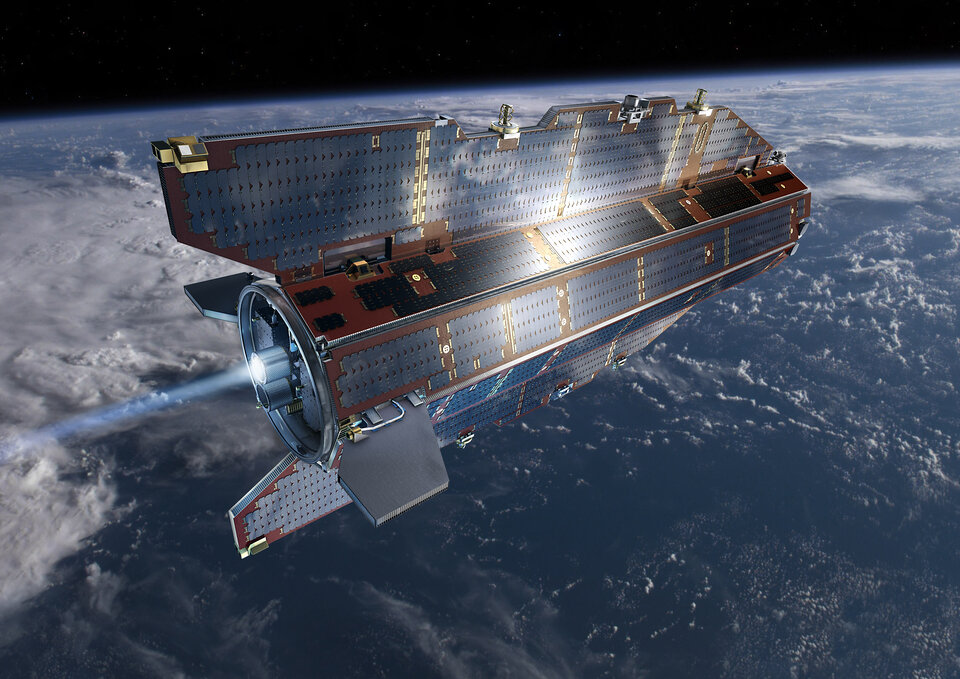
GOCE: ESA's gravity mission
Launched on 17 March 2009 and ended on 11 November 2013, the Gravity field and steady-state Ocean Circulation Explorer (GOCE) mission provided the data to accurately determine global and regional models of Earth's gravity and geoid. This is advancing research in areas of ocean circulation, physics of Earth's interior, geodesy and surveying, and sea-level change.
SMOS: ESA's water mission
Launched on 2 November 2009, the Soil Moisture and Ocean Salinity (SMOS) mission is making global observations of soil moisture and ocean salinity. By consistently mapping these two variables, SMOS is advancing our understanding of the exchange processes between Earth's surface and atmosphere and helping to improve weather and climate models.
CryoSat: ESA's ice mission
Launched on 8 April 2010, the CryoSat mission is monitoring centimetre-scale changes in the thickness of ice floating in the oceans and in the thickness of the vast ice sheets that blanket Greenland and Antarctica. Together with satellite information on ice extent, these measurements are showing how the volume of Earth's ice is changing and leading to a better understanding of the relationship between ice and climate.
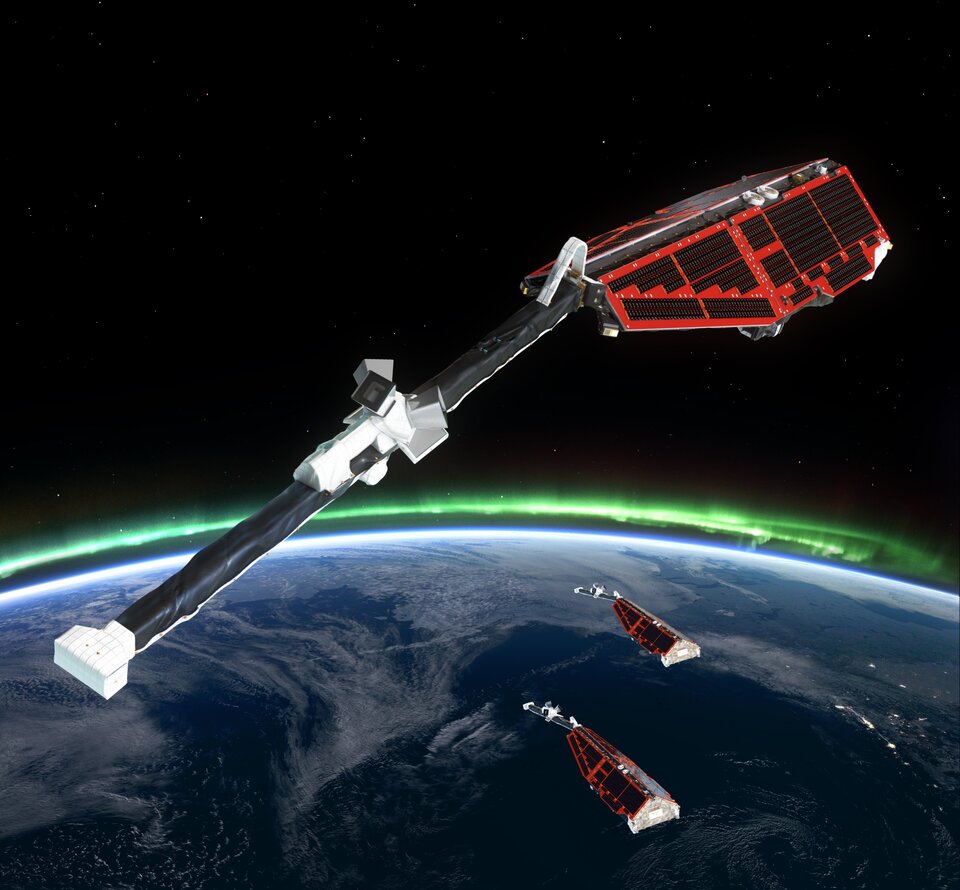
Swarm: ESA's magnetic field mission
Launched on 22 November 2013, Swarm is a constellation of three satellites to measure precisely the magnetic signals that stem from the magnetosphere, ionosphere, Earth's core, mantle, crust and the oceans. This sampling, in both space and time, will lead to an improved understanding of the processes that drive Earth's 'dynamo', which appears to be weakening.
Aeolus: ESA's wind mission
Launched in 2018, the prime aim of the Aeolus mission is to make novel advances in global wind-profile observation and provide much-needed information to improve weather forecasting. Aeolus is expected to pave the way for future operational meteorological satellites dedicated to measuring Earth's wind fields.
EarthCARE: ESA's cloud and aerosol mission
Due for launch in 2024, the Earth Clouds Aerosols and Radiation Explorer (EarthCARE) mission is a European-Japanese mission to improve the representation and understanding of Earth's radiative balance in climate and numerical weather forecast models.
Biomass: ESA's forest mission
Due for launch in 2024, Biomass mission will provide crucial information about the state of our forests and how they are changing. The data will be used to further our knowledge of the role forests play in the carbon cycle.
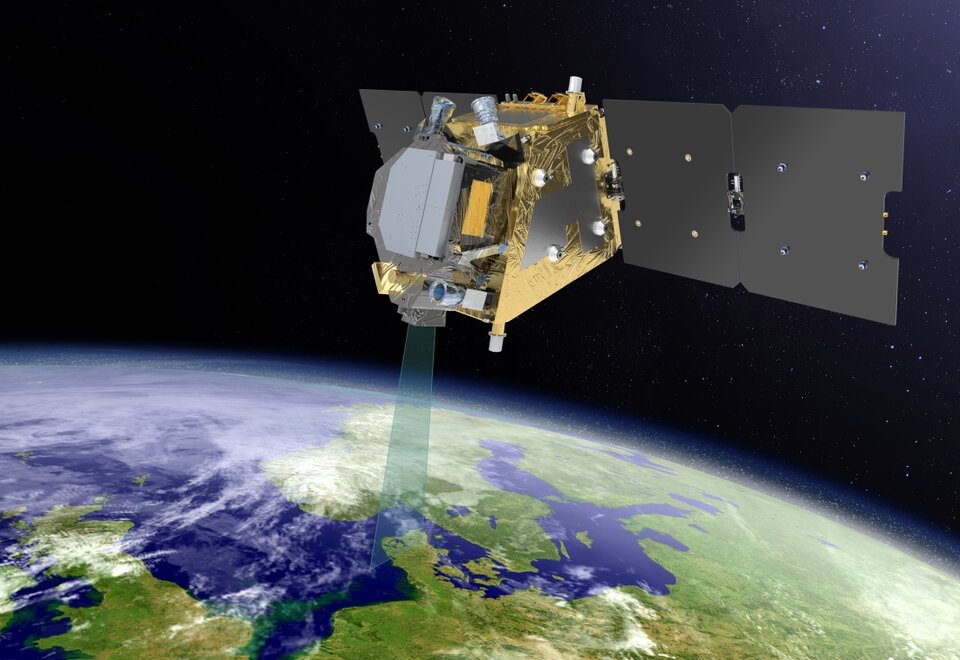
FLEX: ESA's photosynthesis mission
The Fluorescence Explorer (FLEX) will map vegetation fluorescence to quantify photosynthetic activity. This information will improve our understanding of the way carbon moves between plants and the atmosphere and how photosynthesis affects the carbon and water cycles. It will also lead to better insight into plant health and stress.
FORUM
The Far-infrared Outgoing Radiation Understanding and Monitoring (FORUM) mission will provide new insight into the planet’s radiation budget and how it is controlled, and therefore improve climate models. More than half of Earth’s outgoing longwave energy is in the far-infrared part of the electromagnetic spectrum, which has not been measured. FORUM will fill this gap.
Harmony
The Harmony mission will deliver a wide range of unique high-resolution observations of motion occurring at or near Earth’s surface. New information about our oceans, ice, earthquakes and volcanoes will make significant contributions to climate research and risk monitoring.
Future missions
Earth Explorer 11
Following a Call for Ideas for Earth Explorer 11, issued in May 2020, four mission ideas were selected to enter pre-feasibility study in June 2021. These four missions are Cairt, Nitrosat, Wivern and Seastar. Further down-selections will be made in 2023 and 2025, with a view to launching the successful Earth Explorer 11 mission in 2031–2032.
Earth Explorer 12
A Call for Ideas was issued on 20 February 2023. Information and details on how to respond to the Call can be found on ESA’s Earth Observation Proposal System. The deadline to submit a Letter of Intent is 28 April 2023 and the deadline to then submit a full proposal is 29 September 2023.


No comments:
Post a Comment