Only time and future funding will tell if Ocumtún will reveal its secrets, but Šprajc is certain of one thing: when the dry season starts next March, he'll be back in the Yucatán, searching for more clues about a lost civilisation that never truly disappeared.
Ocomtún: A long-lost Maya city that was just discovered
"You need to be a little crazy for this work," said Dr Ivan Šprajc, taking a drag of his cigarette and staring at me with ice-blue eyes. "You have to be careful about the snakes, insects, jaguars and everything else. But there is something pushing us. You have to suffer a little if you want to find something that few people have ever seen that was hidden for so many centuries."
Once described by The Guardian as "the real-life Indiana Jones", Šprajc has spent nearly 30 years hacking his way through the remote tangles of Mexico's Yucatán Peninsula to find long-lost Maya cities buried deep in the jungle.
In 2013, the Slovenian archaeologist and his team unearthed a previously unknown 40,000-person city dating to the 8th Century that had been swallowed by the rainforest called Chactún. A year later, they located two more Maya cities – Lagunita and Tamchén – which each featured pyramid temples, plazas and intricately carved stele that seemed to have been mysteriously abandoned around 1,200 years ago.

In 2014, Šprajc and his team unearthed Lagunita, an ancient Maya city dating to the 8th Century (Credit: Mauricio Marat, INAH, Mexico)
Yet, it is Šprajc's latest discovery that is now drawing worldwide attention.
- He named the site Ocomtún ("stone column" in Yucatec Mayan) after the many cylindrical columns also scattered throughout the settlement. Pottery examined from the site indicates it was likely inhabited between 600 and 800 CE.
Mapping this previously uncharted black hole could shed more light on who the Maya were, and what may have led to their dramatic collapse. . .
The great Maya mystery
ŠPRAJC'S FAVOURITE MAYA SITES
• Palenque – "one of the most beautiful and famous Maya sites"
• Tikal – "a gem that should be known and visited"
• Calakmul – "If you want to see a Maya site in a virgin state, go here. You can climb one of the two biggest pyramids and all you'll see is green jungle. It was a famous rival of Tikal with 120 stele monuments. Tikal only has 40."
- They invented the concept of zero roughly 1,000 years before Europeans and developed a calendar in the 1st Century BCE that was more accurate than the Julian calendar used across the UK, Europe and Asia for the next 1,700-2,000 years.
- They were one of the world's earliest civilizations to devise a system of writing (as early as 300 BCE) and went on to create thousands of paper books.
- They likely invented chocolate, the world's first ball game and rubber.
- Šprajc and others have long pondered whether this was due to warfare, prolonged droughts, soil depletion, climactic change or a combination of factors, but by roughly 1,000 CE, Šprajc explained that almost every settlement in the central and southern Yucatán Peninsula – including Ocomtún – was abandoned.

The Calakmul Biosphere Reserve is one of the most biodiverse places on Earth and gets its name from the lost Maya city of Calakmul (Credit: Julien Cruciani/Alamy)
Why Ocomtún matters
The rediscovery of any new lost Maya city holds valuable clues about how Maya people lived and what caused the civilization's sudden downfall some 1,200 years ago – and this is especially true in an area as little-explored as the central Yucatán Peninsula.
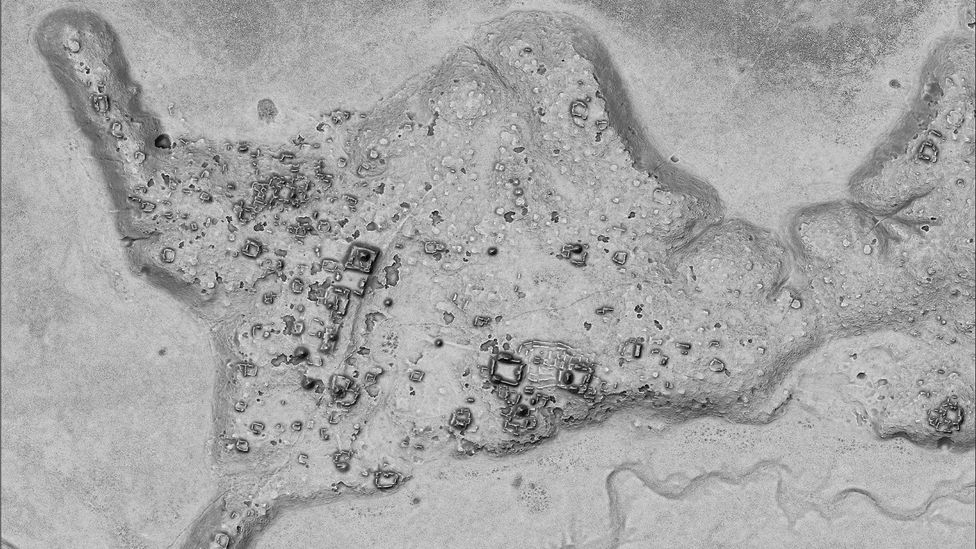
- It's home to 86 species of mammals but virtually no roads, so Šprajc and his team used Lidar – an airborne laser scanning technology that has been transforming how archaeologists conduct research in jungles and uncovering the ancient Maya world – to map the area.
- After receiving Lidar images showing man-made changes to the landscape, they thrashed their way 60km through a riot of vegetation to reach the site.
- Surrounded by extensive wetlands, the city was built on high ground and was comprised of a "monumental nucleus" covering more than 50 hectares.
- In addition to pyramids and stone columns, the team found altars, three plazas dominated by crumbling buildings and a court for the Maya's ancient ball game.
- A sprawling 80m acropolis marks the city's north-western corner and is topped by another pyramid rising 25m above the natural terrain.
- A short walk south, there are two more pyramids standing 15m tall.
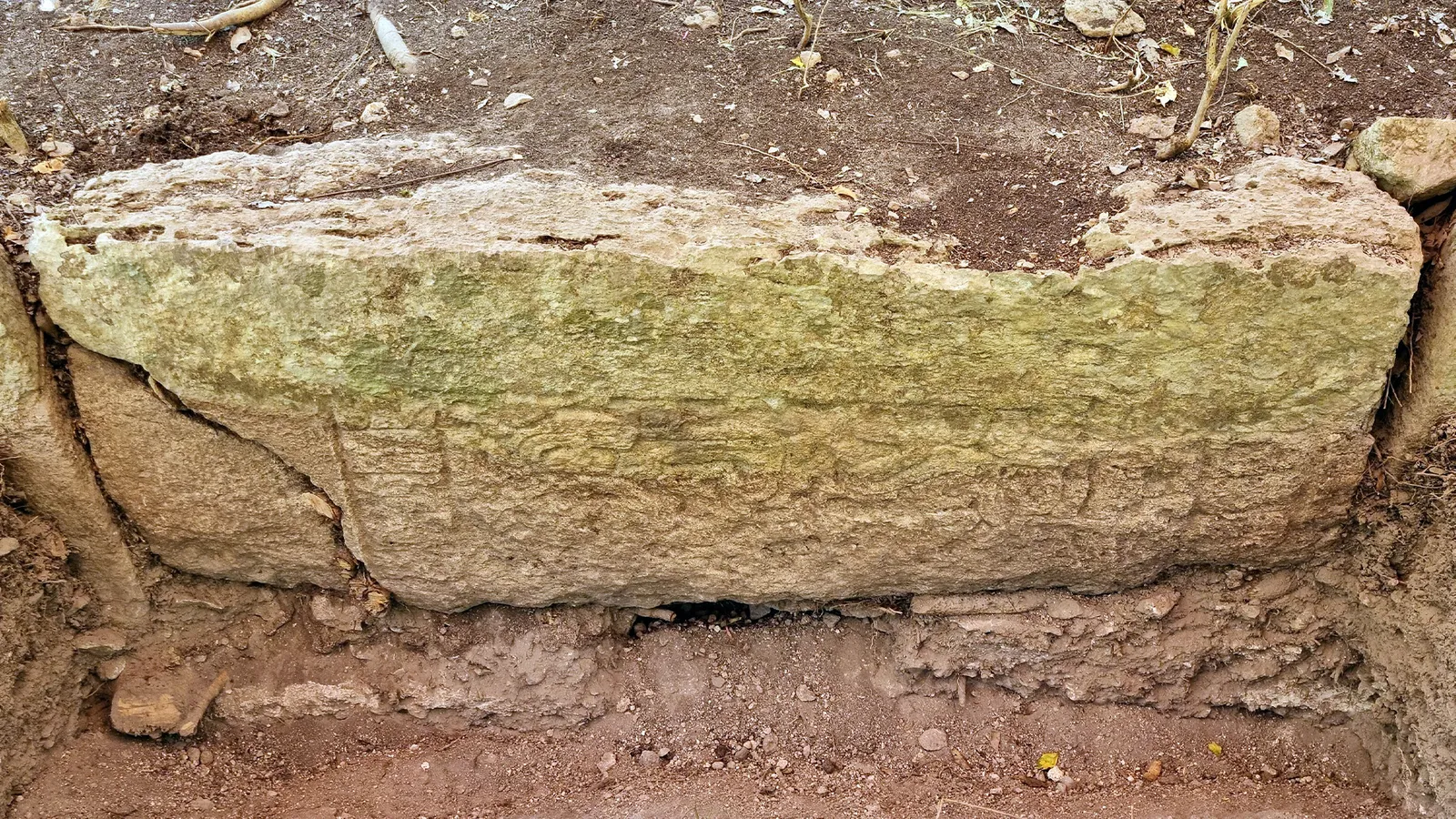
Among pyramids, plazas and stone columns, archaeologists also found detailed relief carvings at Ocomtún (Credit: ZRC SAZU)
- "Despite more than 150 years of investigations in the Maya world, this discovery shows the power of Lidar to reveal sites of this size, as well as important details about their layout and urban planning ... I believe that Ivan's research will shed light on important questions related to the rise and fall of the ancient Maya, as well as their daily life."
MAYAS TODAY
Despite an estimated 90% of Mayas dying from disease, war and slavery during the 16th-Century Spanish conquest, Maya people and culture never disappeared. Today, an estimated six to eight million Maya people speaking 28 Maya languages still live in Guatemala, Belize, western Honduras and El Salvador and southern Mexico.
- Šprajc noted that even though the city began to wane after about 800 CE, the remaining inhabitants continued to alter and adapt the buildings to their evolving needs – "a reflection of ideological and population changes in times of crisis that, finally, by the 10th Century, led to the collapse of [the Maya's] complex sociopolitical organisation and to a drastic demographic decline".
Only time and future funding will tell if Ocumtún will reveal its secrets, but Šprajc is certain of one thing: when the dry season starts next March, he'll be back in the Yucatán, searching for more clues about a lost civilisation that never truly disappeared.
"Many people would say we're losing some of the romance of archaeological discovery, but I don't think so," he said. "It's so romantic. It's heat and hacking through the jungle with machetes and problems with water and then, all of a sudden, there's a big pyramid or inscribed stele right in front of you. That's when all those troubles go away."
BBC Travel's Lost Civilisations delves into little-known facts about past worlds, dispelling any false myths and narratives that have previously surrounded them.
--- Join more than three million BBC Travel fans by liking us on Facebook, or follow us on Twitter and Instagram.
If you liked this story, sign up for the weekly bbc.com features newsletter called "The Essential List". A handpicked selection of stories from BBC Future, Culture, Worklife and Travel, delivered to your inbox every Friday.


No comments:
Post a Comment