Congratulations! The US Is 32nd Worldwide On Broadband Affordability

from the nice-job-everybody dept
"I’ve spent the better part of two decades writing about how telecom monopolization (and the corruption that protects it) results in expensive, spotty, sluggish, broadband and historically terrible customer service.
- The cause of our substandard broadband isn’t much of a mystery, but because of these companies’ political influence, state and federal policymakers often lack the courage to do much about it.
So the problem persists. One recent study found that the U.S. was currently ranked somewhere around 32nd globally, behind countries like Russia, Lithuania, and Bulgaria (you can find the full breakdown here):
“The United States and Canada both have one of the highest internet costs,” Alex Tofts, the Broadband Expert for Broadband Genie, said in a summary.
- “It’s driven by a lack of competition and bigger distances to connect, with lower population density than other developed countries. However, both have average wages in the top fifteen in the world, compensating for the high cost of internet.”
For decades, people (mostly the industry) tried to suggest the problem was because America was just so gosh darn big. But you’ll notice that China and Russia, (ranked 25th and 17th, respectively) still perform better. Data routinely shows that affordability is the key obstacle to access, yet it’s only been in the last few years that you’ve started to see this reality reflected in U.S. policymaking.
Usually after a study like this appears, telecom monopoly lobbyists and think tankers will subsequently try to claim that U.S. broadband is actually super affordable if you stand on your head, squint, and only look at the metrics in some bizarrely specific way, like only looking at relative value in cost-per-Megabits per second in some markets at certain times of day. I wish I was kidding.
But again, the cause of this problem is very clear: monopolization and consolidation, protected by corruption..."
Continue reading > TechDirt


Report: U.S. is 32nd Worldwide on Broadband Affordability
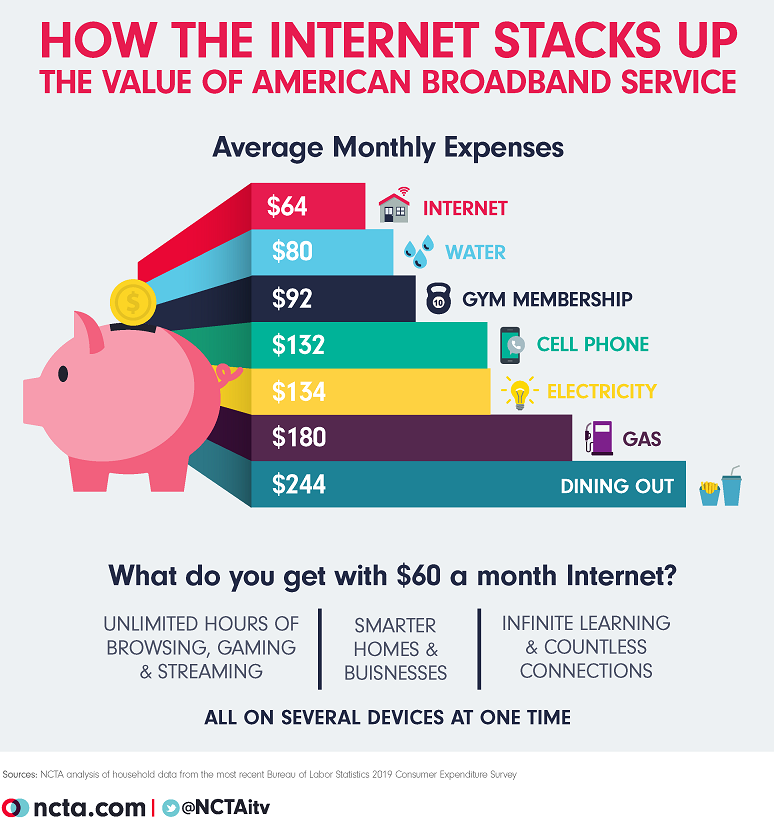
- Broadband Genie estimates that the average monthly U.S. broadband bill is $72.20 and the average monthly salary is $4,083.26.
- That means U.S. residents spend just under 1.8% of their monthly salaries on broadband.
> In North America overall, high speed Internet consumes 3.04% of users’ salaries. > Canada is 41st on Broadband Genie’s internet affordability rankings.
- “It’s driven by a lack of competition and bigger distances to connect, with lower population density than other developed countries.
- However, both have average wages in the top fifteen in the world, compensating for the high cost of internet.”
> The countries with the least affordable internet are Turkmenistan, Equatorial Guinea, Papua New Guinea. Broadband costs more than 80% of the average monthly salary in all three countries.


- Congress May Not Renew Low-Income Broadband Program Birthed During COVID
- Biden Urges FCC To Police Bullshit Cable Fees, But It Can't Because His Staffers Screwed Up The Gigi Sohn Nomination Process
- Tommy Tuberville Is Only The Latest Republican To Take Credit For Massive Broadband Investment They Voted Against
- FCC Launches New Broadband Privacy 'Task Force' So It Can Pretend It Hasn't Become Useless On Consumer Protection
- The Trump FCC Wasted Millions In Broadband Subsidies In A Giant Mess Government Is Still Trying To Clean Up


No comments:
Post a Comment