A Soyuz 2.1v rocket carrying the Luna-25 craft will blast off from the Vostochny cosmodrome, 3,450 miles (5,550 km) east of Moscow, on Friday at 0211 Moscow time and is due to touch down on the moon on Aug. 23, Russia's space agency said.
Russia to launch lunar spacecraft in race to find water on moon


Today at 07:15 am
Share
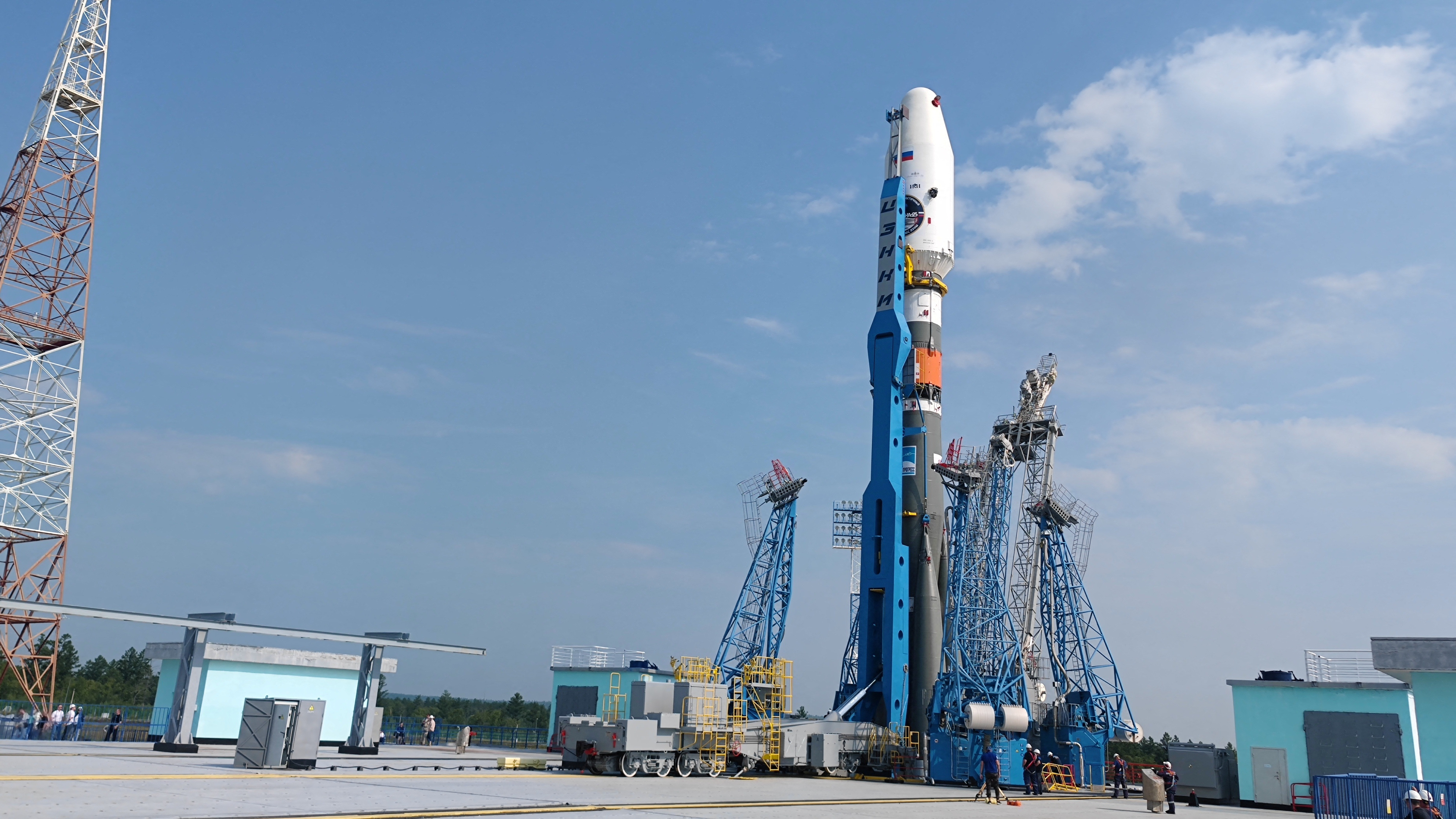

MOSCOW, Aug 10 (Reuters) - Russia made its final preparations on Thursday for the launch of its first lunar landing spacecraft in 47 years as it races to be the first power to make a soft landing on the south pole of the moon which may hold significant deposits of water ice.
For centuries, astronomers have wondered about water on the moon, which is 100 times drier than the Sahara. NASA maps in 2018 showed water ice in the shadowed parts of the moon and in 2020 NASA confirmed water exists on the sunlight areas.
"The last one was in 1976 so there's a lot riding on this," Asif Siddiqi, professor of history at Fordham University, told Reuters.
"Russia's aspirations towards the moon are mixed up in a lot of different things. I think first and foremost, it's an expression of national power on the global stage."
- A Soyuz 2.1v rocket carrying the Luna-25 craft will blast off from the Vostochny cosmodrome, 3,450 miles (5,550 km) east of Moscow, on Friday at 0211 Moscow time and is due to touch down on the moon on Aug. 23, Russia's space agency said.
"The last one was in 1976 so there's a lot riding on this," Asif Siddiqi, professor of history at Fordham University, told Reuters.
"Russia's aspirations towards the moon are mixed up in a lot of different things. I think first and foremost, it's an expression of national power on the global stage."


But Moscow then focused on exploring Mars and since the 1991 fall of the Soviet Union, Russia has failed to send probes beyond the earth's orbit.
- There is much riding on the Luna-25 mission - especially as the Kremlin says the West's sanctions over the Ukraine war have failed to cripple the Russian economy.
MOON WATER?
Major powers such as the United States, China, India, Japan and the European Union have all been probing the moon over recent years, though a Japanese lunar landing failed last year and an Israeli mission failed in 2019.
"From the point of view of science, the most important task, to put it simply, is to land where no one else has landed," Maxim Litvak, head of the planning group for the Luna-25 scientific equipment, said.
"There are signs of ice in the soil of the Luna-25 landing area, this can be seen from the data from orbit," he said, adding that the Luna-25 would work on the moon for at least an earth year, taking samples.
Major powers such as the United States, China, India, Japan and the European Union have all been probing the moon over recent years, though a Japanese lunar landing failed last year and an Israeli mission failed in 2019.
- No country has yet made a soft landing on the south pole. An Indian mission, the Chandrayaan-2, failed in 2019.
"From the point of view of science, the most important task, to put it simply, is to land where no one else has landed," Maxim Litvak, head of the planning group for the Luna-25 scientific equipment, said.
"There are signs of ice in the soil of the Luna-25 landing area, this can be seen from the data from orbit," he said, adding that the Luna-25 would work on the moon for at least an earth year, taking samples.
Russian space agency Roskosmos said that it would take five days to fly to the moon. The craft would spend 5-7 days in lunar orbit before descending on one of three possible landing sites near the pole - a timetable that implies it could match or narrowly beat its Indian rival to the moon's surface.
Chandrayaan-3 is due to run experiments for two weeks, while Luna-25 will work on the moon for a year.
With a mass of 1.8 tons and carrying 31 kg (68 pounds) of scientific equipment, Luna-25 will use a scoop to take rock samples from a depth of up to 15 cm (6 inches) to test for the presence of frozen water that could support human life.
Chandrayaan-3 is due to run experiments for two weeks, while Luna-25 will work on the moon for a year.
With a mass of 1.8 tons and carrying 31 kg (68 pounds) of scientific equipment, Luna-25 will use a scoop to take rock samples from a depth of up to 15 cm (6 inches) to test for the presence of frozen water that could support human life.
- It can explore the moon's regolith - the layer of loose surface material - to a depth of 10 centimetres and carries a dust monitor and a wide-angle ionic energy-mass analyser that provides measurements of ion parameters in the moon's exosphere.
The European Space Agency had planned to test its Pilot-D navigation camera by attaching it to Luna-25, but broke off its ties to the project after Russia invaded Ukraine in February last year.
Residents of a village in Russia's far east will be evacuated from their homes at 7.30 a.m. on Friday because of a "one in a million chance" that one of the rocket stages that launches Luna-25 could fall to earth there, a local official said.
Residents of a village in Russia's far east will be evacuated from their homes at 7.30 a.m. on Friday because of a "one in a million chance" that one of the rocket stages that launches Luna-25 could fall to earth there, a local official said.
(Reporting Guy Faulconbridge in Moscow and Joey Roulette in Washington)





No comments:
Post a Comment