De-dollarisation is the new decolonisation
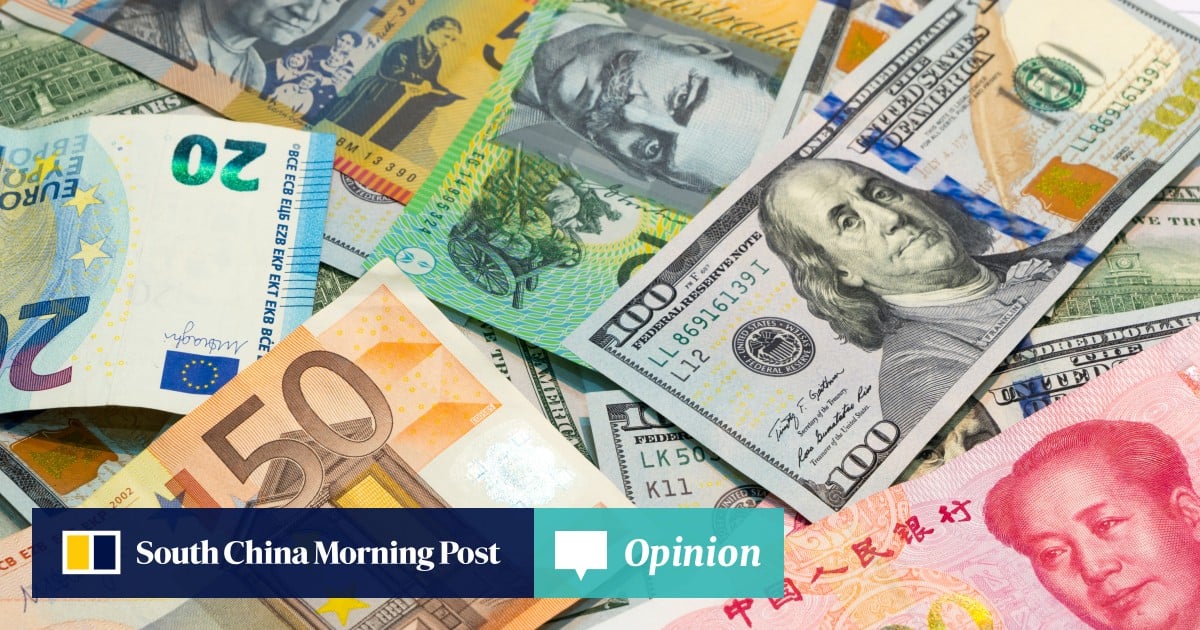
- Everyone, whether America’s vassals or enemies, needs to move away from the dollar when their greenback-denominated assets can be taken from them on Washington’s say-so




To reword Charles Baudelaire about the greatest trick played by the devil was to have convinced the world he didn’t exist, let’s just say the greatest trick the United States ever pulled was convincing the world it wasn’t an empire.
To be so convincing, you first need to convince yourself. That’s not too difficult as most Americans like to think their country was and is a democratic republic. This highly convenient (self-)deception was epitomised by George W. Bush when he told West Point graduates in June 2002 – after the invasion of Afghanistan, but before that of Iraq – that “America has no empire to extend or utopia to establish”.
In his telling, America had no territorial ambitions, never sought an empire and only wanted freedom for themselves and others. Of course.
How ironic that this came from someone who presided over, and then squandered, the short-lived unipolar moment when the US truly dominated the whole world.
In the old days, to win independence meant fighting to recover your land. In the 21st century, securing your autonomy means freeing yourself from dollar domination.
Ancient empires controlled land; modern empires run the world economy
Empires of old controlled large swathes of other people’s lands and resources. The transformation of the world with the emergence of capitalism meant Anglo-American empires came to control the global economy as the source of true hegemonic power, not just through land. Some scholars have argued the Dutch did it first in the 17th century, but it was on a much smaller scale.
The British empire, of course, controlled so much foreign land the sun was said to never set on it. But its true innovation as a global empire was to have secured worldwide trade routes, dominated foreign economies and sold the world on an ideology of free trade, but one regulated out of London and enforced by the British navy. Hence the first globalisation happened during Pax Britannica.
De-dollarisation: is it really achievable for an expanding Brics?1 Sep 2023
All that supposedly justified British imperialism for the universal betterment of mankind. Incidentally, Karl Marx may have been the first to draw the connection between the British pioneering abolition of the global slave trade, and the rise of free trade and industrial capitalism. In Volume 1 of Capital, he argues that subsistence wage labourers were far more efficient and profitable under capitalism. Quite simply, capitalists exploited workers; feudal lords owned serfs; those were examples of social relationships under different economic systems. It was also why institutional slavery, outmoded as an uneconomic form of labour, was phased out in the modern world.
Despite the most profound historical amnesia, the US did start a career as a budding empire by taking over other people’s lands, starting on its own continent.
It’s fascinating how people rarely draw the connection between the US mainland and its foreign possessions. For example, they tend only to remember the imperial Japanese attack on Pearl Harbour. But besides Hawaii, the Japanese that day also attacked Guam, the Philippines, and Midway and Wake islands, all of them, if you like, US imperial possessions, or as Americans prefer, US territories. There were others: Puerto Rico, American Samoa, and the US Virgin and Northern Mariana Islands.
But for the world’s greatest empire, it did physically possess so little foreign land, comparatively speaking. And in time, especially after the second world war, land for imperial possession became more scarce and far less important than capital and its unprecedented dominance and control of the world economy. The US dollar became the primary financial instrument of global control, which was of course, backed up by hundreds of military bases divided into five global commands under the Pentagon. It was less a matter of taking over your land but more about integrating your country into the dollar-led global economy, whether you wanted to or not.
‘The dollar is our currency but your problem’
For all his great cynicism as exemplified by this infamous dictum of his, Richard Nixon, or at least those in his White House who helped him run the US economy, understood how the world operated economically in relation to the greenback.
That was why they put the final nail into the coffin of the classical Bretton Woods and freed the dollar from gold. At least under the original idealistic Keynesian conception of post-war global trade and finance, the system was supposed to benefit everyone. That arguably worked during the immediate post-war reconstruction period for Europe when Washington effectively underwrote the system.
__________________________________________________________________________________
:max_bytes(150000):strip_icc()/INV_De-Dollarization_GettyImages-1407604986-98745ae03c6740ed9008868f123ff2b0.jpg)


No comments:
Post a Comment