 Why America Doesn’t Care About Trump’s Graft
Just when you thought the Hollywood community had proved that standing together to pressure Disney to restore the canceled Jimmy Kimmel to his late-night platform was a victory for free speech, American comedians Kevin Hart, Aziz Ansari, and Pete Davidson, et al. showed up with their acts in Saudi Arabia for the Riyadh Comedy Festival.
As the historian Niall Ferguson told me in his Fresh Hell interview, “If you can do things like impose tariffs arbitrarily, that’s a tremendous power. It creates opportunities for corruption because the CEOs of tech companies are very incentivized to get into the Oval Office and cut deals.”
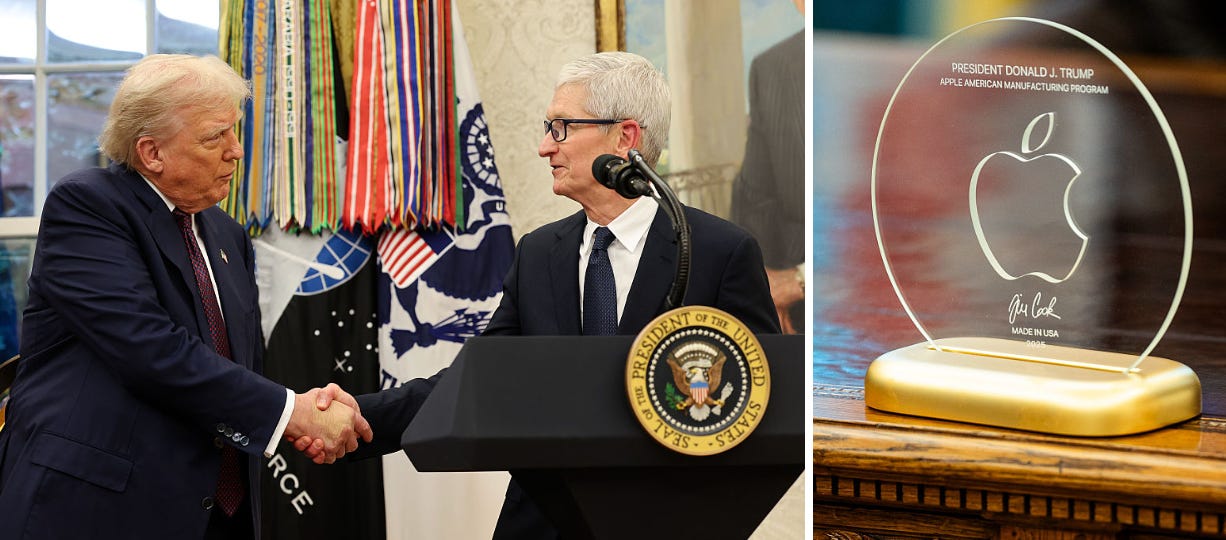
Sure enough, in August, Apple CEO Tim Cook —who once called Jan 6th “a sad and shameful chapter in our nation’s history”—won a dramatic reduction in tariffs on Apple when he announced an additional $100 billion investment in the U.S. and, in a further obsequious grovel, presented Trump with a slab of Corning Gorilla Glass etched with the Apple logo, signed by Cook, and mounted on a 24-karat gold base—“a unique unit of one.”
Quid Pro Bros
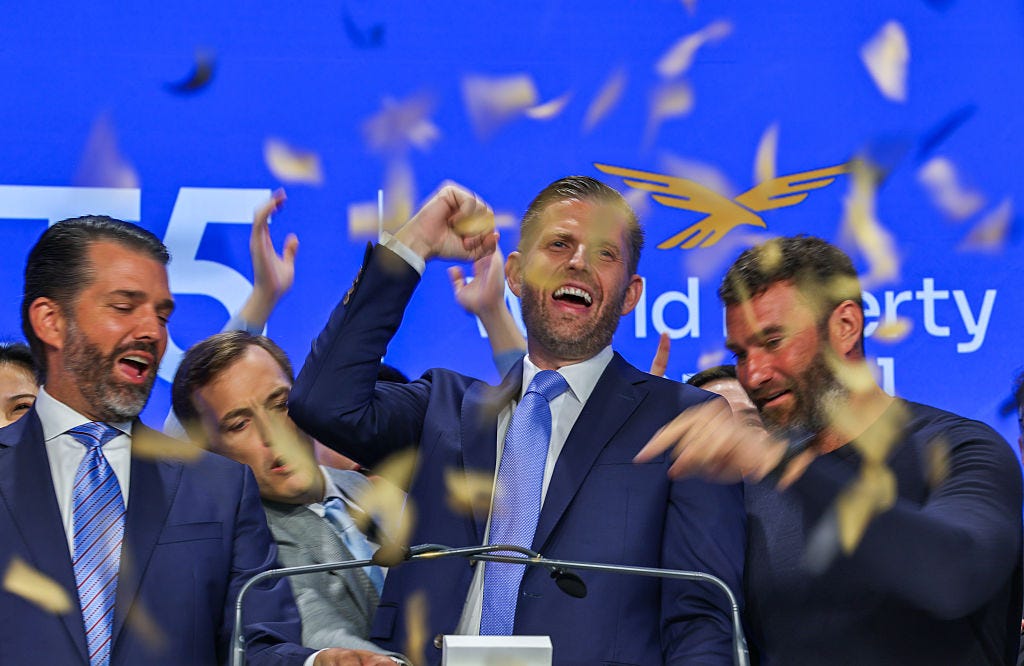
What boggles me more is why MAGA adorers, and the American populace in general, seem to care so little about the raging kleptocracy that is business as usual in the Trump circle. The president’s net worth has nearly doubled in the eight months since he returned to the Oval Office. In May, the UAE’s ruling family deposited $2 billion into the crypto fund cofounded by Eric and Donald Trump, Jr. with, among others, the Middle East special envoy Steve Witkoff’s fresh-faced son, Zach and a fourth Musketeer Zak Folkman, who used to run a company called Date Hotter Girls, —and lo!—two weeks later, the White House gave the UAE access to a payload of the world’s most advanced and scarce AI computer chips, despite national security concerns that they might be shared with our biggest adversary, China. A NYT investigation described the transaction as “eviscerating the boundary between private enterprise and government policy in a manner without precedent in modern American history.”

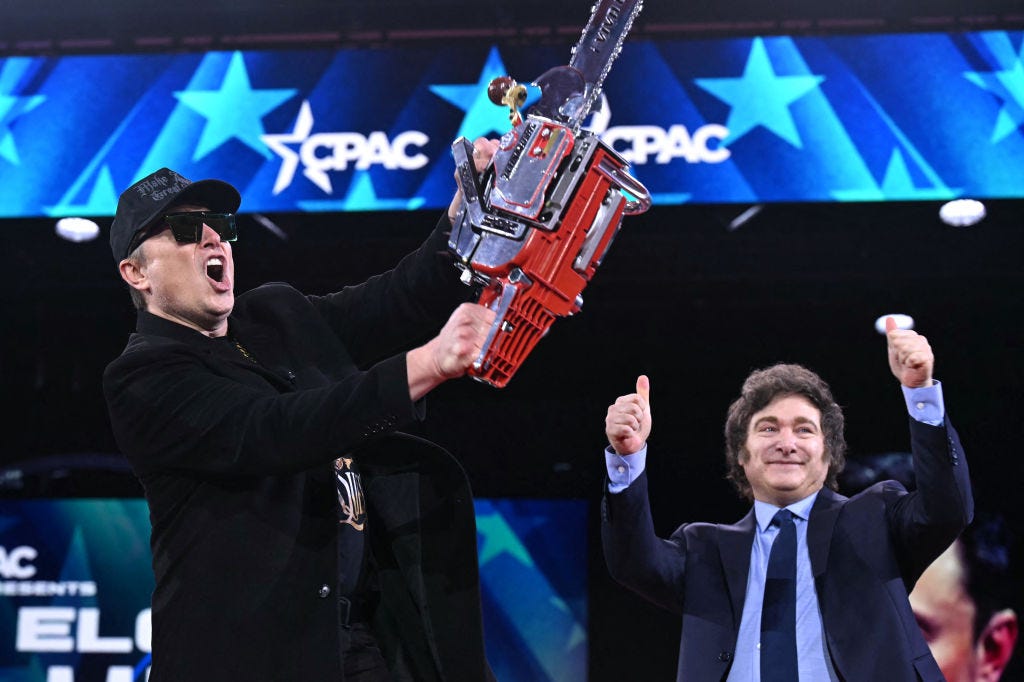
Compared to America’s perplexing yawn over such open-air grift, it was almost touching to read last week of the fury Mexicans feel that politicians in the ruling Morena party are wearing expensive watches and staying in $400-a-night hotels on junkets in Tokyo. It was refreshingly ominous to read of young protesters in Morocco on a rampage over their government spending billions to host the 2030 World Cup and build Africa’s biggest ice hockey rink, when youth unemployment is at 36 percent. Thousands of young people in Madagascar, Indonesia, and Mongolia have taken their doomscrolling offline to protest in the streets. Inequality rage is going viral—except here, where we seem to live in a materialistic trance. Clearly, the economies in “shithole countries,” as Trump would call them, are very different from the low unemployment and comparative affluence of the U.S. But you might think Trump’s dispatching $20 billion of government funds to help out his crony, Argentina’s right-wing president Javier Milei (he of the shag-rug sideburns, who gifted his campaign gimmick of a “bureaucracy chainsaw” to Elon Musk at CPAC in February), would spark more energetic outrage at a moment when Trump is intent on depriving 22 million Americans of health care subsidies.
Mine Eyes Glaze Over
Back in the first Gilded Age, newspapers were a new mass-market medium. Everyone rushed to read about the corruption exposed by crusading muckrakers in broadsheets that, in aggregate, forged something called “public opinion.” Today, earnest, toiling investigative journalists at The New York Times, The New Yorker, and The Atlantic have published tens of thousands of words about the flagrant Trumpian self-dealing, from the $TRUMP meme coin to handshake global hotel deals, often tied to the nation’s business. But these exposés land only briefly on cable news shows no one watches or in the self-affirming social media feeds that generate ephemeral agitation. Corruption is too complex a topic to capture the attention of a society addicted to the tabloid rhythms of TikTok dross (whose spoils are now divvied up among some of Trump’s biggest supporters, including Oracle’s Larry Ellison). The minutiae of balance sheets are not sexy enough to vault over the more seductive silos of digital hearsay or the suffocating national obsession with wealth porn. (Quiet luxury was a bore anyway.) The Instagram feeds of “power women,” who used to post their fashionable concerns about social causes, have turned into leggy displays of female pout clout by content creators, encased in body-hugging Lycra and staring at their own phones in dazed self-admiration.
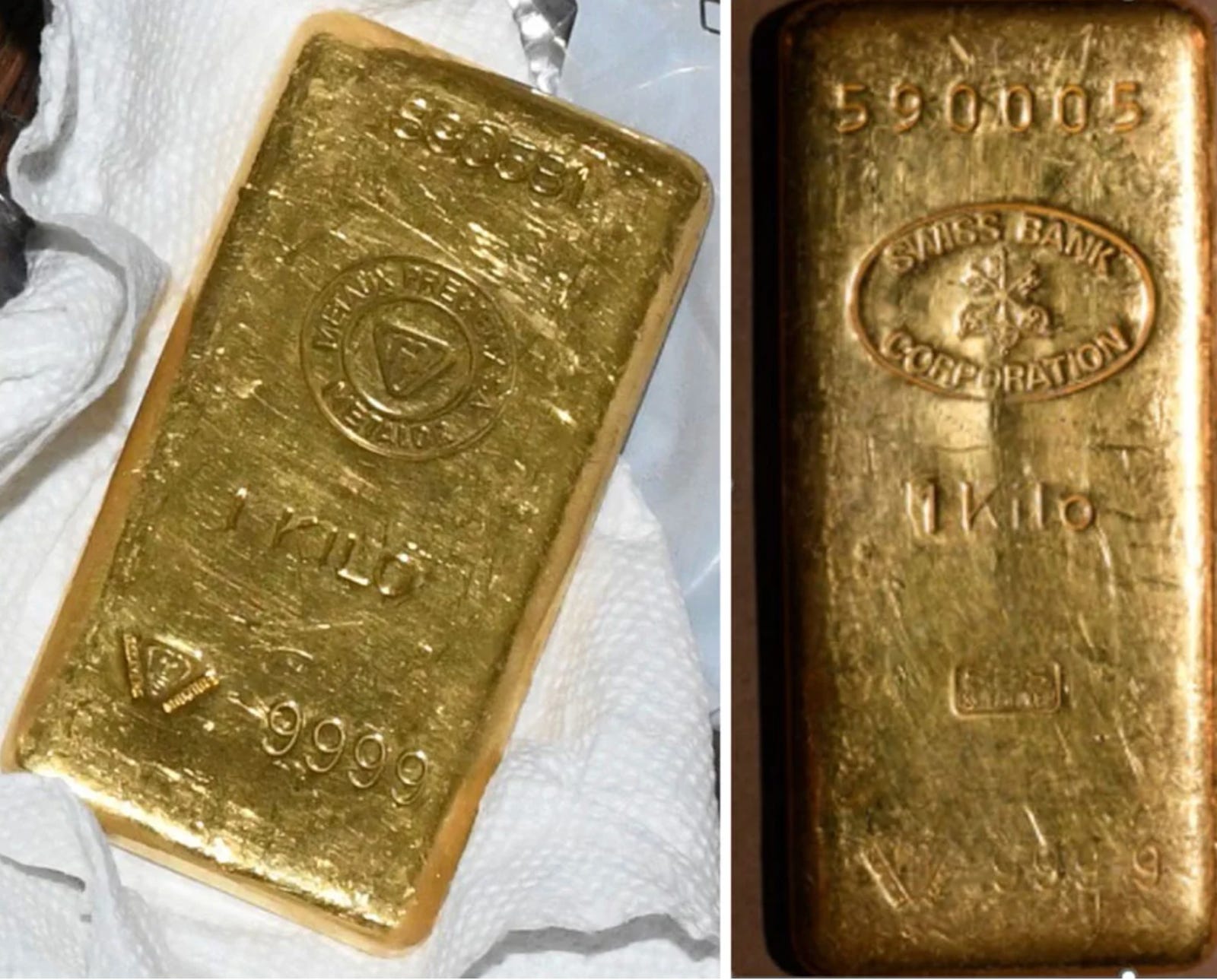
The only corruption stories that rise to the top are those with an instant, juicy visual component, like the stash of thirteen gold bars found in now-incarcerated former Senator Robert Menendez’s New Jersey closet. Now, we are morally concussed by the velocity of the Trump news cycle and the normalization of White House graft. To get exercised about stuff like the Trump tribe’s insider crypto deals, you have to: a) ask Sam Bankman-Fried to explain it, and b) understand a bit about the way in which the presidency used to operate, at least for most of the 20th century, and that would come with the increasingly unrealistic requirement of a passing knowledge of American history.
Remember how in 2017 Elon Musk and Disney CEO Bob Iger resigned from Trump’s advisory councils over the U.S. withdrawal from the Paris climate accords? And later that same summer, Merck CEO Kenneth Frazier, followed by seven more leading CEOs, stepped down from Trump’s American Manufacturing Council in protest over his ambivalent response to the violence at the alt-right march in Charlottesville. Who will break the spell this time? For now, apathy is the new activism.FRESH HELL Tina Brown's Diary
Tina Brown's observations, rants, news obsessions, and human exchanges.


No comments:
Post a Comment