



U.S. Supreme Court Rejects Marijuana Companies’ Case Challenging Federal Prohibition
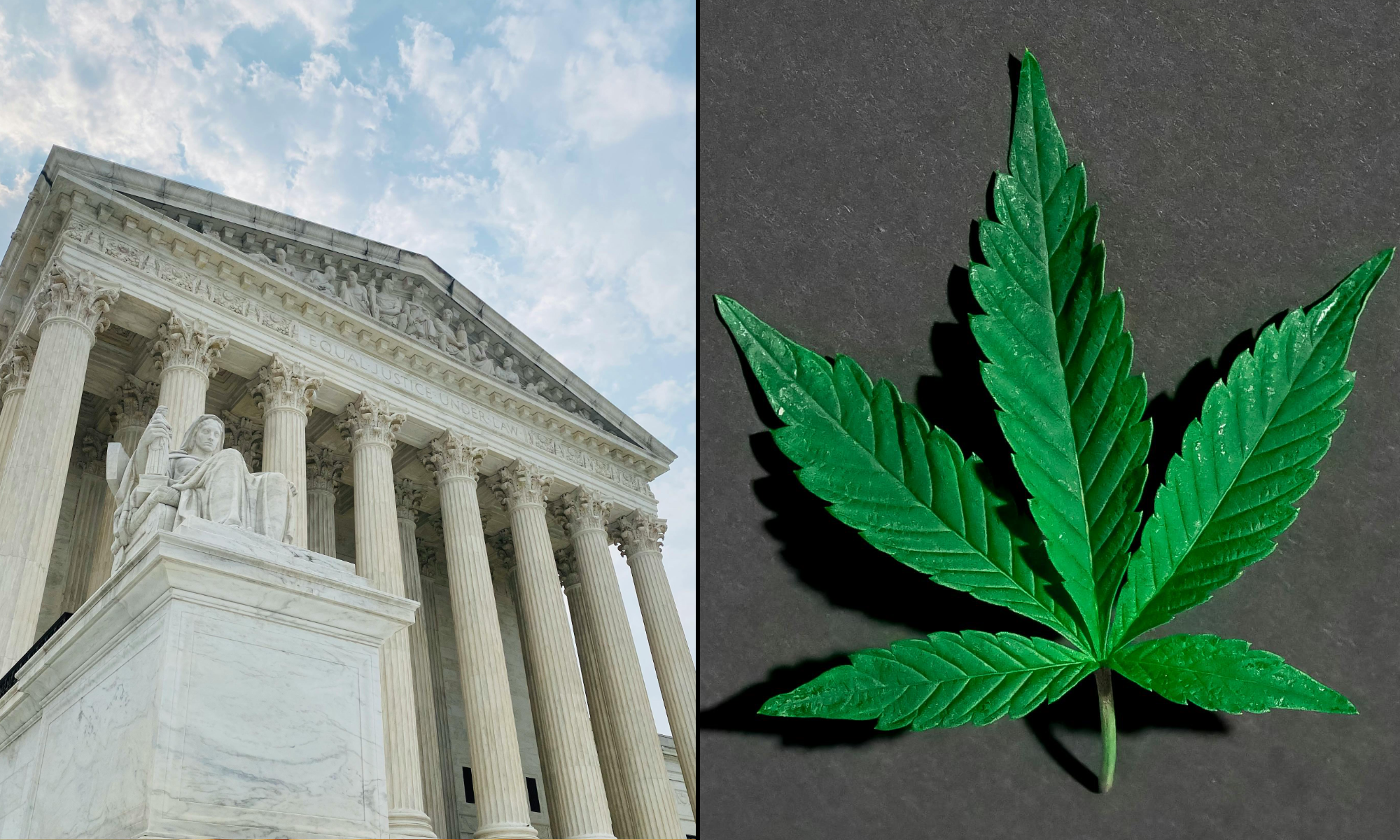
The U.S. Supreme Court is declining to take up a case challenging the constitutionality of federal marijuana prohibition—an issue that even one of the bench’s more conservative members, Justice Clarance Thomas, had previously argued must be resolved amid the state legalization movement.
- On Monday, the court posted an order list showing that the matter failed to receive the needed votes from four justices to grant certiorari.
- Massachusetts-based marijuana businesses had asked the court to take their case because they argued that federal law unconstitutionally prohibits intrastate cannabis activity, contravening the Commerce Clause.
That issue was raised in amicus briefs filed by supporters of the suit over recent weeks. That includes a public interest law firm representing a man who says federal law infringed on his property rights, libertarian think tank the Cato Institute and the Koch-founded Americans for Prosperity Foundation.
- The powerhouse law firm Boies Schiller Flexner LLP submitted their petition for writ of certiorari from the court on behalf of their cannabis industry clients in October, and the Justice Department subsequently declined the opportunity to file a brief for or against the case’s consideration by the justices.
- A lead attorney representing the petitioners previously told Marijuana Moment that he was “hopeful”—albeit somewhat “nervous”—about the prospect of justices ultimately taking up the matter and deciding to address the key legal question about the constitutionality of federal cannabis prohibition.
“Time is of the essence,” Josh Schiller said, noting the dramatic shift in public opinion and state laws governing cannabis. “We think that this is the right time for this case because of the need—the industry needs to get relief from federal oversight at the moment.”
Schiller did not immediately respond to a request for comment from Marijuana Moment about the court’s action on Monday.
- But it’s widely understood that the plaintiffs’ legal team has long intended the matter to end up before the nine high court justices.
- “Once comprehensive, the Federal Government’s current approach is a half-in, half-out regime that simultaneously tolerates and forbids local use of marijuana,” Thomas said at the time.
- “This contradictory and unstable state of affairs strains basic principles of federalism and conceals traps for the unwary,” he said, adding that “though federal law still flatly forbids the intrastate possession, cultivation, or distribution of marijuana…the Government, post-Raich, has sent mixed signals on its views.”
Thomas’s comments seemed to suggest it’d be appropriate revisit the precedent-setting case, Gonzales v. Raich, where the Supreme Court narrowly determined that the federal government could enforce prohibition against cannabis cultivation that took place wholly within California based on Congress’s authority to regulate interstate commerce.
The initial complaint in the current case, filed in U.S. District Court for the District of Massachusetts, argued that government’s ongoing prohibition on marijuana under the Controlled Substances Act (CSA) was unconstitutional because Congress in recent decades had “dropped any assumption that federal control of state-regulated marijuana is necessary.”
—
Marijuana Moment is tracking hundreds of cannabis, psychedelics and drug policy bills in state legislatures and Congress this year. Patreon supporters
pledging at least $25/month get access to our interactive maps, charts
and hearing calendar so they don’t miss any developments.


No comments:
Post a Comment