
RELATED
The
Columbian Exchange created the first truly global interconnectedness,
linking continents previously isolated, and set the stage for modern
world history, impacting everything from food on our tables to the
spread of diseases and patterns of human migration
The Columbian Exchange was the
massive transfer of plants, animals, diseases, technology, and people
between the Americas (New World) and Afro-Eurasia (Old World)
following Christopher Columbus's 1492 voyage, creating global networks
and profoundly reshaping societies, diets, ecosystems, and economies on
both sides of the Atlantic, introducing vital crops like potatoes and
corn to the Old World, while bringing devastating diseases and livestock
to the New, leading to population shifts, new trade, and colonization.
What Was Exchanged?
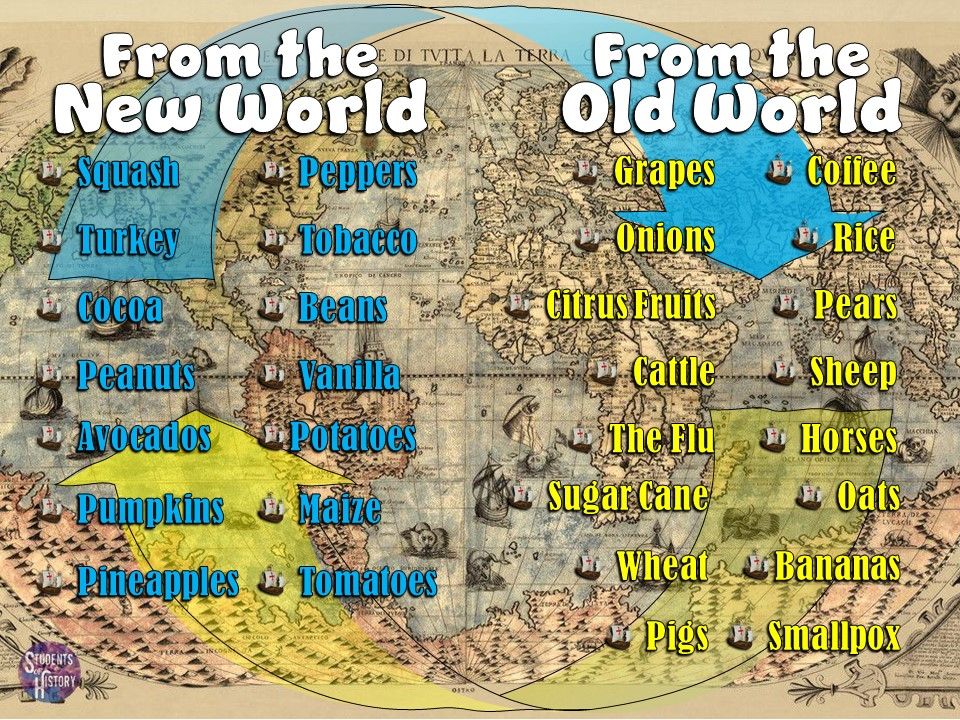
From New World to Old World (Americas to Europe/Africa/Asia):
- Plants: Potatoes, corn (maize), tomatoes, cacao, tobacco, squash, chili peppers, pumpkins.
From Old World to New World (Europe/Africa/Asia to Americas):
- Plants: Wheat, sugar, coffee, bananas, olives, citrus fruits.
Key Impacts
- Demographic Shifts:Diseases caused massive decline in Indigenous populations, while new American crops fueled population booms in Europe, Africa, and Asia.
New World crops became staples worldwide, improving nutrition and increasing food supply, fundamentally changing global diets.
Established new global trade routes and spurred capitalism, though often through exploitation and colonialism.
Introduction of new species altered landscapes and ecosystems on both continents.
Spread of religions, languages, and technologies, reshaping cultures.
Significance
The
Columbian Exchange created the first truly global interconnectedness,
linking continents previously isolated, and set the stage for modern
world history, impacting everything from food on our tables to the
spread of diseases and patterns of human migration.
===


No comments:
Post a Comment