 What’s at stake
Some in the Trump administration have tried to make the domestic case for the US capture of Venezuelan leader Nicolás Maduro by arguing it helps stem drug shipments into the U.S.
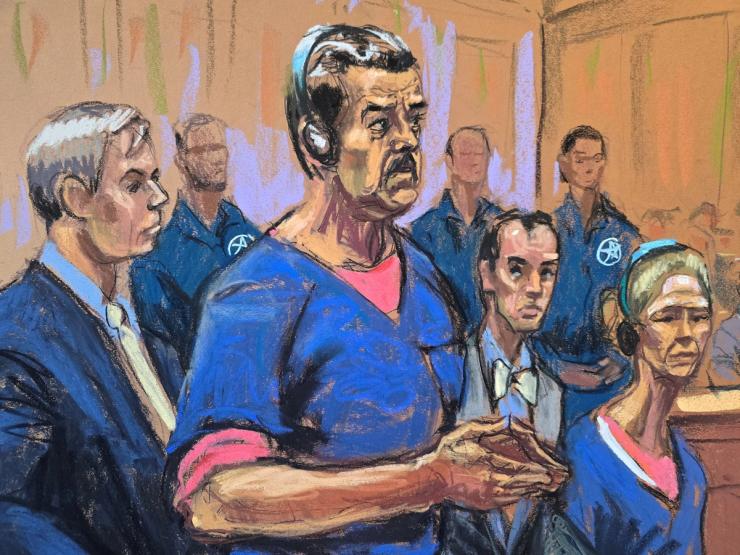
- Maduro, now facing federal charges in New York, has long been accused of aiding drug trafficking.
- The Trump administration described its operation targeting Venezuela as part of a war on drugs, accusing Maduro of causing overdose deaths in the U.S.
But experts say Venezuela plays essentially no role in bringing fentanyl into the U.S., and only a limited one in the trafficking of cocaine.
Vice President JD Vance tried to push back on criticism of the administration’s logic as flawed, posting on X: “If you cut out the money from cocaine (or even reduce it) you substantially weaken the cartels overall.”
Debatable: Maduro and the drug fight
Jan 9, 2026, 2:01am MST
Who’s making the case1. Rahul
Gupta, director of the Office of National Drug Control Policy under
President Joe Biden, argued that defanging the drug trade requires more
than taking out any one figure:
“Nearly four out of five overdose deaths in the United States now
involve fentanyl. That fact alone explains why this crisis cannot be
solved by taking down any single figure. Fentanyl is cheap, compact, and
lethal at microscopic doses, produced through decentralized networks
designed to survive disruption.
- Its supply chain spans continents — chemical precursors from China, synthesized in Mexico, and transported across the southern border in quantities small enough to evade traditional enforcement — before spreading into communities far from any border.
- From there, it moves quickly onto street corners, into emergency rooms, and through small towns, turning a global pipeline into a local catastrophe.
“This is the same mistake made in the 1990s,
when the fall of Pablo Escobar was supposed to end cocaine trafficking.
It didn’t. The market reassembled, routes shifted, and deaths rose.
“International
accountability matters. But ending this crisis requires evidence-based
action at home — and a refusal to conflate headlines with results.”
2. Melissa Ford Maldonado, director
of the Western Hemisphere Initiative at the America First Policy
Institute and a former Trump White House official, said Maduro’s capture
will disrupt drug networks and deter dealers:
“The US
capture of Nicolás Maduro is a major victory in the fight against the
drug cartels, even if the impact isn’t immediate or easily measured.
- Venezuela isn’t solely to blame for America’s drug crisis, but Maduro protected, enabled, and profited from criminal networks trafficking drugs across the Western Hemisphere.
- Taking this regime offline disrupts those networks and serves as a warning to other bad actors.
“For years, corrupt regimes partnered with cartels while hiding behind sovereignty, confident they would never face real consequences. That era is now over. This action sends an unmistakable message: If you amass power by harming American communities and poisoning American citizens, you will be held accountable.”
3. Sen.
Mark Warner, D-Va., the top Democrat on the Senate Intelligence
Committee, said the Trump administration’s argument doesn’t pass muster
given the president’s pardon of former Honduran President Juan Orlando
Hernández, who had been convicted on drug trafficking charges:
- “Not when in the same time frame you are pardoning a convicted Latin American former president drug dealer.
- I mean, this feels like it was much more about oil than about drugs and, again, the signal that the president sent by pardoning Hernández undermines the whole case.


Intelligence for the New World Economy
Notable
- Former Rep. Marjorie Taylor Greene, R-Ga., is among those disputing Trump’s claim that his actions against Venezuela are about drugs, noting that fentanyl largely comes from Mexico.


No comments:
Post a Comment