Supreme Court strikes down Trump’s order ending birthright citizenship

Updated on June 30 at 1:55 p.m.
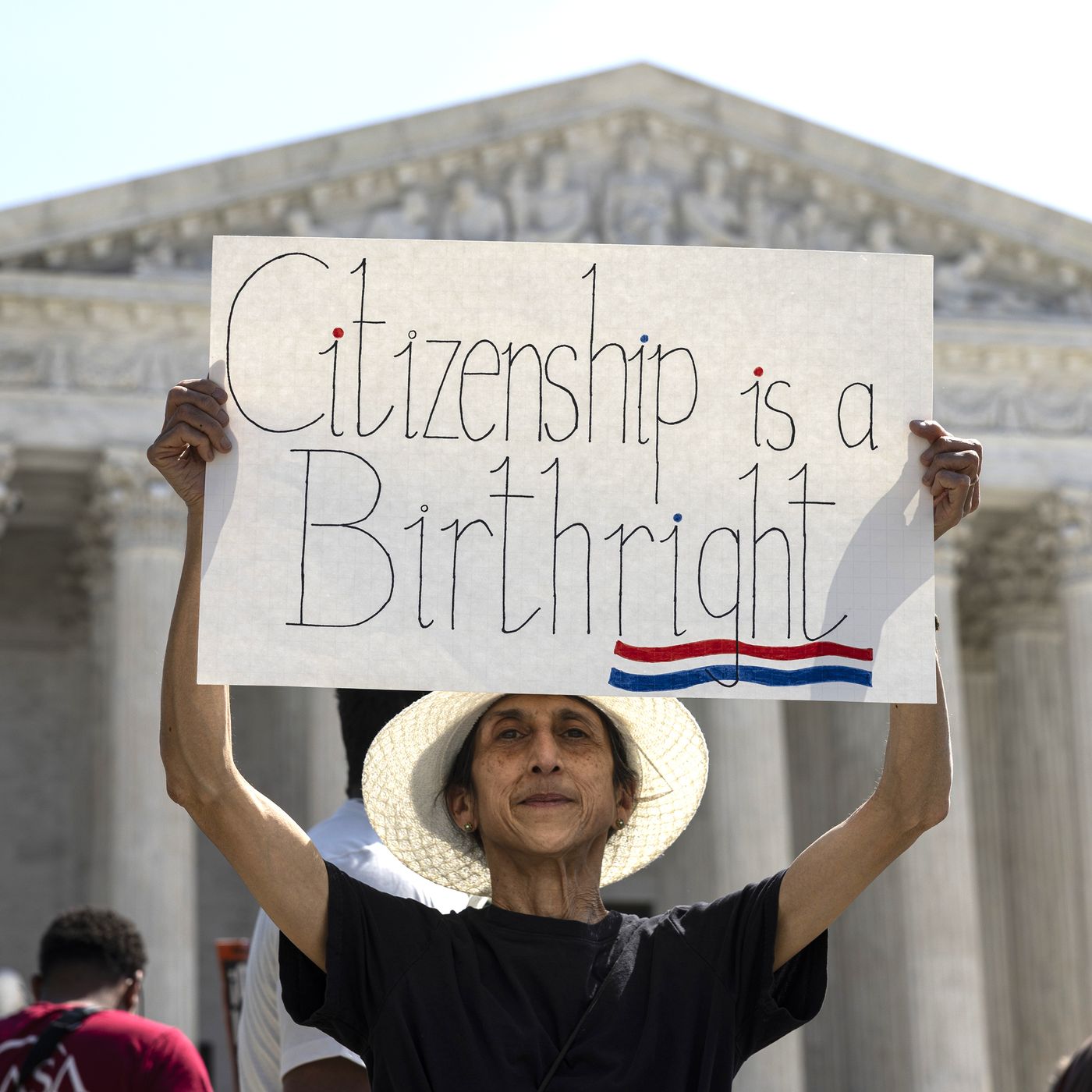
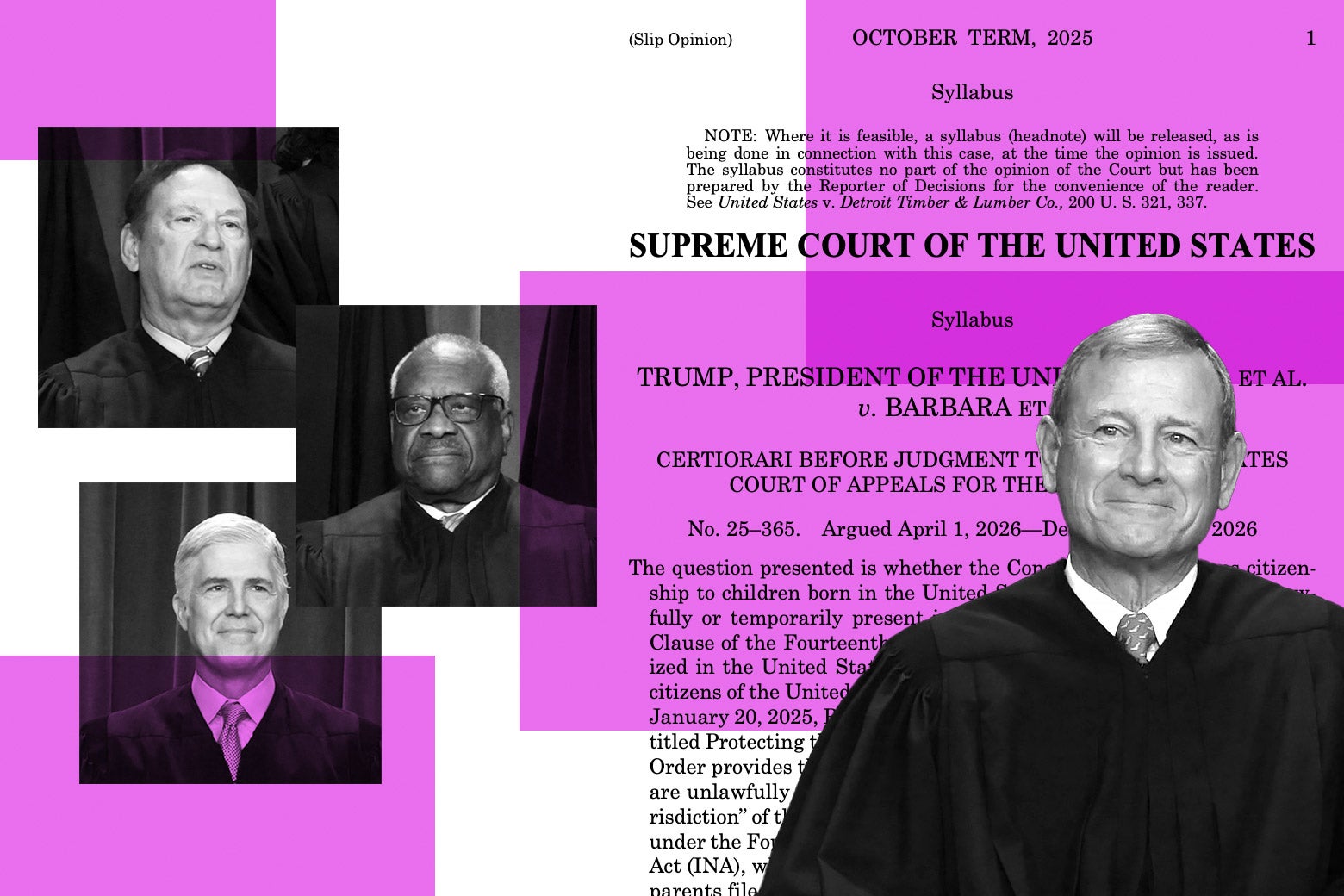
The Supreme Court on Tuesday struck down President Donald Trump’s executive order seeking to end birthright citizenship – the guarantee of citizenship to virtually everyone born in the United States. In a decision by Chief Justice John Roberts, in Trump v. Barbara, the justices agreed with the challengers, as well as all of the lower courts around the country that have considered the issue, that Trump’s order cannot be reconciled with the 14th Amendment to the Constitution, which confers citizenship on anyone “born … in the United States, and subject to the jurisdiction thereof.”
Writing for the majority, Roberts emphasized that the “children born of parents unlawfully or temporarily present in the United States” “satisfy both elements of the Citizenship Clause.” “Under the Constitution,” he concluded, “they are citizens at birth.”
In a dissenting opinion, Justice Samuel Alito called the ruling both “one of the most important decisions in the history of the Court” and “a serious mistake.” “Careful analysis of the text of the Fourteenth Amendment and the process that led to its adoption,” Alito argued, “shows that it does not degrade the concept of United States citizenship in this way. Instead,” he contended, “the Fourteenth Amendment confers citizenship on only those children who, at birth, owe allegiance solely to this country.”
Trump issued the executive order at the center of the case on Jan. 20, 2025, shortly after he was sworn into office for a second term. It provided that babies who are born in the United States to parents who are in this country either illegally or temporarily are not automatically entitled to citizenship.
Although Trump’s order was slated to go into effect 30 days after he signed it, it never did. Instead, several federal judges across the U.S. prohibited the Trump administration from enforcing the order while challenges to it moved forward in court.
- By a vote of 6-3, in Trump v. CASA, the court ruled that they cannot.
- On July 10, a federal judge in New Hampshire issued a preliminary injunction that blocked the government from enforcing the order against a class of babies born after Feb. 20, 2025, who are or would be denied U.S. citizenship by the order.
- U.S. District Judge Joseph Laplante concluded “that the Executive Order likely ‘contradicts the text of the Fourteenth Amendment and the century-old untouched precedent that interprets it.’”
The Trump administration then appealed to the Supreme Court on Sept. 26, asking it to review Laplante’s ruling without waiting for a federal appeals court to weigh in. The justices granted the government’s request on Dec. 5, and the case was argued on April 1.
On Tuesday, the Supreme Court upheld the lower court’s decision. Roberts explained that under early English law, children who were born in Britain automatically became British subjects. “This view crossed the Atlantic with the colonists—and was adopted with little fanfare after the Revolution,” Roberts observed. In 1868, the 14th Amendment was adopted to repudiate the Supreme Court’s infamous 1857 ruling in Dred Scott v. Sandford, holding that a Black person whose ancestors were brought to this country and sold as enslaved persons was not entitled to any protection from the federal courts because he was not a U.S. citizen. In so doing, Roberts wrote, the framers of the amendment intended to “permanently enshrine” the existing understanding of birthright citizenship. “A child born on American soil and subject to American law was made an American citizen.”
The Supreme Court then reaffirmed that principle in 1898 in the case of Wong Kim Ark, who was born in San Francisco to parents of Chinese descent. When he returned to the United States from a visit to China in 1895, immigration officials would not allow him to enter the country on the ground that he was not a U.S. citizen. “What the Court held in Wong Kim Ark was simple,” Roberts stressed: “the Citizenship Clause incorporated the common law and granted citizenship to nearly all children born in the United States. Not surprisingly, then, in the 128 years since, we have repeatedly understood the rule” of that case “to guarantee citizenship to all children born in the United States and subject to its power.”
- As an initial matter, Roberts said, “there is scant evidence for this dramatically revisionist view.”
- But in any event, he added, if Congress “intended to limit American citizenship to the children of those domiciled in the United States, nothing in the succinct language of the Citizenship Clause conveyed that design.”
“Citizenship, then and now,” Roberts concluded, “was the right to have rights—to freely participate in our political community. The Framers of the Fourteenth Amendment extended that promise to ‘every free-born person in this land.’ We keep that promise today.”
Justice Brett Kavanaugh agreed with the result that the court reached – that the president’s executive order is invalid – but not its reasoning. In his view, Trump’s order “does not violate the Fourteenth Amendment” but does violate a federal law providing that children who are “born in the United States, and subject to the jurisdiction thereof” are U.S. citizens. Congress, Kavanaugh suggested, “could amend” that law “or otherwise enact new legislation establishing exceptions to birthright citizenship for children born to foreign citizens unlawfully or temporarily in the country. But,” he noted, “Congress has not yet done so.”
Justice Clarence Thomas penned a lengthy dissent, which Justice Neil Gorsuch joined. He called the majority’s account “not historically accurate” and said that it “adds to the sad history of the Fourteenth Amendment, which was designed and understood to secure equal rights for the freed blacks but has instead been repurposed for political projects that the Reconstruction Congress did not support.”
Gorsuch also wrote a separate brief dissent, in which he appeared to suggest that Trump’s executive order might violate the Constitution as it applies to the children of undocumented immigrants who intend to live in the United States permanently. “If those parents are not domiciled here,” Gorsuch queried, “then where are they domiciled? And if the answer is nowhere,” he continued, “how can we reconcile that conclusion with this Court’s longstanding recognition that every person is domiciled somewhere?” Because the challengers in this case have argued that Trump’s order is invalid in all circumstances, rather than just some, Gorsuch explained, “these questions may not be properly before us. But their answers are undeniably important to a Nation committed to a view of citizenship open to all children born here to parents who can call this country their home.”






No comments:
Post a Comment