Sunday, August 08, 2021
Surprising Take-Away After Some Face-to-Face Time with Mike Lindell
The MyPillow Guy Really Could Destroy Democracy
In the time I spent with Mike Lindell, I came to learn that he is affable, devout, philanthropic—and a clear threat to the nation.
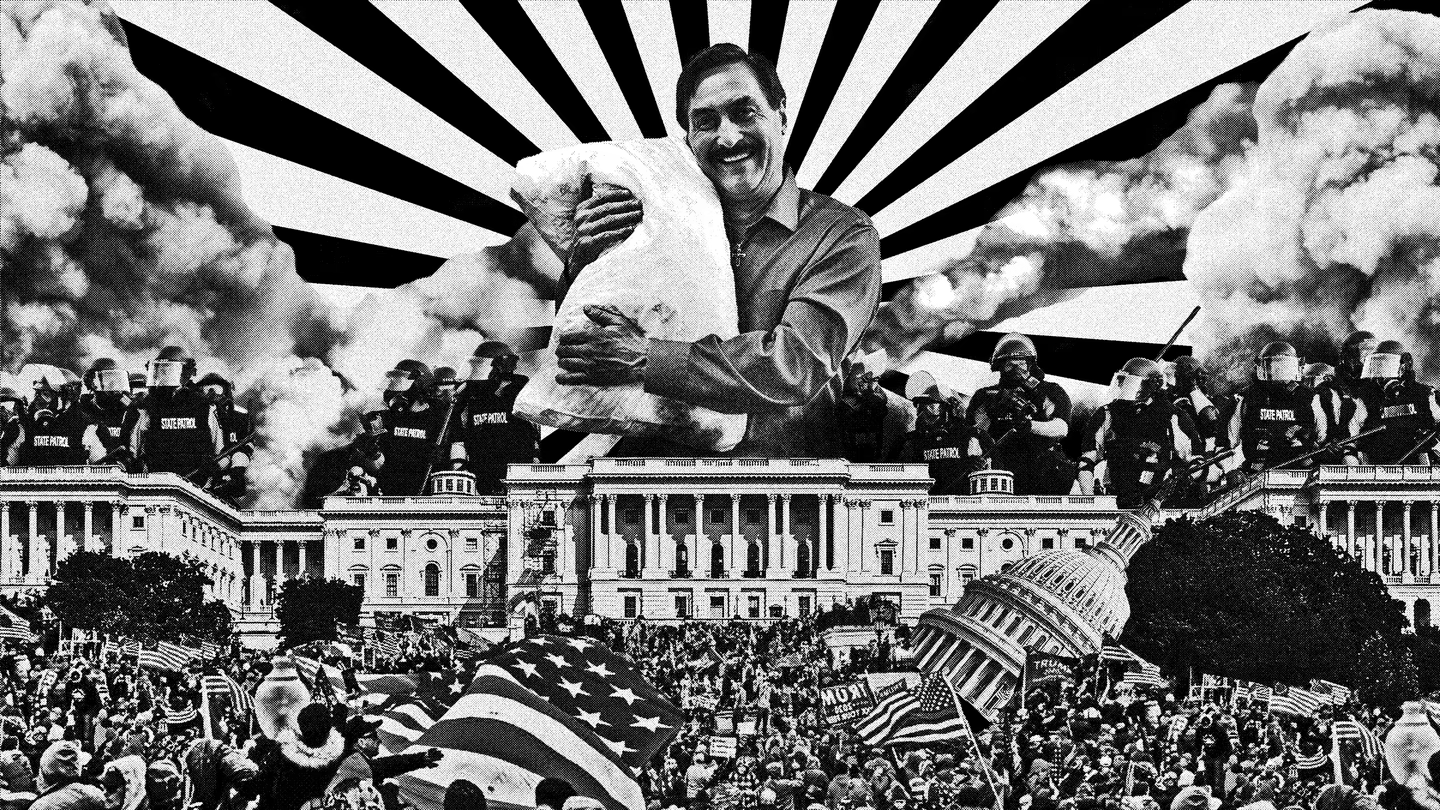
Here is what you probably don’t imagine: an affable, self-made midwesterner, one of those goofy businessmen who makes his own infomercials. A recovered crack addict, no less, who laughs good-naturedly when jokes are made at his expense. A man who will talk to anyone willing to listen (and to many who aren’t). A philanthropist. A good boss. A patriot—or so he says—who may well be doing more damage to American democracy than anyone since Jefferson Davis.
I met Mike Lindell, the CEO of MyPillow, in the recording studio that occupies the basement of Steve Bannon’s stately Capitol Hill townhouse, a few blocks from the Supreme Court—the same Supreme Court that will, according to Lindell, decide “9–0” in favor of reinstating Donald Trump to the presidency sometime in August, or possibly September. I made it through the entirety of the Trump presidency without once having to meet Bannon but here he was, recording his War Room podcast with Lindell. . ."
READ MORE > Anne Applebaum writing in The Atlantic 29 July 2021
SUNDAY INSIGHT: This Perspective on American Extremism will Take Some Time-To-Process

Dimensions of national culture - Hofstede Insights
The Pros and Cons of America’s (Extreme) Individualism (Ep. 470)


According to a decades-long research project, the U.S. is not only the most individualistic country on earth; we’re also high on indulgence, short-term thinking, and masculinity (but low on “uncertainty avoidance,” if that makes you feel better). We look at how these traits affect our daily lives and why we couldn’t change them even if we wanted to.
The 6-D model of national culture
Geert Hofstede, assisted by others, came up with six basic issues that society needs to come to term with in order to organize itself. These are called dimensions of culture. Each of them has been expressed on a scale that runs roughly from 0 to 100.
The dimensions explained

For each dimension here is a brief description and a ten-minute video in which Geert Hofstede explains that dimension.
Hofstede's Globe
Dimension maps of the world: Individualism
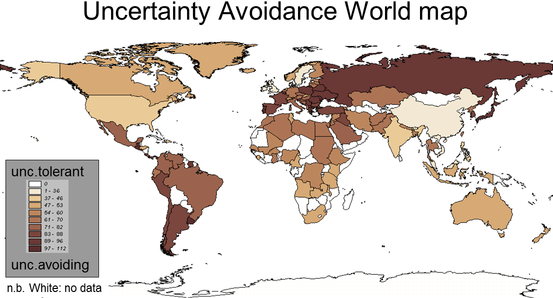
Each dimension has been derived by comparing many, but not all, countries in the world. The findings can be summarized into six world maps of the distribution of that dimension. Of course, in reality there can be quite a bit of within-country variation; these maps should be seen as rough 'climate maps' of culture.
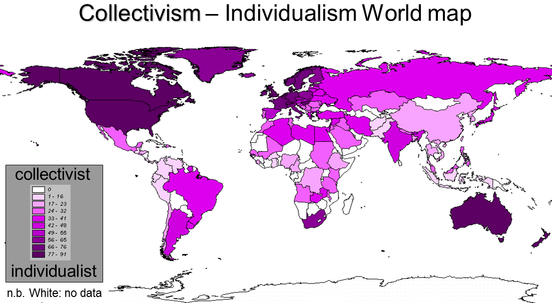
Individualism
_____________________________________________________________________
Dimension maps: Power Distance
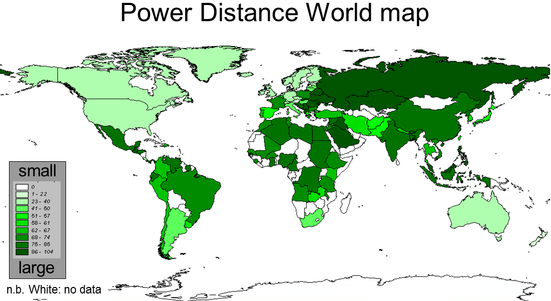
Power Distance
_________________________________________________________________________
Dimension maps: Femininity / Masculinity
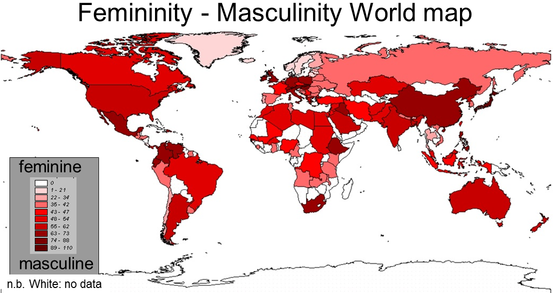
_____________________________________________________________________
Dimension maps: Uncertainty Avoidance
Dimension maps: Long-term Orientation
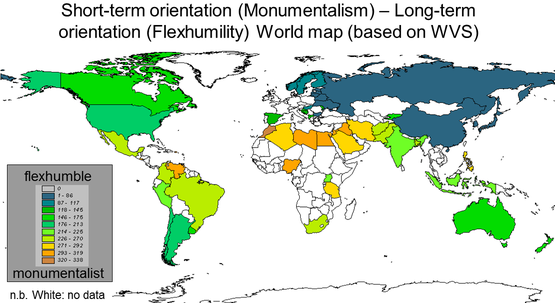
Long-term orientation
_________________________________________________________________________
Dimension maps: Indulgence
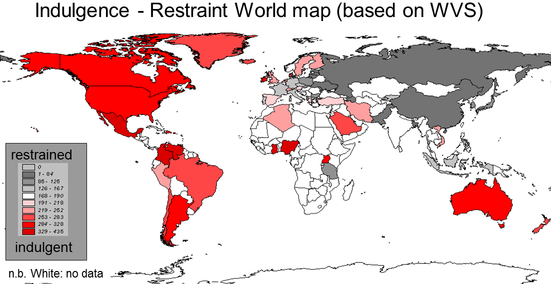
Indulgence
________________________________________________________________________
IN SPANISH
"Soy bastante optimista con el futuro de Europa, los jóvenes ven lo que está sucediendo"
Gert Jan Hofstede vive preocupado por la caída del sentimiento de comunidad. Un problema que este profesor de la Universidad de Wageningen, multidisciplinar e impulsor del concepto de la "socialidad artificial", recomienda abordar dando más importancia a los espacios comunes.
A pesar de la creciente ansiedad y populismo, el hijo del psicólogo social holandés Geert Hofstede mantiene un moderado optimismo, por el paso adelante que están dando los jóvenes para tratar los problemas de todos.
¿En qué tonos pinta el cuadro para la próxima década?
Creo que las cosas empeorarán un poco, antes de que puedan mejorar. Vemos algunas buenas intenciones, pero no las llevamos a cabo. A veces nos estancamos, porque no existe un sentimiento de urgencia para actuar. Pero cuando suceda, la gente reaccionará. Lo único que realmente podría detenernos es si los países se preocupan demasiado por sí mismos.
"Lo que los líderes deben hacer acercarse a los ciudadanos y crear una conexión. Antes los políticos hablaban al corazón y alma de la gente"
THE DIMENSIONS EXPLAINED IN A SERIES OF 10-MINUTE VIDEOS
_____________________________________________________________________________

-
 Flash News: Ukraine Intercepts Russian Kh-59 Cruise Missile Using US VAMPIRE Air Defense System Mounted on Boat. Ukrainian forces have made ...
 -
A nor’easter is about to hit the Northeast in May. That’s very unusual.

