Wednesday, August 25, 2021

MESA CITY COUNCIL STUDY SESSION TOMORROW:: Feedback from Active Transportation Survey + Proposed Spending for COVID Relief

This is as much advance notice as possible:
Like they DON'T SAY "Sorry for the inconvenience"
School Is Too Hard GIF - Sc - Discover & Share GIFs
 
Meeting Name: City Council Study Session Agenda status: Final
Meeting date/time: 8/26/2021 7:30 AM Minutes status: Draft  
Meeting location: Lower Council Chambers
Published agenda: Agenda Agenda Published minutes: Not available  
Meeting video:  
Attachments:
File #Agenda #TypeTitleActionResultAction Details
21-0868 2-aPresentationHear a presentation and discuss the feedback received from the Active Transportation Survey, and provide direction relating to the types of projects to be considered.  Not available
21-0869 2-bPresentationHear a presentation, discuss, and provide direction on the City's proposed expenditure plan for the Coronavirus State and Local Fiscal Recovery Funds.  Not availabl
===============================================================
Today's study session - GIF on Imgur
 
Insert

DAILY COVER (Forbes): Chelsea Manning is Back

Jamel Toppin for Forbes

Five years ago, from her prison cell, trans whistleblower Chelsea Manning sketched out a new way to protect online privacy. Now, she is helping an MIT-affiliated cryptographer bring the next generation of privacy software online.

Chelsea Manning Is Back, And Hacking Again, Only This Time For A  Bitcoin-Based Privacy Startup

Chelsea Manning Is Back, And Hacking Again, Only This Time For A Bitcoin-Based Privacy Startup

Insert "Chelsea Manning’s long blonde hair catches in a cool summer breeze as she turns the corner into Brooklyn’s Starr Bar, a dimly lit counter-cultural haunt in the heart of the hipster enclave of Bushwick. The 33-year-old best known for leaking hundreds of thousands of top-secret government documents to Julian Assange in 2010, then coming out as a transgender woman, walks past a poster depicting sea turtles, humans and geese merging to form the outline of a dove. Beside the image are the words, “Your Nations Cannot Contain Us.”

Dressed in a black suit and wearing a silver Omega watch, she makes her way to a small wooden table illuminated by a shaft of sunlight. She orders a coke. Contrary to what one might expect, this whistleblower turned trans-icon looks uncomfortable in the hip surroundings. A fan reverently approaches her and welcomes her back. “This is my life,” she says after he leaves, expressing both gratitude for the well wishes, and lamenting the loss of her privacy. “I’m not just famous, I’m in the history books.”. . .

.........................................................................................................................................................................

The privacy network industry, including the virtual-private networks (VPNs) familiar to many corporate users, generated $29 billion in revenue in 2019, and is expected to triple to $75 billion by 2027. Fixing the known weaknesses of these networks is about more than just protecting future whistleblowers and criminals. Private networks are also vital for big businesses who want to protect trade secrets. Manning thinks that not-for-profit efforts like Tor, which relies on U.S. government funding and a worldwide network of volunteers to run its anonymous servers, aren’t robust enough. “Nonprofits are unsustainable,” says Manning casually, sipping from her Coke. “They require constant upholding by large capital funds, by large governments.”

. . .In 2016, she was visited in prison by Yan Zhu, a physicist from MIT who would later go on to become chief security officer of Brave, a privacy-protecting internet browser that pays users in cryptocurrency in exchange for agreeing to see ads.

She and Zhu were concerned with vulnerabilities they saw in Tor, including its dependence on the good will of governments and academic institutions. In 2020 53% of its $5 million funding came from the US government and 27% came from other Western governments, tax-subsidized non-profits, foundations and companies. Worse, in their opinion, the technology to break privacy was being funded at a higher rate than the technology to protect it.

“As the dark web, or Tor, and VPN, and all these other services became more prolific, the tools to do traffic analysis had dramatically improved,” says Manning. “And there’s sort of been a cold war that's been going on between the Tor project developers, and a number of state actors and large internet service providers.” In 2014 the FBI learned how to decipher Tor data. By 2020 a single user reportedly controlled enough Tor nodes to steal bitcoin transactions initiated over the network. . .

READERS ARE ENCOURAGE TO READ MORE > Michael del CastilloForbes Staff

There Are Consequences For Growing Trend of Non-Response to The American Community Survey

PAY ATTENTION PLEASE:  The yearly American Communities Survey (ACS) is a vital tool for understanding the US population.
The 3-million-person sample size makes the ACS the most comprehensive data product produced by the US government outside of the decennial census
 
The list of organizations that use ACS data is long and their uses vary: it includes federal entities like the Department of Housing and Human Services and Veterans' Affairs, state and local governments, and many, many businesses. The data informs Title I funding for students from low-income families, the list goes on and on.
Summer Knockout Competition 2019 - Forest Hall Chess Club
Low response rates mean the one-year estimates for the 2020 ACS, originally scheduled for this fall, won't be released.
> > >That could affect how US governments distribute billions of dollars and much more
========================================================================
It's not just the low response rates the Bureau has to contend with, but the pattern of who isn’t responding to the survey. These dropping response rates could signal a more significant concern than losing one year of ACS data, with potential ramifications for other data from the Department of Housing and Human Services, the Education Department, the Labor Department, and more.
 
Nonresponse is a growing trend. The government owes its people surveys to be administered in a method so that all required participants can answer, and participants owe timely, accurate responses as a matter of civic duty.
 
========================================================================

What low response rates mean for 2020 ACS data — and a potential bright side

The ACS is one of the nation's most robust data portraits

The ACS is the premier source of information on the US population, housing, and the workforce.

 > It reveals where people are living, if they rent or own their home, the value of their home, and the kind of conditions in which they live.

> their marital/education/citizenship status

> Do they have health insurance?

> What people spend on gas, if they carpool and how long they commute, their working hours, how many people they live with, the ACS measures all of this and more.

The 3-million-person sample size makes the ACS the most comprehensive data product produced by the US government outside of the decennial census. And it's mandatory, with nonresponses potentially leading to fines up to $5,000.

Low responses and an inability to follow up skewed the 2020 ACS

It's not just the low response rates the Bureau has to contend with, but the pattern of who isn’t responding to the survey.

These dropping response rates could signal a more significant concern than losing one year of ACS data, with potential ramifications for other data from the Department of Housing and Human Services, the Education Department, the Labor Department, and more. Nonresponse is a growing trend. The government owes its people surveys to be administered in a method so that all required participants can answer, and participants owe timely, accurate responses as a matter of civic duty.

The Census Bureau found high nonresponse rates last year, particularly among people with lower income, lower educational attainment, and people less likely to own their home. This skewed the reported data so much that it couldn’t be corrected by the Bureau's traditional methods of accounting for population differences in these underlying populations.

After the significant changes brought on in 2020, it would be helpful to have a clearer picture of how those changes impacted people nationwide.

How many people lost their employer-based health insurance? Or with eviction moratoriums expiring in some places and municipalities issuing extensions in others, one might want to know the percentage of housing units that are renter-occupied versus owned, the median rent, and how much of people's income goes to rent. The ACS could have provided neighborhood-level insight into this.


Withholding this data reinforces the trustworthiness of the ACS

While the absence of the one-year estimates is a loss, it's heartening to know that the Census Bureau would rather withhold these results rather than release heavily biased, skewed data. The Bureau's choice displays a high bar for quality. They made the hard choice, but this is good data governance.

It's unclear what comes next

The Census Bureau has yet to announce its plan for five-year estimates.

> Five-year estimates include data on census tracts and even block groups.

> But if the Bureau doesn't release this five-year estimate, good local data might not be available until 2025.

It's also unclear how this will alter the way governments distribute funds. If tax dollars given to programs are allocated based on old data, will the money serve the right people? If the needs of the population those funds are supposed to help have changed, that won't be apparent when working from old data.

Other surveys, like the Current Population Survey, put out jointly by the Census Bureau and the Bureau of Labor Statistics (BLS), only have data for states or large municipalities. Governments need more granular data (it can get down to the neighborhood level in the ACS) to serve diverse populations of different locales, races/ethnicities, and employment levels.

Plus, other surveys rely on ACS data to design sampling and weight responses.

> The BLS uses it to update the Consumer Price Index, including improvements to continuously update its housing survey sample.

> It's also used to measure the criminal victimization of people with developmental disabilities in conjunction with the National Crime Victimization Survey done by the Bureau of Justice Statistics.

Arizona Vehicle license tax formula for alternative fuel cars changing in 2022

Bookmark and Share

Vehicle license tax formula for alternative fuel cars changing in 2022

Long-planned rate change will bring VLT parity for electric cars, traditional vehicles

PHOENIX – Changes to state law mean that drivers who purchase alternative fuel vehicles will pay the same vehicle license tax (VLT) rate as other drivers by 2023. The change in VLT rates is phased-in, starting Jan. 1, 2022. 

The VLT is paid during vehicle registration and is assessed in place of a personal property tax often charged in other states. The VLT funds transportation infrastructure in Arizona, including highways, bridges and local roads, and contributes to the general funds of cities/towns and counties.

In 2019, the Legislature amended Arizona Revised Statute 28-5805. This implemented a phased-in approach for making the VLT formula used for alternative fuel vehicles the same one used currently for traditional cars and trucks, bringing fairness to VLT assessments. The changes in the formula will begin taking effect this coming January and be completely phased-in by 2023. The changes ensure that drivers of alternative fuel vehicles contribute to the preservation and maintenance of the state’s 7,000-mile highway system at the same rate as drivers of traditional vehicles. Bringing parity to VLT assessments is especially important for the continued maintenance and expansion of Arizona’s infrastructure as alternative fuel vehicles continue to increase in popularity in Arizona. 

Under current state law, an alternative fuel vehicle registered before Jan. 1, 2022, will have its VLT calculated using 1% of the manufacturer's base retail price of the vehicle. For an alternative fuel vehicle registered between Jan. 1 and Dec. 31, 2022, the VLT will be calculated using 20% of the manufacturer's base retail price of the vehicle. After Dec. 31, 2022, the formula used to calculate VLT for alternative fuel vehicles will be the same one used for other vehicles, as determined by ARS 28-5801.

What potential buyers of alternative fuel vehicles need to know

  • It’s important to note that the VLT formula attached to an alternative fuel vehicle is determined by vehicle registration date, which can be different from the purchase date. A temporary registration permit issued by a vehicle dealer qualifies as the registration date and must be issued before Jan. 1, 2022, for a vehicle to have its VLT calculated using the 1% formula.
  • For private party sales, new title documentation must be processed by an MVD or an Authorized Third Party office before Jan. 1, 2022, for the alternative fuel vehicle to have its VLT calculated using the 1% formula. Note: Arizona Department of Transportation Motor Vehicle Division offices will be closed Friday, Dec. 31, 2021, in observance of the New Year’s Day holiday. 

What current owners of alternative fuel vehicles need to know

  • A current owner of an Arizona-registered alternative fuel vehicle who makes no changes to their vehicle title will continue to have their car’s VLT calculated with the 1% formula. The VLT rate changes won’t affect these vehicles until a change is made to the vehicle title, triggering a new registration cycle.
  • The VLT formula attached to the alternative fuel vehicle will be changed to the current formula in use if a new registration cycle is established. Examples of this include but are not limited to: selling the car, transferring ownership, adding or removing an owner from the title, and a lease buy-out.
  • Paying off a vehicle loan and the lender’s name being removed from the title will not trigger a new registration cycle.

For more information about VLT for alternative fuel vehicles, visit azdot.gov/altfuel.

Alternative fuel vehicles are defined as vehicles that are powered by electricity, hydrogen, solar or natural gas/compressed natural gas/liquefied petroleum gas. This does not apply to hybrid vehicles.

Alternative fuel vehicles will continue to be issued the Alternative Fuel Vehicle special license plate, which allows access to HOV freeway lanes at any time, regardless of the number of passengers in the vehicle.

USA FACTS: Life Expectancy, GDP Growth, The Yearly American Communities Survey (ACS), and Utah Had The Highest Child Credit Tax Advance

Life expectancy dropped in 2020

Life expectancy nationwide is at an 18-year low, largely due to COVID-19. The average life expectancy at birth dropped 1.5 years from 78.8 in 2019 to 77.3 in 2020. This is an indicator that US health is decreasing. Here’s what else USAFacts found in this new data:
  • The death rate reached 10.4 people per 1,000 people in 2020. For context, the Spanish flu pandemic resulted in a historic death rate: 13.9 people per 1,000. The death rate trended down in the decades after World War II, dropping to 7.9 people per 1,000 in 2009.
  • The age-adjusted death rate increased by 15.9% between 2019 and 2020.
     
  • Life expectancy decreased by 3.7% for Hispanic people, falling from 81.8 years to 78.8 years. The single-year decrease was the biggest since the CDC started tracking data for the group. 
For even more, including a visual breakdown of the data by race, read this report.


GDP grew 6.5% last quarter

Gross domestic product, commonly called GDP, estimates the size of the US economy. In the second quarter of 2021, GDP grew at an annualized rate of 6.5%. So, what does this growth reveal?
  • This second-quarter growth was largely due to increased consumer spending, with spending on services growing at nearly three times the rate over the first quarter of 2021. 
     
  • In dollar terms, GDP exceeded pre-pandemic levels for the first time, regaining the income lost during the pandemic.
  • The National Bureau of Economic Research announced that the trough of the pandemic recession began in February 2020 and ended in April 2020. The two-month recession is the shortest in history.
See more about this growth here. Want to learn more about the history of measuring GDP? Check out this explainer for more background. 


Nonresponses mean Census won't publish crucial data 
 
The yearly American Communities Survey (ACS) is a vital tool for understanding the US population. The list of organizations that use ACS data is long and their uses vary: it includes federal entities like the Department of Housing and Human Services and Veterans' Affairs, state and local governments, and many, many businesses.

Low response rates mean the one-year estimates for the 2020 ACS, originally scheduled for this fall, won't be released. That could affect how US governments distribute billions of dollars and much more.
  • The ACS is the premier source of information on the US population, housing, and the workforce. Here’s just a sample of what it includes: where people live, if they rent or own their home and their home’s value, their marital/education/citizenship status, whether they have health insurance, how they get to work, how long they work, and how much they spend on gas.
     
  • With a 3-million-person sample size, the ACS is the most comprehensive government data product aside from the decennial census. However, the Census Bureau found high nonresponse rates for 2020, particularly among people with lower income, lower educational attainment, and people less likely to own their homes.
     
  • Nonresponses skewed the data so much that the Bureau's traditional methods couldn't correct it. The absence of the one-year estimates is a loss, but holding back on their release displays a high bar for quality. The Census Bureau made the hard choice, but this is good data governance.
Learn more about the importance of the ACS and what this change could mean this year.


Say yes to facts
As a USAFacts newsletter subscriber, you clearly already care about unbiased facts and data. Maybe you're even among the 83% of Americans who consider the spread of misinformation a major problem. Then join the #SayYestoFacts movement. Spread the word on social media that you’re standing up for facts — because friends don't let friends spread disinformation.


One last fact
Under the American Rescue Plan, filers can receive the tax credit in monthly payments or receive the entire amount with their yearly tax return. Utah had the largest average advance payment amount this year.

New report: Mesa's vacancy rate is below 3% and prices are skyrocketing. What's causing this?

Hi Tim,
Across the country, rents are rising rapidly. In Mesa specifically, the median rent price is up 17% since January, growing significantly faster than during pre-pandemic years. A big reason is vacant apartments in Mesa are becoming increasingly scarce. While rents are up 17%, the local vacancy rate has fallen to less than 3%. The chart below shows this relationship between rents and vacancies playing out on the national scale.
In our latest report, What’s Driving Up Rent Prices This Year?, we examine the trends that are creating this competitive rental market. We provide data and commentary on five factors:
  1. Rapid household formation post-pandemic has pushed the total number of households in the US to an all-time high: more than 131 million.
  2. Meanwhile, the for-sale housing market is plagued by high prices and low inventory, keeping more families renting for longer.
  3. As a result, the sheer volume of people hunting for apartments online is higher today than ever before.
  4. Facing a highly competitive rental market, apartment hunters are searching today with heightened urgency.
  5. As more households compete for fewer apartments, historically low vacancy rates allow property managers to be highly selective and raise prices.
 

Check out the full report here. If you have any questions or would like to hop on a call to discuss the data, please let me know!
Best,
Chris
 
CHRIS SALVIATI
Housing Economist
Apartment List
978.551.0600

Tuesday, August 24, 2021

FOR IMMEDIATE RELEASE | High Pollution Advisory issued for ozone effective Aug. 25, 2021, in the Phoenix area Inbox


Anyone adding up ALL THESE DAYS > BACKGROUND

High Pollution Advisory (HPA) | Notifies the public that the level of an air pollutant is forecast to exceed the federal health standard.

Air Quality Hourly Forecast | Phoenix

Click on each day to view forecast.

Even though we have seen a lot of rain lately, topsoils will likely dry out quickly due to the hot temperatures this week. As a result, as thunderstorm chances return, we will be closely watching the threat of blowing dust with any outflows that move into the Valley this weekend.

The main concern before the dust threat this weekend will be ozone. . .With all of the above working together, along with the fact, ozone reached 100 AQI yesterday in Phoenix, expecting ozone values to be above the federal health standard today through Saturday. As a result, an Ozone High Pollution Advisory is in effect today and Wednesday, with an Ozone High Pollution Watch in effect Thursday through Saturday.

- M. Pace
ADEQ Meteorologist

Tuesday
8/24/2021
Wednesday
8/25/2021
Thursday
8/26/2021
Friday
8/27/2021
Saturday
8/28/2021
=======================================================================================

Superstition Mountains

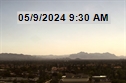
The Superstition Mountains are part of the designated Superstition Wilderness Area. The view is looking east from downtown Mesa with the community of Apache Junction between the camera and the mountain vista

Camera Image


TODAY

FOR IMMEDIATE RELEASE | High Pollution Advisory issued for ozone effective Aug. 24, 2021, in the Phoenix area

High Pollution Advisory HPA Maricopa County Phoenix

The Arizona Department of Environmental Quality (ADEQ) is issuing a High Pollution Advisory (HPA) for ozone effective Aug. 24, 2021, in the Phoenix area


TOMORROW

High Pollution Advisory HPA Maricopa County Phoenix


The Arizona Department of Environmental Quality (ADEQ) is issuing a High Pollution Advisory (HPA) for ozone effective Aug. 25, 2021, in the Phoenix area

YESTERDAY


State of Sino-US Relations, Starmer Touts Personal Mandate in Bid to Subdue Rivals, . . .Silver Caught Between Demand Squeeze and Speculative Turbulence, Yale’s Famed Investing Model Falters, . .

         Ben Brewer/Bloomberg Trump’s Border Enforcer Plans to Leave Minnesota After Backlash 1:21 Trump, Democrats Hurtle Toward Shutdown A...