First time feature on this blog - just once POLITICO Playbook Daily Briefing | EP1204 POLITICO Playbook Daily Briefing | EP1204 POLITICO Playbook Daily Briefing | EP1204
Sept. 20. 2021: Scoop — Sinema issues ultimatum to Biden Sept. 20. 2021: Scoop — Sinema issues ultimatum to Biden Sept. 20. 2021: Scoop — Sinema issues ultimatum to Biden
A 3rd REVISION for the next meeting of _______ included this item on the Meeting Agenda Arizona Water Banking Authority (“AWBA”)
The Arizona Water Banking Authority (AWBA; Water Bank) was established in 1996 to store the unused portion of Arizona's annual Colorado River entitlement in Central and Southern Arizona.
The AWBA stores water in underground aquifers to earn long-term storage credits. These credits can be recovered (pumped) during a shortage to provide back-up water supplies (known as "firming") for Arizona water users.
Through 2020, the Water Bank has accrued 4.36 million acre-feet (MAF) of long-term storage credits (LTSCs):
3.75 MAF for Arizona uses and
613 KAF on behalf of the State of Nevada.
The AWBA firms water supplies for Central Arizona Project (CAP) Municipal and Industrial (M&I) subcontract holders and communities along the Colorado River.
As the agent for the State, the AWBA is responsible for meeting the State's Indian firming obligations under the Arizona Water Settlements Act (AWSA).
The Water Bank also assists with meeting the State's water management objectives under the Groundwater Code and provides the mechanism for interstate water banking with the other Lower Basin States.
By storing water, the Water Bank helps to ensure long-term water supplies for Arizona and neighboring states.
The U.S. Secretary of the Interior has declared the first-ever Tier 1 shortage for Colorado River operations in 2022.
This Tier 1 shortage will result in a substantial cut to Arizona’s share of the Colorado River – about 30% of Central Arizona Project’s normal supply; nearly 18% of Arizona’s total Colorado River supply.
The 2021 Joint Update is a collaborative effort among the AWBA, ADWR, CAP, RPAG and stakeholders to advance recovery planning. This Joint Update builds on previous planning efforts in the 2014 Plan, further discusses Independent Recovery concepts intended to increase flexibility and fully utilize existing infrastructure, includes an analysis of recovery capacity requirements focused on impacts to direct uses, and identifies future activities and commitments.
In 2020, the AWBA > recharged approximately 60,000 acre-feet in the Phoenix, Pinal and Tucson Active Management Areas,
> purchased 27,080 acre-feet of LTSCs and 6,390 AF of Intentionally Created Surplus (ICS) credits under its agreement with the Gila River Indian Community.
Cumulatively, the AWBA has accrued or acquired 4.36 million acre-feet (MAF) of LTSCs, 3.75 MAF are for Arizona uses and 0.61 MAF are interstate credits stored on behalf of the State of Nevada.
The Arizona Water Banking Authority coordinates with ADWR and CAWCD, working cooperatively to ensure recovery implementation is achievable when needed.
Introduction: Maricopa County has consistently exceeded and violated federal Clean Air Standards for year-after-year-after-year - and it's getting worse not better.
For readers of this blog, you know how many times in recent weeks how many High Ozone Pollution Advisories have been issued that impact public health with adverse consequences.
Here's is a continuously updated time-lapse map for the Air Quality Index in Maricopa County.
Please use the Searchbox at the top of this blog or on the right-hand sidebar for more information about exceedance reports that are available from EPA or ADEQ
A meeting of the MAG Air Quality Technical Advisory Committee has been scheduled for September 23, 2021 at 1:30 pm.
The meeting will be held as a virtual meeting only, with no in-person attendance options available at this time.
The agenda for the September 23, 2021, MAG Air Quality Technical Advisory Committee meeting has been posted on the MAG website at https://azmag.gov/Event/27136.
WHY NOT INCLUDE THE AGENDA FOR THIS MEETING OF THE AIR QUALITY TECHNICAL COMMITTEE IN THIS ANNOUNCEMENT INSTEAD OF IMPOSING ANOTHER HURDLE FOR THE PUBLIC TO VIEW IT??
FOR COMMITTEE MEMBERS: Committee members will receive instructions via email on how to participate in the meeting.
FOR NON-COMMITTEE MEMBERS AND THE PUBLIC:
To attend the meeting noticed above by technological means, members of the public may follow the steps below:
In 2019, the inaugural Portal festival unveiled the “Portal to the Past” art installation, a winner of the New Arizona Prize Water Public Art Challenge.
The piece, designed by local Arizona artist Zarco Guerrero, is a sculptural gate that incorporates images acknowledging the importance of the complex canal system created by the Ancestral Sonoran Desert People that we still use today.
The “Portal” is located along the Grand Canalscape offering access to the grounds of Pueblo Grande Museum and an interpretive trail highlighting the accomplishments of the first inhabitants of the Valley of the Sun.
NEW THIS YEAR:
Additional programs exploring modern and historic water issues following the Festival:
October 20: The Gila and The Salt - Our River Stories.
A performance with masks narrating the stories of Arizonans in both the Salt and Gila Rivers throughout the centuries of water use in the Valley;
November 3: Water is Life!
A community conversation about the use of water in the community, its history, and the present situation of water sources in the Valley.
Pueblo Grande Museum and Cultural Coalition present Portal Fest on Sunday, October 3rd at 2pm!
An outdoor family friendly event, people of all ages will enjoy music and dance cultural performances from Arizona tribal communities.
Children's craft activities, gallery chats, and demonstrations by indigenous artisans Jacob Buttler and Ron Carlos.
Families can spend an afternoon exploring the history of water in Arizona, and learn about the importance of conservation as a resource in our community.
NEW THIS YEAR: Additional programs exploring modern and historic water issues following the Festival: October 20: The Gila and The Salt - Our River Stories. A performance with masks narrating the stories of Arizonans in both the Salt and Gila Rivers throughout the centuries of water use in the Valley; November 3: Water is Life! A community conversation about the use of water in the community, its history, and the present situation of water sources in the Valley.
In 2019, the inaugural Portal festival unveiled the “Portal to the Past” art installation, a winner of the New Arizona Prize Water Public Art Challenge. The piece, designed by local Arizona artist Zarco Guerrero, is a sculptural gate that incorporates images acknowledging the importance of the complex canal system created by the Ancestral Sonoran Desert People that we still use today. The “Portal” is located along the Grand Canalscape offering access to the grounds of Pueblo Grande Museum and an interpretive trail highlighting the accomplishments of the first inhabitants of the Valley of the Sun.
GUIDELINES FOR YOUR VISIT: Stay Home if You’re Sick If you are showing COVID-19 symptoms, please stay home. This is critical to the health and safety of our staff and communities.
Wear a Face Mask Effective August 2, 2021, a mask or face covering will be required when inside a city facility, regardless of vaccinations status. We have masks available for those who need them.
Introduction: The director of the Freeman Spogli Institute for International Studies is Michael McFaul, former ambassador to The Russian Federation under President Obama.
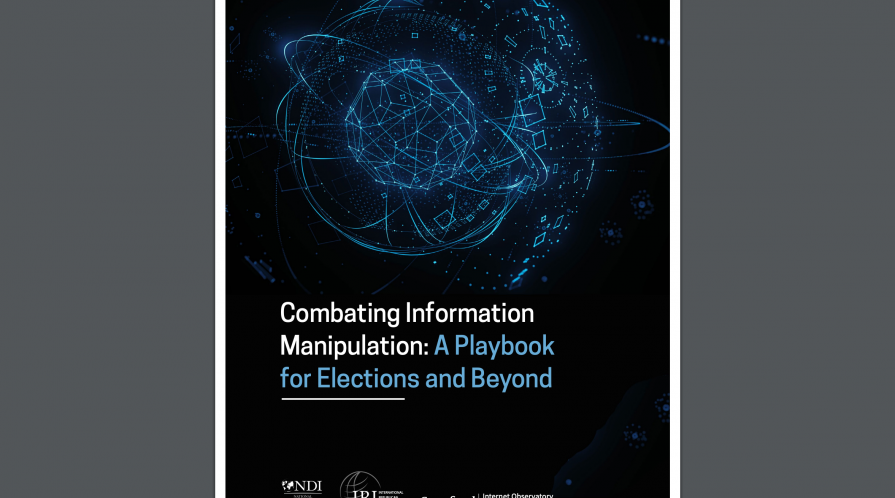
Playbook shares best practices to combat information manipulation
The playbook will be launched on Monday 20 September at 9:30am ET. Stanford Internet Observatory
"Efforts to undermine election-related information integrity are a growing threat to democracies around the world. These efforts serve to delegitimize elections by reducing faith in elected governments, polarizing societies, and strengthening authoritarians. In many countries, civil society actors, journalists, governments, election management bodies and other democratic actors are on the frontlines of these battles. Yet, they face significant challenges preparing and responding to new digital threats as they occur before, during, and after elections. If democracies hope to defend free and fair political competition, concerted efforts are needed to identify, respond, and build long-term resilience to election-related information manipulation.
To counter these threats, the International Republican Institute, National Democratic Institute and Stanford Internet Observatory collaborated to create Combating Information Manipulation: A Playbook for Elections and Beyond. Informed by best practices and lessons learned by civil society, governments, academics, and other practitioners around the world, the playbook is intended to help leapfrog the first six months of the electoral preparation process and enable societies to effectively push back against efforts undermining free and fair elections, supporting democratic processes and rights more broadly.
The playbook will be launched on Monday 20 September at 9:30am ET. You can attend the launch by registering for the event here:



 The meeting will be held as a virtual meeting only, with no in-person attendance options available at this time.
 WHY NOT INCLUDE THE AGENDA FOR THIS MEETING OF THE AIR QUALITY TECHNICAL COMMITTEE IN THIS ANNOUNCEMENT INSTEAD OF IMPOSING ANOTHER HURDLE FOR THE PUBLIC TO VIEW IT??