Sunday, July 31, 2022
Saturday, July 30, 2022
Yep Folks: One more Non-Fiction Popular Pulp Trump Hoopla...Kushner's New Book
Apparently there is a market for these
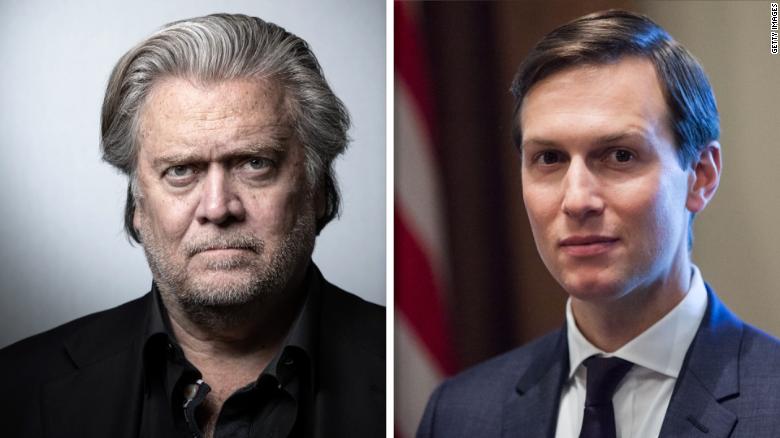
First on CNN: Jared Kushner details West Wing 'war' with 'toxic' Steve Bannon in new book

(CNN)Jared Kushner details his clashes with Steve Bannon in his new book, describing a "toxic" West Wing presence who accused him of "undermining the President's agenda" and threatened to break him "in half" if Kushner turned on him.


(CNN)Jared Kushner details his clashes with Steve Bannon in his new book, describing a "toxic" West Wing presence who accused him of "undermining the President's agenda" and threatened to break him "in half" if Kushner turned on him.
.jpg)
.jpg)
Dig in deeper if you want to...use link in this post
Legalizing the trip: One ‘shroom advocate’s playbook
There are movements in more than two dozen states to either study, decriminalize, or outright legalize mushrooms and other psychedelics.

Here’s something about Washington, D.C., that even a lot of people who live here don’t know: Psychedelic mushrooms are basically legal
HYPER-LOCAL REPORT: Arizona LD10 Primary Race for Two Steadfast East Mesa Mormon Republicans
Mixing up Religion & Politics - and a downstream Trump endorsement for David Farnsworth - all adds up to a very interesting interview by Bryan Metzger writing in Business Insider about 2 hours ago...https://www.businessinsider.com/dave-farnsworth-interview-rusty-bowers-trump-qanon-mormon-2022-7
I spent two and a half hours with David Farnsworth, the man who Trump endorsed to defeat GOP Arizona House Speaker Rusty Bowers. Here's what I learned about religion, 'conspiracy facts,' and the modern Republican party.

- Trump has endorsed former Sen. David Farnsworth to take out AZ House Speaker Rusty Bowers.
- Farnsworth spoke to me for 2.5 hours about why he's challenging Bowers, a prominent Jan. 6 committee witness.
- It was a window into how faith, conspiratorial thinking, and the conservative movement intersect.
MESA, Arizona — Even as he's in the midst of his seventh campaign for office in Arizona, David Farnsworth insists that he really, really, really doesn't like politics.
"I am confident that anywhere there's a consolidation of money and power, evil people are going to congregate there," he says. "It's unpleasant business, a lot of deal making, which just doesn't fit my personality."
Farnsworth, who served in the Arizona Senate from 2013 until 2021, is now emerging from retirement to take on Rusty Bowers, a former colleague and the outgoing speaker of the Arizona House. The 71-year-old has been recruited by Republican figures in Arizona who say the 2020 election was stolen, and who view Bowers — recently a star witness at a June hearing of the January 6 committee — as a turncoat who stands in the way of advancing the MAGA agenda.
Sitting in his home office as his wife, Robin, looked on, Farnsworth spoke with me about his abiding faith as a member of the Church of Jesus Christ of Latter Day Saints, his reasons for challenging Bowers, and how those two things intertwine.
Farnsworth is competing against Bowers, who's term-limited from continuing to serve in the House, for the prize of representing the newly-drawn 10th legislative district in the Arizona Senate. Covering the eastern half of Mesa, the district has a strong conservative bent, and the winner of the August 2 primary is almost certainly likely to serve come January 2023.
Shortly after Bowers' June testimony, Farnsworth earned the official backing of former President Donald Trump, Arizona GOP chair Kelli Ward, and Republican Rep. Andy Biggs, a former House Freedom Caucus chair who represents Mesa in Congress.
On the plane from Washington to Phoenix earlier this month, I contacted both Farnsworth and Bowers for a story about the primary, which is shaping up to be the latest stop on an ongoing revenge war by the former president against his intra-party political foes. The election also poses an intriguing juxtaposition with the January 6 committee, given the timing of the primary just weeks after Bowers' testimony.
Once I landed, I gave Farnsworth a call.
Before he would fully agree to an interview, he asked what Insider's partisan leanings were (nonpartisan) and what my own opinions of Trump might have been. I replied that Trump was "certainly a consequential president" and "someone who is clearly going to continue to have significant sway over the future of the party."
And before handing over his address, he had one final question.
"My favorite thing to do is have discussions where I mix patriotism and religion," he said. "Are you comfortable with doing that?"

Former Sen. David Farnsworth at his home in Mesa, Arizona on July 13, 2022. Bryan Metzger/InsiderI recognized the shelves as Farnsworth's backdrop at a virtual debate he'd had with Bowers just days earlier. Despite the fact that many of the MAGA-aligned forces backing Farnsworth are intent on seeing Bowers fall, I had been struck by the congenial, low-key nature of the debate.

This is Interactive Mapbox FYI | The edge
This interactive map highlights the most notable person from your hometown
The individuals are ranked mostly based on details from their Wikipedia page
This interactive world map visualizes “a cross-verified database of notable people” to show you the most notable person in your hometown — or anywhere else you might want to look.
Topi Tjukanov, a geographer and senior map designer at Mapbox, put the visualization together, which features different influential people from fields including culture, science, leadership, and sports. What someone contributes to society to be considered notable can vary, so researchers tried to narrow it down and account for biases where possible.
Each name featured on the map was determined using a baseline of information scraped from Wikipedia and Wikidata for use in a recent study published in Nature that tried to calculate a person’s notability based on several rules:
The number of Wikipedia editions of each individual;
The length, i.e total number of words found in all available biographies. It is equal to zero for individuals with just one Wikidata entry and no biography in Wikipedia;
The average number of biography views (hits) for each individual between 2015 and 2018 in all available language editions, using an API available in https://wikitech.wikimedia.org/wiki/Analytics/AQS/Pageviews or zero in the absence of a Wikipedia biography;
The number of non-missing items retrieved from Wikipedia or Wikidata for birth date, gender and domain of influence. The intuition here is that the more notable the individual, the more documented his/her biographies will be;
The total number of external links (sources, references, etc.) from Wikidata.
When you click on each name — larger ones that are more visible from further away have higher rankings — you’re able to see where each individual ranks notability-wise.
If you’re a fan of geography and people, this site could be a cool way to explore people near and far. Or, as it was for me, another reminder that I share the same hometown as Beyoncé.
American Attention Deficit Disorder...Please tell me again ("Last Week Tonight")
Not another day goes bye when yet we tend to miss one more important item and a friendly nudge-reminder is appreciated. Here's one more example
76% Of U.S. Voters Don’t Know Congress Passed A Huge Infrastructure Bill

from the finger-on-the-pulse-of-the-nation dept
You might recall that John Oliver bit years ago about how Americans fall asleep when they hear the word “infrastructure.” We’ll obsess for hours over Elon Musk showmanship, or the innovative potential of NFTs, but the U.S. press in particular falls into a lazy stupor any time actual, essential infrastructure is mentioned. It’s a problem for a species facing an historic climate destabilization that heavily targets… infrastructure.
Anyway, here’s the bit if you missed it:
When you actually ask U.S. consumers if infrastructure is important, a huge majority of them will concede that it is. But despite the U.S. Congress passing the massive Infrastructure Investment and Jobs Act late last year, an alarming number of Americans don’t actually know it even exists.
According to a recent Democratic research memo and survey, an amazing 76 percent of U.S. likely voters don’t know the infrastructure bill even passed:
Quite simply, voters do not know the bill was passed. While voters express high levels of support for the deal once they hear about it, only 24% of voters think the bill is law. Meanwhile, a plurality (37%) says they “don’t know” the status of the bill, 30% say “it is still being worked on in Congress but isn’t law yet,” and 9% believe it is not being worked on in Congress and will not be passed.
There are countless reasons for this. One being, of course, that there’s a lot going on. Another being that we’ve based truth and news on a massive, ad-driven infotainment system that prioritizes gibberish and controversy over substance. It’s kind of hard to get the public interested in unsexy but important things when we’re flooding their brains with crypto-hype and Kardashian dance offs.
But Democratic messaging, as the link above hints at, also sucks. The bill includes a massive $65 billion on broadband. Instead of exploiting a bipartisan hatred of US cable monopolies to excite voters, the DNC issued a lot of vague, nebulous, snooze-inducing rhetoric about “bridging the digital divide,” because, like the GOP, the party has a weird aversion to acknowledging that telecom monopolies exist and are harmful.
This focus on how the bill would expand broadband access primarily to folks who don’t have it (as opposed to boosting competition and improving broadband for everybody) left folks with the belief that the bill was largely about helping somebody else, not them:
There is a key distinction between providing access to clean water and internet and providing improvements to existing services. Democrats tend to focus on providing access to basic services, and this law does great work in those areas. But just as most Americans had health insurance when we debated the ACA, most Americans have access to drinkable water and decent internet and perceive conversations about access to be directed to someone else.
Some of this goes well beyond messaging. Making it clear that infrastructure money could be used to challenge widely disliked companies like Comcast and AT&T would not only offend politically powerful campaign contributors, it would anger companies we’ve effectively bone grafted to both the U.S. intelligence and law enforcement apparatus, and you simply can’t have that.
As a result you got this timid messaging about the broadband digital divide that made it sound like this money was all being thrown at somebody else, far away and well around the next bend.
The survey showcases that there’s a ton of stuff in the infrastructure bill that the public widely approves of (better drinking water, less potholes, jobs, economic improvements), that were similarly poorly messaged. And there’s ample opportunity to attack politicians that generally oppose all of this stuff (then, in some cases, turn around and take credit for it on a town by town level) that aren’t being taken advantage of.
Filed Under: broadband, infrastructure, pot holes, water

-
 Flash News: Ukraine Intercepts Russian Kh-59 Cruise Missile Using US VAMPIRE Air Defense System Mounted on Boat. Ukrainian forces have made ...

