Wednesday, December 07, 2022

1st China-Saudi Summit Moves Beyond US in The Middle East & Gulf States

The summit with Saudi Arabia, chaired by King Salman and attended by Crown Prince Mohammed bin Salman (MBS), the kingdom’s de facto ruler, comes after Xi was confirmed for an unprecedented third term as president in October


Xi to attend China-Arab summit, China-GCC summit, visit Saudi Arabia

BEIJING, Dec. 7 (Xinhua) -- Chinese President Xi Jinping will attend the first China-Arab States Summit and the China-Gulf Cooperation Council (GCC) summit in Riyadh, Saudi Arabia, and pay a state visit to Saudi Arabia from Dec. 7 to 10 at the invitation of King Salman bin Abdulaziz Al Saud of Saudi Arabia.

Chinese Foreign Ministry spokesperson Hua Chunying made the announcement here on Wednesday. 


Top stories 
 

english.alarabiya.net

Agreements worth $29 billion to be signed during China’s Xi visit to Saudi Arabia

Al Arabiya English
2 minutes

"More than 20 initial agreements worth SAR 110 billion ($29.26 billion) will be signed during Chinese President Xi Jinping’s visit to Saudi Arabia this week, the official Saudi Press Agency (SPA) reported on Tuesday.

The Chinese president will embark on an official visit to Saudi Arabia on Wednesday at the invitation of Saudi Arabia’s King Salman bin Abdulaziz.

Xi’s visit to the Kingdom will run until December 9 during which a Saudi-Chinese summit headed by King Salman and the Chinese president, with the participation of Crown Prince Mohammed bin Salman, will be held.

In addition to the deals, China and Saudi Arabia will sign a strategic partnership agreement and a plan to harmonize the Kingdom’s Vision 2030 with China’s Belt and Road Initiative.

The summit will also witness launching Prince Mohammed bin Salman Award for Cultural Cooperation between Saudi Arabia and China."

Read more:

China’s Xi hails Jiang as leader who stood up to West after Tiananmen crackdown

Saudi boom for non-oil businesses lifts activity to 7-year peak

Saudi Arabia’s Crown Prince reveals NEOM’s first luxury island Sindalah

www.aljazeera.com

China’s Xi to visit Saudi Arabia to ‘bolster ties’

Al Jazeera
5 - 6 minutes

Initial agreements worth $29bn will be signed during a Saudi Arabian-Chinese summit this week, according to the kingdom’s official news agency

"Chinese President Xi Jinping will make a three-day visit to Saudi Arabia this week, meeting the king and de facto ruler of the world’s biggest oil exporter.

The Chinese leader will arrive on Wednesday for only his third trip abroad since the coronavirus pandemic began and his first to Saudi Arabia since 2016.

 The visit followed an invitation from Saudi Arabia’s King Salman “to bolster historic ties and strategic partnership between the two countries”, the official Saudi Press Agency (SPA) said on Tuesday.

Initial agreements worth $29.26bn will be signed during the bilateral summit, SPA said.

China’s Ministry of Foreign Affairs confirmed the visit in a brief statement on Wednesday morning. Ministry Spokesperson Hua Chunying said Xi would make a state visit to Saudi Arabia and attend the first China-Arab States Summit and the China-GCC Summit in Riyadh.

The visit comes as China looks to deepen its relationships with countries in the Middle East amid growing strains in its ties with the United States and other Western nations.


In an editorial, China’s Global Times, a state-run tabloid, described the China-Arab States summit as “a milestone in the history of China-Arab countries relations”. The paper said that after the “severe impact” of the Arab Spring, the region had a “common desire” to avoid political turmoil and achieve stable growth and was “keenly interested in China’s experience”.

‘Deeper relations’

The summit with Saudi Arabia, chaired by King Salman and attended by Crown Prince Mohammed bin Salman (MBS), the kingdom’s de facto ruler, comes after Xi was confirmed for an unprecedented third term as president in October.

China is Saudi Arabia’s largest trading partner and MBS is expected to give Xi a lavish welcome when he lands in Riyadh on Wednesday, a marked contrast to the muted reception given to US President Joe Biden in July.

The visit reflects “much deeper relations developed in recent years” between the two countries, said Ali Shihabi, a Saudi Arabian analyst close to the government.

“As the largest importer of Saudi oil, China is a critically important partner and military relations have been developing strongly,” he said, adding that he expected “a number of agreements to be signed”.

MBS was in Beijing in 2019 when he held talks that focussed on energy deals and regional economic agreements aligned with Beijing’s Belt and Road Initiative, Xi’s globe-spanning infrastructure project.

The trip also coincides with heightened tensions between Saudi Arabia and the US over issues ranging from energy policy to regional security and human rights.

The latest blow to that decades-old partnership came in October when the OPEC+ oil bloc agreed to cut production by two million barrels a day, a move the White House said amounted to “aligning with Russia” on the war in Ukraine.

On Sunday, OPEC+ decided to keep those cuts in place.

Shihabi said the timing was “a coincidence and not directed at the US”.

In from the cold

China sees Saudi Arabia as its key ally in the Middle East due not only to its importance as an oil supplier but also a shared suspicion of Western countries, especially on issues such as human rights.

Saudi Arabia has remained silent on the situation in China’s far western region of Xinjiang, where the United Nations has said the detention of Uighurs and other mostly Muslim minorities may amount to “crimes against humanity“.

Foreign Minister Wang Yi said in October that Saudi Arabia was a “priority” in China’s overall and regional diplomatic strategy.

China buys roughly a quarter of Saudi Arabian oil exports.

The oil market was thrown into turmoil with Russia’s invasion of Ukraine in February.

The G7 and European Union on Friday agreed on a $60-per-barrel price cap on Russian oil in an attempt to deny the Kremlin revenues to keep up the war, stoking further uncertainty.

“Oil will probably be higher up the agenda than it was when Biden visited,” said Torbjorn Soltvedt of the risk intelligence firm Verisk Maplecroft.

“These are the two most important players in the oil market – Saudi on the supply side and then China on the demand side.”


Beyond energy, analysts have said leaders from the two countries are expected to discuss potential deals that could see Chinese firms become more deeply involved in mega-projects that are central to the crown prince’s vision of diversifying Saudi Arabia’s economy away from oil.

Those projects include a futuristic $500bn megacity known as NEOM, a so-called “cognitive” city that will depend heavily on facial recognition and surveillance technology." 

READ MORE 


[.   ]
China is Saudi Arabia’s largest trading partner and MBS is expected to give Xi a lavish welcome when he lands in Riyadh on Wednesday, a marked contrast to the muted reception given to US President Joe Biden in July.

The visit reflects “much deeper relations developed in recent years” between the two countries, said Ali Shihabi, a Saudi Arabian analyst close to the government.

Privacy Policy

“As the largest importer of Saudi oil, China is a critically important partner and military relations have been developing strongly,” he said, adding that he expected “a number of agreements to be signed”.

MBS was in Beijing in 2019 when he held talks that focussed on energy deals and regional economic agreements aligned with Beijing’s Belt and Road Initiative, Xi’s globe-spanning infrastructure project.

The trip also coincides with heightened tensions between Saudi Arabia and the US over issues ranging from energy policy to regional security and human rights.

The latest blow to that decades-old partnership came in October when the OPEC+ oil bloc agreed to cut production by two million barrels a day, a move the White House said amounted to “aligning with Russia” on the war in Ukraine.

On Sunday, OPEC+ decided to keep those cuts in place.

Shihabi said the timing was “a coincidence and not directed at the US”.

In from the cold

China sees Saudi Arabia as its key ally in the Middle East due not only to its importance as an oil supplier but also a shared suspicion of Western countries, especially on issues such as human rights.

Saudi Arabia has remained silent on the situation in China’s far western region of Xinjiang, where the United Nations has said the detention of Uighurs and other mostly Muslim minorities may amount to “crimes against humanity“.

Foreign Minister Wang Yi said in October that Saudi Arabia was a “priority” in China’s overall and regional diplomatic strategy.

China buys roughly a quarter of Saudi Arabian oil exports.

The oil market was thrown into turmoil with Russia’s invasion of Ukraine in February.

The G7 and European Union on Friday agreed on a $60-per-barrel price cap on Russian oil in an attempt to deny the Kremlin revenues to keep up the war, stoking further uncertainty.

“Oil will probably be higher up the agenda than it was when Biden visited,” said Torbjorn Soltvedt of the risk intelligence firm Verisk Maplecroft.

“These are the two most important players in the oil market – Saudi on the supply side and then China on the demand side.”
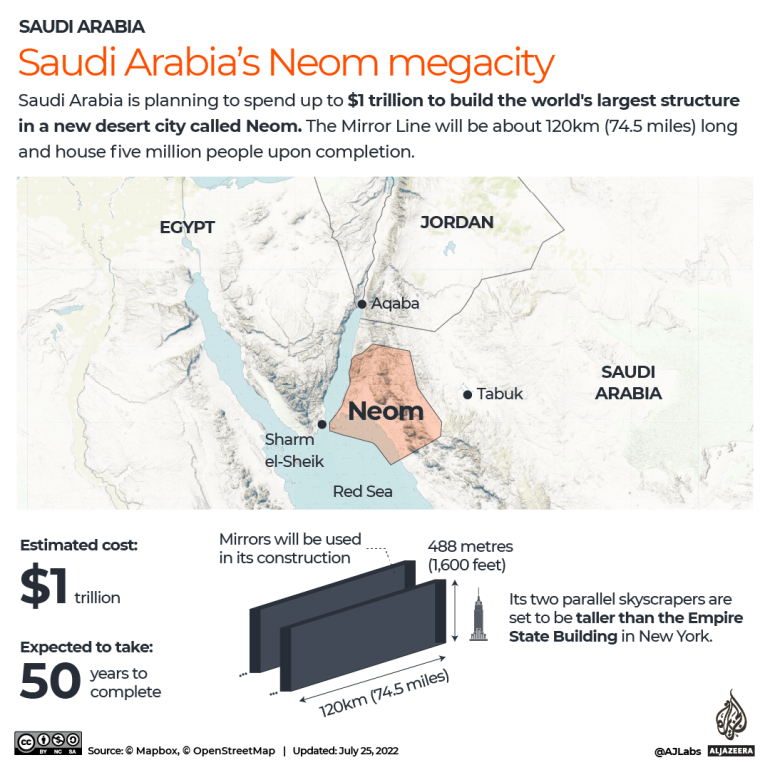
INTERACTIVE- Saudi Arabia Neom megacity mirror line
(Al Jazeera)

Beyond energy, analysts have said leaders from the two countries are expected to discuss potential deals that could see Chinese firms become more deeply involved in mega-projects that are central to the crown prince’s vision of diversifying Saudi Arabia’s economy away from oil.

Those projects include a futuristic $500bn megacity known as NEOM, a so-called “cognitive” city that will depend heavily on facial recognition and surveillance technology.

Source: Al Jazeera and news agencies 

www.globaltimes.cn

The first China-Arab summit is a strategic choice for both sides 


Global Times
5 - 7 minutes

The first China-Arab summit is a strategic choice for both sides 

"The first China-Arab summit, to be held in Saudi Arabia on Friday, is a strategic choice made by both sides. The summit conforms to the trend of the development of the times and will become an epoch-making milestone in the history of China-Arab relations. The summit will lead to the building of a China-Arab community with a shared future in the new era. The strategic mutual trust between the two sides will continue to deepen, while their mutual benefits and win-win results will promote prosperity and development. The China-Arab friendly cooperation is set to enter a new stage.

China and the Arab world are natural cooperative partners who support each other, having been through thick and thin together. The traditional China-Arab friendship has laid a solid foundation for China-Arab strategic partnership in the new era.

Since modern times, China and the Arab countries, both developing countries, have supported each other in the struggle against imperialism and colonialism, which has greatly promoted friendship between the two sides. At the Bandung Conference in 1955, China not only communicated with Arab countries that had achieved independence at that time, but also voiced its support of the just struggle of the Palestinian people. In 1971, the UN General Assembly at its 26th Session adopted Resolution 2758 with an overwhelming majority, including Arab countries, to restore all its rights to the People's Republic of China and to recognize the representatives of the government of the People's Republic of China as the only legitimate representatives of China to the UN.

China and Arab countries are stable cooperative partners that meet each other halfway and go hand in hand in accordance with the times. Against the backdrop of profound changes unseen in a century, China and Arab countries have been jointly promoting the China-proposed Belt and Road Initiative (BRI) with stronger will to focus on development. China's construction programs, including the building of bridges, roads, hospitals, as well as trade, have brought more and more benefits to the local people in Arab world. Under the framework of the BRI, China has deeply participated in the infrastructure construction of Saudi Arabia, Egypt, Qatar, the United Arab Emirates, Algeria and other countries.

China and Arab countries are reliable partners who treat each other equally. In their long-term interactions with the Western countries, Arab countries have become tired of the condescending arrogance of the West. Just as Saudi Arabian Crown Prince Mohammed bin Salman said when he met with US President Joe Biden in July - the only way we're going to work together is if we respect each other, and that includes countries respecting each other's values and sovereignty.

Through comparison, the Arab countries have become more and more aware that China does not interfere in others' internal affairs, nor will it rope in one force against another. China respects the development path chosen independently by the people of other countries, and is a reliable partner that will not impose its own values on others..."READ MORE


Xi Jinping Gets Saudi Red Carpet as Middle East Looks Past US
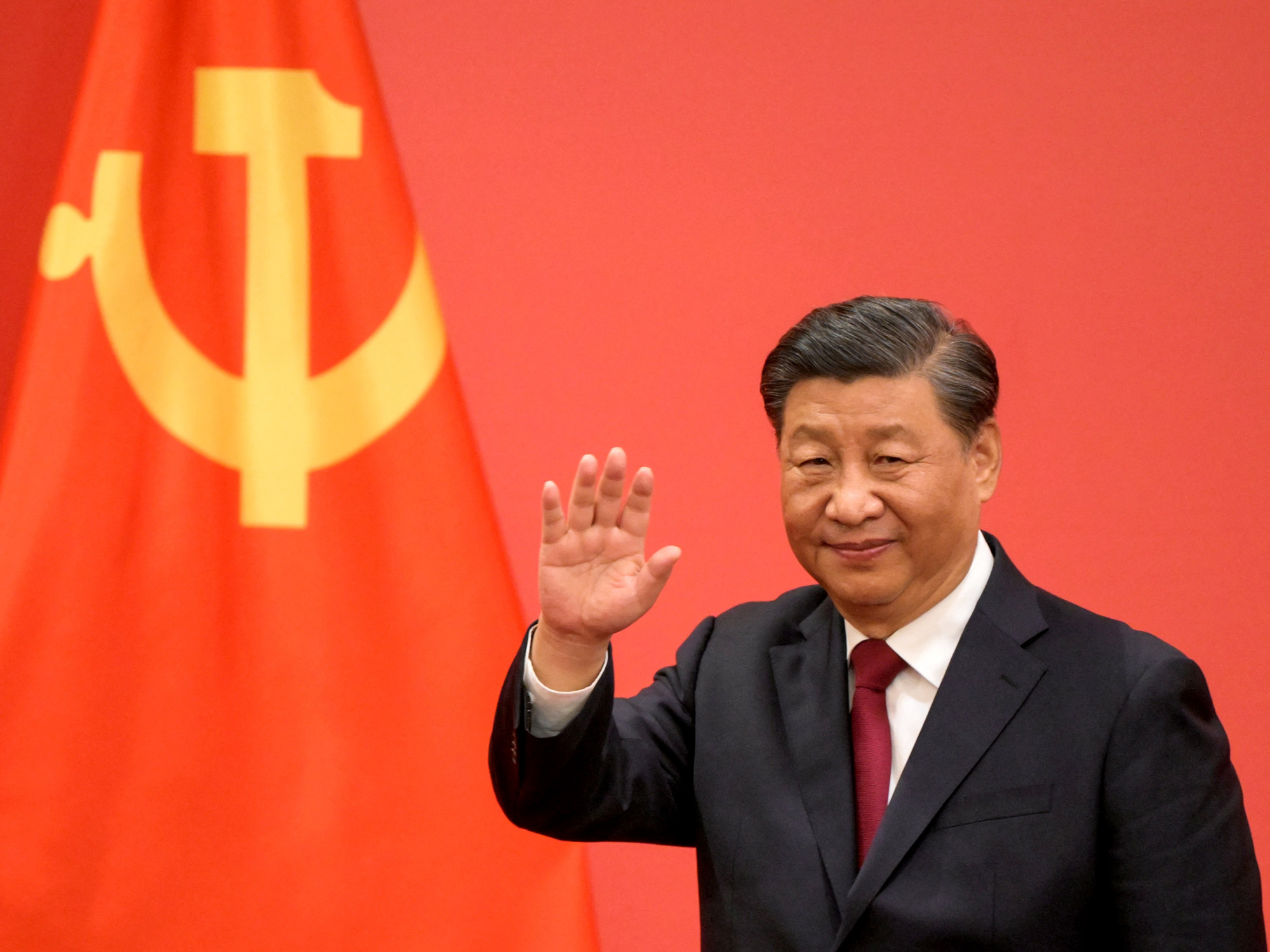
ByBen Bartenstein and Sylvia Westall
1 minute

Xi Jinping

Xi Jinping

Photographer: Wang Zhao/AFP/Getty Images

Updated on

Two months after snubbing US President Joe Biden’s pleas for oil, Saudi Arabia is rolling out the red carpet for his Chinese counterpart, Xi Jinping.

Xi will visit Saudi Arabia for several days starting Wednesday, during which he will take part in a regional summit with Saudi Crown Prince Mohammed bin Salman and other Arab leaders, the kingdom’s SPA state news agency said, promising agreements worth some $30 billion.  Energy and infrastructure deals will top the agenda, according to two people briefed on the plans."


Tuesday, December 06, 2022

Sadly, The Logic Does Not Apply..or Does It, Seriously

Criminalizing basic investigative journalism, including the publishing of leaked documents in the public interest would have tremendously dangerous consequences at a time when we need more investigative reporting than ever before.

Obtaining and disclosing sensitive information when necessary in the public interest is a core part of the daily work of journalists. If that work is criminalized, our public discourse and our democracies are made significantly weaker.


Media Organizations Ask US To Drop Charges Against Assange

from the they're-right dept

"While it seems difficult for some to balance these things, it remains entirely possible to think that Julian Assange is, generally speaking, a horrible human being, who was likely easily played like a fiddle by foreign nation states looking to play influence games in other nations… and that the US’s charges against him remain absolute bullshit and a threat to freedom of the press. That’s basically the position we’ve held since day one.

Recently a bunch of giant news organizations appeared to feel similarly and sent a letter to the US government saying that the DOJ should drop its case against Assange. From the letter:

This group of editors and publishers, all of whom had worked with Assange, felt the need to publicly criticise his conduct in 2011 when unredacted copies of the cables were released, and some of us are concerned about the allegations in the indictment that he attempted to aid in computer intrusion of a classified database. But we come together now to express our grave concerns about the continued prosecution of Julian Assange for obtaining and publishing classified materials.

The Obama-Biden administration, in office during the WikiLeaks publication in 2010, refrained from indicting Assange, explaining that they would have had to indict journalists from major news outlets too. Their position placed a premium on press freedom, despite its uncomfortable consequences. Under Donald Trump however, the position changed. The DoJ relied on an old law, the Espionage Act of 1917 (designed to prosecute potential spies during world war one), which has never been used to prosecute a publisher or broadcaster.

This indictment sets a dangerous precedent, and threatens to undermine America’s first amendment and the freedom of the press.

Obtaining and disclosing sensitive information when necessary in the public interest is a core part of the daily work of journalists. If that work is criminalized, our public discourse and our democracies are made significantly weaker.

The letter was signed by the New York Times, the Guardian, Le Monde, Der Spiegel, and El Pais.


> That’s the crux of the concern there. Most of the actions described in the indictment would apply equally to many investigative reporters and their employers. And they are core journalism techniques that deserve protection. Criminalizing basic investigative journalism, including the publishing of leaked documents in the public interest would have tremendously dangerous consequences at a time when we need more investigative reporting than ever before.

Filed Under: , , , ,
Companies: ny times, the guardian, wikileaks

Digging TechDirt More...Mis-Uses of Technology

"...The hack highlighted a weakness in modern vehicles’ internet-connected systems, in particular those that track vehicle use and location, while hooking up to drivers’ cellphones and sucking in user data. They’re the same technologies that are regularly being exploited by federal law enforcement agencies, with immigration and border cops investing more than ever before on tools that extract masses of data—from passwords to location—from as many as 10,000 different car models. 


Law Enforcement Is Extracting Tons Of Data From Vehicle Infotainment Systems

from the four-wheeled-informants dept

"For years, cars have collected massive amounts of data. And for years, this data has been extraordinarily leaky. 

✓ Manufacturers don’t like to discuss how much data gets phoned home from vehicle systems. ✓ They also don’t like to discuss the attack vectors these systems create, either for malicious hackers or slightly less malicious law enforcement investigators.

The golden age of surveillance definitely covers cars and their infotainment systems. A murder investigation had dead-ended until cops decided to access the on-board computers in the victim’s truck, which led investigators to the suspect nearly two years after the investigation began. 


And whatever investigators can’t access themselves will be sold to them. The Ulysses Group, a data broker with several government contracts, told government agencies in early 2021 it had access to location data pulled from vehicles that could be delivered “in near real time.”

Security researchers have uncovered a vulnerability that somewhat inadvertently exposes just how much access law enforcement agencies can pull from on-board systems. A flaw in satellite radio provider SiriusXM’s system allowed anyone to basically hijack a car (turn on the ignition, lock doors, etc.) using nothing but the VIN. This hack also gave them access to personal data stored in the car, along with other data collected by SiriusXM, like speed, brake use, and door status (open/closed).

While this particular flaw only affected Hondas and Nissans, similar payloads of data are only a hack/forensic scrape away from being harvested by law enforcement on demand, as Thomas Brewster reports for Forbes.

The hack highlighted a weakness in modern vehicles’ internet-connected systems, in particular those that track vehicle use and location, while hooking up to drivers’ cellphones and sucking in user data. They’re the same technologies that are regularly being exploited by federal law enforcement agencies, with immigration and border cops investing more than ever before on tools that extract masses of data—from passwords to location—from as many as 10,000 different car models.

✓ 10,000 car models is a tasty target for hackers and cops alike. The near-omnipresence of infotainment systems that link with drivers’ phones make nearly any car a potential source of evidence (or, in the case of malicious hackers, a one-stop shop for personal data).

Federal agencies are definitely making use of this data source, according to court documents.

In a recent search of a 2019 Dodge Charger near the Mexican border, a patrol agent wrote that infotainment systems—those that provide GPS, remote control and entertainment features—were especially useful to government investigators. They could provide information on a suspect’s location, email addresses, IP addresses and phone numbers…

✓ Another vehicle system search — this one performed by the ATF — was accompanied by the same claim: infotainment systems not only give investigators access to useful data, but could also reveal user passwords. This (unverified) claim echoed the one made by the CBP agent in regards to the search of the Dodge Charger. What’s undeniable is the fact that investigators are working around phone encryption (and, perhaps, cell phone search warrants) by accessing phone data via connected infotainment systems, rather than trying to access (possibly locked) phones themselves.


✓ It all adds up to real money for companies like Maryland-based Berla, which sells its iVe forensic extraction tool to federal law enforcement agencies.

According to government contract records, in August CBP spent over $380,000 on iVe, nearly eight times its previous single biggest purchase of $50,000 from 2020. ICE, which has been buying Berla’s tools and trainings since 2010, spent $500,000 on iVe in September, well over twice its previous record of $200,000. In a May 2022 contract, CBP specifically asked for “vehicle infotainment forensic extraction tools, licenses, and training” from Berla.

> We’ll probably have to wait for a challenge of these searches to learn more details about what the government is obtaining from in-car systems and what judicial paperwork it’s using to perform these searches. 

>Just because it’s technically in “plain view” doesn’t mean a computer storing massive amounts of data should be considered the equivalent of contraband found laying on a backseat or stashed in the trunk. 

> Like cell phones, the search of a connected infotainment system can reveal far more about a person than a search of their home. Hopefully, someone in the judicial system is keeping an eye on these searches and pushing back when warrant affidavits ask for far more than the government is entitled to obtain."

Filed Under: , , , ,
Companies: siriusxm


Monday, December 05, 2022

Niall Ferguson: The Tim Ferris Show #634: Niall Ferguson, Historian — The Coming Cold War II, Visible and Invisible Geopolitics, Why Even Atheists Should Study Religion, Masters of Paradox, Fatherhood, Fear, and More

Niall Ferguson (@nfergus), MA, DPhil, FRSE, is the Milbank Family Senior Fellow at the Hoover Institution, Stanford University, and a senior faculty fellow of the Belfer Center for Science and International Affairs at Harvard. He is the author of 16 books, including The Pity of WarThe House of RothschildEmpireCivilization, and Kissinger, 1923–1968: The Idealist, which won the Council on Foreign Relations Arthur Ross Prize.


“One of the things that’s exciting about the study of history is you are trying to remind yourself again and again that what happened, that what we know happened, might have gone the other way. That the Cuban Missile Crisis ended in both sides essentially backing down was not predetermined. There was a moment when a Soviet submarine commander gave the order to fire a nuclear torpedo at US naval surface ships, so we came within a hair’s breadth of World War III. These alternate worlds, these histories that didn’t happen, have to be alive in your mind when you are writing history. The fatal mistake is to write history as if it were bound to happen the way it happened.”

— Niall Ferguson

He is an award-winning filmmaker, too, having won an International Emmy for his PBS series The Ascent of Money. His 2018 book, The Square and the Tower, was a New York Times bestseller and also adapted for television by PBS as Niall Ferguson’s Networld. In 2020 he joined Bloomberg Opinion as a columnist.

In addition, he is the founder and managing director of Greenmantle LLC, a New York-based advisory firm; a co-founder of Ualá, a Latin American financial technology company; and a trustee of the New York Historical Society, the London-based Centre for Policy Studies, and the newly founded University of Austin.

His latest book, Doom: The Politics of Catastrophe, was published last year by Penguin and was shortlisted for the Lionel Gelber Prize. 

Please enjoy!

The transcript of this episode can be found here. Transcripts of all episodes can be found here.

#634: Niall Ferguson, Historian — The Coming Cold War II, Visible and Invisible Geopolitics, Why Even Atheists Should Study Religion, Masters of Paradox, Fatherhood, Fear, and More

Listen to the episode on Apple Podcasts, Spotify, Overcast, Podcast Addict, Pocket Casts, Castbox, Google Podcasts, Stitcher, Amazon Musicor on your favorite podcast platform. You can watch the interview on YouTube here.

The Tim Ferriss Show is one of the most popular podcasts in the world with more than 900 million downloads. It has been selected for "Best of Apple Podcasts" three times, it is often the #1 interview podcast across all of Apple Podcasts, and it's been ranked #1 out of 400,000+ podcasts on many occasions. To listen to any of the past episodes for free, check out this page.

tim.blog

Niall Ferguson, Historian — The Coming Cold War II, Visible and Invisible Geopolitics, Why Even Atheists Should Study Religion, Masters of Paradox, Fatherhood, Fear, and More (#634) - The Blog of Author Tim Ferriss

Tim Ferriss
17 - 21 minutes

Skip to content

U.S. Supreme Court debates web designer's anti-gay marriage stance


www.reuters.com

U.S. Supreme Court hears arguments over anti-gay marriage web designer

3 minute read December 5, 20228:08 AM MSTLast Updated an hour ago
1 - 2 minutes

U.S. Supreme Court takes up case of web designer who objects to same-sex marriage


[1/2] Web designer Lorie Smith, plaintiff in a Supreme Court case who objects to same-sex marriage, poses for a portrait at her office in Littleton, Colorado, U.S., November 28, 2022. REUTERS/Kevin Mohatt

WASHINGTON, Dec 5 (Reuters) - The U.S. Supreme Court on Monday began hearing arguments in a major case pitting LGBT rights against a claim that the constitutional right to free speech exempts artists from anti-discrimination laws in a dispute involving an evangelical Christian web designer who refuses to provide her services for same-sex marriages..."

Reporting by Andrew Chung in Washington and Nate Raymond in Boston; Editing by Will Dunham 

READ MORE


www.nytimes.com

Listen Live: Supreme Court Hears Arguments on Same-Sex Marriage and Faith Case

Adam Liptak
30 - 38 minutes

Adam Liptak

The justices could settle a First Amendment question they left open only a few years ago.

The Supreme Court is hearing arguments on Monday in a First Amendment battle pitting claims of religious freedom against laws prohibiting discrimination on the basis of sexual orientation.

A web designer in Colorado, Lorie Smith, said she was happy to create graphics and websites for anyone, including L.G.B.T.Q. people. But her Christian faith, she said, did not allow her to create messages celebrating same-sex marriages. A state law forbids this kind of discrimination.

Here’s what else you need to know:

  • The ruling could have enormous consequences. Ms. Smith’s supporters say a ruling for the state would allow the government to force all sorts of artists to state things at odds with their beliefs. Her opponents say a ruling in her favor would allow many businesses to refuse service to, say, Black people or Muslims based on odious but sincerely held convictions.

  • If the case sounds familiar, it is. The court ruled in a very similar one in 2018 involving a baker of wedding cakes in Colorado but did not settle the question of whether the First Amendment permits discrimination by businesses open to the public based on their owners’ religious convictions.

  • The court has shifted to the right since that 2018 decision and has been exceptionally receptive to claims of religious freedom.

  • The court might have to give guidance on what kinds of businesses are engaged in expression. In the 2018 case, the baker’s lawyer was closely questioned about where to draw the constitutional line, but her answers did not reveal a consistent principle.

Charlie Savage


Eric R. Olson, the solicitor general for Colorado, and Brian H. Fletcher, the principal deputy solicitor general for the United States, are defending Colorado’s anti-discrimination law in Monday’s case.

Mr. Olson, who was appointed in January 2019, had previously been a partner at Bartlit Beck, a corporate and trial law firm. He graduated from Oberlin College and the University of Michigan Law School, then completed several clerkships, including for Justice John Paul Stevens.

In August, when Mr. Olson filed the state’s merit brief in the case, he took note of its defense of “the right of all Coloradans to participate in the public marketplace as equals.”

“Being part of this team doing this important work is such a privilege for us all,” he wrote.

Mr. Fletcher will argue on behalf of the Justice Department, which is supporting Colorado as a friend of the court.

He joined the Biden administration last year as an adviser to Attorney General Merrick B. Garland, for whom he had clerked when Mr. Garland was a judge on the Court of Appeals for the District of Columbia Circuit. He later moved to the No. 2 position in the solicitor general’s office.

He also served in the solicitor general’s office as well as the White House Counsel’s office during the Obama administration. After moving to private practice, he worked in the Supreme Court practice of the law firm WilmerHale.

A debater in high school and college, Mr. Fletcher graduated from Yale University and Harvard Law School. He also clerked for Justice Ruth Bader Ginsburg.

During the Trump administration, Mr. Fletcher was a professor at Stanford Law School, where he helped direct a Supreme Court clinic. When he joined, his co-director, the prominent law professor Pamela S. Karlan, praised him as versatile.

“Baseball scouts talk about five-tool players, and Brian is the paradigmatic five-tool Supreme Court lawyer,” she said. “He writes powerfully and quickly, has great judgment, gives the students exactly the right combination of guidance and ownership, and is wonderfully supportive of his colleagues and staff as well.”

Jeremy W. Peters

Dec. 5, 2022, 11:06 a.m. ET

Jeremy W. Peters

Justice Thomas presses the lawyer arguing against the web designer on the difference between businesses where free speech, or art, is the product, and more purely commercial enterprises like hotels. “This is not a hotel. This is not a restaurant. This is not a riverboat or a train,” the justice says, referring to website design.

Charlie Savage

Dec. 5, 2022, 11:06 a.m. ET

Charlie Savage

Eric R. Olson, the solicitor general for Colorado, is now arguing. He says the question should be framed through public accommodations laws, raising the analogy of whether a Christmas store could refuse to sell its products to Jewish customers. The plaintiffs are seeking a sweeping license to discriminate that could enable architects, photographers, etc., to refuse services to customers because of their views on disabilities, sexual orientation, religion or race.

Ruth Graham

Dec. 5, 2022, 11:01 a.m. ET

Ruth Graham

We’re getting an overview of American popular culture in this hearing. Justices and lawyers have so far referenced “It’s a Wonderful Life,” “Hamilton” and “The Wind Beneath My Wings,” among others.

Who are Eric Olson and Brian Fletcher, the lawyers defending the Colorado law?

Image

Formal portraits of Eric R. Olson, left, and Brian H. Fletcher. Both men are wearing jackets and ties.
Eric R. Olson, left, the solicitor general for Colorado, and Brian H. Fletcher, the principal deputy solicitor general for the United States.Credit...Left, Colorado Office of the Attorney General; right, United States Department of Justice 

5 minutes ago · WASHINGTON — The U.S. Supreme Court on Monday engaged in spirited arguments in a major case pitting LGBT rights against a claim that the ...
57 minutes ago · The U.S. Supreme Court on Monday began hearing arguments in a major case pitting LGBT rights against a claim that the constitutional right ...
3 hours ago · The Supreme Court will revisit the intersection of LGBTQ rights and religious liberty on Monday, when it takes up the case of a graphic ...
4 hours ago · The justices will consider whether web designer Lorie Smith, a conservative evangelical Christian, has a free-speech right that trumps ...
3 days ago · The Supreme Court on Monday will revisit a long-simmering tension between legal protections for LGBTQ people and the rights of business ...
4 minutes ago · Devoted to covering the US Supreme Court comprehensively, without bias according to the highest journalistic standards as a public service.
Missing: stance | Must include:stance
11 minutes ago · A web designer in Colorado wants to limit her wedding-related services to celebrations of heterosexual unions because of her religious ...
Sep 14, 2022 · Colorado is urging the U.S. Supreme Court to uphold its anti-discrimination law against a challenge by a Christian web designer who does not ...
3 days ago · A Colorado website designer who opposes same-sex marriage is the newest face of a religious-rights movement that has been taking full ...  

Nov 7, 2022 · Given the current conservative composition of the Supreme Court it is possible that claims of religious freedom may be utilized to limit the ...