Wednesday, December 21, 2022

BASKETBALL BONANZA UNDER THE PHOENIX SUNS: Mortgage Wholesaling, A Cash-Out SPAC Deal,

Report in Forbes (Yesterday) On Tuesday, Forbes confirmed an ESPN report that Ishbia and his brother Justin Ishbia had reached an agreement to buy control of the NBA’s Phoenix Suns at a record price that values the team at $4 billion. The WNBA’s Phoenix Mercury will also be included in the transaction...


✓ The Suns and the Mercury had been for sale since September after allegations of racism, misogyny and a toxic workplace centered on controlling owner Robert Sarver had rocked the organization and prompted the NBA to suspend Sarver for one year and fine him $10 million. Forbes valued the Suns at $2.7 billion in October. Sarver purchased the team for $401 million in 2004. If the new deal goes through, it will very likely make Sarver a billionaire. (A representative for Sarver could not be reached.)

www.forbes.com

Meet The New Owners Of The Phoenix Suns, Mat And Justin Ishbia

Justin Birnbaum
6 - 8 minutes

"Mat Ishbia hardly had a future in professional basketball. As a walk-on point guard at Michigan State University, where he rode the bench during the team’s 2000 national title run, he “had to be the hardest working guy to be the worst player on that team” and saw coaching as his lifeline to stay connected to the game, he once told Forbes. That’s all about to change. . .


Forbes estimates that Mat Ishbia, the chairman and CEO of Michigan-based mortgage lender United Wholesale Mortgage, is worth $4.7 billion. Most of that comes from his 71% stake in the company, which trades on the New York Stock Exchange as UWM Holdings Corp. His brother Justin owns 22% of UWM and is worth $2.1 billion, according to Forbes estimates. 

✓ Together, the brothers are picking up 60% of the Suns for $2.4 billion, valuing the team at $4 billion, people familiar with the deal told Forbes’ Mike Ozanian. The previous record purchase price for an NBA team was the $3.2 billion Joe Tsai paid for the Brooklyn Nets in 2019.

The NBA’s board of governors will have to vote to approve Mat Ishbia as the new controlling owner, but assuming that doesn’t prove to be a roadblock, the 42-year-old would supplant the Memphis Grizzlies’ Robert Pera and the Utah Jazz’s Ryan Smith as the youngest controlling owner in the league. A representative for Mat and Justin Ishbia declined to comment.

As the billionaire brothers enter the world of pro sports, they have their father to thank for laying the groundwork for what would become their fortune. An attorney by day, but an entrepreneur at heart, Jeff Ishbia launched a variety of endeavors—an alarm business, a title company and, in 1986, a mortgage company. It fit in nicely with his legal services and took little of his time.

> Mat had no plans to enter the mortgage business. Fresh off a national title at Michigan State, where he appeared in 48 games over three seasons and averaged 0.6 points per game, he didn’t consider his father’s 11-person outfit all that exciting. But after graduating in 2003, he gave it a shot, at his father’s request. “I went there with the concept that I was gonna be there for six months, a year,” Mat told Forbes in January 2021. “No one likes mortgages. I don’t like them still.”

While things started slow—UWM issued just 45 mortgages in February 2004 and was “barely breaking even” through 2006—Ishbia settled in and decided to stay. 

✓ The company then caught a massive break during the 2007-08 financial crisis. Unlike powerhouse mortgage firms such as New Century and Countrywide, UWM wasn’t issuing subprime loans. When the bigger outfits collapsed, the Ishbias scooped up the new business and available staff. In 2009, UWM issued more than $2 billion in loans.

It was a turning point. The business had its best year, and Mat’s father asked him what he wanted to do next. “I want to be the largest wholesale lender in the country,” he said. Over the next six years, Mat bought out his dad (who still sits on the UWM board) and grew UWM’s top line without taking on outside money. 

✓ UWM started issuing more than $1 billion in mortgages monthly and making $100 million in annual profits in 2015.

✓ Then, the pandemic threatened it all. In a bid to prop up the faltering economy, the Federal Reserve committed on March 23, 2020, to buying “unlimited” amounts of mortgage securities. It sent mortgage bond prices skyrocketing, leaving interest-rate-hedging lenders like UWM facing margin calls. Mat turned to Goldman Sachs for a solution, and together they settled on a special-purpose acquisition company 

✓ In a SPAC deal, a publicly traded shell company raises capital from investors and puts the money in escrow until it finds a private company to pump the proceeds into. It's a much quicker, and more controversial, path to going public than a traditional IPO.


✓ In January 2021, UWM sold 6% to a SPAC managed by billionaire investor Alec Gores, raising $925 million at a $16 billion valuation. The deal turned Mat into a billionaire with a net worth of $12.6 billion, and gave Justin a $4 billion fortune.


✓ The public markets haven’t been kind to UWM, however. Since debuting at $11.95 per share in January 2021, the stock price has lost two-thirds of its value, closing at $3.78 on Tuesday.


 ✓ Mat’s fortune, which is mostly tied up in UWM stock, has declined nearly 63%. Justin, who also runs private-equity firm Shore Capital Partners, is down about 48% since January 2021.

 ✓ Given that the Ishbia brothers don’t appear to have billions of dollars in cash, it’s unclear how the deal will be financed. . .


If they can pull it off, it’s an opportune time to be joining the ranks of NBA ownership. The average NBA team value has grown 15% over the last year, to $2.86 billion, thanks to record sponsorship and advertising revenue, as well as sky-high expectations for the league’s next media rights package. 

✓✓(NBA teams on average have appreciated 1,200% since 2002.) 


✓ The NBA as a league currently earns $2.66 billion annually from a mix of media deals with ESPN, Turner and ABC—a sum that gets split among the 30 teams. The next package could double that figure." READ MORE 


In from The Dark: Ukranian Comedian-Turned Politician-President & Troop Commander

 Intro: 300 days

7 hours ago · Zelensky is poised to move from being a beleaguered regional leader sending videos from a bunker to taking a place, well deserved and overdue, ...

www.rt.com

Zelensky headed to Washington – media

RT
3 - 4 minutes

"The Ukrainian president may visit the White House as Congress votes on a $45 billion aid package

Ukrainian President Vladimir Zelensky may be on his way to Washington, multiple US outlets reported on Tuesday, citing anonymous sources. While the administration of President Joe Biden would neither confirm nor deny the rumor, House Speaker Nancy Pelosi sent a letter asking all members to attend in person on Wednesday for “a very special focus on Democracy.”

Officially, Zelensky has not left the country since Russia began its military operation on February 24. He has addressed anyone who would listen via video-link, including the UN Security Council, in breach of standing rules. 

CNN cited “two sources familiar with the planning underway” claiming the former actor is to meet with Biden at the White House and address Congress on Wednesday evening, but that it all depends on security concerns. Axios added, citing “multiple senior leadership sources,” that the Capitol Police were already preparing security arrangements for the potential visit.

The rumored visit comes amid whispers in Washington that the US will finally announce the delivery of Patriot air defense systems to Ukraine. Russia has explicitly warned that any NATO personnel operating them will be a legitimate target. Biden has strenuously insisted that neither the US nor its allies were actually a party to the conflict, even as he sent Kiev money, weapons, and ammunition worth billions of dollars.

The White House declined to comment on the Patriots or Zelensky’s potential visit. “I don’t know that that’s going to happen,” Pelosi said when asked by reporters. . .' READ MORE

4 hours ago · This would be Zelensky's first in-person visit to the U.S. since Russia invaded Ukraine in February.

The appearance would mark a potentially electrifying moment as Democratic control of the House — and Ms. Pelosi’s reign as speaker and a member of Democratic leadership — comes to a conclusion, with Republicans set to take over on Jan. 3.


>... And, on a surprise visit to the battered city of Bakhmut on Tuesday, Mr. Zelensky was presented with a flag by Ukrainian soldiers who asked that he present it to Congress. 

He promised to give it to President Biden, according to Ukrainian media who joined him on the trip.While his office had no official comment on any looming trip, the moment was captured on camera. It was not clear, however, that Mr. Zelensky was actually preparing to imminently leave the country for the first time since the war began.

President Volodymyr Zelensky has confirmed on Twitter that he is on his way to Washington to meet with President Biden and address Congress.

✓ He also has a series of bilateral meetings planned.

On my way to the US to strengthen resilience and defense capabilities of 🇺🇦. In particular, @POTUS and I will discuss cooperation between 🇺🇦 and 🇺🇸. I will also have a speech at the Congress and a number of bilateral meetings.

— Володимир Зеленський (@ZelenskyyUa) December 21, 2022


Dec. 21, 2022, 4:49 a.m. ET

Anton Troianovski

Deliveries of new U.S. weapons to Ukraine will lead “to an aggravation of the conflict” and do “not bode well for Ukraine,” Dmitri S. Peskov, the Kremlin’s spokesman, told reporters on Wednesday. He also said that President Vladimir V. Putin will give an “important” and “rather voluminous” speech Wednesday at an annual Defense Ministry meeting.

Zelensky Takes Plea To Congress as Russia Pounds Ukraine: Live Updates

Andrés R. Martínez
22 - 28 minutes

Here are the latest developments.

President Volodymyr Zelensky of Ukraine will visit Washington on Wednesday to meet with President Biden and address Congress, where he will likely lay out his case for more military aid to fight off a wave of Russian attacks that has left millions without power and clean water.

The trip is Mr. Zelensky’s first outside Ukraine since Russia invaded in February. It is a bold move as Russian forces regularly target the nation’s energy, water and internet infrastructure. There were no signs that Russia or Ukraine is seeking a peaceful solution as the war entered its 300th day this week, with both sides preparing for renewed fighting.


Ukrainian troops have slowed their advance after months of recapturing territory claimed illegally by Russia, and there is evidence that Russia might be preparing for another attack on Kyiv after it failed to capture the capital earlier this year. President Vladimir V. Putin of Russia visited Belarus on Monday to meet with President Aleksandr G. Lukashenko, stoking concern about a possible strike on Kyiv, which is just south of Belarus. The United States is said to be doubling the number of Ukrainian troops it trains in Germany, including in infantry tactics.

Mr. Zelensky has made providing electricity a priority for the winter, normally frigid and snowy across Ukraine. Russian attacks have left as many as 10 million people, about 20 percent of the prewar population, without power at a time, forcing Ukraine’s energy company to race to make repairs.

Here are the latest developments:

  • Congress proposed on Tuesday $44 billion in emergency aid for Ukraine, billions more than Mr. Biden requested in November. The package consists mostly of military spending, including nearly $20 billion to arm and equip Ukraine’s forces, and to replenish Defense Department stockpiles from which weapons are being sent to Kyiv

  • Mr. Biden will announce on Wednesday $1.8 billion in immediate aid for Ukraine that includes the most advanced U.S. ground-based air defense system, including a Patriot missile battery.


Tuesday, December 20, 2022

WATCH OUT! Nothing is Sacred when There's Money To Be Made


> 1 As The Markup report makes clear, existing privacy regulations like the Health Insurance Portability and Accountability Act (HIPAA) were not built for telehealth, so much of this sloppy handling of consumer data falls through the cracks. Most consumers, meanwhile, operate from the false belief that this data is far more protected than it actually is. . 

www.techdirt.com

Surprise: Telehealth Startups Playing Fast And Loose With Sensitive User Medical Data

Mon, Dec 19th 2022 05:49am - Karl Bode
4 - 5 minutes

from the nothing-is-sacred-when-there's-money-to-be-made dept 


"From the Internet of very broken things to telecom networks, the state of U.S. privacy and user security is arguably pathetic. It’s 2022 and we still don’t have even a basic privacy law for the Internet era, in large part because over-collection of data is too profitable to a wide swath of industries, which, in turn, lobby Congress to do either nothing, or the wrong thing.

Sensitive medical data, supposedly held to a higher standard, isn’t much of an exception. The Markup and STAT this week had an interesting joint report showcasing how many telehealth startups routinely play fast and loose with consumer data. . . 

Inevitably there will be a medical privacy data scandal so massive it will force the culture to truly own the fact they’ve prioritized money over consumer/market health, privacy, and safety for decades. But even then, it’s a steep uphill climb to get a comically corrupt Congress to craft even the most modest of guardrails." READ MORE (7 comments)

Filed Under: , , , , , , ,


> 2 InfraGard, a program run by the U.S. Federal Bureau of Investigation (FBI) to build cyber and physical threat information sharing partnerships with the private sector, this week saw its database of contact information on more than 80,000 members go up for sale on an English-language cybercrime forum.


7 days ago · In response to information shared by KrebsOnSecurity, the FBI said it is aware of a potential false account associated with the InfraGard Portal ...
5 days ago · The FBI was repeatedly breached recently. On December 10, 2022, a database containing the contact information of more than 80,000 members of the ...

6 days ago · A hacker has breached an FBI program dedicated to critical infrastructure cybersecurity and is now selling access to its data on the dark ...
6 days ago · As seen by Hackread.com, the hacker is selling the stolen InfraGard database which contains the personal data of its members for $50,000. by ...
6 days ago · The database was stolen by a hacker who goes by the name USDoD. The way they gained access was relatively simple—using the personal details of a ...
6 days ago · Ughh. FBI's Vetted Threat Sharing Network 'InfraGard' Hacked ... Meanwhile, the hackers responsible are communicating directly with members ...


It’s a shame the FBI wasn’t aware of this before being contacted by people who don’t work for the FBI. If the agency wants the private sector to trust it with its threat reports and data, it needs to be ahead of things like this, rather than simply refusing to talk about incidents it should have been more proactive about.

www.techdirt.com

FBI Private Sector Cyberthreat Reporting Database Hacked By Apparently Unreported Cyberthreat 


Tue, Dec 20th 2022 09:30am - Tim Cushing
5 - 6 minutes

from the target-rich-environment-unsurprisingly-targeted dept

"Is this irony? It kind of seems like it is. Maybe it isn’t. It could just be a coincidence. An extremely unfortunate, ironic coincidence.

Whatever it is, it doesn’t look good for the FBI, which encouraged pretty much every private company to register as reporting entities so the FBI could (theoretically, it appears) respond to reported security threats.

The FBI wants to be part of the cyber Pearl Harbor discussion. Here’s its latest contribution to that conversation, as first reported by Brian Krebs.

InfraGard, a program run by the U.S. Federal Bureau of Investigation (FBI) to build cyber and physical threat information sharing partnerships with the private sector, this week saw its database of contact information on more than 80,000 members go up for sale on an English-language cybercrime forum. Meanwhile, the hackers responsible are communicating directly with members through the InfraGard portal online — using a new account under the assumed identity of a financial industry CEO that was vetted by the FBI itself.

Trust, but don’t even bother verifying, I guess. That’s how they — and by “they,” I mean the hacker referring to themselves as “USDoD” — get you. A portal for private companies to report threats has been compromised using nothing more than credentials that have likely been floating around the web (dark or otherwise) for some time now.

USDoD said they gained access to the FBI’s InfraGard system by applying for a new account using the name, Social Security Number, date of birth  and other personal details of a chief executive officer at a company that was highly likely to be granted InfraGard membership.

The CEO in question — currently the head of a major U.S. financial corporation that has a direct impact on the creditworthiness of most Americans — told KrebsOnSecurity they were never contacted by the FBI seeking to vet an InfraGard application.

With access obtained, the breach began. USDoD “asked a friend” to create a script that would pull all available user data from the database, which apparently had no defensive methods in place to thwart the script, or any siloing in place to ensure one user’s approved access wouldn’t allow them to obtain other users’ information.

In an effort to increase collaboration between private sector contributors (if not the FBI itself, although there doesn’t appear to be any actual FBI data/communications included in the hacking haul), InfraGard acted as a quasi-social media hub to allow private companies to share info with each other. That connectivity apparently contributed to the easy exfiltration of data, albeit data of disputable value.

USDoD acknowledged that their $50,000 asking price for the InfraGard database may be a tad high, given that it is a fairly basic list of people who are already very security-conscious. Also, only about half of the user accounts contain an email address, and most of the other database fields — like Social Security Number and Date of Birth — are completely empty.

While the eventual sale of this data will put USDoD in the black, the ultimate end game may not be the easily-absconded-with user data. The hacker is taking full advantage of this impersonation to contact private sector participants in hopes of securing additional data and/or credentials usable for bigger and better data heists.

The FBI has responded to these reports with a no comment.

“This is an ongoing situation, and we are not able to provide any additional information at this time,” the FBI said in a written statement.

It’s a shame the FBI wasn’t aware of this before being contacted by people who don’t work for the FBI. If the agency wants the private sector to trust it with its threat reports and data, it needs to be ahead of things like this, rather than simply refusing to talk about incidents it should have been more proactive about.

But spending tax dollars on “cyber security furniture” only buys so much competence. While it’s essential private sector contributors are able to share information easily with each other, a breach like this will only encourage them to cut the FBI out of the loop. There are obviously more secure channels for communication about these issues. Allowing a hacker to make off with critical data suggests the FBI is not only failing to fully vet contributors to its cyber security marketplace of ideas, but failing to ensure the private companies it hires to provide solutions are capable of meeting the demands of the job.

Filed Under: , , ,


Monday, December 19, 2022

NEED TO KNOW: Detecting t AI-generated text

GPT-3, ChatGPT’s predecessor, has only been around since 2020. OpenAI says ChatGPT is a demo, but it is only a matter of time before similarly powerful models are developed and rolled out into products such as chatbots for use in customer service or health care.


 And that’s the crux of the problem: the speed of development in this sector means that every way to spot AI-generated text becomes outdated very quickly. It’s an arms race—and right now, we’re losingwww.technologyreview.com

How to spot AI-generated text 


Melissa Heikkilä
8 - 10 minutes

This sentence was written by an AI—or was it? OpenAI’s new chatbot, ChatGPT, presents us with a problem: How will we know whether what we read online is written by a human or a machine?

Since it was released in late November, ChatGPT has been used by over a million people. It has the AI community enthralled, and it is clear the internet is increasingly being flooded with AI-generated text. People are using it to come up with jokes, write children’s stories, and craft better emails. 


ChatGPT is OpenAI’s spin-off of its large language model GPT-3, which generates remarkably human-sounding answers to questions that it’s asked. The magic—and danger—of these large language models lies in the illusion of correctness. The sentences they produce look right—they use the right kinds of words in the correct order. But the AI doesn’t know what any of it means. These models work by predicting the most likely next word in a sentence. They haven’t a clue whether something is correct or false, and they confidently present information as true even when it is not. 


In an already polarized, politically fraught online world, these AI tools could further distort the information we consume. If they are rolled out into the real world in real products, the consequences could be devastating. 

We’re in desperate need of ways to differentiate between human- and AI-written text in order to counter potential misuses of the technology, says Irene Solaiman, policy director at AI startup Hugging Face, who used to be an AI researcher at OpenAI and studied AI output detection for the release of GPT-3’s predecessor GPT-2. 


New tools will also be crucial to enforcing bans on AI-generated text and code, like the one recently announced by Stack Overflow, a website where coders can ask for help. ChatGPT can confidently regurgitate answers to software problems, but it’s not foolproof. Getting code wrong can lead to buggy and broken software, which is expensive and potentially chaotic to fix. 

A spokesperson for Stack Overflow says that the company’s moderators are “examining thousands of submitted community member reports via a number of tools including heuristics and detection models” but would not go into more detail. 

In reality, it is incredibly difficult, and the ban is likely almost impossible to enforce.


Today’s detection tool kit

There are various ways researchers have tried to detect AI-generated text. One common method is to use software to analyze different features of the text—for example, how fluently it reads, how frequently certain words appear, or whether there are patterns in punctuation or sentence length. 

“If you have enough text, a really easy cue is the word ‘the’ occurs too many times,” says Daphne Ippolito, a senior research scientist at Google Brain, the company’s research unit for deep learning. 

Because large language models work by predicting the next word in a sentence, they are more likely to use common words like “the,” “it,” or “is” instead of wonky, rare words. This is exactly the kind of text that automated detector systems are good at picking up, Ippolito and a team of researchers at Google found in research they published in 2019.


But Ippolito’s study also showed something interesting: the human participants tended to think this kind of “clean” text looked better and contained fewer mistakes, and thus that it must have been written by a person. 

In reality, human-written text is riddled with typos and is incredibly variable, incorporating different styles and slang, while “language models very, very rarely make typos. They’re much better at generating perfect texts,” Ippolito says. 

“A typo in the text is actually a really good indicator that it was human written,” she adds. 

Large language models themselves can also be used to detect AI-generated text. One of the most successful ways to do this is to retrain the model on some texts written by humans, and others created by machines, so it learns to differentiate between the two, says Muhammad Abdul-Mageed, who is the Canada research chair in natural-language processing and machine learning at the University of British Columbia and has studied detection

Scott Aaronson, a computer scientist at the University of Texas on secondment as a researcher at OpenAI for a year, meanwhile, has been developing watermarks for longer pieces of text generated by models such as GPT-3—“an otherwise unnoticeable secret signal in its choices of words, which you can use to prove later that, yes, this came from GPT,” he writes in his blog. 

A spokesperson for OpenAI confirmed that the company is working on watermarks, and said its policies state that users should clearly indicate text generated by AI “in a way no one could reasonably miss or misunderstand.” 

But these technical fixes come with big caveats. Most of them don’t stand a chance against the latest generation of AI language models, as they are built on GPT-2 or other earlier models. Many of these detection tools work best when there is a lot of text available; they will be less efficient in some concrete use cases, like chatbots or email assistants, which rely on shorter conversations and provide less data to analyze. And using large language models for detection also requires powerful computers, and access to the AI model itself, which tech companies don’t allow, Abdul-Mageed says. 

The bigger and more powerful the model, the harder it is to build AI models to detect what text is written by a human and what isn’t, says Solaiman. 

“What’s so concerning now is that [ChatGPT has] really impressive outputs. Detection models just can’t keep up. You’re playing catch-up this whole time,” she says. 

Training the human eye

There is no silver bullet for detecting AI-written text, says Solaiman. “A detection model is not going to be your answer for detecting synthetic text in the same way that a safety filter is not going to be your answer for mitigating biases,” she says. 

To have a chance of solving the problem, we’ll need improved technical fixes and more transparency around when humans are interacting with an AI, and people will need to learn to spot the signs of AI-written sentences. 

“What would be really nice to have is a plug-in to Chrome or to whatever web browser you’re using that will let you know if any text on your web page is machine generated,” Ippolito says.

Some help is already out there. Researchers at Harvard and IBM developed a tool called Giant Language Model Test Room (GLTR), which supports humans by highlighting passages that might have been generated by a computer program. . ." READ MORE


War Zone Report: “Expendable Hypersonic Multi-mission ISR and Strike program.” The War Zone reported that it’s unclear at this point whether the Mayhem project is more like a hypersonic missile or a jet.


americanmilitarynews.com

PIC: Secret new US hypersonic spy jet unveiled; named 'Mayhem'

Justin Cooper
2 - 3 minutes

The Pentagon in Arlington County, Virginia. (Dreamstime/TNS)

"The Pentagon has awarded a contract worth as much as $334 million to develop a new multi-purpose hypersonic air vehicle under a secretive program known as “Mayhem.”

The experimental Mayhem program is thought to be creating some kind of hypersonic aircraft capable of strikes as well as spying, also known as intelligence, surveillance and reconnaissance (ISR), The War Zone reported.

The first details on Mayhem emerged in 2020, according to The War Zone. Now, Virginia defense contractor Leidos has been awarded an “indefinite-delivery/indefinite-quantity contract” for research and development of Mayhem, expected to be completed by Oct. 15, 2028.

In its announcement, the Pentagon describes the goal as “a larger class air-breathing hypersonic system capable of executing multiple missions with a standardized payload interface, providing a significant technological advancement and future capability.”

Leidos’ work is to be done at the Wright-Patterson Air Force Base in Ohio, with other potential testing sites to be determined, according to the announcement. 

In its own press release, Leidos said its task is to develop “a large-class version” of the Mayhem system “that surpasses current air-breathing systems in range and payload capacity using digital engineering to ensure the design efforts help future development and transition.”

The firm is coordinating partnerships with the government, academia and private sector to prepare prototypes and leading efforts to “help ensure Mayhem can transition from idea to operational system,” according to the release.

The release refers to the Mayhem program’s full name as the “Expendable Hypersonic Multi-mission ISR and Strike program.” The War Zone reported that it’s unclear at this point whether the Mayhem project is more like a hypersonic missile or a jet.

According to The War Zone, a 2021 contract revealed that Mayhem’s “goal is to carry payloads five-times the mass and double the range” of current systems, with a “standardized payload interface” suitable to various types of missions."READ MORE

Not for everyone..


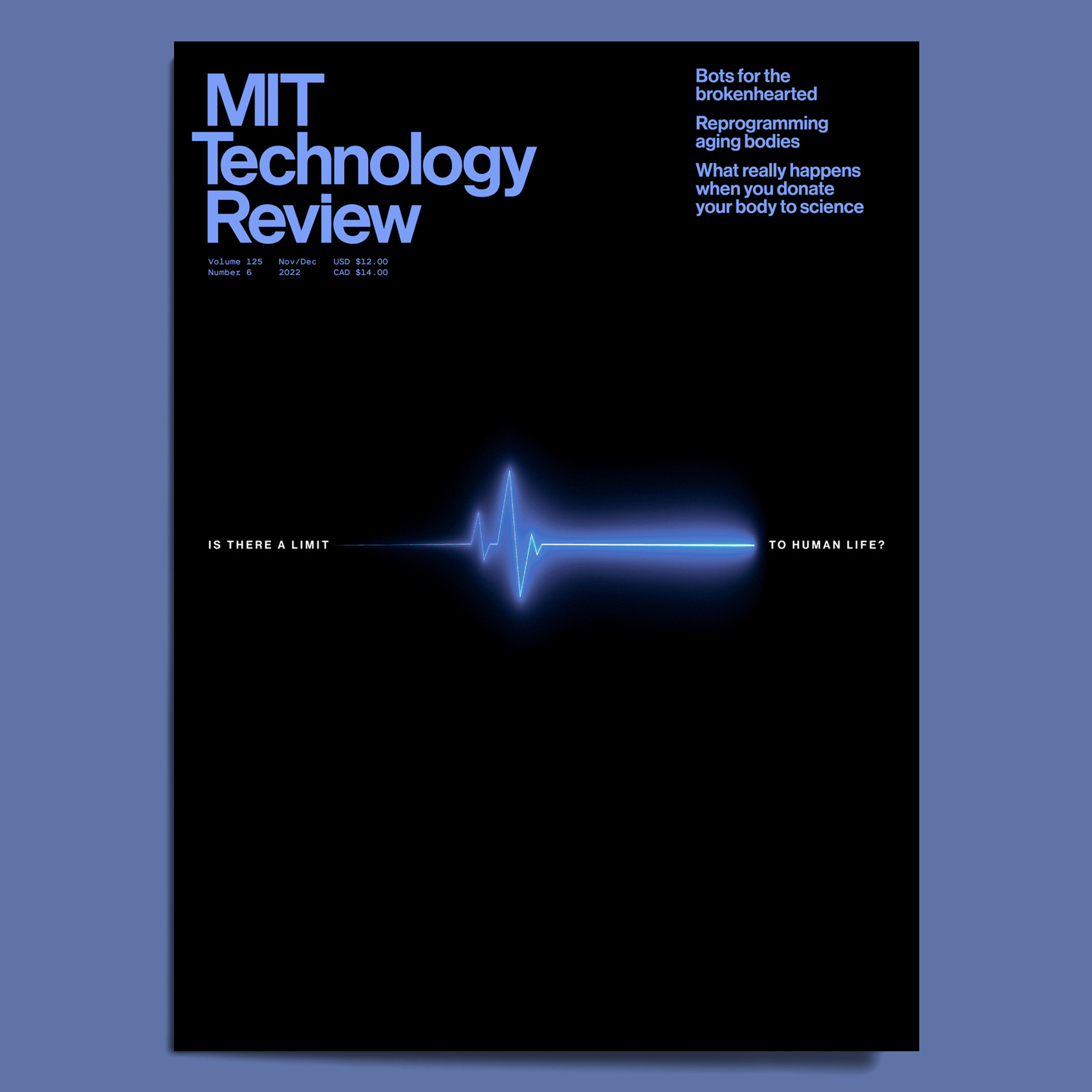
November/December 2022
Introducing: The Mortality Issue
Is there a limit to human life? Is old age a disease? Plus reprogramming aging bodies, demedicalizing death, technology that lets us speak to our dead relatives, and what really happens when you donate your body to science.

El-Erian...Global Inflation + The Week Ahead


El erian from www.linkedin.com
Duration: 49:35
Posted: 5 days ago 


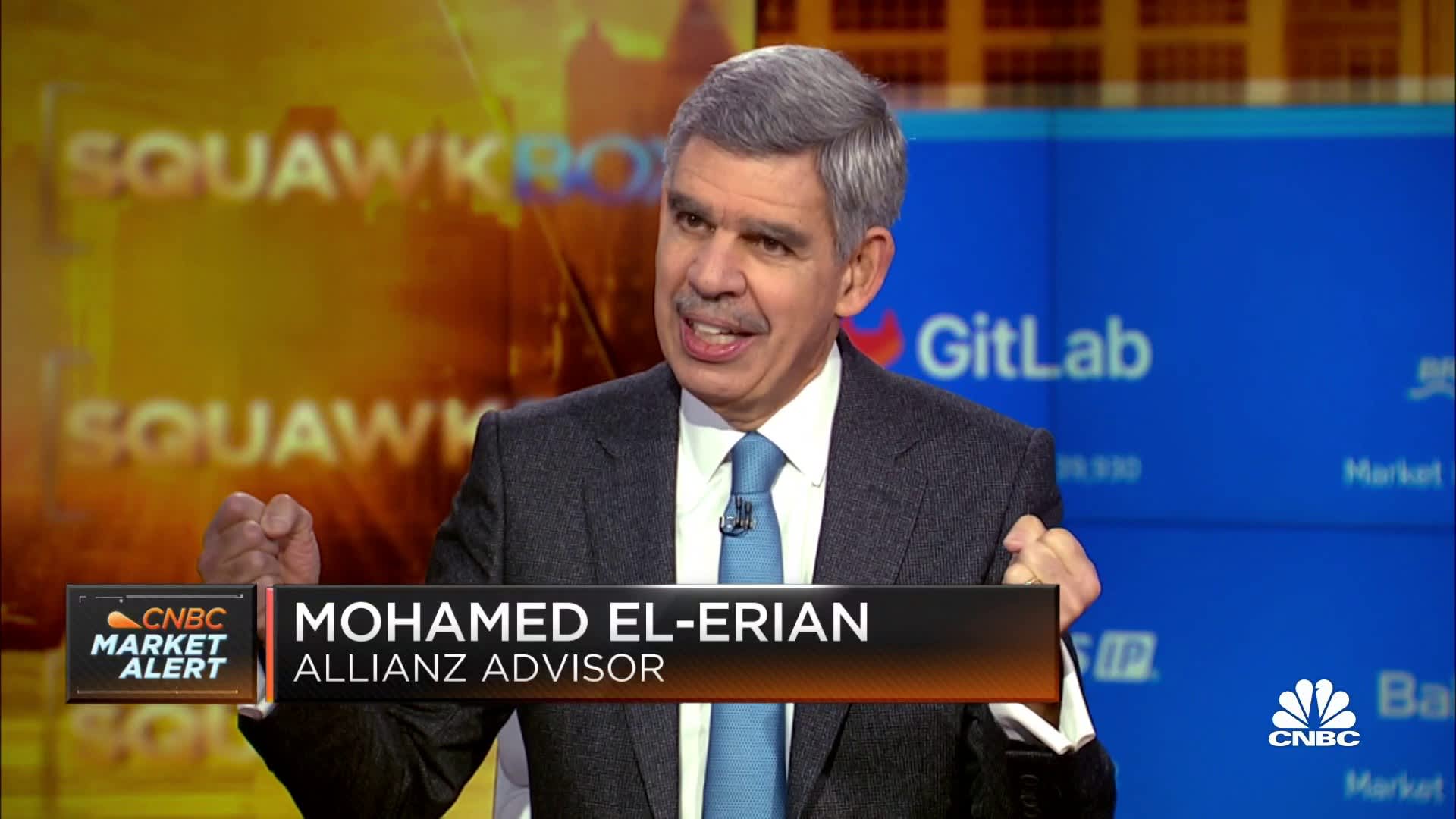
Investors moving to cash over worries that Fed will overdo rate hikes, says Mohamed El-Erian

Investors moving to cash over worries that Fed will overdo rate hikes, says Mohamed El-Erian
1
4


Video for El erian
Duration: 8:16
Posted: 11 hours ago

RELATED CONTENT

8 days ago · Mohamed El-Erian—the economist who was once CEO of Pimco and is currently the president of Queens' College at the University of ...

www.project-syndicate.org

Another Annus Horribilis for the Fed | by Mohamed A. El-Erian - Project Syndicate

Mohamed A. El-Erian
3 - 4 minutes

Over the past two years, the US Federal Reserve has repeatedly erred in its analysis, policymaking, communications, and governance. To restore its effectiveness and reduce its vulnerability to undue outside interference, Fed officials must start making up for past mistakes in the new year.

CAMBRIDGE – On the 40th anniversary of her accession to the throne, Queen Elizabeth II remarked that, “1992 is not a year on which I shall look back with undiluted pleasure. In the words of one of my more sympathetic correspondents, it has turned out to be an annus horribilis.” The late monarch’s now-famous speech followed a year of uncomfortable developments for the Crown, including a fire in Windsor Palace, the end of two of her children’s marriages (with a third royal separation to be made public the following month), and various leaks.

The queen’s admirably open and honest acknowledgment of these difficulties helped solidify another three decades of enormous domestic and global respect for the monarchy. As we head into a new year, the US Federal Reserve, seeking to move on from its own second successive annus horribilis, would do well to heed her example. That is the Fed’s best chance to regain policy credibility, restore its reputation, and reduce its vulnerability to undue political interference, all of which will be critical to its effectiveness and, therefore, to economic well-being more broadly.

Over the past two years, the Fed has been proven terribly wrong in its assessment of inflation. Its forecasts have been so far off the mark that some former Fed officials have publicly and repeatedly dismissed them – a highly unusual occurrence. As a result, policymakers squandered the opportunity to move in a timely fashion to contain the price increases that have since eroded everyone’s purchasing power, hitting the most vulnerable segments of society the hardest.

In its latest projections and final press conference of the year, the Fed went out of its way to signal to markets that its policy rate would likely be at 5.1% at the end of 2023. This forward guidance was supported by 17 of 19 Fed officials, yet markets still did not price it in. Instead, futures markets point to a policy rate of 4.4%, anticipating also that the Fed will be forced to cut rates over the course of the coming year, despite everything it has said to the contrary.

Then there were all the ethical slippages. Over the past two years, three senior Fed officials have resigned following reports that they had engaged in questionable stock-trading practices during the pandemic, when Fed policies were massively boosting valuations. Then, a fourth official acknowledged that he had violated trading rules and reporting requirements, and a fifth official raised eyebrows by agreeing to speak at an invitation-only, off-the-record event organized by a large bank.

All these developments raise obvious concerns about the effectiveness, standing, and reputation of an institution that plays – and must play – an absolutely critical role in both the US economy and the international monetary system. Not only do they weaken its authority, undermine the impact of its forecasts, and erode the efficacy of its forward guidance, but they also could render it vulnerable to outside interference. That could further threaten the operational autonomy that the Fed needs to deliver on its mandate.

Looking ahead, the Fed is unlikely to have done enough to make up for its earlier mistakes on inflation. While inflation is easing and will continue to do so, this will come at the cost of undue damage to livelihoods. And, having allowed inflation to become embedded in the structure of the economy, there is still a risk, later in 2023, that it will be sticky at a rate above the Fed’s 2% target. Should that happen, the Fed will have to pick between equally uncomfortable policy options, all of which will become even more painful for society if the US has fallen into recession.

To confront such challenges, the Fed will need to move on from the failures of 2021-22. Its task now has a critical external component, as well as the equally important internal one. That is why this vital institution must take a page from the late queen’s remarkable 30-year-old playbook."

To read more from Project Syndicate, click here.

Recommended Articles

CLASSIC ART MEMES Zara Zentira