Sunday, July 09, 2023

NASA's X-59 'quiet' supersonic jet looks ready to fly in new photos

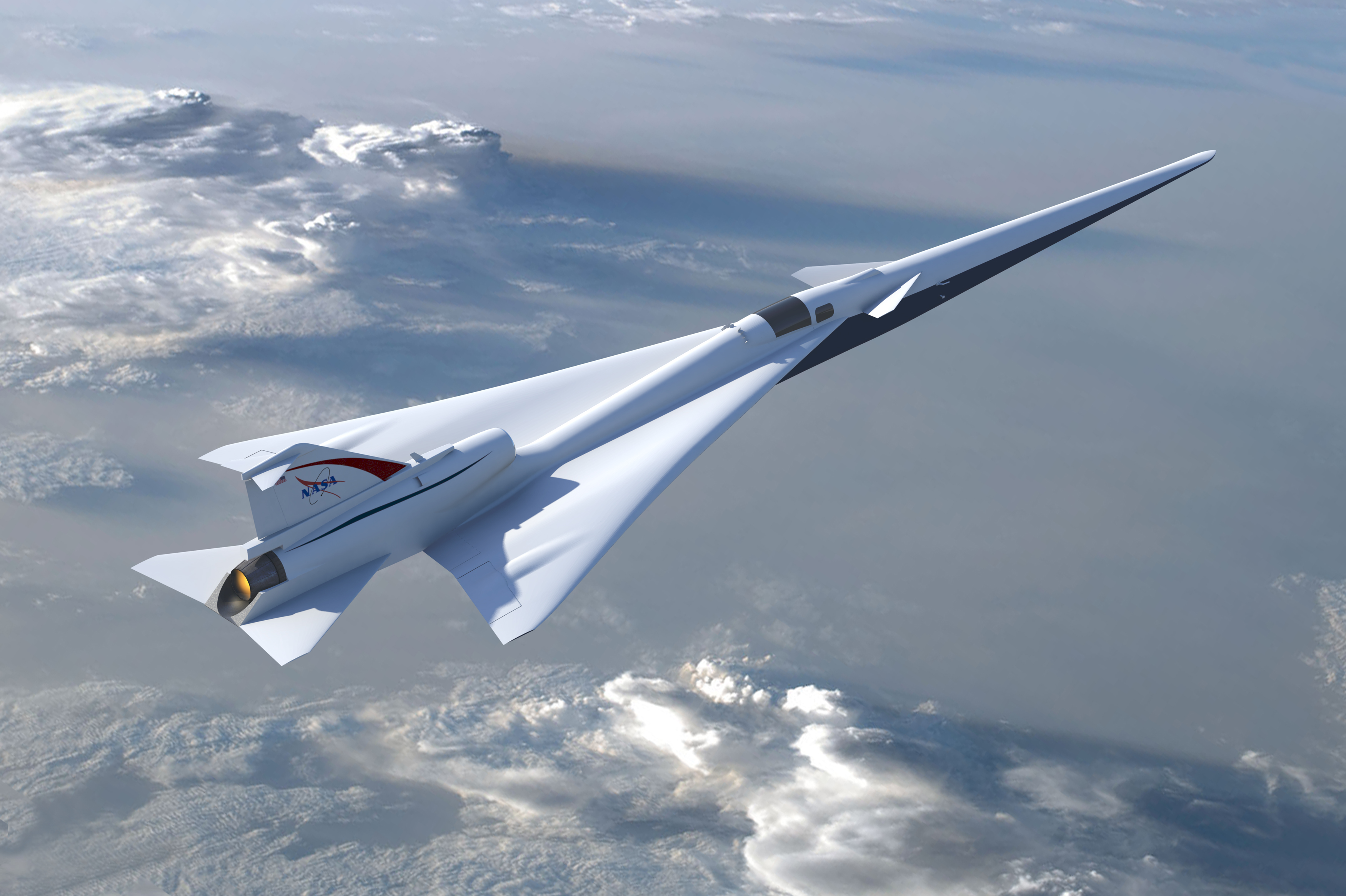
Dubbed the "Son of Concorde," NASA's experimental X-59 is almost ready for its first test flights later this year. Formerly called the  X-59 Quiet SuperSonic Technology (QueSST) plane, the aircraft could usher in a new era of supersonic mass transportation.


NASA's X-59 'Son of Concorde' gearing up for first test flight

According to statements and images shared by NASA, its experimental X-59 Quiet SuperSonic Technology (QueSST) plane could perform test flights later this year.


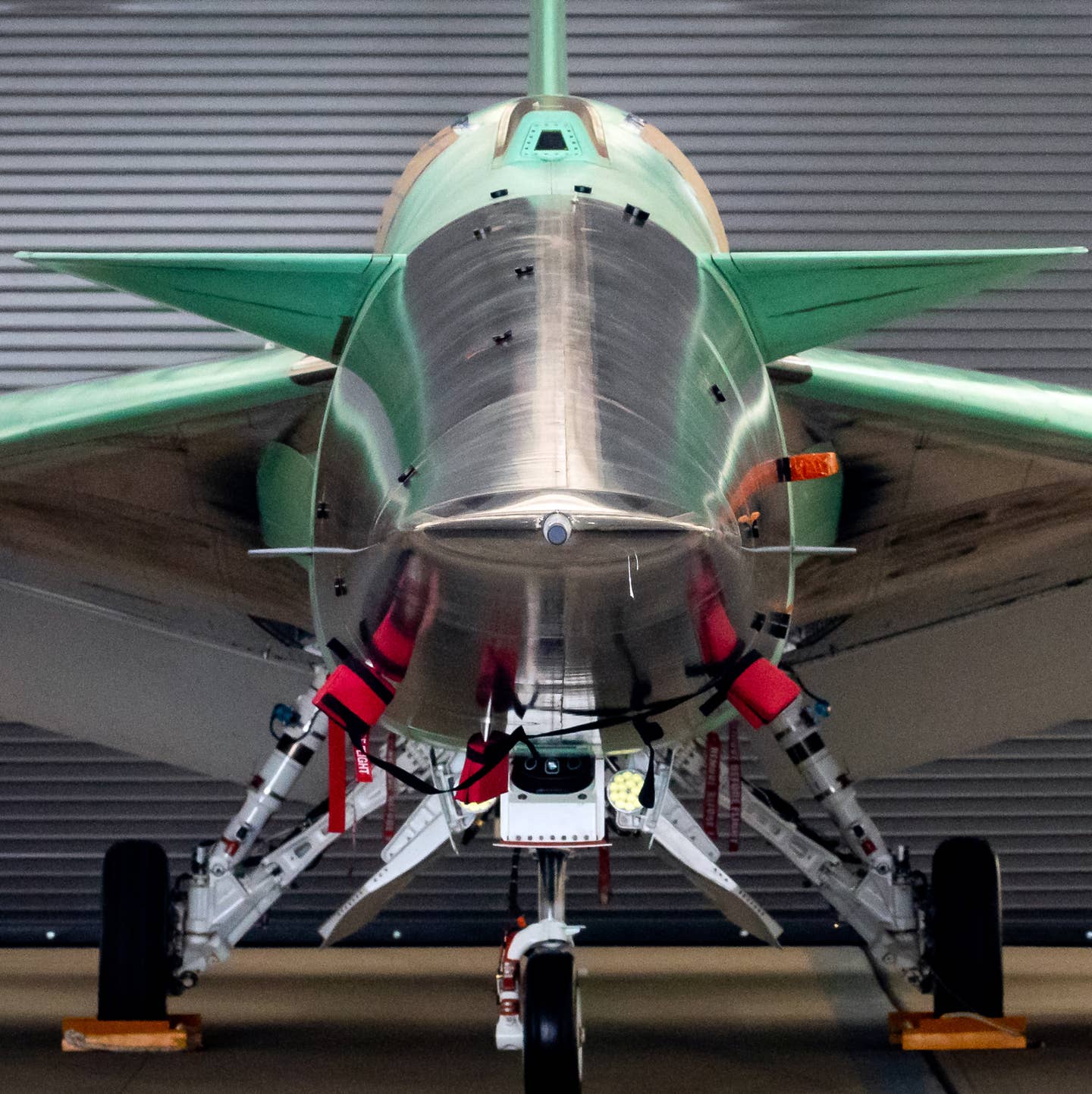
This news comes after a few images were shared by NASA showing the X-59 sitting on the "flight line" (the space between the hangar and the runway) at Lockheed Martin Skunk Works in Palmdale, California.

The X-59 can fly at Mach 1.4

The X-59 project was initiated in 2016 to enable flight at 55,000 feet (16,765 meters) and a cruising speed of Mach 1.42 (937 mph/1,508 kph) - nearly twice the speed of a standard passenger jet. Such high speeds will significantly reduce flight durations between destinations. What's more, it can do all this while only producing sounds about as loud as a "car door closing."
To date, the fastest Concorde flight between New York City and London took only 2 hours and 53 minutes, less than half the time it takes a subsonic passenger jet. The implications are noteworthy, as a supersonic flight from New York City to Los Angeles that currently takes around 5 hours and 30 minutes could be reduced to about 2 hours and 30 minutes or even less. However, a mixture of noise pollution, running costs, and high-profile accidents ultimately doomed this incredible aircraft.
The X-59 aircraft is testing a technology that aims to dampen the loud sound of the sonic boom when breaking the sound barrier. By reducing the noise to a more subdued "sonic thump," this technology could allow supersonic passenger flights over the continental US, previously prohibited due to noise pollution regulations.

NASA announced this week that the X-59 had been relocated from the construction site to the flight line, marking a significant milestone in preparation for its first and subsequent flights. The team will proceed with a series of crucial ground tests to ensure the aircraft is fully prepared for its maiden flight.

NASA will conduct a test flight of the X-59 at supersonic speed across different communities to gauge their response to the sonic thump created during the high-speed flight. The test results will be shared with US and international regulators, which may pave the way for commercial supersonic flights over land.

Supersonic airliners to return?

"The X-59 will be used to collect community response data on the acceptability of a quiet sonic boom generated by the unique design of the aircraft. The data will help NASA provide regulators with the information needed to establish an acceptable commercial supersonic noise standard to lift the ban on commercial supersonic travel over land," explains Lockheed Martin. "This breakthrough would open the door to an entirely new global market for aircraft manufacturers, enabling passengers to travel anywhere in the world in half the time it takes today," they add.
The X-59 has the potential to create numerous faster routes, not only within the United States but also globally. However, the affordability of a seat remains uncertain. 
NASA's X-59 'quiet' supersonic jet looks ready to fly in new photos
A head-on shot of NASA's X-59 supersonic jet, whose wingspan stretches across the middle of the photo. Green and black panels of the jet's body reveal sleek, sharp angles. The jet sits on three wheel connected by landing gear struts. The jet sits inside a hanger with white walls, and a grey corrugated door closed behind the jet.
A head-on view of the X-59 supersonic plane, as engineers prepare for ground and initial flight tests at Lockheed Martin’s Skunk Works facility in Palmdale, California. (Image credit: Lockheed Martin)

NASA's supersonic plane has moved closer to the runway in preparation for its debut flight. 

New photos show the X-59 supersonic plane parked on the flight line — the space between the hangar and the runway —  at Lockheed Martin’s Skunk Works facility in Palmdale, California. The plane was moved from its construction site to the flight line on June 19, according to a statement from NASA. 

This milestone kicks off a series of ground tests to ensure the X-59 is safe and ready to fly as part of NASA's Quesst mission, which aims to demonstrate that the aircraft can fly faster than the speed of sound (or Mach 1) without generating the loud sonic booms generally produced by supersonic planes. 

"NASA will then fly the X-59 over several communities to gather data on human responses to the sound generated during supersonic flight," officials said in the statement from the space agency. "NASA will deliver that data set to U.S. and international regulators to possibly enable commercial supersonic flight over land. . .

The plane will remain parked near the runway during its ground and initial flight tests by Lockheed Martin. The 99.7-foot-long, 29.5-foot-wide aircraft is powered by a single jet engine, which was built by General Electric Aviation, a subsidiary of General Electric. It is designed to reach a speed of Mach 1.4, or 925 mph, flying at an altitude of 55,000 feet (16,764 meters).

If all goes according to plan, the X-59 will fly over select U.S. cities starting in 2024. Residents will be able to share their responses to the sound produced by the X-59 aircraft. Then, data collected from the flights will be shared with American and international regulators in 2027, when the Quesst mission comes to a close. 

NASA's X-59 Supersonic X-Plane: What's New in Aerospace - YouTube
Uploaded: Mar 18, 2021
18.9K Views83 Likes
There hasn't been a supersonic commercial aircraft since the retirement of the Concorde in 2003. NASA is trying to change that. The Lockheed Martin X-59 QueS...

Continue reading > 

FEDS LOOKING INTO SCAMS >> 'Ponzi scheme' victims in Arizona still waiting for justice after 3 years

Yellen's visit to China: Tweedle Dee and Tweedle Dum


Yellen's visit and prospects for constructive Sino-U.S. dialogue
Imran Khalid

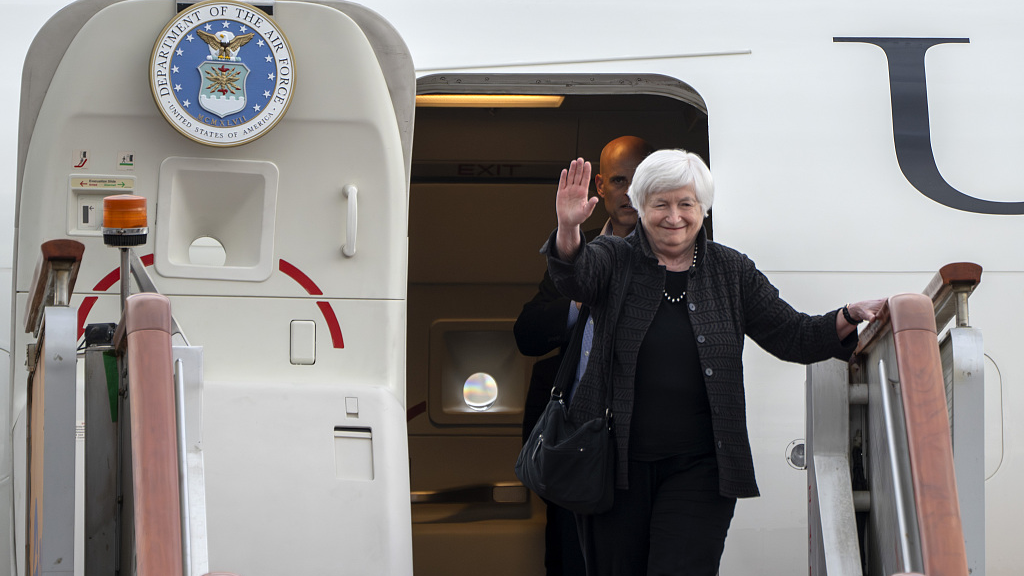
U.S. Treasury Secretary Janet Yellen arrives at Beijing Capital International Airport, China, July 6, 2023. /CFP


Editor's note: Imran Khalid, a special commentator on current affairs for CGTN, is a freelance columnist on international affairs. The article reflects the author's opinions and not necessarily the views of CGTN.

For obvious reasons, despite the lack of any tangible breakthroughs on the main contentious issues, U.S. Treasury Secretary Janet Yellen's four-day visit to China is still seen as a positive development in Sino-U.S. relations.

Even prior to her visit, both sides maintained a pragmatic stance and refrained from making any optimistic claims about its outcome. However, amidst tense Sino-U.S. relations, Yellen's visit, following the recent visit by U.S. Secretary of State Antony Blinken to China, has signaled a promising trajectory of renewed communication channels between the two countries. Throughout her visit, which involved a long string of meetings and negotiations with business leaders and top policy makers of China — including Chinese Premier Li Qiang, Chinese Vice Premier He Lifeng, and the governor of the People's Bank of China, Yi Gang — showed a relatively conciliatory tone in every interaction with the Chinese leadership.

"I am in Beijing to build on that direction … It is my hope that this visit can spur more regular channels of communication between our two countries … We seek healthy economic competition that is not winner-take-all but that, with a fair set of rules, can benefit both countries over time," remarked Yellen. 

  • She repeatedly talked about a "healthy economic competition" which is certainly encouraging, especially when contrasted with the frequently biased and bullying rhetoric directed at China from Capitol Hill. 
  • Unlike some of her hawkish peers in Washington, Yellen displayed a somewhat practical approach towards China. 
  • Her statements opposing "decoupling" from China and advocating for "necessary" and "constructive" economic relations reflect her differing approach.

China-U.S. relations have faced significant challenges in recent times, characterized by escalating tensions across various fronts, including trade, tariffs, and technological competition. 

  • Given the strained state of affairs, it is imperative for both of the countries to approach these issues cautiously, prioritizing the restoration of stability, enhancing productive dialogue, and identifying areas of mutual interest and global importance. 
  • One contentious issue is regarding the United States' additional tariffs on China, and the possibility of their cancellation. 
  • Additionally, the U.S.' possible withdrawal of the "Section 301 investigation" against China also warrants careful consideration. 
  • Equally important is the possible review of the phase-one economic and trade agreement, necessitating a comprehensive assessment of its implementation.

Enhancing cooperation is right choice for China and U.S.: Chinese premier
Updated 08:36, 08-Jul-2023

Chinese Premier Li Qiang (R) meets with U.S. Treasury Secretary Janet Yellen at the Great Hall of the People, Beijing, capital of China, July 7, 2023. /CFP

Chinese Premier Li Qiang (R) meets with U.S. Treasury Secretary Janet Yellen at the Great Hall of the People, Beijing, capital of China, July 7, 2023. /CFP    People, Beijing, capital of China, July 7, 2023. /CFP

Strengthening cooperation is a realistic need and the right choice for China and the United States, Chinese Premier Li Qiang told U.S. Treasury Secretary Janet Yellen in Beijing on Friday. 

Yellen is on a four-day visit to China starting from Thursday – her first trip to the country as U.S. treasury chief.

Whether China and the U.S. can handle their relationship well bears on the future of the world, said Li. He added that the two presidents reached important common understandings in Bali last year, chartering the course for China-U.S. relations.

Noting mutual respect, peaceful coexistence and win-win cooperation are the basic ways to conduct state-to-state relations, he said China hopes that the U.S. can meet China halfway and bring bilateral relations back on the right path guided by reason and pragmatism.

He noted that China and the U.S. should strengthen communication and seek consensus on important economic issues between the two countries, so as to inject stability and positive energy into bilateral economic relations.

Yellen said the U.S. does not seek "decoupling" and is willing to implement the consensus of the Bali meeting reached by the two heads of state with China to promote communication, avoid misunderstandings caused by differences, and enhance cooperation in macroeconomic stabilization and addressing global challenges, contributing to a mutually beneficial win-win situation for the U.S. and Chinese economies.