(Adds comments from Yellen, Xinhua statement on meeting)
By David Lawder
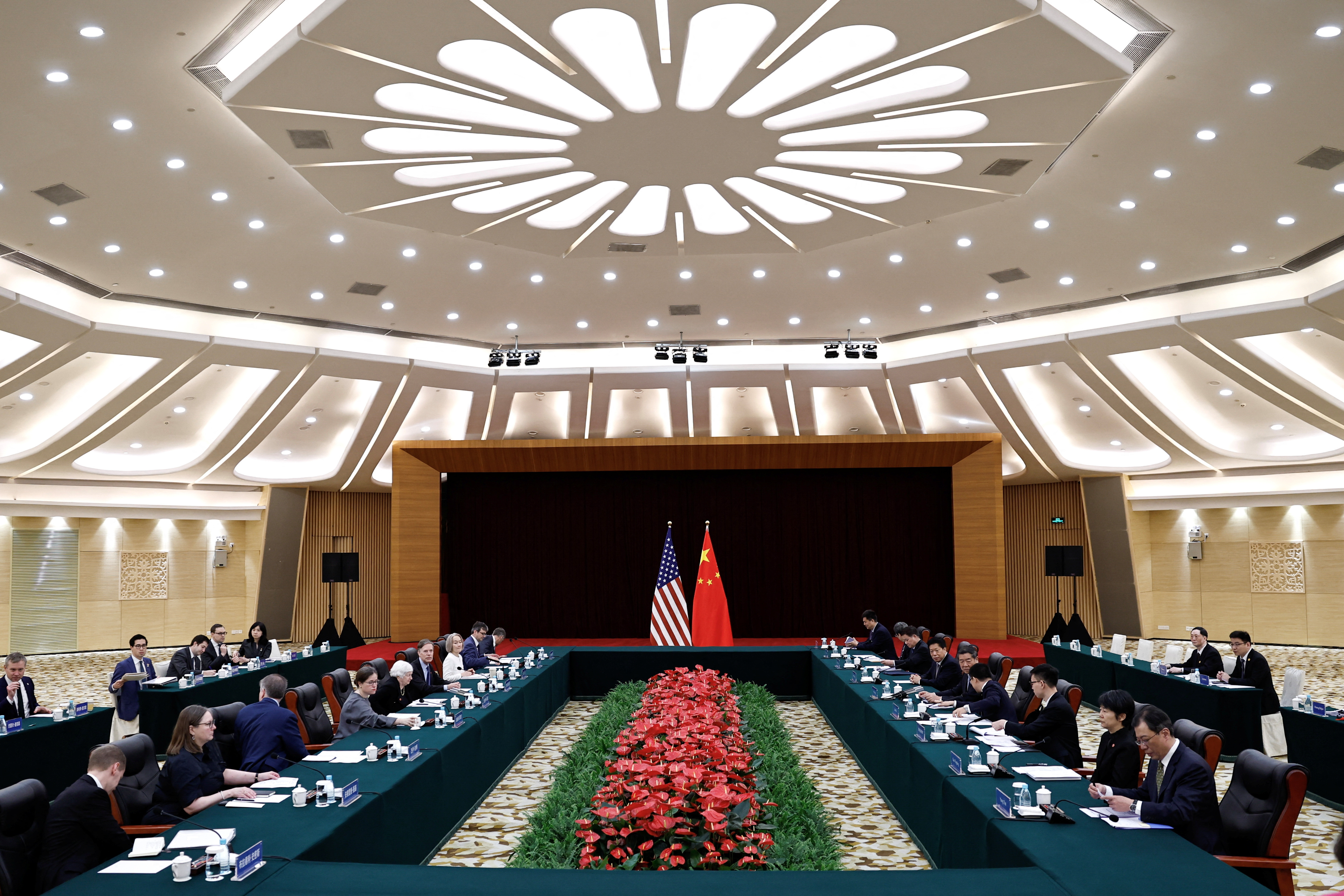
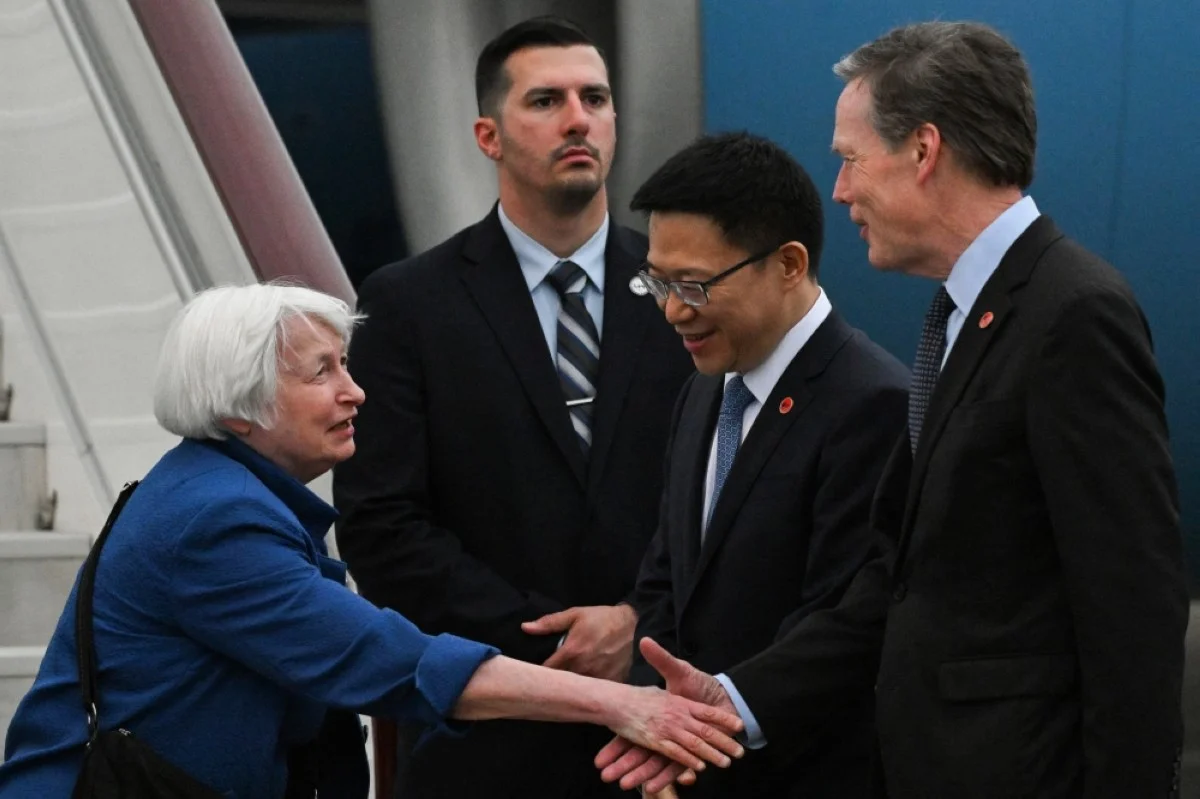
GUANGZHOU, China, April 6 (Reuters) - U.S. Treasury Secretary Janet Yellen said on Saturday that she and Chinese Vice Premier He Lifeng agreed to launch exchanges on balanced economic growth, an effort partly aimed at addressing U.S. concerns about China's excess manufacturing capacity.
After two days of economic talks in China's southern export hub of Guangzhou, Yellen said she and He also agreed to start a forum to cooperate on anti-money laundering efforts in their respective financial systems.
The exchanges "will facilitate a discussion around macroeconomic imbalances, including their connection to overcapacity, and I intend to use the opportunity to advocate for a level playing field for American workers and firms," Yellen said in a statement released at the conclusion of the talks.
She characterised the discussions as productive and frank. Coming into her four-day visit to China, her top priority was to persuade Chinese officials to rein in excess production capacity for electric vehicles, solar panels and other clean energy technology that threaten competing firms in the U.S. and other countries.
Chinese state media pushed back on her excess capacity arguments, calling them a "pretext" for protectionist U.S. policies.
Such comments seek to undermine China's domestic growth and international cooperation, and Washington should focus on fostering innovation and competitiveness within its own borders instead of resorting to "fear-mongering," state news agency Xinhua said in an editorial late on Friday.
Yellen, He and their teams held over four-and-a-half hours of meetings on Saturday on a range of topics, with U.S. concerns about China's growing exports of electric vehicles, solar panels and other goods the biggest priority for the Treasury chief.
They discussed the excess capacity issue for over two hours, Yellen told reporters on Saturday afternoon.
"I think the Chinese realise how concerned we are about the implications of their industrial strategy, for the United States, for the potential to flood our markets with exports that make it difficult for American firms to compete," Yellen said. "And then other countries have the same concern."
She said that the forum would provide a "structured" way to discuss a complicated issue, but that it would take some time to resolve.
"I think they have heard that this is an important issue to us. It's going to be critical to our bilateral relationship going forward and to China's relationship with other countries that are important."
She added Chinese officials were "more confident" about the economy after putting in place policies to address issues in the property sector and on local government debt.
The discussions on economic relations and global challenges between He and Yellen were "candid, pragmatic and constructive," Xinhua said in a statement on Saturday, confirming both parties had agreed to further discuss balanced growth and financial stability.
Beijing also expressed serious concerns about U.S. economic and trade restrictions on China and made a full response to the production capacity issue during the talks, it added.
Yellen also warned Chinese firms faced "significant consequences" if they provided material support to Russia's war effort. The Chinese side emphasised that their policy was not to provide such support and did not want this to be a bilateral issue, she said.
PROTECTIONIST PRETEXT
Xinhua criticised Yellen's remarks late on Friday, saying that talking up "Chinese overcapacity" in the clean energy sector created a pretext for protectionist policies to shield U.S. companies.
"After all, it is now known by the world that Washington will not hesitate to show its protectionist teeth under the guise of national security in areas where its supremacy is challenged," the state news agency said.
Some trade experts see increased U.S. criticism of China's production-focused, subsidy- and debt-driven economic model as a step towards raising U.S. tariffs on Chinese EVs and clean energy goods.
Yellen has shied away from raising new trade threats but said during her journey to Guangzhou she would not rule out more actions to protect a fledgling American supply chain for EVs, batteries, solar power and other goods from cut-price Chinese imports.
While Treasury does not expect a major shift in Chinese policy after Yellen's visit, U.S. officials believe it was important to explain the economic risks that overinvestment in some sectors and weak consumer demand present to both China and its trading partners.
Yellen said on Friday her trip was partly aimed at cementing U.S.-China ties to "withstand shocks and challenging circumstances."
She will travel on Saturday to Beijing, where she meets officials including Premier Li Qiang, Finance Minister Lan Foan and People's Bank of China Governor Pan Gongsheng through Monday. (Reporting by David Lawder in Guangzhou and Brenda Goh in Shanghai; Editing by William Mallard and Sam Holmes)