Kyiv-based analyst Igar Tyshkevych told Al Jazeera Zelenskyy needed the shake-up to divert the public’s attention from corruption and the dysfunctional court system.
The cabinet reshuffling is nothing but a public relations stunt as most of the fired ministers got new jobs in the presidential administration – where their replacements came from, another observer said.
“This is just a media-friendly shake-up, a rotation between the cabinet and the administration, to show the public in the fall how the government has been renewed,”the analyst told Al Jazeera on condition of anonymity. He said only one key minister, Kuleba, was replaced, while heads of law enforcement agencies, finance, health and education ministries kept their jobs
.In Ukraine, some are skeptical of Zelenskiyy’s shake-up as Russia advances
The president, whose approval ratings are in decline, oversaw a major reshuffle as Russian troops advance in southeastern Donbas.
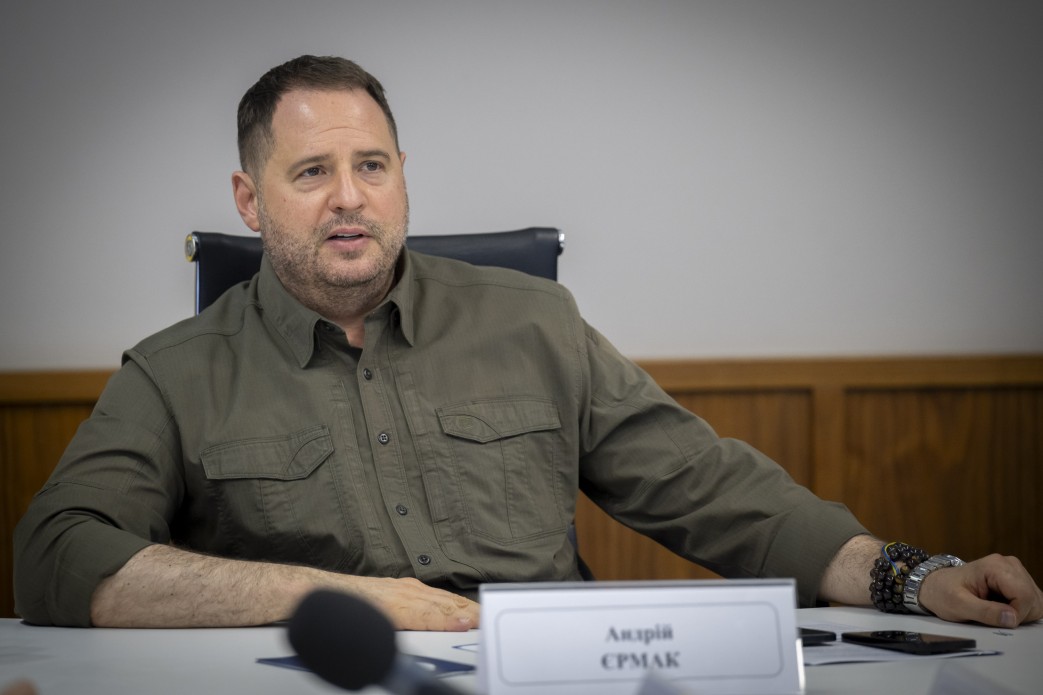
Head of the Office of the President Andriy Yermak Introduced New Deputy Heads and Spoke About Their Areas of Work 10 September 2024 - 17:17
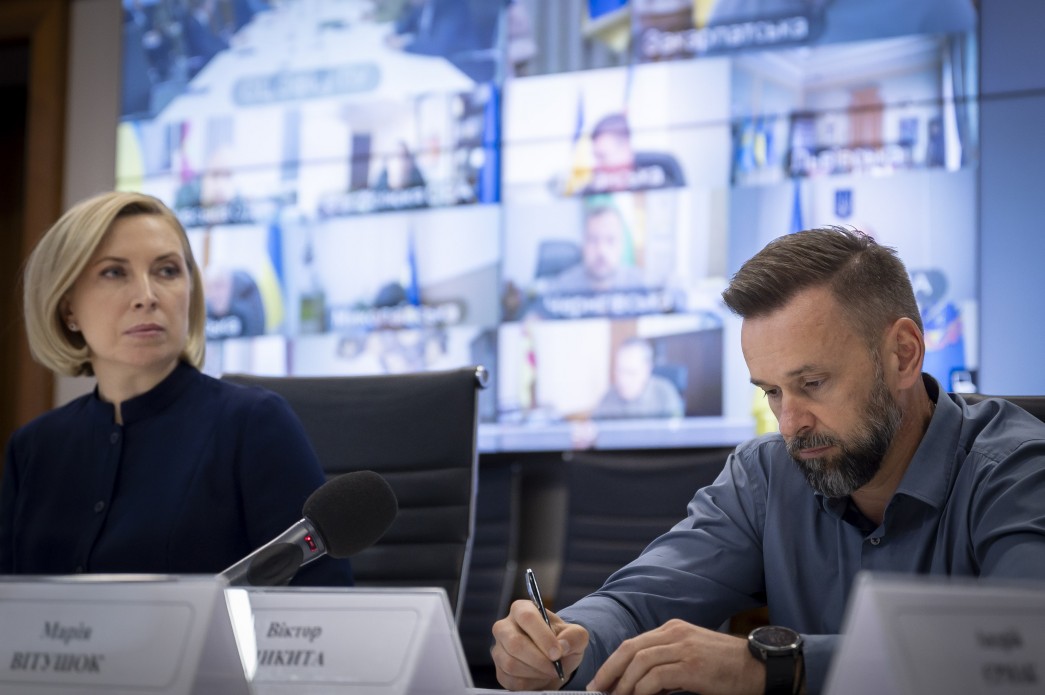
Head of the Office of the President of Ukraine Andriy Yermak introduced his new Deputies, Iryna Vereshchuk and Viktor Mykyta, during a meeting with the heads of regional state administrations.
“Viktor Mykyta will work with the regions and continue what Oleksiy Kuleba was doing.
And Iryna Vereshchuk will focus on the issues she dealt with in her government position: internally displaced citizens, children and protection of their rights, especially children in the frontline regions, and all humanitarian issues,”the Head of the Presidential Office said.
Andriy Yermak particularly emphasized the importance of strengthening the work of the Congress of Local and Regional Authorities under the President of Ukraine, which should ensure quality communication with communities.
He also stressed the need to develop cooperation between the regions of Ukraine and partner countries, primarily the United States, France, Germany, Italy and the United Kingdom.
Viktor Mykyta identified his priorities as working with the frontline areas and establishing communication with all regions to promptly resolve issues, including restoring damaged energy infrastructure and supporting business.
“I plan to meet with each Head of Regional Administration – we have already developed a schedule of meetings – to understand the problems of each region.
It is also important to establish communication with the Cabinet of Ministers.
I want to introduce certain changes in the approaches to holding the Congress for better communication,” he said.
Iryna Vereshchuknoted that she will be helping IDPs and children living in the frontline areas, and also work on the reintegration of children returned from deportation. “Another extremely important track is veterans. They will be at the forefront of the President's and our attention. I am confident that together with the new Minister of Veterans Affairs we will be able to give a new impetus to veterans' policy,”she added.
Ukrainian forces continue to lose ground in the southeastern Donbas region even after trying to divert Moscow’s attention and manpower by occupying a chunk of the western Russian region of Kursk.
The public is weary of the war, draconian measures to mobilise men, almost daily blackouts and endemic corruption, while President Volodymyr Zelenskyy’s popularity declines.
According to an August survey by the National Democratic Institute pollster, his ratings dropped to 45 percent from 69 percent in January.
Earlier this month, a deputy prime minister and six cabinet ministers sent their resignations to the Verkhovna Rada, the unicameral parliament of Ukraine. Dominated by Zelenskyy’s Servant of the People party, the Rada readily voted to “relieve them of their duties”.
Zelenskyy’s explanation was overtly simple and general.“We need new energy and these new steps are connected to strengthening our state in different directions,” he told a news conference on Wednesday.
To some Ukrainians, the shake-up looks unnecessary and untimely.
“I honestly don’t understand why Zelenskyy is doing it. We need to concentrate on the war,” Nadiya Gorbatenko, a cashier at a fast food restaurant in Kyiv, told Al Jazeera. “It takes time for the new ministers to settle in, and it will affect the government’s work.”
And as the new appointees are settling in, Russian forces keep advancing in the Donbas region despite heavy losses. Their push towards the strategic town of Pokrovsk nearly stopped over the weekend, but they keep pressing on nearby towns and villages.
Meanwhile, Ukrainian forces are severely undermanned, while seasoned servicemen are not allowed to demobilise even after life-threatening wounds.
“We are just tired. We don’t need new ministers, we need new soldiers,” an officer who began his service in 2021 and is recovering from a contusion in a Kyiv hospital, told Al Jazeera.
Who’s out?
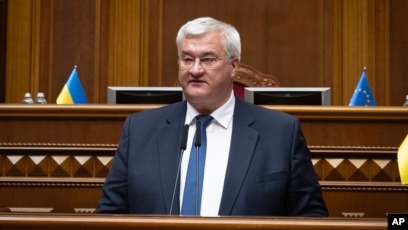
Foreign Minister Dmytro Kuleba, who tirelessly toured Western capitals to secure multibillion aid packages, was replaced with his deputy Andrii Sybiha, a seasoned diplomat who also served as presidential adviser.
Strategic Industries Minister Olexander Kamyshin, who oversaw domestic arms production, was substituted with Herman Smetanin, a 32-year-old head of the state consortium of defence companies.
The justice, environment and reintegration ministers were also replaced with obscure officials known for their loyalty to Zelenskyy.
Opposition figures cried foul, claiming that the president prefers dogged devotion to competence. “We need effective and empowered ministers, but the parliamentary majority has no one to offer, and [the presidential administration] comes up with things that make the nation tremble every time,” Ivanna Klympush-Tsintsadze, a lawmaker with the European Solidarity, a party of Zelenskyy’s predecessor and archrival Petro Poroshenko, said in televised remarks.
The party has long accused Zelenskyy of concentrating power by firing officials and top generals who disagree with him and dare make their disagreements public.
Last year, Zelenskyy dismissed top general Valerii Zaluzhny and Defence Minister Oleksiy Reznikov.
But observers say any dissenters within the government have already been weeded out after Zelenskyy came to power in 2019.
“The government of Ukraine fully, and I would like to emphasize it, fully depends on the presidential administration, before the reshuffling and after,”Volodymyr Fesenko, head of the Penta think tank in Kyiv, told Al Jazeera. He said the reshuffling had to do with Zelenskyy’s penchant for “motivating” the reshuffling of officials of all levels. “He thinks that it contributes to more active, more motivated work of ministers. That’s his conviction,”Fesenko said.
An artilleryman of the 15th Operative Purpose Brigade Kara-Dag of the National Guard of Ukraine is seen at his position at a front line near Pokrovsk in the Donetsk region [Radio Free Europe/Radio Liberty/Serhii Nuzhnenko via Reuters]
Another reason for the reshuffling was that five ministers, or almost a quarter of the cabinet of 22, have not been officially confirmed and served in an acting capacity.
Meanwhile, some ministries needed to be restructured or eliminated altogether.
The Ministry of Reintegration of the Temporarily Occupied Territories – Russia-annexed Crimea and separatist-controlled parts of the Donbas region – was created in 2014 to implement the Minsk accords with Russia.
It helped evacuate and integrate residents who fled the occupied regions and organised prisoner swaps but largely lost its purpose as Kyiv refused to stick to the accords.
Therefore, its head, Iryna Vereshchuk, will now serve as deputy head of the presidential administration under Andriy Yermak, who is widely seen as the “grey cardinal” of Ukrainian politics.
“Decisions on appointments have been delayed since the [full-scale invasion] began and it made no sense to keep postponing them,”analyst Fesenko said.
Other observers say the reshuffling had to do with the public’s disappointment in the course of the war and the government’s failure to tackle corruption. “There may be show trials [of corrupt officials], very fast ones, that are impossible now, or a dramatic renewal of the government,”Kyiv-based analyst Igar Tyshkevych told Al Jazeera. He said Zelenskyy needed the shake-up to divert the public’s attention from corruption and the dysfunctional court system.
‘Just a media-friendly shake-up’ Defence installations in the troubled Donetsk region have not been completed, and the official who was in charge of building them faces up to 10 years in jail for “illicit enrichment”.
But Pavlo Kyrylenko claimed last month that his father-in-law “made $300,000 on selling raspberries” from his farms after anticorruption officials accused him of buying pricey land plots and luxurious apartments.
The cabinet reshuffling is nothing but a public relations stunt as most of the fired ministers got new jobs in the presidential administration – where their replacements came from, another observer said. “This is just a media-friendly shake-up, a rotation between the cabinet and the administration, to show the public in the fall how the government has been renewed,” the analyst told Al Jazeera on condition of anonymity.
He said only one key minister, Kuleba, was replaced, while heads of law enforcement agencies, finance, health and education ministries kept their jobs. “They only touched the Foreign Ministry,” the analyst said.
I thought that the e-mailed invitation was spam. “Nice try, Russia,” I said to my laptop screen. But the Pope really did want to meet with comics and humorists.
In June, with three days’ notice, David Sedaris was summoned to the Vatican to meet the Pope—along with Stephen Colbert, Tig Notaro, Whoopi Goldberg, and a hundred or so other notable names. The visit is not what he’d imagined it would be, but he turns the trip around with an outing, accompanied by Julia Louis-Dreyfus, to a centuries-old, bespoke tailoring business that’s been dressing the Pope and his associates for generations. There he buys a black cassock—“It takes ten pounds off!”—complete with a Roman collar and two fascias. The only remaining question? What to wear underneath.
Just the Facts: Economy and energy & the environment
Yesterday, USAFacts Founder Steve Ballmer debuted the next installments in the Just the Facts series. For the next few weeks, we’ll focus on the topics from these videos and dig into aspects of the economy and energy & the environment.
Understanding the US economy
The economy is one of the biggest topics this election season. But the economy isn’t just one thing. It’s many, many measurements and indicators, from nationwide numbers to Americans’ wallets and kitchen tables. So, to start, we’ll break down the sometimes unwieldy concept of GDP.
Gross domestic product (GDP) is the value of all goods and services produced in the American economy. In the second quarter of 2024, US GDP rose 3.0% to $28.65 trillion.
Measuring GDP across locations and industries is helpful in analyzing economic shifts, such as the GDP growth in information technology as the internet expanded in the 1990s.
Sixty-eight percent of GDP comes from consumer spending on goods and services. Another 18% comes from investments and another 18% from government spending. The US has imported more than it has exported recently, making trade account for -3% of GDP.
For 61 years, the United States used more energy than it produced. That changed in 2019 when production surpassed consumption — and it’s remained that way since. So, what's behind this shift? And how does America keep its lights on?
The US is the world’s top producer of both oil and gas. In 2023, fossil fuels were 75% of US energy production, with natural gas accounting for 38.2% and crude oil accounting for 26.1%. Renewable energy sources comprised 8.2%. Nuclear energy was at 8.1%.
Coal, once the top energy source, has fallen by half since 2008. In 2023, it was 11.5% of energy production. Wyoming produces more coal than any other state, accounting for 41.2% in 2022.
Crude oil is also the nation’s top energy source, accounting for 38% of the energy usage. It’s been the nation’s top source since data tracking began in 1950. In 1977 and 1978, it reached 49% of US energy consumption.
Renewable energy has long been part of US energy consumption but its usage hasn't exceeded 10%. It has fluctuated between 3% and 9% since 1950. It's used the most in the electric power sector (39% of renewables) and the least in the commercial sector (3%).
Catch Steve Ballmer on a post-presidential debate episode of The Daily Show tomorrow at 11 pm ET/8 pm PT. He'll talk with host Jon Stewart about the importance of trusted source data this election season.
Data behind the news
A 14-year-old boy and his father were charged in a Georgia school shooting that left two students and two teachers dead last Wednesday. Here’s the government data on school shootings.
The Chinese government has said it will no longer allow most foreign adoptions. China suspended international adoptions at the start of the pandemic; prior to that, it was the top nation for foreign-born children adopted into US families.
Test your knowledge of the latest data with the weekly fact quiz.
One last fact: Election edition
Traditional political action committees (PACs) have both spending and donation limits. They can spend up to $5,000 on a candidate every election, up to $5,000 annually in contributions to other PACs, and up to $15,000 on national party committees.
Super PACs, however, came about after the 2010 Citizens United v. FEC court decision. Read more about it here.
.jpg) Meanwhile, Ukrainian forces are severely undermanned, while seasoned servicemen are not allowed to demobilise even after life-threatening wounds.
Meanwhile, Ukrainian forces are severely undermanned, while seasoned servicemen are not allowed to demobilise even after life-threatening wounds.





.jpg)