American Water shuts down online services after cyberattack
- October 7, 2024
- 01:29 PM
- 0

- In a filing with the U.S. Securities and Exchange Commission (SEC), American Water said it has already hired third-party cybersecurity experts to help contain and assess the incident's impact.
- It also reported the breach to law enforcement and is now coordinating their efforts in a joint and ongoing investigation.
- As American Water said in a separate statement on its website, the attack also forced it to shut down its online customer portal service, MyWater, and pause billing services.
"Our dedicated team of professionals are working around the clock to investigate the nature and scope of the incident," Rodriguez added. "The Company currently believes that none of its water or wastewater facilities or operations have been negatively impacted by this incident."
This incident follows a similar one that impacted the water treatment facility of Arkansas City, Kansas, which was forced to switch to manual operations after a weekend cyberattack.
These incidents come after a TLP:AMBER advisory warning Russian-linked cyberattacks targeting the water sector, issued by the Water Information Sharing and Analysis Center (WaterISAC), a nonprofit organization that helps protect water utilities from cyber threats.
For instance, Chinese-backed Volt Typhoon hackers infiltrated the networks of drinking water systems in February, while Iranian threat actors breached a Pennsylvania water facility in November 2023.
The U.S. Environmental Protection Agency (EPA) has also recently issued guidance to assist water and wastewater systems (WWSs) owners and operators in evaluating their cybersecurity practices and identifying measures to reduce their attack exposure.
AT&T, Verizon reportedly hacked to target US govt wiretapping platform
Ionut Ilascu
- October 7, 2024
- 10:51 AM
- 4
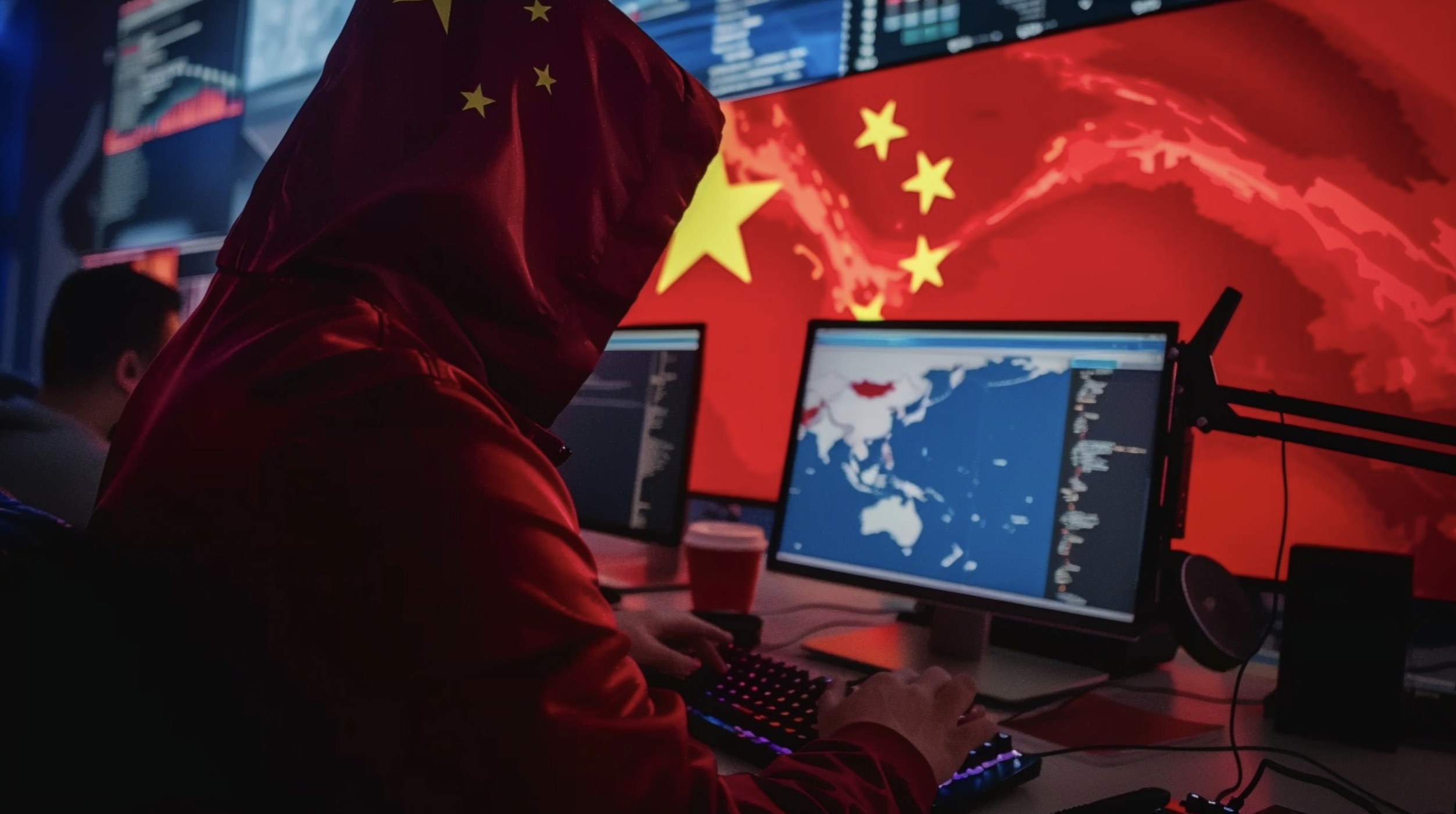
The purpose of the attack appears to be for intelligence collection as the hackers might have had access to systems used by the U.S. federal government for court-authorized network wiretapping requests.
It is unclear when the intrusion occurred, but WSJ cites people familiar with the matter, saying that "for months or longer, the hackers might have held access to network infrastructure used to cooperate with lawful U.S. requests for communications data."
- Other cybersecurity companies are tracking the adversary as Earth Estries (Trend Micro), FamousSparrow (ESET), Ghost Emperor (Kaspersky), and UNC2286 (Mandiant, now part of Google Cloud).
According to the WSJ, the attack was discovered in recent weeks and is being investigated by the U.S. government and security experts in the private sector.
The impact of the attack - amount and type of observed and exfiltrated data - is still being assessed, people with information about the intrusion told WSJ.
“The hackers appear to have engaged in a vast collection of internet traffic from internet service providers that count businesses large and small, and millions of Americans, as their customers” - Wall Street Journal

Security researchers also found that the threat actor attacked hotels, engineering companies, and law firms in Brazil, Burkina Faso, South Africa, Canada, Israel, France, Guatemala, Lithuania, Saudi Arabia, Taiwan, Thailand, and the United Kingdom.
In previous attacks attributed to Salt Typhoon/Ghost Emperor, the threat actor used a custom backdoor called SparrowDoor, customized versions of the Mimikatz tool for extracting authentication data, and a Windows kernel-mode rootkit Demodex.
However, a Cisco spokesperson told WSJ that the company was looking into the matter but had received no indication that Cisco networking equipment was involved in the breach.
- BleepingComputer contacted AT&T about the alleged breach and was told they "are not commenting on the WSJ report." Lumen also declined to comment.
- Verizon has not responded to our emails, and we will update the story if we receive a reply.
In August, cybersecurity researchers at Lumen's Black Lotus Labs disclosed that the Chinese threat actors known as "Volt Typhoon" exploited a zero-day flaw in Versa Director to steal credentials and breach corporate networks. During these attacks, the threat actors breached multiple ISPs and MSPs in the U.S. and India, which is not believed to be related to the recent breaches.
In September, Black Lotus Labs and law enforcement disrupted a massive Chinese botnet named "Raptor Train" that compromised over 260,000 SOHO routers, IP cameras with malware. This botnet was used by the "Flax Typhoon" threat actors for DDoS attacks and as a proxy to launch stealthy attacks on other organizations.
While these attacks have been attributed to different Chinese hacking groups, they are believed to operate under the same umbrella, commonly sharing infrastructure and tools.


LATEST ARTICLES

LEGO's website hacked to push cryptocurrency scam
On Friday night, cryptocurrency scammers briefly hacked the LEGO website to promote a fake Lego token that could be purchased with Ethereum.
- October 07, 2024
- 05:48 PM
 0
0

Ukrainian pleads guilty to operating Raccoon Stealer malware
Ukrainian national Mark Sokolovsky has pleaded guilty to his involvement in the Raccoon Stealer malware-as-a-service (MaaS) cybercrime operation.
- October 07, 2024
- 05:10 PM
- 0

Microsoft: Word deletes some documents instead of saving them
Microsoft warns that a new bug may cause Word for Windows to delete some documents instead of saving them.
- October 07, 2024
- 04:11 PM
- 2

Qualcomm patches high-severity zero-day exploited in attacks
Qualcomm has released security patches for a zero-day vulnerability in the Digital Signal Processor (DSP) service that impacts dozens of chipsets.
- October 07, 2024
- 02:30 PM
- 0

- Security· Sponsored Content
Hybrid Analysis Bolstered by Criminal IP’s Comprehensive Domain Intelligence
AI SPERA announced that its domain and IP address threat intel platform, Criminal IP, is now integrated with Hybrid Analysis. Learn more from Criminal IP about how this brings additional insights to Hybrid Analysis.
- October 07, 2024
- 10:02 AM
- 0

This course bundle helps you train for CISSP certification exam concepts
Prepare for the CISSP certification exam by grabbing this CISSP training bundle, now just $29.97. This offer ends October 27 at 11:59 PM Pacific, or as long as supplies last.
- October 07, 2024
- 07:07 AM
- 2

Comcast and Truist Bank customers caught up in FBCS data breach
Comcast Cable Communications and Truist Bank have disclosed they were impacted by a data breach at FBCS, and are now informing their respective customers that their data has been compromised.
- October 06, 2024
- 11:12 AM
- 1

Man pleads guilty to stealing $37 million in crypto from 571 victims
A 21-year-old man from Indiana named Evan Frederick Light pleaded guilty to stealing $37,704,560 worth of cryptocurrency from 571 victims in a 2022 cyberattack.
- October 06, 2024
- 10:17 AM
- 0

Google Pay alarms users with accidental ‘new card’ added emails
Google Pay alarmed users this week after erroneously sending out "new card" added email notifications. Google has acknowledged that the email was "accidental" and that no user information was compromised.
- October 06, 2024
- 09:00 AM
- 0

EaseUS Disk Copy is only $24.97 in this deal
Switching to a bigger hard drive, moving from an HDD to an SSD for better performance, or just making sure your data is backed up is all a whole lot easier with a tool like EaseUS Disk Copy on hand to clone your entire system—operating system, programs, and files—with just a few clicks, and it's available for life for $24.97.
- October 06, 2024
- 08:15 AM
- 0

MoneyGram: No evidence ransomware is behind recent cyberattack
MoneyGram says there is no evidence that ransomware is behind a recent cyberattack that led to a five-day outage in September.
- October 05, 2024
- 10:16 AM
- 0

Prepare for your CompTIA exams with this $30 course bundle deal
If you're looking for an affordable way to prepare for these exams, check out the Ultimate Cybersecurity & IT Career Certification Pathway Training Bundle, and it's only $29.97 (reg. $184).
- October 05, 2024
- 08:12 AM
- 0

Highline Public Schools confirms ransomware behind shutdown
On Thursday, K-12 school district Highline Public Schools confirmed that a ransomware attack forced it to shut down all schools in early September.
- October 04, 2024
- 04:32 PM
- 0

Russia arrests US-sanctioned Cryptex founder, 95 other linked suspects
Russian law enforcement detained almost 100 suspects linked to the Cryptex cryptocurrency exchange, the UAPS anonymous payment service, and 33 other online services and platforms used to make illegal payments and sell stolen credentials.
- October 04, 2024
- 02:56 PM
- 0

 October 3, 2024
.jfif)


